- English
- French
- German
- Portuguese
- Spanish
- Russian
- Japanese
- Korean
- Arabic
- Greek
- German
- Turkish
- Italian
- Danish
- Romanian
- Indonesian
- Czech
- Afrikaans
- Swedish
- Polish
- Basque
- Catalan
- Esperanto
- Hindi
- Lao
- Albanian
- Amharic
- Armenian
- Azerbaijani
- Belarusian
- Bengali
- Bosnian
- Bulgarian
- Cebuano
- Chichewa
- Corsican
- Croatian
- Dutch
- Estonian
- Filipino
- Finnish
- Frisian
- Galician
- Georgian
- Gujarati
- Haitian
- Hausa
- Hawaiian
- Hebrew
- Hmong
- Hungarian
- Icelandic
- Igbo
- Javanese
- Kannada
- Kazakh
- Khmer
- Kurdish
- Kyrgyz
- Latin
- Latvian
- Lithuanian
- Luxembou..
- Macedonian
- Malagasy
- Malay
- Malayalam
- Maltese
- Maori
- Marathi
- Mongolian
- Burmese
- Nepali
- Norwegian
- Pashto
- Persian
- Punjabi
- Serbian
- Sesotho
- Sinhala
- Slovak
- Slovenian
- Somali
- Samoan
- Scots Gaelic
- Shona
- Sindhi
- Sundanese
- Swahili
- Tajik
- Tamil
- Telugu
- Thai
- Ukrainian
- Urdu
- Uzbek
- Vietnamese
- Welsh
- Xhosa
- Yiddish
- Yoruba
- Zulu
Lutein Powder Bulk, derived from marigold (Tagetes erecta L.), is essential in modern eye health supplements, helping meet rising demand driven by screen use and aging populations. For B2B buyers, sourcing premium-grade lutein is a strategic priority affecting product performance, regulatory compliance, and market positioning. This guide supports wholesalers and R&D teams with insights into biological function, quality standards, and sourcing strategies, enabling consistent supply, innovation, and informed supplier selection aligned with both scientific and commercial goals.
Understanding Lutein Powder Bulk and Its Benefits for Eye Health
Lutein Powder Bulk is a unique form of xanthophyll carotenoid that only builds up in the macula of the human eye. There, it serves as both an antioxidant protector and a high-energy visible light blocker. Natural lutein from marigold oleoresin is different from manufactured versions because it goes through separation, purification, and drying steps that keep its biological activity. The powder usually has a small amount of zeaxanthin in it, which is another vitamin that works with the others to improve vision.
How Lutein Protects Against Blue Light Damage?
Lutein secures the eyes by retaining high-energy blue light in the 400–500 nm run some time recently it comes to retinal photoreceptors. This decreases oxidative stretch and limits receptive oxygen species arrangement caused by light presentation. By expanding macular shade thickness, lutein capacities as an inside optical channel. This is especially critical for people uncovered to screens, Driven lighting, and daylight. In general, it makes a difference keep up retinal keenness and diminishes the long-term hazard of phototoxic harm related with present day advanced and natural light exposure.
Clinical Evidence Supporting Retinal Health
Several thinks about that were checked on by specialists affirm that lutein makes a difference keep your visual perception clear and delicate to differentiate. The Age-Related Eye Illness Think about 2 (AREDS2) found that giving high-risk individuals 10 mg of lutein and zeaxanthin each day moderated the improvement to progressed age-related macular degeneration by 25%. Modern ponder proposes that lutein supplements may lower the chance of creating cataracts by keeping the focal point clear and bringing down the sum of oxidative protein that builds up.
Bioavailability Considerations in Product Development
Lutein’s adequacy depends on assimilation effectiveness, which is made strides through detailing methodologies like beadlets and microencapsulation. These strategies decrease molecule estimate and secure lutein from debasement. Since lutein is fat-soluble, dietary fats altogether improve take-up in the digestive system. As a result, conveyance frameworks such as softgels or oil-based definitions are favored. Item plan must consider these variables to guarantee steady bioavailability and unsurprising wellbeing results over distinctive supplement formats.
Quality and Composition: What to Look for When Procuring Lutein Powder in Bulk?
When purchasing managers look at Lutein Powder Bulk suppliers, they have to deal with a complicated world. Differences in source material, extraction method, and quality control have a direct effect on how well the end product works. To tell the difference between good and great raw materials, you need to know the basic requirements for pharmaceutical-grade ingredients.
Natural Versus Synthetic Sources
Most commercial lutein is determined from marigold blossoms due to shopper inclination for normal fixings. This frame holds a carotenoid profile comparable to verdant vegetables and may incorporate strong co-nutrients. Engineered lutein exists but is less favored in clean-label markets. Supercritical CO₂ extraction is favored for solvent-free generation. Source straightforwardness and extraction strategy approval are vital for administrative compliance and shopper believe in health-focused products.
Critical Quality Indicators
High-quality lutein powder requires strict testing benchmarks, counting immaculateness examination through HPLC and auxiliary affirmation utilizing UV spectroscopy. Dampness levels ought to stay underneath 5% to guarantee soundness and anticipate microbial development. An 80-mesh molecule measure is commonly utilized to keep up uniform blending and anticipate clumping. Certificates of Investigation confirm composition, whereas controlled bundling ensures lutein from oxidation and light presentation amid capacity and transportation.
Comparing Powder Forms and Related Ingredients
Lutein is available in multiple formats, including standard powders, beadlets, and water-dispersible emulsions. Beadlets provide protection against heat, light, and oxidation, while emulsions improve solubility in beverages. Ratios of lutein to zeaxanthin vary depending on formulation goals, commonly ranging from 5:1 to 1:1. These variations allow manufacturers to tailor products for specific applications such as capsules, drinks, or fortified foods with targeted bioavailability.
Procurement Insights: How to Buy Lutein Powder Bulk Effectively for Business Needs?
To strategically source Lutein Powder Bulk, you need to find a balance between quality control, a reliable supply chain, and business terms that allow for large-scale production. There are choices on the global market from different manufacturing areas, and each has its own benefits when it comes to certification standards, output capacity, and price competitiveness.
Identifying Reputable Manufacturers
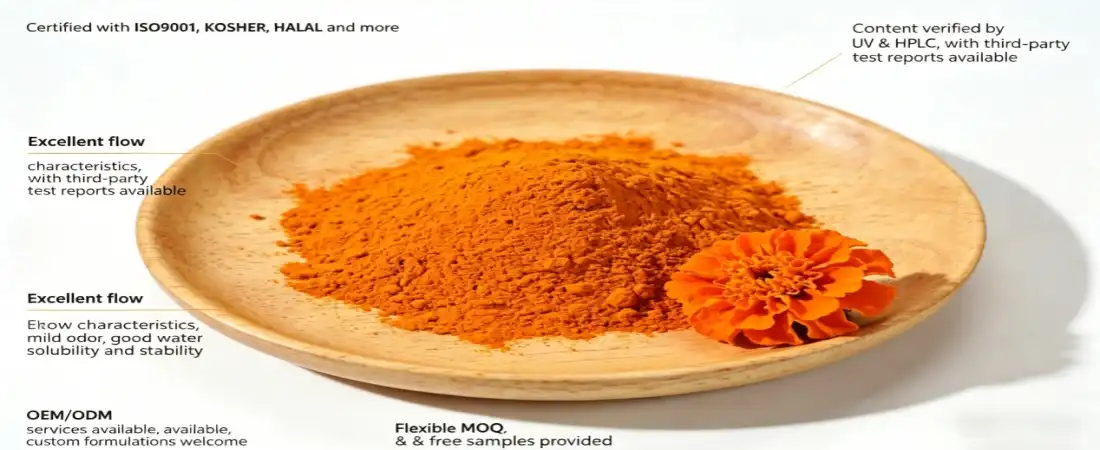
Qualified lutein powder suppliers need ISO9001, Kosher, and Halal certifications. Third-party lab tests confirm quality control. Transparent raw material tracking, from marigold farms to processing, prevents contamination and costly recalls. Manufacturers with grower partnerships outperform spot-market buyers. Vertical integration improves pesticide timing and post-harvest processing, enhancing final extract quality.
Pricing Structures and Order Flexibility
Lutein prices fluctuate with marigold harvests and seasons. Volume commitments unlock tiered pricing, but consider total landed cost (freight, taxes, terms). Minimum orders of 25 kg suit new brands, while 500+ kg orders allow container-rate savings. Payment flexibility—local currencies, letters of credit for first orders, net terms later—supports both startups and multinationals.
Custom Packaging and Private Label Opportunities
Top suppliers offer custom packaging (1 kg foil bags to 25 kg fiber drums) and private label programs with unique blends (lutein plus vitamin A, bilberry, or omega-3). Technical help includes formulation advice, stability testing, and regulatory support. This consultative approach turns transactions into strategic partnerships, especially when entering new markets with different legal requirements.
Dosage, Safety, and Regulatory Considerations for Bulk Lutein Powder Use
Making sure that eye health goods follow the rules and are safe are the basics of making Lutein Powder Bulk work. When making choices about what to buy, it's important to take into account how dosages, labeling rules, and production standards for Lutein Powder Bulk vary from region to region.
Recommended Dosage Ranges
Clinical evidence supports 6–20 mg daily lutein for eye health; 20–40 mg for existing macular degeneration. AREDS2-aligned formulas target 10–20 mg per dose. Manufacturers must account for concentration: 10 mg lutein requires 200 mg of 5% powder or 50 mg of 20% concentrate, affecting tablet size, capsule count, and cost per serving.
Safety Profile and Side Effects
Lutein has an excellent safety record, with no upper limit set by major regulators. Human studies of 40 mg daily for extended periods found only mild stomach discomfort in sensitive individuals. EFSA and FDA recognize lutein as safe, easing approval. Storage stability prevents harmful breakdown; properly kept powder lasts 24–36 months. Procurement must require moisture-barrier packaging and nitrogen flushing to protect carotenoid purity.
Navigating Global Regulatory Frameworks
Regional governmental structures must be taken into account in market entry tactics. The Dietary Supplement Health and Education Act lets the FDA set rules for dietary supplements in the United States. These rules allow structure-function claims about supporting vision without getting pre-market approval. EFSA rules for the European Union say that health claims must be linked to particular nutrient amounts. Asian markets have different rules. For example, Japan's Foods with Function Claims system is very different from China's filing steps for health foods that are brought in from other countries. Proactive suppliers keep paperwork packages that meet common regulatory requirements, such as GMO releases, allergen statements, heavy metal tests, and microbial limits. Customers' time-to-market is sped up by this planning, which gets rid of the delays caused by information requests during regulatory reviews. We keep our licenses and test reports up to date because we know that procurement professionals have to work with short development timelines and that missing paperwork can cause expensive delays.
Maximizing Value: Applications and Future Trends for Lutein Powder Bulk in the Eye Health Market
The Lutein Powder Bulk market keeps growing beyond standard supplement categories. This is because more people are learning about ways to stay healthy and because new ingredients are making products work better. Strategic buying of Lutein Powder Bulk looks at both present application needs and new possibilities that will help a company stand out from its competitors.
Core Application Categories
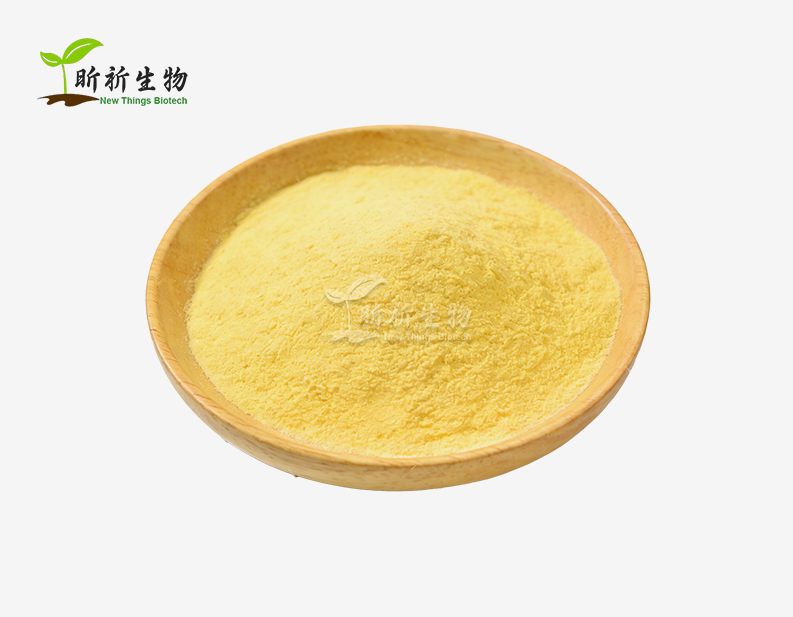
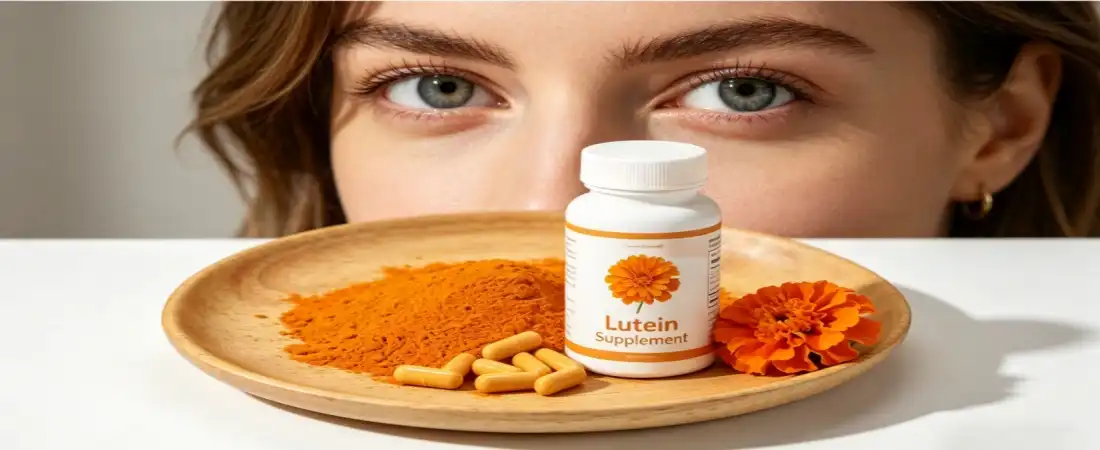
Tablets and capsules are still the most common way to give medicines because they are easy for people to understand and use. Hard capsules can hold both powder mixes and beadlet forms, and tablets made with direct compression grades are more efficient when making a lot of them. Because lutein dissolves easily in fat, softgels use this property to their advantage by mixing the carotene with carrier oils that make absorption better and allow for tightly sealed packing that keeps the product fresh for longer. Functional food uses represent the fastest-growing section. People who want to get nutrition in a fun way instead of taking pills like beverages, nutrition bars, and even baked goods that contain lutein. Some types of lutein can dissolve in cold water, which makes it possible to make clear drinks. Other types can survive high temperatures, like those used in baking, without breaking down much. The natural orange-yellow color makes the product look good, so formulators can use fewer or no manufactured colorants.
Emerging topical applications explore lutein's antioxidant properties in eye drops and skin care items for the sensitive skin around the eyes. Early studies show that lutein applied to the skin may lower inflammation and guard against environmental stressors, which opens up new areas of use beyond oral supplementation.
Market Growth Drivers and Trends
People all over the world are becoming more aware of digital eye strain, which has increased the demand for blue light protection goods. This is especially true among people of working age who are having problems like tired eyes and trouble sleeping. This change in the population means that the market is bigger than just the elderly people who are usually thought of as having age-related macular degeneration. This opens the door for lifestyle-focused branding and specific marketing efforts. Organic certification is becoming a premium positioning strategy as customers who care about the environment look more closely at the farming methods used to make supplements. Synthetic pesticides and fertilizers are not used in organic marigold farming, but returns are usually 15-20% lower than in conventional farming. This means that the cost of raw materials is higher, but some market groups are willing to pay it. Enhanced bioavailability technologies represent a competitive frontier. Liposomal coating, nano-emulsion systems, and phospholipid complexation are all said to be better at absorption than regular Lutein Powder Bulk. Different technologies have different levels of clinical proof, but the fact that they are used in high-end goods shows that customer standards are changing, which procurement teams should keep an eye on.
Building Brand Credibility Through Quality Sourcing
In the health supplement industry, where long-term success depends on customer trust, product recalls and quality problems hurt brand reputations more than they hurt other industries. A way to protect your brand is to choose providers who show they care about quality by trying products openly, communicating quickly, and sticking to regular delivery schedules. As part of our process, we offer free samples before customers commit to buying Lutein Powder Bulk. This way, customers can make sure the requirements are met through independent testing before placing large orders. With the shift toward value-chain openness, brands can tell sourcing stories that intelligent customers can relate to. By keeping track of the steps that go from marigold fields to processing plants and finally to finished products, marketing stories can be used to set basic vitamins apart from premium ones. For this level of openness to work, providers must be ready to share facility certifications, cultivation practices, and even standards for worker safety. This level of honesty sets industry leaders apart from commodity makers who only care about making money.
Conclusion
To find high-quality Lutein Powder Bulk, you need to find a balance between science knowledge, the ability to evaluate quality, and long-term source relationships that support business goals. More and more proof supports lutein's role in protecting eye health. This makes this carotenoid an important factor for brands that want to reach both older people and people who are always connected online. When purchasing professionals learn the technical details that set pharmaceutical-grade materials apart from regular powders, they gain a competitive edge through better product performance and regulatory compliance. For the global eye health market to continue to grow, it's important to work with providers who offer technical know-how, flexible minimums, and clear quality systems. This is because market demand is growing and uses are expanding beyond traditional supplements.
FAQ
1. What distinguishes natural lutein powder from synthetic alternatives?
Natural lutein taken from marigold flowers has the same carotenoid makeup as food sources. It also has small amounts of zeaxanthin and other co-nutrients that may help the body absorb it better. Even though synthetic lutein has the same molecular structure as natural lutein, it usually only appears as one pure molecule. When it comes to clean labels, consumers strongly prefer natural sources, even though both types have the same biological activity when properly made. Regulatory support varies around the world. For example, in some areas, synthetic carotenoids can't be used in food.
2. How can buyers verify lutein powder purity before purchase?
Ask for a Certificate of Analysis for each batch of production that shows the HPLC test results that show how much lutein is present. Reliable providers offer both internal testing and proof by a third-party laboratory. Customers can test free samples in their own quality control labs before placing large orders, which is something we normally recommend. Check the package for moisture barriers and see how long it says to be stored. If you store it correctly, lutein will keep its orange-yellow color without turning brown, which is a sign of oxidation.
3. What storage conditions maximize lutein powder shelf life?
Keep large containers in cool places (below 25°C) that are out of direct sunlight and away from wetness. Packaging that is filled with nitrogen keeps things stable for longer by reducing air contact. Once it's opened, put any leftovers in sealed containers and eat them within six months. Refrigeration adds extra safety for long-term keeping that lasts longer than a year, but handling things carefully when the temperature changes is important to avoid condensation.
Partner with NT Biotech for Premium Lutein Powder Bulk Supply
NT Biotech can help you create an eye health product by giving you pharmaceutical-grade Lutein Powder Bulk, along with full quality paperwork and quick service. As a reliable bulk lutein powder maker, we keep enough in stock to ship quickly, within two to four days of receiving payment proof. This way, there are no supply problems that delay product launches. Our marigold extract specifications cover 5-80% lutein concentrations in 80-mesh powder form. It is certified by ISO9001, Kosher, and Halal standards, which makes it easier for customers around the world to buy it. Beyond ingredient supply, we function as your technical partner throughout the whole creation process. You can try formulations with free samples before making a commercial commitment, and our team can help you figure out the best specifications for your purpose. Custom package options, such as 25-kilogram drums and private-label forms, help brands stand out. We provide the dependability that B2B clients need with our own extraction methods that produce products of the highest purity and reasonable prices that represent our efficient supply chain. Email our team at info@newthingsbiotech.com to get technical data sheets, discuss your specific requirements, or arrange sample shipments that demonstrate our commitment to excellence.
References
1. Age-Related Eye Disease Study 2 Research Group. (2013). Lutein + zeaxanthin and omega-3 fatty acids for age-related macular degeneration: the Age-Related Eye Disease Study 2 randomized clinical trial. JAMA, 309(19), 2005-2015.
2. Stringham, J.M., & Hammond, B.R. (2008). Macular pigment and visual performance under glare conditions. Optometry and Vision Science, 85(2), 82-88.
3. Loughman, J., Akkali, M.C., Beatty, S., et al. (2010). The relationship between macular pigment and visual performance. Vision Research, 50(13), 1249-1256.
4. Kijlstra, A., Tian, Y., Kelly, E.R., & Berendschot, T.T. (2012). Lutein: more than just a filter for blue light. Progress in Retinal and Eye Research, 31(4), 303-315.
5. Buscemi, S., Corleo, D., Di Pace, F., et al. (2018). The effect of lutein on eye and extra-eye health. Nutrients, 10(9), 1321.
6. Ranard, K.M., Jeon, S., Mohn, E.S., et al. (2017). Dietary guidance for lutein: consideration for intake recommendations is scientifically supported. European Journal of Nutrition, 56(Suppl 3), 37-42.