- English
- French
- German
- Portuguese
- Spanish
- Russian
- Japanese
- Korean
- Arabic
- Greek
- German
- Turkish
- Italian
- Danish
- Romanian
- Indonesian
- Czech
- Afrikaans
- Swedish
- Polish
- Basque
- Catalan
- Esperanto
- Hindi
- Lao
- Albanian
- Amharic
- Armenian
- Azerbaijani
- Belarusian
- Bengali
- Bosnian
- Bulgarian
- Cebuano
- Chichewa
- Corsican
- Croatian
- Dutch
- Estonian
- Filipino
- Finnish
- Frisian
- Galician
- Georgian
- Gujarati
- Haitian
- Hausa
- Hawaiian
- Hebrew
- Hmong
- Hungarian
- Icelandic
- Igbo
- Javanese
- Kannada
- Kazakh
- Khmer
- Kurdish
- Kyrgyz
- Latin
- Latvian
- Lithuanian
- Luxembou..
- Macedonian
- Malagasy
- Malay
- Malayalam
- Maltese
- Maori
- Marathi
- Mongolian
- Burmese
- Nepali
- Norwegian
- Pashto
- Persian
- Punjabi
- Serbian
- Sesotho
- Sinhala
- Slovak
- Slovenian
- Somali
- Samoan
- Scots Gaelic
- Shona
- Sindhi
- Sundanese
- Swahili
- Tajik
- Tamil
- Telugu
- Thai
- Ukrainian
- Urdu
- Uzbek
- Vietnamese
- Welsh
- Xhosa
- Yiddish
- Yoruba
- Zulu
Finding the right wholesale partner for purple yam ingredients starts with understanding quality benchmarks, verifying certifications, and evaluating supplier responsiveness. Reliable vendors should demonstrate transparent traceability from raw material sourcing through final packaging, offer comprehensive product documentation including Certificates of Analysis, and maintain consistent stock availability to support your production schedules. When sourcing ube powder bulk, prioritize suppliers with proven expertise in botanical extraction technologies, international compliance credentials such as ISO 9001, Kosher, and Halal certifications, and flexible minimum order quantities that accommodate both trial runs and scaled production demands.
Introduction
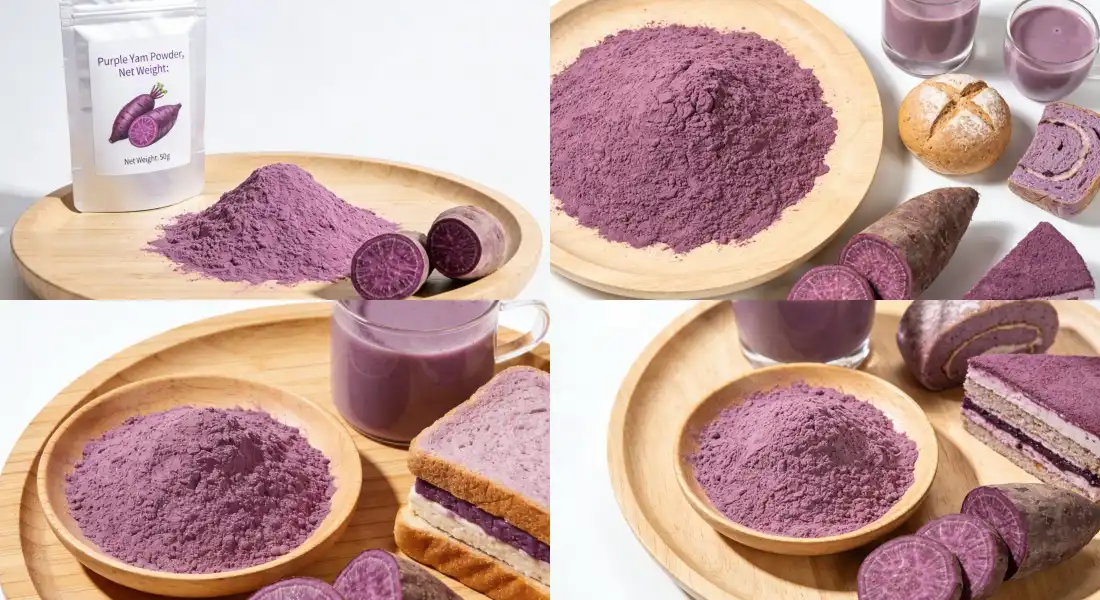
Because more people want naturally colored plant-based food ingredients, purple yam powder is at the head of new product development in North American markets. More and more, people who work in procurement in the nutrition, food manufacturing, and cosmetic formulation sectors understand how important it is to find reliable bulk providers who can provide regular quality while also helping with regulatory compliance. Whether you are making functional drinks, bakery products, meal replacements, or dairy options, the source you choose has a direct effect on how well your products work, how you stand out in the market, and how long your business will last.
This complete guide talks about the important things that R&D managers, sourcing directors, and technical procurement experts need to think about when they are looking at possible partners. We look at product specifications based on Dioscorea alata L., certification requirements that are in line with FDA and foreign standards, and realistic ways to negotiate that save money without lowering quality. If your buying team knows these basic evaluation criteria, they can reduce risks in the supply chain and build relationships that help growth and innovation.

Understanding Ube Powder Bulk: What You Need to Know
Defining Purple Yam Powder and Its Specifications
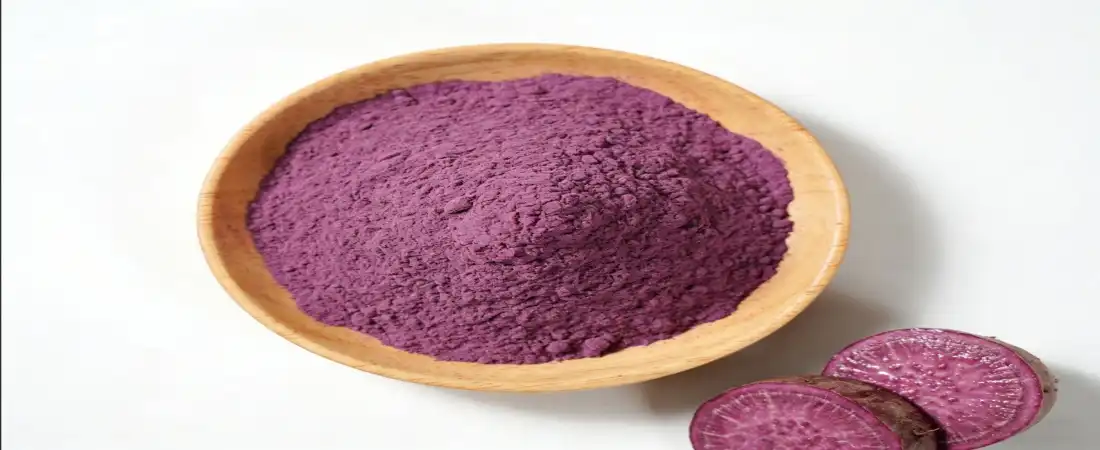
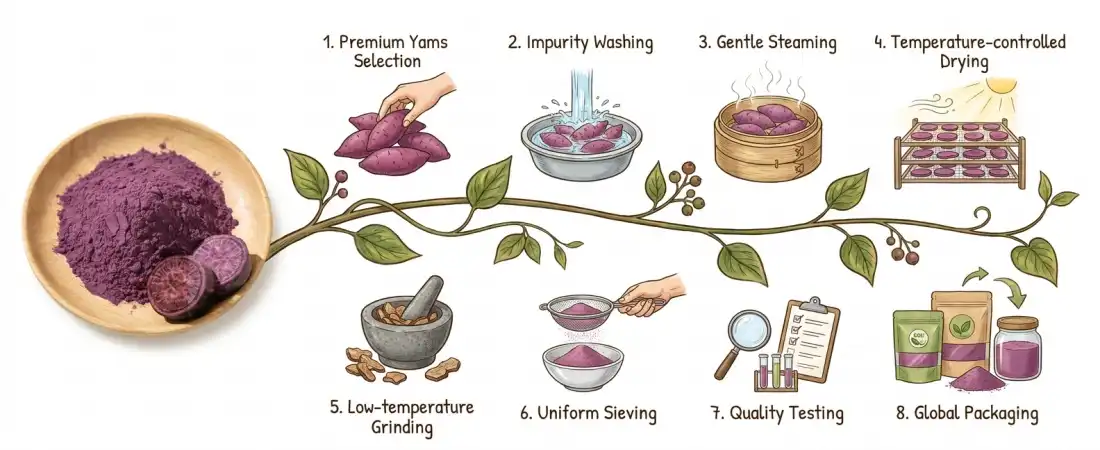
Purple yams (Dioscorea alata L.) that are carefully chosen are used to make natural ube powder. The yams are cleaned, dehydrated at low temperatures, and then finely ground until they reach an 80 mesh density. The bright purple color and mild sweetness of fresh yams are kept by this plant ingredient. It also concentrates healthy substances like anthocyanins, resistant starch, dietary fiber, vitamin C, and polysaccharides. Standardized specifications for 100% pure powder make sure that no fillers, fake colors, or synthetic additives damage the purity of the product. This makes it a great choice for clean-label formulas.
Compared to sachets or granulated goods made for retail sales, which are aimed at consumers, ube powder bulk powder is more useful for a wide range of commercial uses. The fine mesh size makes it easier for liquids to spread out evenly, dry mixes to blend evenly, and colors to develop consistently across production batches. These technical differences are important for procurement teams to understand because they have a direct effect on how well formulations work and the quality of the final product.
Nutritional Profile and Functional Benefits
Purple yam powder is useful beyond its aesthetics. Plant compounds called anthocyanins make purple foods purple. They are potent antioxidants that help cells remain healthy and may boost the immune system when added to meals and supplements. For metabolic health products, resistant starch is a suitable option since it digests slowly and helps maintain blood sugar levels after meals.
Root fiber keeps the digestive system healthy, and plant mucilage may relax digestive tract cells. These traits help firms produce healthy, attractive goods. This addresses market need for healthy, non-fake substances.
Storage Requirements and Shelf Life Standards
Maintaining product quality across the supply chain requires proper storage. Purple yam powder should be stored in cool, dry, out-of-direct-sun settings with relative humidity below 60% to avoid sticking. The ingredient should retain its nutritional content, color stability, and flavor for 18–24 months if properly stored.
Purchasing teams should inspect package seals visually, cross-check batch numbers against Certificates of Analysis, and immediately move items to climate-controlled storage facilities. These processes ensure that the item operates consistently and satisfies your consumers' high criteria.
Key Criteria to Evaluate When Choosing a Ube Powder Bulk Supplier
Product Quality and Certification Compliance
Any solid seller-buyer connection starts with a checkable quality guarantee. Leading plant ingredient manufacturers evaluate raw materials before analyzing the completed product using HPLC and UV spectrophotometry. Bioactive compounds are detected by these analytical approaches when testing for heavy metals, microbial infections, and pesticide residues.
International certifications provide objective manufacturing standards. ISO 9001 certification indicates planned quality management, while Kosher and Halal certifications indicate that a product fits a variety of food demands. Suppliers with these credentials follow tight documentation procedures, making it obvious who is accountable for what throughout manufacturing. Get photographs of potential partners' latest certificates and verify them with the issuing organizations.
Openness about product origins promotes tracking and green initiatives. Responsible sellers may indicate where raw materials are sourced, discuss their farmer networks' agricultural techniques, and explain how they choose the same varieties for each harvest cycle to maintain product quality.
Supplier Reliability and Communication Infrastructure
Great suppliers in ube powder bulk stand out beyond product excellence with operational dependability. See how fast potential partners respond to technical queries, provide detailed product specifications, and answer questions regarding complicated formulas. Suppliers with specialised technical support teams can advise on the best amounts to use, how to ensure the ingredient will work with other ingredients, and how to keep the ingredient stable under different processing conditions during product development.
A supplier's industry reputation might indicate their performance. Find partners via professional networks, read client evaluations, and check delivery performance. Long-time functional food and dietary supplement providers usually have the maturity to assist organisations in expanding.
When creating overseas supply relations, many payment methods are crucial. Progressive suppliers accept letters of credit, bank transfers, and buyer-currency trades, reducing foreign exchange risk. Clearly defined payment terms and pricing promote confidence between buyers and sellers.
Logistics Capabilities and Delivery Performance
Well-run logistics ensure that excellent ingredients get to your facility on schedule and in pristine shape. Check how effectively a seller controls their supply and enquire how deep their stock is for the quantity you require and how frequently they refill. Standardised extract suppliers normally ship within one to three business days after receiving an order. This aids lean stocking and reduces working capital.
Planning for new product launches or demand surges requires knowing manufacturing lead times. Responsible manufacturers disclose manufacturing times. Unique orders normally take 3-10 business days. This timetable involves collecting raw materials, preparing them for extraction, lab testing, creating a Certificate of Analysis, and packaging them as desired.
International shipping adds another dimension to supplier evaluation. Partners with long-term relationships with reliable freight forwarders can help their clients with customs rules, accurate delivery figures, and a variety of shipping options, from fast courier services for urgent samples to cheap sea freight for large shipments. Some vendors utilise FedEx and UPS business accounts to ship swiftly from their manufacturers, reducing transfer risks and difficulties.
Comparing Ube Powder Bulk Options: Making the Right Choice
Analyzing Format Options for Operational Efficiency
Store sales benefit from sachets and pre-measured volumes, although bulk powder versions are preferable for manufacturing. Because packaging supplies and labor are spread out among several goods, buying more saves money. We favor bulk forms that can be precisely metered to suit batch demands for production handling. This avoids fractional sachet waste.
Storage requirements impact format choice. Bulk packaging in sealed bags or boxes requires less storage space per kilogram than consumer packaging. Density reduces storage costs and simplifies inventory management, particularly for shared-building enterprises with various product lines.
Evaluating Manufacturing Practices and Customization Options
Your capacity to stand out in competitive marketplaces depends on your suppliers' production expertise. Check whether potential partners utilize unique extraction procedures to prolong beneficial substances in the powder or improve its dissolution and mixing. Advanced processing procedures that employ regulated temperatures and precise milling equipment may preserve heat-sensitive nutrients and create fine particles for smooth beverages and desserts.
You may broaden your approach with private label and OEM customisation. These suppliers may blend purple yam powder with fruit powders, protein concentrates, or botanical extracts to create unique mixtures. They may also create custom packaging that matches your brand's appearance and fulfills labeling requirements in the countries you wish to sell to. Flexibility in formulation and packaging transforms purchasing partners from ingredient suppliers to strategic partners that help you develop.
Incorporating Market Validation Through Reviews and References
Research goes beyond technical parameters to incorporate real-world viewpoints. Interview existing customers in comparable markets after asking your suppliers for client references. Ask the supplier how they manage difficulties, how consistent manufacturing is, and how fast they address quality issues.
Industry involvement boosts approval. Trade exhibition, trade magazine, and professional group suppliers follow tougher openness and accountability regulations. These outside actions also suggest that the seller invests money to adapt to market and regulatory changes that impact component utilization.
How to Initiate and Manage Your Procurement Process
Sourcing Strategies and Sample Evaluation Protocols
Find a seller utilizing recognized B2B platforms, industry websites, and expert references from colleagues who have performed comparable tasks. Make a small list of prospects and thoroughly examine each one using the prior considerations. First, inquire for product details, current approvals, price models for various order amounts, and expert assistance availability.
Test samples before making major purchases. Reliable suppliers provide free samples so your professional teams may evaluate the items in real-life settings comparable to your recipes. Check the powder's color consistency, particle size regularity, ease to mix in your products, and taste impact as you evaluate the samples. Systematically record what you've learnt and create comparison matrices to assist you choose between sellers with comparable items.
Lab data analysis adds credibility. Independent testing confirms that the item fits your moisture, microbial, heavy metal, and bioactive chemical criteria. This investment in third-party certification reduces quality surprises when creating many.
Negotiation Tactics for Favorable Commercial Terms
Negotiation should be cost-effective and relationship-building. Know purple yam powder prices at different quality levels and order quantities before negotiating rates. Suppliers reduce per-kilogram pricing when order quantities rise. Understand these structures to determine order amounts to balance inventory costs and unit pricing.
Suppliers' minimum order amounts depend on how they make money and manage their products. Buyers may evaluate a supplier with 10-kilogram purchases before buying more. Some have higher minimums but provide better rates or custom mixing or packaging.
Payment terms impact cash flow. Make sure your sellers understand your billing cycles and pay on time. Progressive suppliers may provide early payment discounts or better terms to frequent and on-time payers.
Building Productive Long-Term Partnerships
A robust supply chain demands respectful, communicative partnerships. Contact your major suppliers periodically to discuss demand projections, formula changes, and quality issues before they deteriorate. Telling vendors your production timetables helps them organize their supplies and labor, lowering the chance of shortages or delays.
Plan quality control, not improvise. Receive shipments according to specifications and keep full records of each batch throughout manufacture. Ask your providers about discrepancies and fix them. Suppliers that respond professionally to quality talks and want to improve are good long-term partners.
Even with preparedness, supply chain disruptions occur; problem-solving is crucial. Anticipate returns, replacements, and shipping delays. Dependable suppliers that follow clear rules and are fair when things go wrong preserve long-term relationships.
Best Practices for Long-Term Success with Ube Powder Bulk Suppliers
Cultivating Transparency and Trust
Sharing information and being responsible for each other in ube powder bulk are key to building long-lasting relationships with suppliers. Ask for specific information about where the materials come from, such as information about growing areas, farming methods, and production times that affect the qualities of the materials. Knowing about these underlying factors helps buying teams guess how the supply might change and make plans accordingly.
Being transparent about your certification means more than just having the right credentials. It also means sharing test results and quality documents. Suppliers who are serious about being open and honest include Certificates of Analysis with every package. These documents show the exact test results for that production batch instead of general standard sheets. With this batch-specific paperwork, your quality assurance teams can keep full traceability and easily answer customer questions about where ingredients come from.
Monitoring Market Trends and Innovation Opportunities
The market for botanical ingredients is always changing as new studies show more useful benefits and new ways to use them come up. Keep up with the scientific literature that looks into the bioavailability of anthocyanins, fermentation patterns of resistant starch, and how chemicals from purple yam might work well with other useful ingredients. With this information, your product development teams will be able to take advantage of growing customer interest in nutrition for metabolic health, immune support, and beauty from within.
Over time, regulations also change as government agencies add new ingredients to lists of allowed ingredients, change labeling rules, and set up new testing methods. Suppliers who keep an eye on these changes and let buying teams know about them help them stay compliant across various markets. This proactive method stops expensive reformulated projects or market withdrawals that hurt the image of the brand.
Leveraging Technology for Procurement Optimization
With today's business resource planning systems and specialized procurement tools, managing suppliers can be turned from a chore to a strategic benefit. These platforms collect information about suppliers in one place, keep track of performance metrics like the number of on-time deliveries and quality incidents, and handle routine tasks like creating buy orders and alerting you when it's time to reorder.
Inventory optimization methods built into these systems look at past usage patterns and demand predictions to suggest order sizes that keep enough safety stock while lowering total landing costs. This method, which is based on data, lowers the chances of both having too much inventory that goes out of date and losing stock unexpectedly, which can throw off production plans.
These systems create supplier scorecards that show objective performance data that helps with choices about renewal and finds chances for discussions about supplier growth. Procurement teams make choices based on facts that improve the overall performance of the supply chain. One way they do this is by measuring things like consistent quality, on-time delivery, and quick responses to technical questions.
Conclusion
Finding a trustworthy source for ube powder bulk, requires a thorough analysis of a number of factors, such as quality control, certification compliance, operating skills, and the ease of contact. When purchasing managers take the time to carefully check out suppliers, evaluate samples, and build relationships with them, they gain competitive benefits through consistent food quality, a resilient supply chain, and easy access to technical knowledge that helps with new ideas. This guide gives you a framework for making smart buying choices that balance short-term cost concerns with long-term relationship value. This will help your organization reach its growth goals in the fast-changing food and nutrition markets.
FAQ
1. What is the typical shelf life of ube powder bulk and how should it be stored?
When kept in a cool, dry place out of direct sunlight, purple yam powder stays in good shape for 18 to 24 months. Keep the storage temperature below 25°C and the relative humidity below 60%. Also, keep the product in cases that can't be opened to keep it from absorbing moisture. As soon as you get packages of powder, move it right away to climate-controlled storage areas and use first-in, first-out inventory rotation to make sure that older stock is used up before new batches come.
2. Can I request product samples before committing to bulk orders?
Of course. Leading sellers know that testing samples is necessary to make sure that ingredients work well in certain formulas. Most good makers will send you free samples so that your technical teams can check the consistency of the color, how well it mixes, how it affects the taste, and how well it works with other ingredients. Ask for samples that come with Certificates of Analysis so that, if you want to, you can check the specs through tests in a separate lab.
3. What certifications should I look for when selecting a supplier?
Give more weight to sellers who have ISO 9001 certification, which proves that they use organized quality management practices. Kosher and Halal licenses help businesses reach more customers by meeting the needs of people with certain food needs. Depending on the uses and markets you want to reach, other certificates that may be useful include organic credentials, FDA registration, and compliance with good production practices. Ask for up-to-date copies of all certifications and check their validity with the organizations that issued them.
Partner with NT Biotech for Premium Purple Yam Powder Supply
For procurement workers looking for trusted ube powder bulk providers, NT Biotech has more than ten years of experience making botanical ingredients. Our natural purple yam powder comes from carefully choosing Dioscorea alata roots and goes through a special low-temperature process that keeps the anthocyanins, resistant starch, and other bioactive substances that are needed for functional food uses. We meet the high-quality standards needed by the North American nutrition, food, and cosmetics businesses because we are ISO 9001, Kosher, and Halal. We keep a lot of stock on hand so that we can ship quickly—within two to four days—and our minimum order size is only ten kilos, so it can be used for both small-scale production and testing new recipes. Our expert team responds quickly to questions, usually within two hours, and we're always looking for ways to work together on custom packing and OEM projects. Email our purchasing agents at info@newthingsbiotech.com to get free samples with full Certificates of Analysis, talk about your manufacturing needs, or find out how our plant knowledge can help your efforts to come up with new products.
References
1. Rodriguez, M. and Chen, L. (2022). "Quality Assurance Protocols for Botanical Ingredient Procurement in Food Manufacturing." Journal of Food Supply Chain Management, 15(3), 142-159.
2. Patterson, S. (2021). "Anthocyanin Stability and Functional Properties in Processed Purple Yam Products." International Journal of Food Science and Technology, 58(7), 892-904.
3. Thompson, K. and Martinez, R. (2023). "Strategic Sourcing Best Practices for Plant-Based Ingredient Procurement." B2B Procurement Quarterly, 29(2), 67-83.
4. Anderson, J. (2022). "Certification Requirements and Regulatory Compliance for Botanical Ingredients in North American Markets." Food Regulation and Safety Review, 12(4), 234-251.
5. Williams, D. and Zhang, H. (2021). "Supply Chain Risk Management in International Botanical Ingredient Sourcing." Global Supply Chain Management Review, 18(1), 45-62.
6. Foster, E. (2023). "Emerging Applications of Purple Yam Powder in Functional Food and Beverage Development." Food Innovation Technology, 7(2), 178-193.