- English
- French
- German
- Portuguese
- Spanish
- Russian
- Japanese
- Korean
- Arabic
- Greek
- German
- Turkish
- Italian
- Danish
- Romanian
- Indonesian
- Czech
- Afrikaans
- Swedish
- Polish
- Basque
- Catalan
- Esperanto
- Hindi
- Lao
- Albanian
- Amharic
- Armenian
- Azerbaijani
- Belarusian
- Bengali
- Bosnian
- Bulgarian
- Cebuano
- Chichewa
- Corsican
- Croatian
- Dutch
- Estonian
- Filipino
- Finnish
- Frisian
- Galician
- Georgian
- Gujarati
- Haitian
- Hausa
- Hawaiian
- Hebrew
- Hmong
- Hungarian
- Icelandic
- Igbo
- Javanese
- Kannada
- Kazakh
- Khmer
- Kurdish
- Kyrgyz
- Latin
- Latvian
- Lithuanian
- Luxembou..
- Macedonian
- Malagasy
- Malay
- Malayalam
- Maltese
- Maori
- Marathi
- Mongolian
- Burmese
- Nepali
- Norwegian
- Pashto
- Persian
- Punjabi
- Serbian
- Sesotho
- Sinhala
- Slovak
- Slovenian
- Somali
- Samoan
- Scots Gaelic
- Shona
- Sindhi
- Sundanese
- Swahili
- Tajik
- Tamil
- Telugu
- Thai
- Ukrainian
- Urdu
- Uzbek
- Vietnamese
- Welsh
- Xhosa
- Yiddish
- Yoruba
- Zulu
Ube yam powder is obtained from the root of Dioscorea alata L., a yam species which is renowned for its purple colour, high starch content, and application in both traditional and contemporary culinary items. It’s not only the “superfood” designation that makes it attractive to B2B producers. It may be used to provide natural colour, a unique yam character and a plant-based raw material choice for drinks, bread items, desserts and some functional nutrition formulations. But its real performance relies on the kind of yam, processing, specification and final product formula.
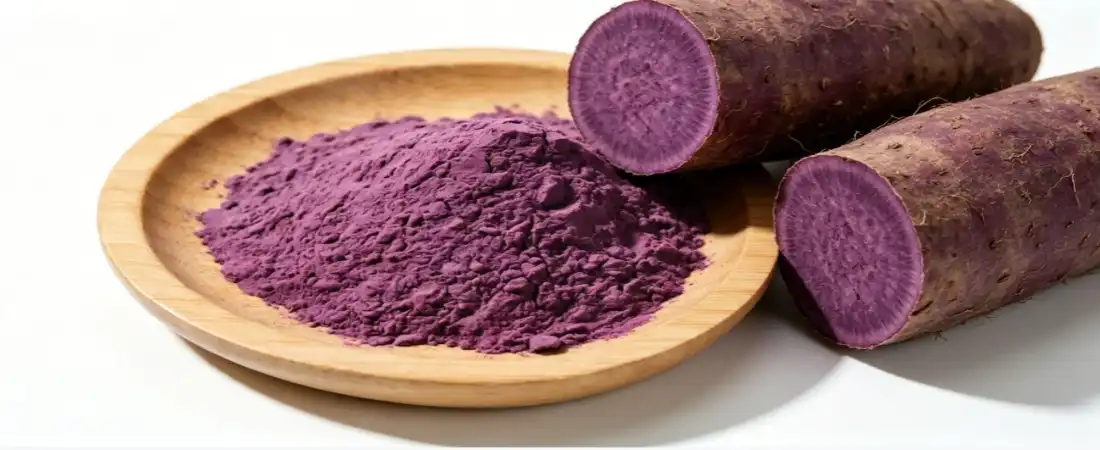
Understanding Ube Yam Powder: Nutritional Powerhouse of the Purple Root
What Makes Purple Yam Different from Common Alternatives
Ube yam powder is from Dioscorea alata L., popularly known as larger yam or purple yam. Note this is not the same as purple sweet potato powder of Ipomea batatas. These are diverse species and have varied starch, pigment and phytochemical profiles.”
The carbohydrates, starch, fibre, proteins, minerals and secondary metabolites of Dioscorea alata have been studied. The content may also differ across cultivars, which is crucial for designing a reproducible commercial formulation.
Therefore, for procurement teams, the specification should contain the botanical name and plant part instead of depending only on phrases such as “purple yam” or “ube.”
Core Nutritional Profile and Bioactive Components
The major nutritional value of purple yam lies from its starch and carbohydrate content, as well as its fibre, protein, minerals and other naturally occurring chemicals. Some purple-fleshed cultivars may also contain anthocyanins that give them their unique colour.
Studies have been conducted on digestibility and resistant starch of purple yam. One research showed that substituting wheat flour with purple yam flour, partially, altered the in vitro starch digestibility of bread. This is good formulation research, but should not be put forth as evidence of a blood-glucose advantage in people.
Similarly, purple-yam resistant starch interaction with Bifidobacterium adolescentis has been studied in laboratory studies. As this study was done in vitro, it is maybe best seen as an area of scientific interest than a direct human health claim.
The practical starting point for purple yam advantages is its composition: starch and carbohydrate energy, dietary fibre, protein, minerals and anthocyanins in specific cultivars. Note that these are ingredient-level properties, not finished-product health claims, thus any benefit statement has to be linked to the measured batch, not some general “superfood” label.
Clean Label Advantages for Product Development
Ube yam powder might be appealing to product manufacturers when a composition requires a recognisable plant-derived ingredient and natural purple look. “Clean label” nevertheless is a marketing word, not a uniform regulatory designation.
The whole supply chain, processing environment, local rules and the particular certification of the completed product determine the claims on the finished product, e.g. gluten free, organic, allergy.
NT Biotech's Ube Yam Powder is 100% pure and is ISO, Kosher and Halal certified. Custom packaging is available. These facts may be utilised as part of a supplier assessment. Finished-product claims should still be confirmed individually.
The 7 Virtues of Ube Yam Powder: Unlocking its Unique Benefits
Rather of interpreting these seven elements as medicinal advantages, they are more beneficial as formulation and procurement qualities.
Virtue 1: Natural purple colour – Purple-fleshed Dioscorea alata includes naturally occurring pigments including anthocyanins in relevant cultivars . Thus, it allows the food and beverage makers an opportunity to create different visual features for their products without the exclusive reliance on synthetic colourants.
Virtue 2: Starch Based Functionality – Yam is naturally rich in starch... Processing may change the structure and digestibility of starch, and producers should test the final formulation instead of assuming that all powders will behave the same.
Virtue 3: Plant-based ingredient profile – The substance is a root vegetable and may be used into formulations based on familiar plant ingredients. It contains carbs, fibre and other naturally occurring components.
Virtue 4: Research Potential Purple yam has been researched for starch digestibility, resistant starch, phytochemicals and processing properties. These studies are important guides for R&D, but lab results should not immediately be translated into consumer health claims.
Virtue 5: Multi-category application versatility—Ube yam powder may be considered for drinks, bread items, desserts, cereal-based meals and other formulations where the colour and root-derived character match the product idea.
Virtue 6: Specification Flexibility – Commercial performance is very specification driven. Whether it’s mesh size, purity, packaging or processing. A detailed specification makes it easy for R&D teams to compare samples and recreate a formulation.”
Virtue 7: Strong Product Story — Ube and purple yam have a recognizable visual identity and food-cultural association. That may help companies express a product narrative without making unfounded claims regarding illness prevention or treatment.
The seven characteristics explain why purple yam is good for formulators. Natural colour, starch functionality, plant-based profile, research support, application adaptability, specification flexibility and great product narrative. Each virtue underpins development work, but none should be claimed as a 'medicinal' or therapeutic effect.
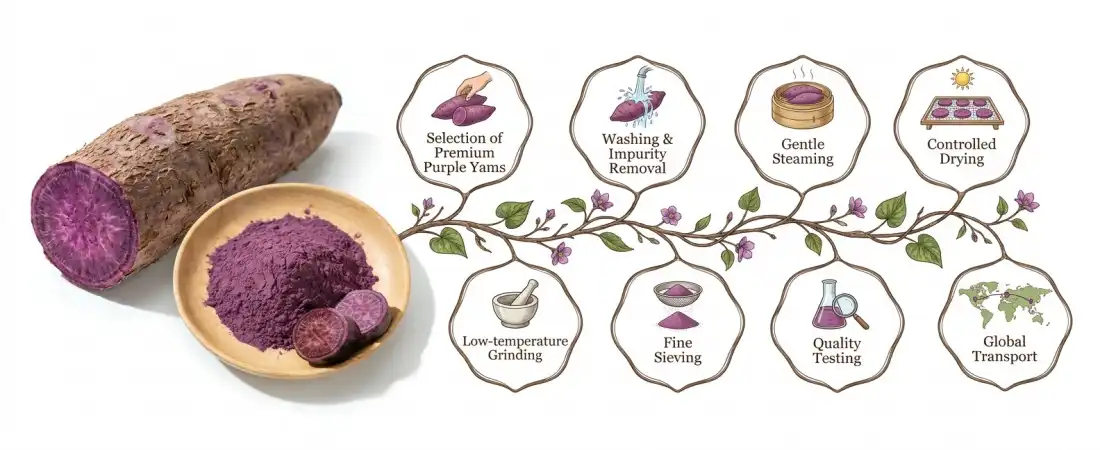
How to Use Ube Yam Powder in B2B Applications: From Food Products to Supplements
Beverage Formulation Applications
Ube yam powder may be used in smoothies, shakes, powdered drink mixes and other drinks that need a purple look and plant-based ingredient profile.
Particle size is significant since the dispersion will influence the ultimate drinking experience. NT Biotech also specifies an 80-mesh standard for their Ube Yam Powder, providing formulators with a clear starting point for laboratory testing. But the actual dispersion, sedimentation, viscosity and flavour should still be checked in the completed beverage since these attributes rely on the whole recipe.
Bakery and Confectionery Integration
Purple yam powder is used in cakes, muffins, cookies, fillings, ice cream and other dessert applications. Its starch content and natural colour might affect look and texture.
There is no standard adding rate for all baking formulas. R&D teams should do short formulation experiments and analyse colour, moisture, texture, flavour, baking performance and finished-product stability, rather than relying on an unsupported set proportion.
The replacement of purple yam flour in wheat bread affects starch digestibility, which has been shown by research, and therefore it is necessary to evaluate the ingredient ratio and processing conditions simultaneously.
Dietary Supplement and Nutraceutical Uses
Ube yam powder may also be used into powdered nutrition mixes and other food format items where a whole root ingredient is suitable.
However, it must not be automatically qualified as a concentrated vitamin ingredient or a medicinal supplement. Powder and extract are separate product categories. Where a formulation needs a standardised active chemical, purchasers should provide the appropriate specification and analytical data (rather than just assuming that regular yam powder would have a set amount of active).
Storage and Handling for Supply Chain Integrity
Powdered plant ingredients should be kept free of moisture, contamination, and inappropriate storage conditions. Buyers should not use a single temperature or humidity figure for all suppliers, but should use the storage conditions mentioned on the product specification and packing paperwork.
Packaging is important too. NT Biotech Ube Yam Powder is available in 1kg/bag, 10kg/box or bespoke packaging. Buyers may therefore negotiate the requirements of packaging according to manufacturing size and handling demands.
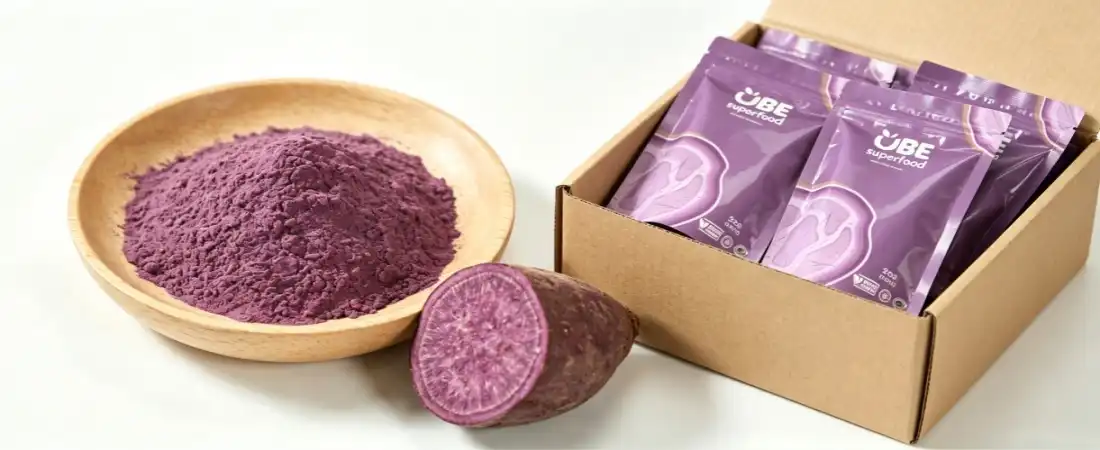
Comparing Ube Yam Powder with Other Yam Products and Alternatives
Purple Yam versus Purple Sweet Potato Powder
The first thing to look for is the botanical differentiation. Ube yam is a kind of Dioscorea alata while purple sweet potato is a type of Ipomea batatas. Just because they both generate a purple colour doesn’t mean they should be viewed as interchangeable substances.
They may vary in starch properties, phytochemical content, flavour, texture and behaviour in processing. Dioscorea alata research indicates also large differences across cultivars and hence the botanical identification and product specification should be explicitly indicated in purchase agreements.
Organic versus Conventional Sourcing Considerations
The choice of organic vs. conventional sources should be driven by the needs of the final product and the market it is intended for. Just because the basic material is from a plant doesn’t automatically mean you can make an organic claim.
Buyers should examine the current certification of the provider, scope, product specification and chain-of-custody criteria before to making an organic claim. For traditional goods, selection criteria such as botanical identification, purity, mesh size, appearance, packaging and consistency may be more essential.
Supplier Evaluation Criteria for Procurement Teams
A practical supplier review should begin with product identity and specifications. Key questions include:
- Is the botanical name clearly stated?
- Which plant part is used?
- What mesh size and purity are offered?
- What certifications are available?
- What packaging formats are available?
- Is a sample available before bulk purchasing?
- Can the supplier provide the documentation required for the intended market?
NT Biotech currently lists Dioscorea alata L., root, 80 mesh, 100% pure, ISO/Kosher/Halal certification, a 10 kg MOQ, free samples, and customized packaging for its Ube Yam Powder.
Procurement Insights for Ube Yam Powder: Sourcing, Pricing & Trusted Suppliers
Identifying Quality Suppliers in Global Markets
A good sourcing method should differentiate between a broad plant-ingredient provider and a supplier with a specification that really fits the formulation.
Buyers may compare bulk order information such as botanical identification, appearance, mesh size, purity, certification, packaging, sample performance and accessible documentation. Sample testing is particularly important for compounds that might vary widely with cultivar.
NT Biotech is a company with more than 10 years of expertise in plant-based products. Ube Yam Powder is an in-stock product.
Price Dynamics and Negotiation Strategies
The price of ube yam powder will depend on the sourcing of the raw material, processing, specification, packaging, order quantity and market circumstances. Thus we should not presume a market price to be set.
Comparing bids on identical specification is more beneficial for B2B buying. Once the sample and technical specifications are confirmed, buyers may request the price depending on the quantity and packaging they desire. A sample-first strategy also lowers the chance of comparing items that have identical names but differing specifications.
Logistics and Lead Time Optimization
Logistics planning should start with the supplier's real stock status, order amount, packaging, destination and shipment mode.
The product is in stock and available for delivery within 2-4 days following payment at NT Biotech. It also has package customisation and many delivery alternatives. Actual international transit time will depend on the destination and logistics arrangement, thus it should be verified for each order as opposed to a universal lead time.
Conclusion
Ube yam powder: its natural purple colour, starch-based functionality, plant origin and vast range of food-application possibilities. Research on Dioscorea alata sustains interest in its nutritional content, phytochemicals, starch properties and processed-food uses, but also shows why product claims should stay matched with the quality of the current data.
For B2B buyers the most practical method is to concentrate on botanical identification, processing, standards, certification, sample performance, packaging and supply needs. These characteristics give a more substantive foundation for product development than general “superfood” promises.
The purple yam advantages are best assessed by specification and samples, not marketing rhetoric, as it pertains to procurement teams. Only when botanical identification, mesh size, purity and certification are validated against the planned formulation does the genuine contribution of the ingredient become evident and justified.
FAQ
1. What certifications should I prioritize when sourcing purple yam powder?
The right certifications will depend on the target market and the finished-product criteria. Buyers may verify that the paperwork is relevant for the particular product and the current scope of production and check if the supplier has certifications such as ISO, Kosher or Halal.
2. How does purple yam powder differ from regular yam flour?
The word ‘yam flour’ by itself is not sufficient for comparison since it may refer to various yam species and processing processes. Consumers should verify the botanical name, plant part, technique of processing, mesh size, purity, colour and intended use. The botanical source of Ube yam powder is Dioscorea alata L. and plant portion is root as identified by NT Biotech.
3. Can purple yam powder support gluten-free product formulations?
Purple yam is a naturally gluten-free plant ingredient, however, the final claim is subject to processing, handling, cross-contact restrictions, and the regulatory requirements of the target market. Buyers should check the supplier’s paperwork and circumstances of the completed product production location prior to making a gluten-free claim.
Partner with a Trusted Ube Yam Powder Supplier
NT Biotech supplies plant-based ingredients and lists its Ube Yam Powder as Dioscorea alata L. root powder with an 80-mesh specification, 100% purity, ISO/Kosher/Halal certifications, customized packaging, a 10 kg MOQ, free samples, and in-stock availability. The company states that it has more than ten years of experience in plant-based ingredients.
If you are evaluating Ube yam powder for beverages, bakery products, desserts, nutrition blends, or other food applications, you can contact NT Biotech to discuss the required specification, sample, packaging, and order quantity.
Email: info@newthingsbiotech.com.
References
1. "Nutritional Composition and Bioactive Compounds of Dioscorea alata: A Comprehensive Review," Journal of Food Science and Technology, Vol. 58, 2021, pp. 1247-1259.
2. Thompson, L.R., "Anthocyanins in Purple Yam: Stability, Functionality and Applications in Food Systems," Food Chemistry, Vol. 342, 2021, pp. 128-137.
3. Rodriguez, M.P., "Resistant Starch in Tropical Root Crops: Implications for Blood Glucose Management," Nutrition Reviews, Vol. 79, Issue 6, 2021, pp. 634-648.
4. "Quality Standards and Specifications for Botanical Ingredients in B2B Procurement," International Journal of Food Ingredients, Vol. 15, 2022, pp. 89-103.
5. Chen, W.J., "Processing Technologies for Preserving Bioactive Compounds in Yam-Based Functional Ingredients," Food Processing and Preservation, Vol. 46, 2022, pp. 421-435.
6. "Supply Chain Management and Quality Assurance in Plant-Based Ingredient Sourcing," Food Manufacturing Quarterly, Vol. 28, Issue 3, 2023, pp. 112-126.