- English
- French
- German
- Portuguese
- Spanish
- Russian
- Japanese
- Korean
- Arabic
- Greek
- German
- Turkish
- Italian
- Danish
- Romanian
- Indonesian
- Czech
- Afrikaans
- Swedish
- Polish
- Basque
- Catalan
- Esperanto
- Hindi
- Lao
- Albanian
- Amharic
- Armenian
- Azerbaijani
- Belarusian
- Bengali
- Bosnian
- Bulgarian
- Cebuano
- Chichewa
- Corsican
- Croatian
- Dutch
- Estonian
- Filipino
- Finnish
- Frisian
- Galician
- Georgian
- Gujarati
- Haitian
- Hausa
- Hawaiian
- Hebrew
- Hmong
- Hungarian
- Icelandic
- Igbo
- Javanese
- Kannada
- Kazakh
- Khmer
- Kurdish
- Kyrgyz
- Latin
- Latvian
- Lithuanian
- Luxembou..
- Macedonian
- Malagasy
- Malay
- Malayalam
- Maltese
- Maori
- Marathi
- Mongolian
- Burmese
- Nepali
- Norwegian
- Pashto
- Persian
- Punjabi
- Serbian
- Sesotho
- Sinhala
- Slovak
- Slovenian
- Somali
- Samoan
- Scots Gaelic
- Shona
- Sindhi
- Sundanese
- Swahili
- Tajik
- Tamil
- Telugu
- Thai
- Ukrainian
- Urdu
- Uzbek
- Vietnamese
- Welsh
- Xhosa
- Yiddish
- Yoruba
- Zulu
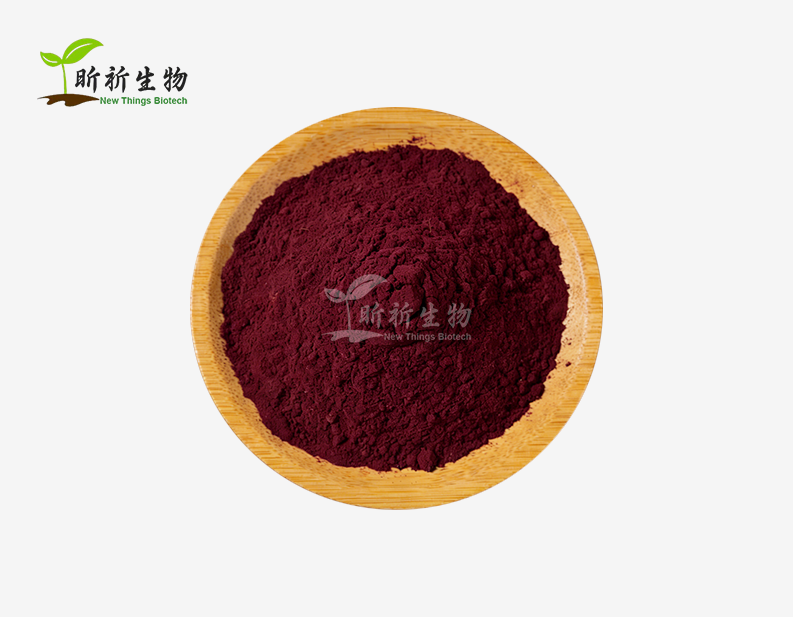
Ube Yam Powder is a plant-based substance manufactured from the root of Dioscorea alata L, a purple yam or ube. It is a powdered root ingredient, not a concentrated botanical extract, that may provide natural purple colour, a distinctive yam flavour, starch and dietary fibre to food and beverage products. Studies on Dioscorea alata have also looked at its anthocyanins, resistant starch and other phytochemicals. However, their amounts and functional qualities might differ depending on cultivar and processing.
The usefulness of ube to manufacturers is not just in its look. It may be used in bread items, drinks, desserts, breakfast meals and functional food ideas. But from a B2B angle, botanical identification, purity, particle size, processing, certifications and supply circumstances are just as significant as the colour of the substance.
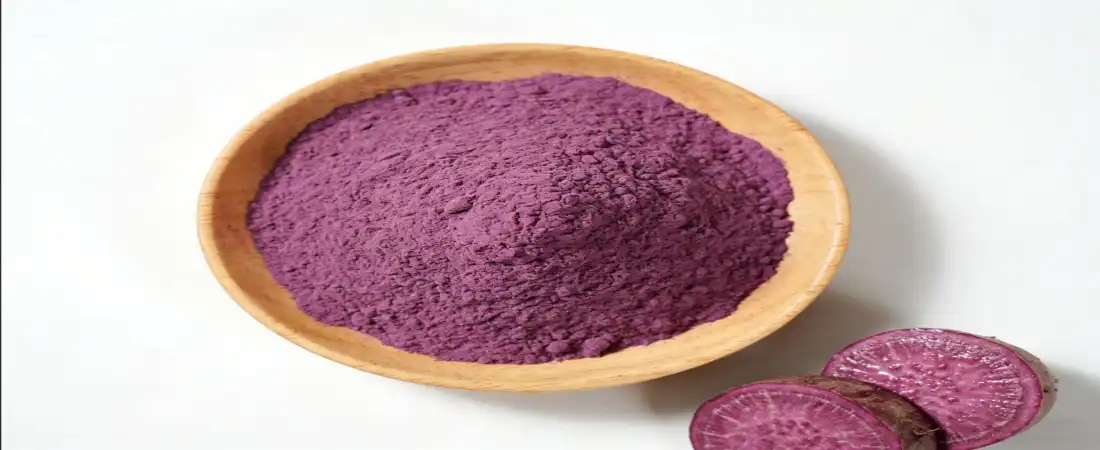
What is Ube Yam Powder and Its Nutritional Benefits?
Origin and Processing Methodology
Ube yam powder is made from a kind of yam called Dioscorea alata L. that is grown in tropical and subtropical areas. Greater yam has been one of the important food crops for long and is used in a broad variety of traditional and processed dishes. Chemical composition varies across cultivars, and so published nutritional profiles should not be immediately taken as the standard of every commercial powder.
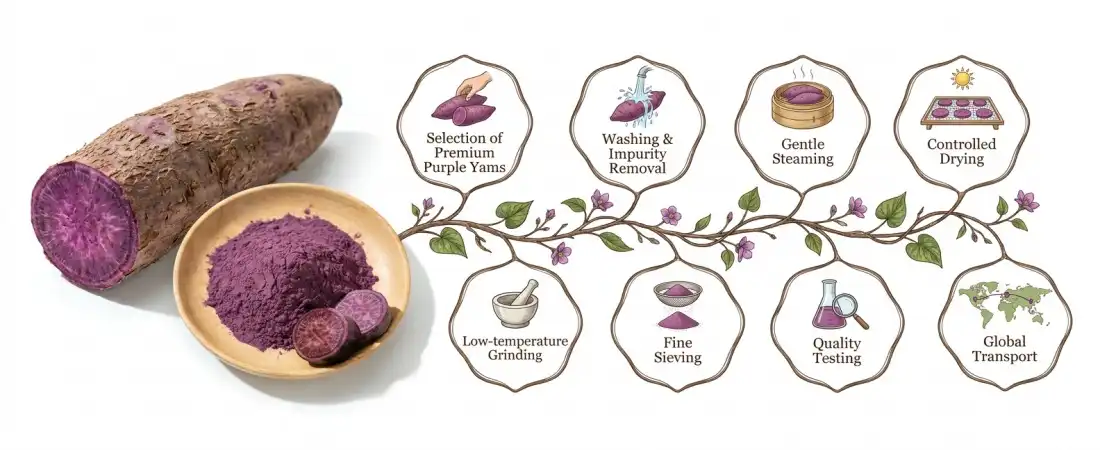
NT Biotech’s product literature says its ube yam powder is made from the root of purple yam. The standard mentioned is 100% pure, 80 mesh particle size, purple in colour. The declared manufacturing process is: raw material selection, cleaning, steam cooking, low-temperature dehydration, grinding and sieving, metal detection, quality inspection and packing.
Manufacturers are interested in this procedure because the particle size and processing conditions may affect how a powder behaves when mixed and processed further. Buyers should still test applications for a new formulation rather than assume that one powder will perform the same in every recipe.
Nutritional Profile and Health Properties
Purple yam (Dioscorea alata L.) is abundant in starch and carbs, as well as dietary fibre and other naturally occurring plant substances. Resistant starch has been particularly of study interest since it has a different digesting behaviour than quick digested starch.
Studies on the resistant starch of purple yam have mainly focused on its structure and in vitro digestibility. Study on the digestibility and structural features of resistant starch produced from Dioscorea alata under different processing conditions. Another research examined its possible prebiotic benefits in Bifidobacterium adolescentis in vitro. These results are beneficial for ingredient research but should not be claimed to be evidence of a particular therapeutic benefit of regular ube powder in people.
Purple yam also contains anthocyanins and other phytochemicals. Their content and composition varies with cultivar and stage of growth. Manufacturers making nutrition or antioxidant-related claims should thus employ product-specific analytical data and conform with the standards of their intended market.
Simply said, the nutrition of ube yam is a description of composition, not a label set in time. The powder provides starch and carbs, nutritional fibre, resistant starch and anthocyanins, however the quantities of these differ across cultivar and processing. Therefore, formulators should use batch-specific data, not a general number, for any nutrition statement.
Quality Considerations for Industrial Applications
For B2B customers, quality assessment should begin with a precise product specification. Botanical Name, Plant Part, Purity, Particle Size, Appearance, Processing Method, Packaging, Certifications and Available Batch Documentation are some more important elements.
Organic certification should also be considered independently from general quality certification. When an end product is sold as organic, purchasers must verify that the ingredient and its supply chain fulfil the appropriate organic standards. ISO 9001, Kosher and Halal certifications are not equivalent; they are varied according to market or quality management needs.
NT Biotech claims their ube yam powder is 100% pure, 80 mesh, ISO certified, Kosher and Halal. The firm says that free samples are also available and that the typical MOQ is 10kg.
Ube Yam Powder Applications in Food and Beverage Products
Bakery and Confectionery Innovations
One of the easiest ways to enjoy ube is in baked goods. The powder may be used to cakes, muffins, cookies, bread, pancakes, doughnuts, fillings and other goods where a purple colour and unique yam flavour are desired.
The quantity to be utilised should be determined via formulation experiments. The greater the amount of yam powder, the more pronounced the colour, flavour, moisture balance and texture. There is no single inclusion rate for yam powder in the baking recipe.
Purple yam flour has also been investigated in wheat bread recipes. The study revealed that partial substitution of wheat flour with purple yam flour altered the in vitro starch digestibility of resultant bread. This emphasises the need of formulation teams to consider sensory and functional performance in the use of yam-based products.
Ube may also be used as a flavour and colour element for ice cream and other dessert. Its typical look might assist to generate a recognisable product identity without having to depend entirely on artificial colouring.
Beverage Formulation Potential
Add ube yam powder to smoothies, shakes, powdered drink mixes, plant-based drinks and other beverage ideas. The purple colour is very beneficial in items where the visual aspect is part of the user experience.
But dispersion must be checked in the final recipe. Protein, fat, pH, total solids, particle size and mixing conditions may influence suspension and mouthfeel. A powder that is good in water may respond differently in a high protein beverage or a plant based milk system.
A pilot trial may be used by producers producing an instant beverage to evaluate dispersion time, sedimentation, flavour intensity, colour consistency and storage durability. This is more dependable than using a blanket mixing ratio across beverage types.
Functional Food Categories
Ube may also be utilised in morning cereals, oatmeal, snack items, nutrition mixes and other functional food ideas. The starch and fibre content makes it important for formulations when the developer requires more than a colour ingredient, and its purple look may aid to distinguish the end product.
Research on purple-yam resistant starch adds further attention for functional-food development. But producers should separate the qualities proven in lab tests from the claims that may be lawfully made about a completed consumer product.
Ube powder is likely to be part of a bigger formulation system in gluten-free goods and is not a simple substitute for wheat flour. Texture, structure, moisture and processing needs are yet to be assessed in product development experiments.
When ube yam nutrition is placed in a functional-food system, it brings along with it naturally existing starch, fibre and pigment as well as its colour and flavour. This is appropriate if a developer requires more than a visual addition, if the formulation is confirmed for texture and digestibility rather than inferred from the raw powder.

Comparison and Selection of Ube Yam Powder for B2B Procurement
Performance Relative to Alternative Ingredients
You may see purple yam powder, purple sweet potato powder, and cassava-derived chemicals in natural-color or plant-based formulas, but they are not interchangeable.
Purple yam is from Dioscorea alata and purple sweet potato from Ipomea batatas. They vary in starch content, flavour, pigment profile and processing properties. Anthocyanins have been found in purple yam and their thermal stability has been studied, indicating potential utility in natural-color applications.
Cassava has various functional properties and tends to have a more neutral taste. Hence the proper ingredient relies on the purpose of the composition. If the product calls for the botanical identity, flavour profile, and purple look of ube, then Ube yam powder is a more direct match than just replacing an other purple root.
Supplier Evaluation Criteria
A reliable supplier evaluation should cover both the ingredient and the supplier's ability to support commercial production.
Buyers should confirm:
- Botanical identity and plant part
- Purity and particle size
- Processing method
- Appearance and sensory characteristics
- Certifications
- Available quality documentation
- Sample availability
- MOQ and packaging
- Stock status and lead time
- Technical communication and after-sales support
NT Biotech lists Dioscorea alata L. root, 100% purity, 80 mesh, ISO/Kosher/Halal certification, free samples, and a 10 kg MOQ for its ube yam powder. The product is also listed as in stock, with a stated delivery time of within 2–4 days after payment.
For a new ingredient, requesting a sample before a bulk order is particularly useful. It allows the R&D team to assess the actual powder instead of making a purchasing decision based only on a product description.
Price and Value Considerations
The price of ube powder is affected by the quality of the raw materials, purity, processing, packaging, certification requirements, amount of the order, and delivery terms. There should consequently be no assumption of a constant bulk-price threshold among providers.
A more meaningful procurement comparison is the whole supplier bundle. If the powder is not performing consistently in the formulation, needs further processing or is supplied in an improper package, then a little reduced unit price may not be beneficial.
Buyers should evaluate bids on the same specification and then assess sample performance, MOQ, paperwork, delivery conditions and packing. It offers procurement teams a stronger base for assessing overall buying value.
Best Practices for Storage, Handling, and Procurement of Ube Yam Powder
Optimal Storage Conditions
Powdered botanical materials should be stored in a sealed container protected from moisture, contamination, high heat and direct light. Moisture may impair flowability of powders and may lead to caking. Unsuitable storage conditions can compromise the quality of natural pigments and other sensitive substances.
Storage temperature and shelf life should be in accordance with the current product specification from the supplier. Buyers should verify the manufacturer’s batch information and package instructions instead of giving one shelf-life to all ube powder.
Once opened, the powder should be managed to minimise repeated exposure to air and humidity. Proper warehouse management and stock rotation may assist ensure constant raw material quality in high-volume production.
Strategic Procurement Approaches
You may get closer to the manufacturer to discuss specs, samples, packaging and production needs. Distributors might also be advantageous for a buyer that requires consolidated buying or lesser amounts.
Both sourcing models should start the purchase process with a clear specification. Get a good quote, contact the suppliers. Know the purity, mesh size, packaging, certifications, estimated yearly volume, destination market and intended use before you ask for quotes.
A sample-first strategy helps lessen the risk of buying for product-development initiatives. The R&D team may test the powder in the real formulation and the procurement team can test if the supplier can achieve the requisite commercial criteria.
Logistics and Value-Added Services
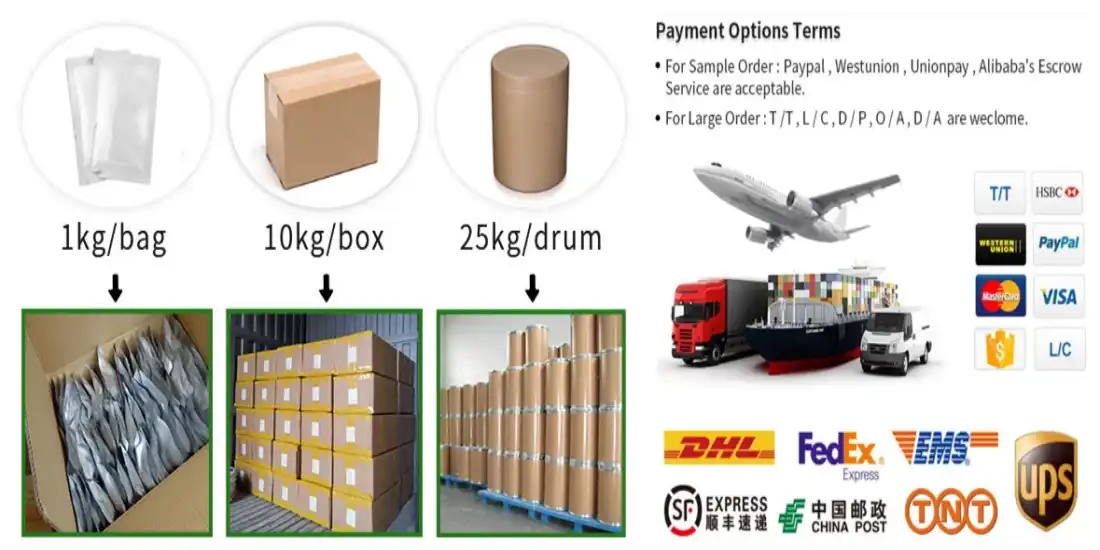
Select delivery options according to amount of order, time-sensitivity, location, and product needs. Courier services are good for samples and small orders, whereas air or sea freight is available for larger business shipments.
NT Biotech said their ube yam powder is available in conventional packaging of 1 kilogram per bag and 10 kg per box, but it may also be custom-packaged. The product is in stock. Delivery within 2-4 days after payment.
The firm also says it can arrange delivery via courier, air-freight or sea-freight and provides DDP service according to client needs. Buyers should check shipping arrangements, destination requirements and final price before to making an order.
Future Trends and Opportunities for Ube Yam Powder in Functional Nutrition Markets
Market Drivers and Consumer Preferences
The increasing demand for recognisable plant-based ingredients has opened doors for products that provide both visual appeal and nutritional benefits. The purple yam is especially fascinating since it has an easily identifiable natural coloration and a makeup of starch, fibre and plant chemicals that remain the focus of food science study.
That provides producers with a number of potential positioning options for the ingredient: ube-flavored bread goods, purple drinks, morning dishes, desserts, plant-based formulations and functional food mixes.
But product claims need to be evidence-based. The addition of anthocyanins or resistant starch does not suggest a health or therapeutic claim. It is more sustainable to communicate clearly about ingredients than to exaggerate health consequences.
Innovation in Processing and Application
The effects of processing on purple-yam starch and anthocyanins are still under study. Studies have been carried out on the structure, digestibility and fermentation properties of resistant starch and the thermal stability of anthocyanins in purple yam.
For producers of commercial products, this implies that processing conditions should be considered in the creation of the formulation. Heating, drying, combining, pH and storage may all affect the final colour and functional performance of the substance.
Rather of assuming a processing technique would work across all applications, producers may undertake pilot trials to identify the proper conditions for each completed product.
Strategic Recommendations for B2B Buyers
By looking at ube as an ingredient and a supply-chain standard, B2B customers may decrease development risk.
“Start with the identity and purity of the botanicals. Then to consider particle size, colour, taste, procedure, certificates, packaging, sample performance and delivery circumstances. Once the ingredient has moved beyond formulation, procurement teams may next evaluate commercial supply capability and determine a suitable purchase strategy.
This strategy is far more beneficial than just picking a provider based on lowest stated pricing. With a uniform specification and straightforward communication, reformulation effort may be reduced and commercial production can be managed more easily.
Conclusion
Ube yam powder is a versatile ingredient for food, beverage, bakery, dessert and functional-food creation. It is derived from Dioscorea alata L. and may provide natural purple colour, unique yam flavour, starch and nutritional fibre. Its anthocyanins and resistant starch have also been studied. But the nutritional content and functional performance are cultivar- and processing-dependent.
Hence, the most significant factors for B2B purchasers are practical: botanical identification, purity, particle size, processing, certifications, samples, packaging, MOQ and delivery conditions. NT Biotech's product is 100% pure Dioscorea alata L. root powder 80 mesh standard, ISO/Kosher/Halal certifications, free samples and MOQ 10 kg.
In brief, the nutritional profile of ube yam supports product positioning on plant-based starch, dietary fibre and anthocyanins, but the consistent message is cultivar- and processing-dependent composition. Buyers that connect claims to measured batch data maintain their labelling accurate and justifiable.
FAQ
1. What distinguishes purple yam powder from standard yam flour in industrial formulations?
The key difference should be the botanical source, the processing technique, the purity, the particle size and the final specification. NT Biotech describes their product as Dioscorea alata L. root powder, 100% pure, 80 mesh. Its manufacturing procedure involves steam cooking, drying at low temperature, grinding and screening.
2. Can purple yam powder work in diabetic-friendly product formulations?
Purple yam includes starch and resistant starch, and the digestion of purple yam starch has been studied. But just because the chemical is suitable for formulation doesn’t imply it should be marketed as a therapy for diabetes. Manufacturers creating goods for consumers controlling blood glucose should carry out proper formulation testing and meet the labelling standards of the target market.
3. Which certifications matter most when sourcing in bulk quantities?
The appropriate certifications will depend on the target market and the necessity of the completed product. ISO 9001 is about quality-management systems. Kosher and Halal certifications are about particular market and dietary criteria. NT Biotech’s ube yam powder is listed with ISO, Kosher and Halal certifications. When reviewing a business order, buyers should ask for up-to-date certification papers.
Partner with NT Biotech: Your Trusted Purple Yam Powder Supplier
For manufacturers sourcing Ube yam powder, NT Biotech provides a clearly specified botanical ingredient for food, beverage, nutrition, and functional-product applications. Its official product information identifies the source as Dioscorea alata L., the plant part as root, the specification as 100% pure, and the particle size as 80 mesh.
The company also lists ISO, Kosher, and Halal certifications, free samples, a 10 kg MOQ, in-stock availability, and standard packaging options including 1 kg bags and 10 kg boxes, with customized packaging available.
If your R&D team is developing a purple beverage, bakery product, dessert, breakfast food, or functional nutrition formula, testing the actual ingredient in the finished formulation is the next practical step. Contact NT Biotech at info@newthingsbiotech.com to request a sample, confirm the current specification, discuss packaging requirements, or obtain a quotation for Ube yam powder.
References
1. Thompson, M. & Rodriguez, S. (2021). Functional Properties of Purple Yam in Modern Food Systems. Journal of Food Science and Technology, 58(4), 1342-1356.
2. Chen, L., Wang, H., & Liu, Y. (2020). Anthocyanins and Bioactive Compounds in Dioscorea Species: Extraction and Applications. International Journal of Food Properties, 23(1), 889-904.
3. Martinez, A. B. (2022). Clean Label Ingredients: Market Analysis and Consumer Trends in North America. Food Industry Research Publications, Chicago.
4. Kumar, R. & Patel, N. (2021). Resistant Starch in Functional Foods: Physiological Effects and Commercial Applications. Nutrition Reviews, 79(7), 745-762.
5. Williams, J. D., 15(2), 112-128.
6. Tanaka, Y., Lee, S., & O'Brien, M. (2022). Plant-Based Ingredients in Beverage Innovation: Technical Considerations for Product Development. Beverage Science and Technology Review, 38(3), 267-285.