- English
- French
- German
- Portuguese
- Spanish
- Russian
- Japanese
- Korean
- Arabic
- Greek
- German
- Turkish
- Italian
- Danish
- Romanian
- Indonesian
- Czech
- Afrikaans
- Swedish
- Polish
- Basque
- Catalan
- Esperanto
- Hindi
- Lao
- Albanian
- Amharic
- Armenian
- Azerbaijani
- Belarusian
- Bengali
- Bosnian
- Bulgarian
- Cebuano
- Chichewa
- Corsican
- Croatian
- Dutch
- Estonian
- Filipino
- Finnish
- Frisian
- Galician
- Georgian
- Gujarati
- Haitian
- Hausa
- Hawaiian
- Hebrew
- Hmong
- Hungarian
- Icelandic
- Igbo
- Javanese
- Kannada
- Kazakh
- Khmer
- Kurdish
- Kyrgyz
- Latin
- Latvian
- Lithuanian
- Luxembou..
- Macedonian
- Malagasy
- Malay
- Malayalam
- Maltese
- Maori
- Marathi
- Mongolian
- Burmese
- Nepali
- Norwegian
- Pashto
- Persian
- Punjabi
- Serbian
- Sesotho
- Sinhala
- Slovak
- Slovenian
- Somali
- Samoan
- Scots Gaelic
- Shona
- Sindhi
- Sundanese
- Swahili
- Tajik
- Tamil
- Telugu
- Thai
- Ukrainian
- Urdu
- Uzbek
- Vietnamese
- Welsh
- Xhosa
- Yiddish
- Yoruba
- Zulu
The beverage industry faces an intriguing challenge when working with one of nature's most vibrant yet temperamental colorants: the magnificent red pigments derived from beetroot. These betalain compounds create stunning ruby and magenta hues that capture consumer attention, yet they present formulators with genuine technical challenges, particularly in acidic drink applications where color stability becomes exponentially more complex. Understanding the science behind betalain degradation and mastering stabilization techniques enables manufacturers to harness beetroot's visual appeal without sacrificing product quality or shelf life expectations. NT Biotech has invested substantially in understanding these challenges, developing natural red beetroot extract powder products specifically engineered for superior stability in challenging applications. Their proprietary extraction technology preserves pigment integrity while their technical support team helps beverage manufacturers navigate the formulation complexities that acidic environments introduce. For brands seeking to capitalize on consumer demand for clean-label natural colors, mastering beetroot color stabilization represents a competitive advantage worth pursuing.
The Science of Betalain Degradation in Acidic Beverages
To understand the erratic behaviour of beetroot colour in acidic beverages, the chemical basis of betalain pigments and the conditions that hasten their breakdown must be studied. This science base enables formulators to make educated judgements that will maintain colour intensity over product shelf life.
The Chemistry of Betalain Pigments
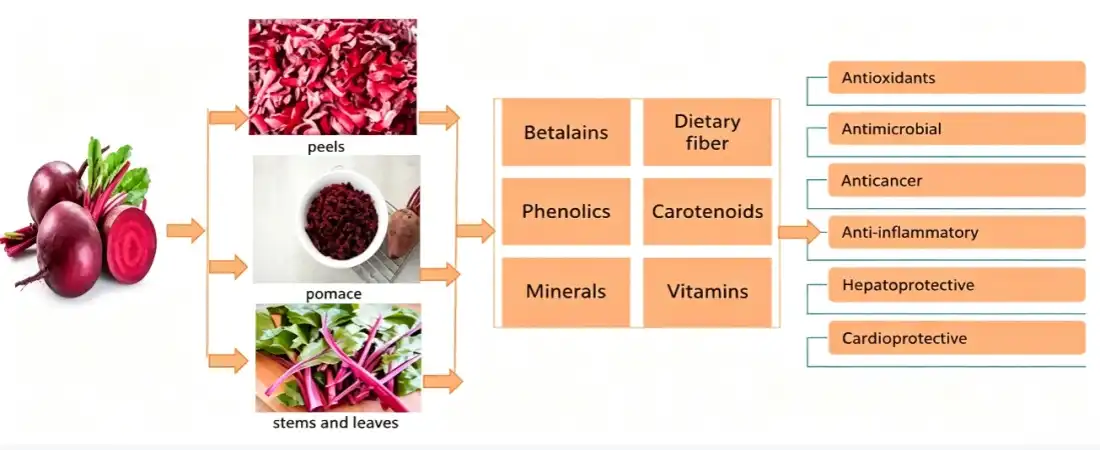
Betalains are a unique pigment found only in the group of plants known as Caryophyllales, and the most major source for commercial culinary uses is beetroot. There are two separate groups of chemical compounds: betacyanins are responsible for the deep reds and purples which are the visual characteristic of beetroot, while betaxanthins provide the yellow-orange hues present in certain types. Both families have a basic chemical structure that gives them their characteristic colour, but also makes them susceptible to the processes heat, light, and oxygen may initiate to break them down. Consumers relate beetroot products with a bright red colour, which is mostly due to betanin, the main betacyanin in red beetroot cultivars, accounting for roughly 75-95% of the total betalain depending on the variety and growth circumstances .
Why Acidic Environments Challenge Color Stability
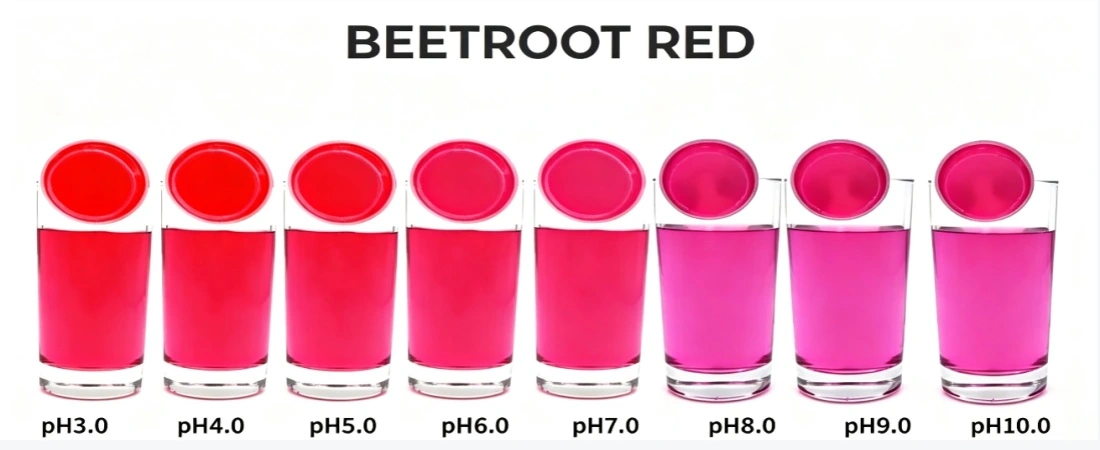
The hydrogen ion concentration typical of acidic drinks provides circumstances that favour the breakdown of betalains via several methods. At lower pH levels, betalain molecules undergo structural modifications that might improve initial colour intensity, giving an appearance of high stability which diminishes as products age. However, the same acidic conditions that initially enhance colour expression also encourage hydrolysis events that break down pigment molecules over time, leading to a progressive loss of colour that becomes visible during storage. Betalains are most stable at a pH of around 5.0–6.0, yet commercially acceptable acidic drinks often need a lower pH for flavour balance and microbiological safety, thus producing an inherent tension that formulators must resolve carefully.
Degradation Pathways and Kinetics
The predictable kinetic patterns of betalain degradation allow formulators to estimate the shelf life performance and to create suitable quality claims. In most beverage applications, betalain breakdown is best described by first-order degradation kinetics, or rate of colour loss proportional to the pigment concentration at the time . Temperature strongly increases deterioration . Typically , Q10 values are between 2 and 3 , implying that degradation rates nearly double or treble for every 10°C rise in temperature . The temperature sensitivity also accounts for the much longer colour retention in refrigerated storage than at ambient temperature, a feature product producers consider when setting shelf life expectations and storage recommendations for customers.
Environmental Factors Influencing Color Retention
Besides pH and chemical degradation processes, various environmental variables strongly impact beetroot colour performance throughout beverage shelf life. Successful stabilisation demands methodically dealing with various variables rather than concentrating on individual elements.
Temperature Exposure During Processing and Storage
Probably, heat is the most important environmental element impacting the stability of betalains in acidic beverages and both processing temperatures and storage conditions are of great influence on colour retention. Microbiological safety in many beverage applications requires high temperature processing. However, high temperature processing causes instantaneous pigment loss which may not be seen until weeks later when accelerated deterioration occurs during distribution and customer storage. HTST pasteurisation (high temperature short time) results in greater retention of colour compared to prolonged lower temperature treatments while conditions should be optimised for particular formulations. Storage temperature is also important. Products held at refrigerator temperatures regularly function better than those stored at ambient levels, even if initial colour intensity seems equivalent right after processing.
Light-Induced Photodegradation
Furthermore, the betalain molecules are decomposed by photochemical processes when exposed to ultraviolet and visible light . Ultraviolet radiation is especially harmful . Clear beverage bottles and transparent packaging expose items to light during retail display and consumer storage, producing gradual fading of colour that disappoints customers who anticipate the brilliant look of the product they originally bought. Protection measures include use of opaque or amber packaging that filters harmful wavelengths, supplementary cardboard packing for items exhibited under strong retail lighting and formulation approaches that promote light stability by adding antioxidants . Beverages that are to be shown for long periods in the light need special attention to light protection since the total exposure during the customary retail display might lead to a major colour change by the time the product reaches the customer.
Oxygen and Oxidative Degradation
The oxidation of betalain pigments by atmospheric oxygen slowly contributes to colour loss, which adds to other causes of deterioration during the shelf life. Dissolved oxygen in drinks shortly after processing is responsible for continuing oxidative damage, with the rate dependent on headspace volume, container oxygen permeability, and storage temperature. Deoxygenation methods after filling, oxygen scavenger packaging materials and nitrogen flushes during packing all help to minimise oxidative damage. Although it is not possible to completely remove oxygen for most beverage goods, reducing the quantities of dissolved oxygen greatly improves colour stability over that of the untreated products.
Proven Stabilization Strategies for Acidic Beverage Formulations
Understanding of degradation processes and variables affecting them enables beverage formulators to take specific actions for beetroot colour retention throughout shelf life of the product. Such techniques target distinct parts of the stability problem, and the best results are often obtained by using the combined approaches.
Optimizing pH Within Practical Constraints
The appropriate pH for betalain stability should be determined with due consideration for microbiological safety and flavour balance. The optimal betalain stability is around pH 5.0-6.0, however, many acidic drinks need lower pH values for flavour or for compliance with food safety regulations. Buffer systems may assist maintain pH stability across shelf life, and avoid creeping acidification that can occasionally occur in fermented or carbonated goods. Formulators should experiment with many pH values in the permitted range, monitoring colour retention at frequent intervals in accelerated shelf life experiments to determine the optimum formulation pH for their application.
Antioxidant Co-additives and Synergistic Effects
The protective effects of food-grade antioxidants on betalain pigments have been shown by either direct scavenging of free radicals to begin degradation or chelating of metal ions to catalyse pigment breakdown . Ascorbic acid is a special instance since it offers antioxidant protection at low concentrations but accelerates breakdown by its oxidation products at higher levels. Citric acid has a dual role, since it provides acidity and metal chelation at the same time, although it is quite acidic and should be carefully controlled for pH. Other antioxidants such as rosemary extracts, green tea-catechins and tocopherols may also prolong the retention of the colour when applied in the proper doses. Synergistic effects can be seen when numerous antioxidants are combined.
Encapsulation and Carrier Technologies
Advanced ingredient technologies may provide alternate alternatives to direct inclusion with the potential for considerable improvements in betalain stability in difficult applications. Encapsulated beetroot extracts in maltodextrin or gum arabic matrices are more stable than free extracts as the carrier material protects the pigment molecules from external influences and allows for a regulated release during ingestion. Although encapsulated goods might demand a premium price, they can be cost efficient if the benefits of decreased inclusion rates and greater stability outweigh the higher cost per kilogram. NT Biotech, a quality natural red beetroot extract powder provider, provides a range of delivery options optimised for distinct application requirements, allowing formulators to pick the most suitable technology for their particular demands.
Processing Parameter Optimization
In addition to formulation changes, process conditions themselves provide chances to enhance colour retention by judicious selection of parameters. HTST pasteurisation often maintains betalains better than prolonged holding durations at lower temperatures as shorter total heat exposure minimises cumulative damage even while peak temperatures are identical. Cold aseptic processing works without heat for items that can tolerate microbiological contamination, and preserves colour intensity that thermal processing cannot. Product sequencing is important for multi-component drinks, adding beetroot colour later in processing minimises heat exposure while providing sufficient mixing for equal dispersion.
Practical Formulation Guidelines and Inclusion Rates
Stabilisation science is the translation to commercial formulations of recommendations on constituent quantities, processing sequences and quality characteristics to achieve consistency of results.
Recommended Extract Inclusion Levels
The amount of natural red beetroot extract powder to be added will depend on the desired colour intensity, the nature of the beverage and the stability requirements of the particular product. Inclusion rates of 0.2% to 0.5% often provide acceptable results and minimise flavour influence for clear liquids with light pink hue. For functional beverages and juice-added drinks, 0.5–1.5% incorporation is often required for medium-intensity colouring, providing a compromise between colour effect and cost and flavour concerns . Stronger or concentrated goods, which are deep ruby in colour, may necessitate inclusion rates of 1.5% to 3.0% or more; with stronger concentration, flavour masking and cost optimisation become important considerations.
| Beverage Type | Target pH | Recommended Inclusion | Expected Stability | Storage Recommendation |
|---|---|---|---|---|
| Functional waters | 3.0-4.0 | 0.3-0.8% | Moderate | Refrigerated preferred |
| Sports drinks | 2.8-3.5 | 0.5-1.2% | Moderate | Refrigerated or ambient |
| Juice beverages | 3.2-4.0 | 0.8-2.0% | Good | Refrigerated |
| Carbonated drinks | 2.8-3.8 | 0.3-1.0% | Moderate | Ambient acceptable |
| Dairy alternatives | 6.0-7.0 | 1.0-3.0% | Excellent | Refrigerated |
| Tea-based beverages | 3.0-4.5 | 0.5-1.5% | Good | Refrigerated preferred |
Compatible Ingredients and Flavor Systems
The choice of ingredients may either help or hinder the persistence of beetroot colour, depending on how certain compounds interact with one another. Citric and malic acids supply acidity and chelate metal ions that might potentially catalyse deterioration. The high acidity of these acids needs pH control. Sugar and syrups typically have neutral impact on colour stability, although they contribute to total formulation sweetness. Indeed, complex formation with tea or grape extract tannins may improve the stability of betalains, therefore beetroot-tea combos are highly stable. Strong metal ions from mineral supplements or contaminated processing equipment may further hasten deterioration. Therefore, quality management of raw materials and equipment cleanliness are key issues.
Shelf Life Testing and Quality Parameter Monitoring
Formulators may use accelerated stability tests to forecast the performance throughout shelf life and provide suitable storage recommendations before the product is launched commercially. The colour intensity is measured spectrophotometrically at regular time intervals on samples that are subjected to increased temperatures (35-45 °C) according to standard accelerated methods. Data from real-time studies at the planned storage condition are conclusive but time consuming and hence delay product introductions. The most credible estimations of shelf life are those that include both techniques, the accelerated studies giving preliminary direction and the real-time investigations validating the forecasts. Target endpoints should be set as minimum acceptable colour intensity based on consumer acceptability thresholds rather than total colour retention, since tiny variations may be unnoticeable to consumers yet substantially influence laboratory findings.
Sourcing Quality Natural Red Beetroot Extract Powder for Optimal Stability
The extract itself has a big role in how beetroot colour functions in acid drinks. Supplier selection and product specification have a direct effect on formulation performance.
Processing Technology and Product Quality
The stability features of natural red beetroot extract powder in end-use applications are mostly determined by the production procedure. Traditional extraction, with heat and water, destroys the betalain pigments that offer colour and nutrition, meaning that the extracts are intrinsically unstable, no matter how much formulation optimisation is done. Top providers, like NT Biotech, use patented extraction processes to maximise the amount of betalains they get while ensuring the pigment’s integrity throughout processing. The technology difference generates extracts with standardised specifications that are more stable than those treated traditionally, therefore alleviating the formulation problems that inferior constituents may introduce.
Specification Verification and Quality Documentation
Good suppliers give extensive documentation so that formulators may verify that the materials obtained satisfy the criteria that their applications demand. Quality Testing: HPLC analysis to verify betalain content, moisture determination to determine probable shelf-life stability, and heavy metal screening to comply with safety standards. Reputable providers of natural red beetroot extract powder provide Certificates of Analysis with each batch of the extract to verify these characteristics and thus the formulation performance is constant from batch to batch. The batch testing documentation is complemented by specification papers describing handling, storage and intended stability characteristics.
For technical consultation on formulation optimization or custom specification discussions, reach out directly to info@newthingsbiotech.com where knowledgeable specialists provide detailed guidance tailored to your specific application requirements.
Certification and Compliance Support
For beverage firms operating in regulated markets, the supply chain must have ingredient suppliers that can provide evidence to support regulatory compliance. NT Biotech is ISO9001 quality management certified, KOSHER certified and HALAL certified by frequent third party audits that allow compliance formulations for a variety of market needs. Their documentation bundle also includes technical data sheets, safety data sheets and specification papers that assist with regulatory filings and quality assurance verification.

Quality Control and Process Monitoring
In commercial manufacturing, quality control procedures are required to systematically detect and correct variability before it impacts completed goods in an effort to maintain colour uniformity.
Incoming Material Testing and Specification Verification
Each batch of natural red beetroot extract powder must be tested and verified before release to production to ensure that supplied materials meet the formulation standards. Spectrophotometric examination at 535nm (betacyanin absorption maximum) for evaluation of colour intensity gives an objective confirmation that each batch produces consistent colouring power. The analysis of moisture content indicates the correct handling and storage during transit, and the microbiological testing proves the hygienic manufacture and fulfilment of safety requirements. These checks identify quality problems before they spread through the manufacturing process, avoiding expensive batch rejections and formula variations.
Process Monitoring and Critical Control Points
Production procedures should include monitoring at important control points where variability might impact final product colour. Mixing duration and intensity effects the dispersion of extracts throughout drinks . Poor mixing will result in streaks and colour variance . The parameters used for heat treatment directly effect pigment degradation and must be documented and verified to be within established ranges of processing conditions. Packaging oxygen exposure and headspace volume effect oxidative colour loss during shelf life and optimisation is needed to balance cost, quality and production efficiency. Clear specifications and monitoring processes for each crucial control point provide consistency in quality of commercial production runs.
Conclusion
Stabilizing the magnificent red color from beetroot in acidic beverages presents genuine technical challenges that yield to systematic understanding and targeted formulation strategies. The chemistry of betalain degradation reveals multiple vulnerability points that informed formulators can address through pH optimization, antioxidant co-additives, encapsulation technologies, and processing parameter management. Sourcing premium natural red beetroot extract powder from quality-focused suppliers like NT Biotech provides the foundation upon which successful formulations build, with superior ingredient quality reducing the formulation challenges that inferior alternatives create. While complete color stability throughout extended shelf life remains elusive for acidic beverages, achieving acceptable retention that satisfies consumer expectations proves entirely achievable through careful attention to the factors this article has explored. The reward for mastering these challenges is access to one of nature's most visually striking and consumer-appealing natural colorants, enabling product differentiation that synthetic alternatives cannot match.
FAQ
1. What pH range provides optimal betalain stability in acidic drinks?
Betalain stability peaks around pH 5.0-6.0, though many acidic beverages require lower pH for flavor and safety, necessitating formulation balancing of competing requirements.
2. How does temperature affect beetroot color stability in beverages?
Elevated temperatures dramatically accelerate degradation through first-order kinetics, with refrigeration typically doubling or tripling color retention compared to ambient storage.
3. What inclusion rates of natural red beetroot extract powder work best for acidic beverages?
Light pink coloration typically requires 0.2-0.5%, medium intensity 0.5-1.5%, and deep ruby tones 1.5-3.0% depending on specific product characteristics.
4. Can antioxidant additives improve beetroot color stability?
Yes, certain antioxidants including citrus extracts and rosemary compounds can extend color retention when incorporated at appropriate concentrations for specific applications.
5. How should natural red beetroot extract powder be stored to maintain quality?
Store in airtight containers in cool, dark locations away from moisture and direct light, with refrigeration recommended for extended storage to maximize shelf life.
Partner with NT Biotech for Stable Natural Red Beetroot Extract Powder Solutions
Transform your acidic beverage formulations with natural red beetroot extract powder engineered for superior color stability throughout shelf life. NT Biotech combines proprietary extraction technology with rigorous quality verification to produce extracts that outperform conventional alternatives in challenging applications. Our technical team provides formulation guidance specifically addressing acidic beverage challenges, helping you optimize pH, processing parameters, and co-additive selection for maximum color retention. With ISO9001, KOSHER, and HALAL certifications, we support compliant formulations across diverse market requirements. Our responsive team, flexible order quantities, and competitive pricing make NT Biotech the natural red beetroot extract powder supplier that serious beverage manufacturers trust. Reach out today at info@newthingsbiotech.com to discuss your specific application requirements, request samples for formulation testing, or explore how our expertise can help you overcome beetroot color stabilization challenges.
References
1. Azeredo, H.M.C. (2009). Betalains: Properties, sources, applications, and stability. International Journal of Food Science and Technology, 44(12), 2365-2376.
2. Khan, M.I., Giridhar, P., & Bettadaiah, B.K. (2014). Chemistry and food applications of betalains. Food Chemistry, 162, 443-450.
3. Rodriguez, E.B., & Mendoza, D.B. (2019). Natural food pigments: Chemistry, sources, and applications in the food industry. Comprehensive Reviews in Food Science and Food Safety, 18(2), 312-326.
4. Naderi, M., Ghazali, H.M., & Manap, M.Y.A. (2015). Betalain: A bioactive compound and its applications. International Journal of Food Properties, 18(8), 1669-1678.
5. Kumar, S., & Kumar, R. (2018). Betalains: Natural colorants with pharmacological properties. Journal of Food Science and Technology, 55(4), 1201-1212.
6. Esquivel-Chavero, F., Wall-Medrano, A., Alvarez-Parrilla, E., et al. (2022). Stability of betalains in food matrices: Factors and processing effects. Food Chemistry, 374, 131754.