- English
- French
- German
- Portuguese
- Spanish
- Russian
- Japanese
- Korean
- Arabic
- Greek
- German
- Turkish
- Italian
- Danish
- Romanian
- Indonesian
- Czech
- Afrikaans
- Swedish
- Polish
- Basque
- Catalan
- Esperanto
- Hindi
- Lao
- Albanian
- Amharic
- Armenian
- Azerbaijani
- Belarusian
- Bengali
- Bosnian
- Bulgarian
- Cebuano
- Chichewa
- Corsican
- Croatian
- Dutch
- Estonian
- Filipino
- Finnish
- Frisian
- Galician
- Georgian
- Gujarati
- Haitian
- Hausa
- Hawaiian
- Hebrew
- Hmong
- Hungarian
- Icelandic
- Igbo
- Javanese
- Kannada
- Kazakh
- Khmer
- Kurdish
- Kyrgyz
- Latin
- Latvian
- Lithuanian
- Luxembou..
- Macedonian
- Malagasy
- Malay
- Malayalam
- Maltese
- Maori
- Marathi
- Mongolian
- Burmese
- Nepali
- Norwegian
- Pashto
- Persian
- Punjabi
- Serbian
- Sesotho
- Sinhala
- Slovak
- Slovenian
- Somali
- Samoan
- Scots Gaelic
- Shona
- Sindhi
- Sundanese
- Swahili
- Tajik
- Tamil
- Telugu
- Thai
- Ukrainian
- Urdu
- Uzbek
- Vietnamese
- Welsh
- Xhosa
- Yiddish
- Yoruba
- Zulu
The soft drink industry stands at a pivotal moment where consumer expectations and ingredient technology are colliding with unprecedented force. Shoppers increasingly demand beverages that look as pure as they taste, rejecting the chemical-sounding colorants that dominated formulation science for decades. Into this void steps beetroot red pigment, a naturally derived colorant offering breathtaking ruby and magenta tones that photograph beautifully while satisfying the clean-label movement sweeping across global markets. Yet beverage formulators face a critical question that determines whether this natural alternative succeeds or fails in commercial applications: just how stable is beetroot red pigment when suspended in acidic soft drink matrices? The answer determines everything from production scheduling to shelf life claims, from packaging selection to consumer satisfaction metrics. NT Biotech has invested years in answering this question definitively, developing red beet extract powder colorant products engineered specifically for soft drink applications where stability demands are particularly stringent. Their proprietary extraction technology preserves betalain pigment integrity while their technical specialists guide manufacturers through the formulation challenges that acidic environments inevitably present.
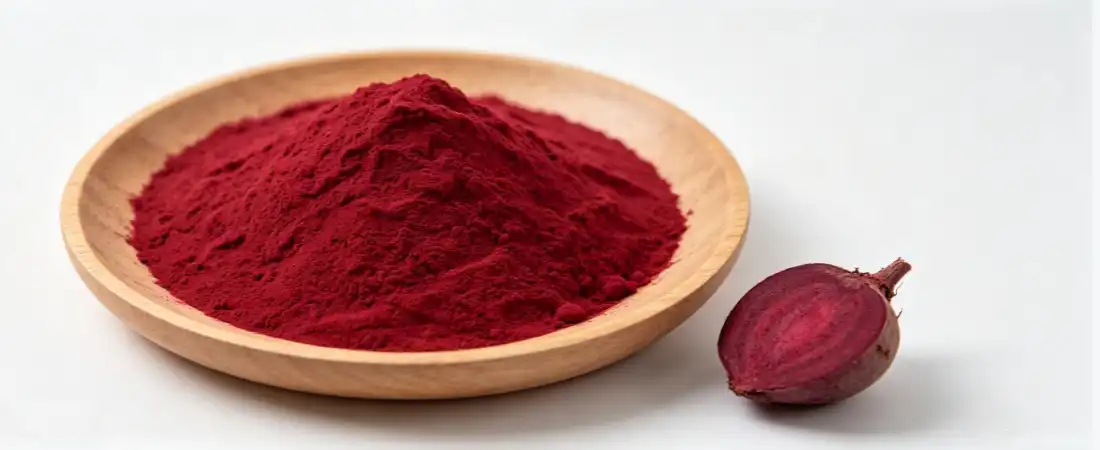
The Chemistry of Betalain Pigments in Beverage Environments
How is the environment of soft drinks distinct to other food applications? To understand why the beetroot red pigment acts differently in soft drinks, we need to examine the chemical environment of these popular beverages. Whether the colour will stay vivid throughout shelf life, or sadly fade before customers complete their purchases is determined by the way pigment molecules interact with beverage components.
Betalain Structure and Color-Producing Mechanisms
Betalains are a remarkable group of pigments that originated as plant defence molecules, giving the bright hue that conveys nutritional value and possible toxicity to herbivores. Betacyanins and betaxanthins, the two major families of betalains, have a shared core structure of betalamic acid that influences their light-absorbing characteristics and hence their visual colour presentation. In red beetroot varieties, the major betacyanin is betanin. It has a maximum light absorption at around 535 nanometers, and this gives the characteristic deep magenta-red colour to beetroot products. This conjugated double-bond system, responsible for the colour, also makes it vulnerable to degradation processes that eventually tear down these light-absorbing structures.
The Soft Drink Matrix Challenge
Colour stability in soft drinks is notably hard because to the combination of low pH, high sugar or high-fructose corn syrup content, dissolved carbon dioxide, possible metal ion contamination from processing equipment, and heat history during pasteurisation. Soft drinks have a pH between 2.5 and 4.0 and are acidic. This is a very different milieu to the slightly acidic to neutral circumstances in which betalains exist naturally in plant tissues. In fact, mild acidity improves initial betalain colour intensity, generating the bright look that attracts customers at the moment of purchase, but same acidity also accelerates degradation events that lead to gradual colour loss during storage. The organic acids in soft drinks, such as citric, phosphoric, or malic acid, might react with the betalain molecules and affect the structure of the betalain molecules over time.
Degradation Reaction Pathways
The degradation of betalains is a multi-pathway process that collectively determines the rate of colour loss under different storage conditions. Hydrolytic cleavage cleaves the glycosidic connections between betanin and its glucose moiety, giving rise to betalamic acid and cyclodopa-5-O-glucoside, which do not have the vivid hue of the parent molecule. Oxidative degradation, catalysed by metal ions or induced by ambient oxygen, destroys the conjugated double-bond structure responsible for the absorption of light. Thermal deterioration is especially a concern for hot-fill pasteurisation or retort processing, where short times at high temperatures produce considerable instantaneous loss of colour and faster rates of further degradation during subsequent storage. Knowing which route prevails under certain situations allows formulators to most efficiently focus stabilisation efforts.
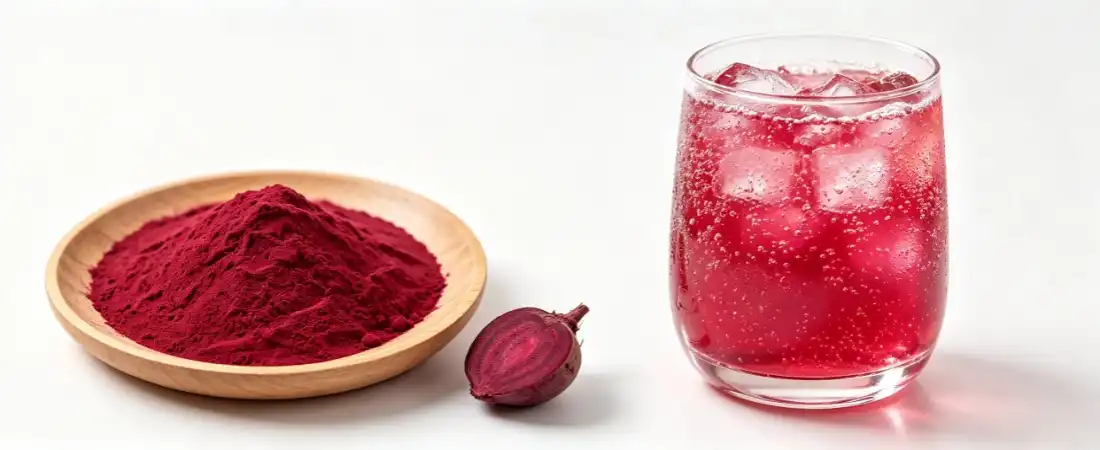
Factors Determining Betalain Stability in Carbonated Beverages
Soft drinks are composed of many product categories with differing properties that impact the stability of beetroot red pigment differently. Each of these factors poses special obstacles that must be overcome by knowledgeable formulators to ensure satisfactory colour retention.
Carbonation Effects on Pigment Stability
The presence of dissolved carbon dioxide that distinguishes this category of beverages makes carbonated soft drinks distinctive and creates stability issues. Carbonation causes weakly acidic conditions even in generally moderate - pH drinks . When CO2 dissolves in water , carbonic acid is formed . This increased acidity combined with the presence of organic acids makes for a particularly inhospitable environment for betalain pigments. Additionally, slow carbonation loss due to package penetration or customer opening results in continuous fluctuations in pH that may exacerbate deterioration as items age. Formulators responsible for the red beet extract powder colorant in carbonated drinks and who are setting shelf life expectations and storage recommendations should consider these dynamic situations.
Temperature Sensitivity and Cold Chain Considerations
Temperature is arguably the most dramatic effect on betalain stability in soft drinks, with degradation rates rising exponentially with higher storage temperatures . The half-life of betalain has been shown to be in the range of many months at refrigeration temperature to just a few weeks at higher ambient settings in model beverage systems . The sensitivity to temperature has major formulation and marketing consequences, because items meant for chilled retail display would behave substantially differently from those intended for ambient shelf placement . Accelerated shelf-life testing at higher temperatures may offer helpful comparison data, but must be interpreted with caution, else the stability at the lower temperature at which the product is to be stored may be overestimated. Brands should make sure that storage needs are properly communicated to customers via package labelling so they know how to maximise the visual appeal they originally bought.
| Storage Temperature | Estimated Half-Life Range | Practical Shelf Life | Consumer Guidance |
|---|---|---|---|
| Refrigerated (4°C) | 4-8 months | 6-12 months | Optimal quality maintained |
| Cool ambient (15°C) | 2-4 months | 3-6 months | Good quality expected |
| Room temperature (22°C) | 1-2 months | 2-4 months | Color fade noticeable |
| Warm storage (30°C+) | 2-4 weeks | 1-2 months | Significant fade expected |
Light Exposure and Packaging Selection
Photochemical degradation is an important breakdown process for beetroot red pigment, especially when the container is transparent or translucent and UV light reaches the beverage directly. Progressive colour fading of soft drinks in transparent glass or plastic bottles is accelerated by retail lighting conditions, particularly in establishments with bright fluorescent or LED lighting. Protective techniques include amber or cobalt blue glass which filters out harmful wavelengths, opaque plastic containers which block out all light, and supplementary packaging such as cartons or sleeved containers that protect the drinks during retail display. The commercial attractiveness of a visible product has to be weighed against the stability needs of betalain pigments, and hence brands often use protective packaging to maintain the visual appearance customers anticipate during the shelf life.
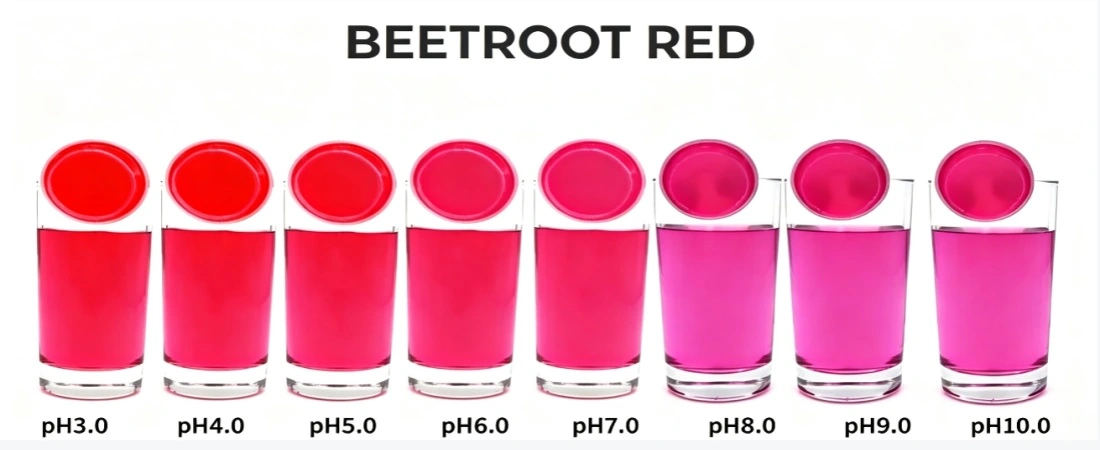
Formulation Strategies for Enhanced Stability
Understanding the parameters that influence betalain stability will allow beverage formulators to use targeted tactics to improve colour retention in soft drink applications. These techniques target distinct parts of the stability problem and best results are often obtained via combination tactics.
pH Optimization Within Product Constraints
Formulators must walk a fine line to get the ideal pH for betalain stability while retaining the flavour character and microbiological safety expected in soft beverages. A pH range of 4.0-5.0 provides the optimum balance between initial colour intensity and long-term stability, while many soft drinks need lower pH for flavour preferences or to suppress pathogenic microorganisms. Buffer systems may assist keep the pH stable during the shelf life, reducing the slow acidification that often happens in carbonated drinks when the carbonation is lost. Formulation experiments at different pH values, with colour measurement over time during accelerated stability testing, provide a means to identify the best equilibrium point for certain product ideas.
Antioxidant Synergies and Protective Additives
Stability of beetroot red pigment in soft drinks may be considerably increased by the introduction of strategic co-additives that interfere with the degradation pathways leading to colour fading. Ascorbic acid is a more complex example, functioning as an antioxidant at low doses, while perhaps increasing the breakdown via oxidation products at greater amounts. Citric acid gives acidity, but also chelates metal ions that may catalyse oxidative deterioration. This is especially useful in soft beverages where metal contamination from the processing equipment may otherwise expedite pigment degradation. Rosemary extract, green tea catechins and other plant derived antioxidants show beneficial properties that support their functional positioning as clean-label ingredients customers recognise and trust.
Encapsulated Delivery Technologies
Modern ingredient technology enables new direct integration options that may greatly increase betalain stability in demanding soft drink applications. The encapsulated red beetroot extract powder colourant products are surrounded by pigment molecules in protective matrices of maltodextrin, gum arabic or modified starches that protect them from environmental influences throughout storage and shelf life. These delivery techniques pause the hydration and release in beverage applications, allowing prolonged colour intensity while safeguarding betalain molecules from the acidic conditions that promote breakdown. Encapsulated goods often demand a premium price, yet the decreased inclusion rates which may be used and their increased stability are frequently more cost efficient than the higher direct addition rates which have to be used with standard extracts.
Practical Implementation Guidelines
For translation of stability science to commercial soft drink formulations, particular advice is needed on ingredient selection, processing parameters, and quality control monitoring that provides consistent results across production batches.
Recommended Inclusion Rates for Soft Drink Applications
The level of incorporation of red beet extract powder colorant should be decided upon the intensity of colour wanted, the properties of the base beverage and the length of stability sought. Clear carbonated drinks often provide acceptable light pink colours at use levels of around 0.15% to 0.4%. This is a compromise between visual effect, flavour contribution and ingredient cost. More highly coloured goods, such as juice-added beverages or functional drinks, often need 0.4% to 1.0% inclusion, with the upper range yielding rich crimson tones that photograph well for marketing reasons. These initial suggestions should be further modified using colour matching vs target standards and evaluation of stability under real or accelerated storage circumstances.
Processing Parameter Best Practices
In the manufacture of soft drinks, heat treatment should be optimised to reduce betalain degradation while providing the essential microbiological safety. In general, high temperature short duration pasteurisation, holding at 90-95°C for 15-30 seconds, retains colour better than prolonged low temperature treatments which result in more cumulative pigment degradation. Particular attention must be paid to colour preservation in hot-fill procedures when goods are subjected to temperatures exceeding 85°C. Rapid cooling immediately after heat treatment is necessary to minimise deterioration. Aseptic processing, in which the product and the package are sterilised separately and then brought together under sterile conditions, gives the greatest colour retention for items where the investment in equipment can be justified by the volume of production.
Quality Monitoring Throughout Shelf Life
Successful commercialisation will need rigorous quality control that monitors colour retention and flags stability problems before they reach customers. Objective quantification of betalain content may be made by spectrophotometric measurement (535nm) and compared to beginning values and minimum acceptable threshold values. Visual assessment by trained panels complements instrumental testing, capturing consumer-perceptible variations that laboratory tools may not discover. High temperature accelerated stability testing may be used to provide shelf life performance predictions without waiting for months for real time data to accumulate, but findings need to be validated against real storage circumstances prior to making label claims.
For technical consultation on formulation optimization or custom specification discussions, reach out directly to info@newthingsbiotech.com where knowledgeable specialists provide detailed guidance tailored to your specific application requirements.
Regulatory Considerations and Market Positioning
The formulation of soft drinks with beetroot red pigment must be supported by regulatory requirements and marketing position, justifying the premium ingredient expenditure.
Global Regulatory Status of Beetroot Colorants
The regulatory approval of beetroot-derived colourants in most of the main worldwide markets allows for a clean-label posture that would not be achievable with many other ingredients. In the U.S. the FDA lists beetroot juice and beetroot extract as colourants exempt from certification, meaning they may be used without the batch testing and certification costs of synthetic approved colours. Beetroot colourants are also included as authorised natural sources in the European Union laws, with some being particular to beverage categories. This legislative recognition allows simple label statements such as “colored with beet” or “contains beetroot juice concentrate” which convey to the customer that the material is naturally sourced, without regulatory complexities.
Clean Label Positioning Advantages
Natural colourants are a crucial ingredient category that enables this transformation, as consumer demand for clean-label goods continues to drive reformulation efforts throughout the soft drink sector. “Red beetroot extract powder colourant is a great solution for brands looking to pursue clean-label positioning as consumers recognise and trust beetroot as a wholesome vegetable versus an obscure chemical compound. This ingredient identification offers a premium posture that justifies higher price points and also differentiates goods in congested market categories where artificial substitutes prevail. When appropriately stabilised, the visual attractiveness of beetroot-derived colours may be used to develop drinks that look great in photographs for social media marketing, enhancing brand exposure in digitally linked consumer markets.
Sourcing Premium Red Beet Extract Powder Colorant
The quality of the red beetroot extract powder colourant has a direct impact on its performance in soft drink applications, and supplier selection is an important choice for beverage producers.
Processing Technology and Product Quality
The natural stability features of red beetroot extract powder colourant in final drinks are conditioned by the extraction process used for its production. The stability of the extracts obtained by conventional extraction with heat and water may be impaired due to the degradation of the betalain pigments notwithstanding the optimisation of the formulation. High-end vendors like NT Biotech have their own extraction processes that maximise the amount of betalains and keep the pigments intact while they are being processed. This technical distinction leads to a standardised red beetroot extract powder colourant with excellent stability properties, reducing the formulation issues encountered with inferior alternatives.
Documentation and Compliance Support
Good suppliers will give paperwork to allow soft drink makers to check the materials received and to comply with regulatory requirements. Quality verification is ensured by HPLC analysis for betalain content, ICP-MS screening for heavy metals and microbiological testing. Full Certificates of Analysis covering these specifications for each batch provide for consistent formulation performance and support regulatory filings in various worldwide markets. NT Biotech has a robust documentation infrastructure to ensure compliant market access, and maintains and verifies ISO9001, KOSHER and HALAL certifications via frequent third-party audits.
Conclusion
The stability of beetroot red pigment in soft drinks presents genuine technical challenges that informed formulators can successfully navigate through careful attention to the factors affecting betalain degradation. While acidic soft drink environments accelerate color fade compared to neutral or low-acid applications, strategic formulation approaches including pH optimization, antioxidant co-additives, and encapsulated delivery technologies enable acceptable stability duration for most commercial applications. Temperature management and light protection through appropriate packaging selection provide additional tools for preserving the visual appeal that initially attracts consumers. Sourcing premium red beet extract powder colorant from established suppliers like NT Biotech ensures that starting material quality supports rather than undermines formulation optimization efforts. The reward for mastering these challenges is access to one of the most visually striking and consumer-trusted natural colorants available, enabling soft drink differentiation that artificial alternatives simply cannot match.
FAQ
1. How stable is beetroot red pigment in carbonated soft drinks?
Betalain stability in carbonated beverages varies significantly based on pH, temperature, and light exposure, with refrigerated storage extending color retention to 6-12 months while ambient storage may show noticeable fade within 2-4 months.
2. What pH range provides the best balance for beetroot color stability in soft drinks?
The pH range of 4.0-5.0 offers optimal compromise between initial color intensity and long-term stability, though many soft drinks require lower pH for taste preferences.
3. Does carbonation affect beetroot red pigment stability?
Yes, dissolved carbon dioxide creates additional acidity that can accelerate betalain degradation, requiring formulation adjustments compared to non-carbonated beverages.
4. What packaging protects beetroot-colored soft drinks from color fade?
Amber glass, opaque plastics, or secondary packaging that blocks light exposure significantly extends color retention compared to clear containers.
5. Can antioxidant additives improve stability of beetroot in soft drinks?
Yes, certain antioxidants including citrus extracts and chelating agents can extend color retention when incorporated at appropriate concentrations.
Partner with NT Biotech for Premium Red Beet Extract Powder Colorant Solutions
Transform your soft drink formulations with red beet extract powder colorant engineered for superior stability in challenging acidic applications. NT Biotech combines proprietary extraction technology with rigorous quality verification to produce colorants that deliver consistent visual appeal throughout shelf life. Our technical team provides formulation guidance specifically addressing soft drink challenges, helping you optimize pH, processing parameters, and co-additive selection for maximum color retention. With ISO9001, KOSHER, and HALAL certifications and comprehensive documentation packages, we support compliant formulations across diverse global markets. Our responsive team responds within two hours and offers flexible order quantities from development samples through commercial-scale production. Reach out today at info@newthingsbiotech.com to discuss your soft drink formulation requirements, request samples for stability testing, or explore how our expertise can help you achieve the natural color performance your consumers expect.
References
1. Azeredo, H.M.C. (2009). Betalains: Properties, sources, applications, and stability. International Journal of Food Science and Technology, 44(12), 2365-2376.
2. Khan, M.I., Giridhar, P., & Bettadaiah, B.K. (2014). Chemistry and food applications of betalains. Food Chemistry, 162, 443-450.
3. Rodriguez, E.B., & Mendoza, D.B. (2019). Natural food pigments: Chemistry, sources, and applications in the food industry. Comprehensive Reviews in Food Science and Food Safety, 18(2), 312-326.
4. Naderi, M., Ghazali, H.M., & Manap, M.Y.A. (2015). Betalain: A bioactive compound and its applications. International Journal of Food Properties, 18(8), 1669-1678.
5. Kumar, S., & Kumar, R. (2018). Betalains: Natural colorants with pharmacological properties. Journal of Food Science and Technology, 55(4), 1201-1212.
6. Esquivel-Chavero, F., Wall-Medrano, A., Alvarez-Parrilla, E., et al. (2022). Stability of betalains in food matrices: Factors and processing effects. Food Chemistry, 374, 131754.