- English
- French
- German
- Portuguese
- Spanish
- Russian
- Japanese
- Korean
- Arabic
- Greek
- German
- Turkish
- Italian
- Danish
- Romanian
- Indonesian
- Czech
- Afrikaans
- Swedish
- Polish
- Basque
- Catalan
- Esperanto
- Hindi
- Lao
- Albanian
- Amharic
- Armenian
- Azerbaijani
- Belarusian
- Bengali
- Bosnian
- Bulgarian
- Cebuano
- Chichewa
- Corsican
- Croatian
- Dutch
- Estonian
- Filipino
- Finnish
- Frisian
- Galician
- Georgian
- Gujarati
- Haitian
- Hausa
- Hawaiian
- Hebrew
- Hmong
- Hungarian
- Icelandic
- Igbo
- Javanese
- Kannada
- Kazakh
- Khmer
- Kurdish
- Kyrgyz
- Latin
- Latvian
- Lithuanian
- Luxembou..
- Macedonian
- Malagasy
- Malay
- Malayalam
- Maltese
- Maori
- Marathi
- Mongolian
- Burmese
- Nepali
- Norwegian
- Pashto
- Persian
- Punjabi
- Serbian
- Sesotho
- Sinhala
- Slovak
- Slovenian
- Somali
- Samoan
- Scots Gaelic
- Shona
- Sindhi
- Sundanese
- Swahili
- Tajik
- Tamil
- Telugu
- Thai
- Ukrainian
- Urdu
- Uzbek
- Vietnamese
- Welsh
- Xhosa
- Yiddish
- Yoruba
- Zulu
The cosmetics and personal care industry is experiencing a profound shift toward natural ingredients that consumers can trust, pronounce, and understand. Amid this transformation, beetroot extract powder has emerged as a compelling botanical ingredient gaining traction among formulators seeking to create products that deliver both visual appeal and genuine skin benefits. The question of safety, however, deserves careful examination beyond simple ingredient lists, encompassing toxicological profiles, regulatory compliance, and quality considerations that determine whether this natural colorant belongs in your formulations. When sourced from reputable suppliers like NT Biotech, natural red beetroot extract powder offers an exceptionally favorable safety profile backed by extensive historical use, scientific validation, and regulatory recognition across major global markets. Their commitment to organic sourcing, rigorous testing protocols, and comprehensive documentation ensures cosmetic manufacturers receive ingredients that meet the exacting standards modern skincare brands and their customers expect.
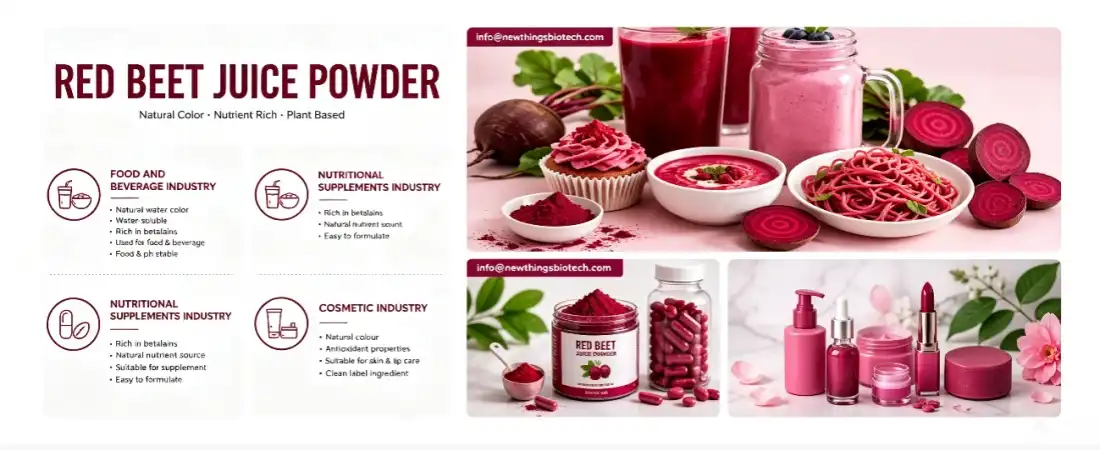
Understanding the Safety Profile of Natural Red Beetroot Extract Powder
Responsible formulators need to carefully assess safety issues prior to adding any ingredient to cosmetic formulations, including toxicity data, allergy potential and historical use trends. Natural red beetroot extract powder has a very promising profile for usage in a wide range of personal care applications.
Historical Use and Traditional Acceptance
Beetroot has been eaten as food for thousands of years and there is a long history of human exposure to it with no ill effects and much confidence on its safety when applied to the skin. That it is edible implies it has undergone one of the most stringent long-term safety assessments imaginable: widespread human ingestion for millennia by varied populations, age groups and health conditions. In fact, the pigments that give beetroot its distinctive hue (betalains) have been taken in many forms with no noted harm. This sets a precedent of safe usage for regulatory bodies when considering cosmetic uses.
Toxicological Assessment and Literature Review
There are several toxicological studies of beetroot and its constituent chemicals in the scientific literature and no major problems have been found that would prevent its usage in cosmetics. The betalain pigments betacyanins and betaxanthins have been shown to have negligible toxicity in animal experiments, with no genotoxic or carcinogenic effects at levels of intake many times higher than any feasible cosmetic exposure. The LD50 of beetroot ingredients puts them in the safest of the natural substances. This leads to the conclusion that topical administration bears little danger. This beneficial toxicological profile is due to the ingredient’s evolutionary compatibility with human biology, since edible plants have co-evolved with human physiology for millions of generations.
Allergen Considerations and Sensitization Potential
Concerns of contact allergenicity and sensitisation are valid for each cosmetic component. Assessment of the phototoxic, irritating and allergenic potential of prospective additions is necessary. Based on the information available, natural red beetroot extract powder has a low potential to cause sensitisation, and there are no reported occurrences of serious allergic contact dermatitis associated with beetroot-derived substances used in cosmetic products. Trace proteins that may be found in botanical extracts that occasionally induce immunological responses are present at quantities much below limits linked with sensitisation for beetroot chemicals. The good allergen profile facilitates wide usage across consumer segments including those with sensitive skin needs.
Skin Benefits That Make Beetroot Extract Valuable for Cosmetics
Beyond safety considerations, cosmetic ingredients must deliver meaningful benefits that justify their inclusion and satisfy consumer expectations. Natural red beetroot extract powder provides multiple skin-supporting functions that align perfectly with current skincare trends favoring antioxidant protection, anti-aging benefits, and natural radiance enhancement.
Antioxidant Protection for Skin Defense
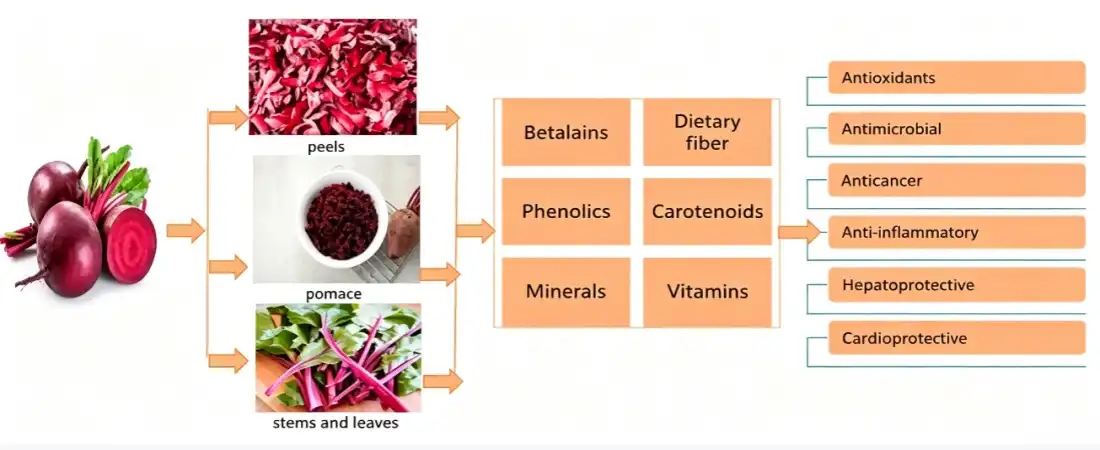
The antioxidant power of beetroot extract is mostly attributed to its pigments, called betalains, which have been shown in laboratory tests to be quite effective in mopping up free radicals. These antioxidants neutralise reactive oxygen species that build up in skin from UV exposure, pollution, stress and regular metabolic activities. Premature ageing, collagen loss and cellular dysfunction are caused by free radical damage which shows up as fine wrinkles, uneven tone and loss of firmness. By using natural red beetroot extract powder in cosmetic formulas, cosmetic producers may provide customers antioxidant protection that helps the skin’s own natural defence systems against environmental aggressors.
Anti-Aging and Collagen Support
Betaine chemicals activate the enzymes that decompose collagen and increase skin ageing, indicating the potential for anti-wrinkle effects beyond antioxidant protection. According to research, several compounds in beetroot may decrease the activity of matrix metalloproteinases, enzymes that degrade collagen and elastin fibres in ageing skin. In addition to the antioxidant properties of the substance, the mechanism-based support for collagen preservation makes it a multi-faceted anti-aging skincare treatment that appeals to customers looking for complete solutions. Cosmetic businesses may design solutions to fight the apparent indications of ageing using natural red beetroot extract powder, supported by both historic usage and increasing scientific data.
Skin Conditioning and Radiance Enhancement
Besides the preventive activities, beetroot extract offers direct conditioning advantages to improve appearance and tactile properties. Beetroot has many substances, including vitamins and minerals, which enhance skin health overall. Its bright colours may also provide a delicate natural hue to cosmetic products. Beetroot extract products are typically claimed to enhance skin luminosity, smoothness and overall complexion brightness, contributing to client satisfaction and repeat purchase. The observable advantages are converted into appealing marketing messages targeting people who want items that give apparent outcomes.
Regulatory Framework and International Compliance
Cosmetic formulations have to conform with various regulatory standards that vary greatly across world markets. Understanding these frameworks helps firms in selecting substances that help to get compliant market access in their target locations.
United States Regulatory Perspective
The Food and Drug Administration (FDA) regulates cosmetics under the Federal Food, Drug, and Cosmetic Act. This law requires that ingredients be safe, but it does not require each cosmetic product to be approved before it is marketed. The FDA registers beetroot and beetroot derived compounds as generally recognised as safe for ingestion, which supports their usage in cosmetic applications. Cosmetic chemicals originating from food often encounter less regulatory obstacles than innovative synthetic compounds, since a history of usage gives a great deal of safety assurance. Manufacturers should also ensure that enough documentation is available to support the safety-in-use of their formulations and keep records indicating appropriate vigilance in ingredient selection.
European Union Cosmetics Regulation
Perhaps the strongest regulation of cosmetics in the world is the Cosmetics Regulation EC 1223/2009 of the European Union, which mandates a full safety evaluation for any cosmetic product put on the market in the EU. Ingredients must be recorded in the Inventory of cosmetic ingredients and certain types of substances are subject to additional limitations. Beetroot extract and the individual constituents are included in the inventory without or with minor limitations, which means that they may be used in all cosmetic applications in the EU. NT Biotech, as a recognised supplier, can deliver natural red beetroot extract powder with all the necessary paperwork and traceability for EU compliance, the correct INCI nomenclature and supply chain transparency.
International Certification Portfolio
Cosmetic companies that sell in several markets benefit from ingredient suppliers with certificates accepted in multiple governments. Natural Red Beetroot Extract Powder With ISO9001 Quality Management Certification KOSHER Certification For Products Targeting Jewish Consumers HALAL Certification Supporting Access To Muslim-Majority Markets These certificates, validated by periodic audits carried out by independent third parties, ensure that the provided substances fulfil the established criteria and quality standards demanded by international trade.
Formulation Considerations for Cosmetic Applications
It is essential to understand how chemicals react in formulation matrices, including their compatibility with other components, stability throughout processing, and performance throughout the product shelf life, for successful cosmetic creation.
pH Considerations and Color Stability
When producing cosmetic goods formulators need to consider the pH dependant stability of the betalain pigments that give beetroot its unique colour. These pigments are stable across a mildly acidic to neutral pH range of around 4.0 to 7.0 which covers most skin care products. Very acid circumstances may sometimes cause fading of colour during long storage. Highly alkaline conditions can move the colour to purple-brown colours. Good natural red beetroot extract powder is rather robust to ordinary cosmetic pH ranges, although validation testing in real storage settings is still recommended for products with long shelf life expectations.
Compatibility with Cosmetic Raw Materials
Formulators should consider possible interactions of natural red beetroot extract powder with other formulation ingredients that might impact stability, effectiveness or aesthetics. Betalains stability may be affected by oxidising components, strong acids or bases and certain preservative systems, and these should be investigated throughout development. Metal ions occasionally may affect the colour expression but it depends on the particular formulation makeup. This is why standard compatibility testing is done throughout development, to detect issues prior to scaling to production so that you may optimise to guarantee that the final goods will fulfil the quality requirements for the duration of their shelf life.
| Formulation Type | Optimal pH Range | Typical Inclusion Rate | Stability Notes |
|---|---|---|---|
| Skincare serums | 5.0-6.5 | 0.5-2.0% | Excellent in aqueous systems |
| Cream moisturizers | 5.5-7.0 | 0.3-1.5% | Good overall stability |
| Cleansing products | 4.5-8.0 | 0.2-1.0% | Varies with surfactant systems |
| Color cosmetics | 5.0-7.0 | 1.0-5.0% | Depends on base formula |
| Masks and treatments | 5.0-7.0 | 0.5-3.0% | Generally excellent |
Concentration Guidelines for Optimal Performance
The definition of optimum inclusion rates is a compromise between intended advantages and practical concerns including cost, implications on colour and possible interactions. Natural red beetroot extract powder is commonly used in cosmetic formulations at 0.5% to 5% depending on the desired function and type of formulation. those that provide antioxidant benefits may need lower inclusion levels to provide the intended impact, whereas those that are focused on providing visible colour or improved conditioning benefits may require greater concentrations. Recommended ranges should be a starting point and then you should tune them based on performance testing to optimise to provide the desired advantages effectively.
Sourcing Premium Natural Red Beetroot Extract Powder for Cosmetics
Botanical extracts may vary greatly in quality from provider to supplier depending on their sourcing, processing and quality control procedures. Cosmetic makers should assess possible suppliers on many levels, to guarantee that acquired ingredients fulfil the criteria that their formulas demand.
Processing Methodology and Quality Preservation
The process of production of natural red beetroot extract powder has a considerable impact on the quality of the finished product and its effectiveness in cosmetic applications. The extraction process impacts the component concentration, purity and stability qualities that directly influence the success of the formulation. NT Biotech and other quality providers use patented extraction techniques that optimise the production of betalains while retaining the integrity of the pigments during processing. This technology differential allows for extracts with standardised requirements that allow for consistent formulation outcomes for manufacturing batches and over time.
Organic Certification and Purity Verification
The cosmetic industry is increasingly seeking a natural and organic posture, which needs suppliers of ingredients to be able to provide proper certification paperwork. Organic certification means the source beetroots were grown without synthetic pesticides and fertilisers, there are no chemical residues for health-conscious customers to worry about. All extracts given are quality tested in addition to organic certification to confirm levels of heavy metals, pesticides and microbiological contamination are below acceptable limits. NT Biotech provides full Certificates of Analysis for every batch confirming conformance to specifications by HPLC verification, heavy metal testing and microbiological testing that meets the most stringent cosmetic quality standards.
Documentation and Regulatory Support
Responsible cosmetic makers have a lot of paperwork to prove the safety and compliance of their compositions. It is the quality ingredient suppliers that supply the accompanying documents to allow this compliance. These include technical data sheets, safety data sheets, specification papers and certificates of analysis. NT Biotech’s documentation package facilitates rapid regulatory filings worldwide, while offering the openness that more sophisticated cosmetic businesses are demanding from their suppliers.
For technical specifications, certification documentation, or custom requirement discussions, reach out directly to info@newthingsbiotech.com where knowledgeable specialists provide detailed consultation and responsive support.
Quality Standards and Testing Protocols
Cosmetic ingredients must be thoroughly tested to ensure their safety, purity, and effectiveness against the metrics that are relevant for skincare uses. Understanding of standard testing processes lets to make educated assessments of supplier capabilities.
Chemical and Physical Characterization
Full characterisation of the element provides the identification, purity and quality attributes to guarantee the materials delivered are within specification criteria. Key testing includes HPLC analysis to validate the betalain pigment concentration, assessment of moisture to verify water activity and shelf stability potential, and characterisation of particle size to influence formulation behaviour. The tests prove that the natural red beetroot extract powder given is within criteria necessary for successful formulations. This means that development samples may be confidently scaled-up to commercial production.
Contaminant Screening and Safety Verification
Botanical ingredients must be thoroughly screened for contaminants and the unique dangers of agricultural goods and manufacturing conditions must be considered. Heavy Metal Testing (ICP-MS) Screening for lead, arsenic, cadmium, mercury and other potentially dangerous metals that might build up from soil, water or processing equipment. Residue testing for pesticides shows that no agricultural chemicals that should be excluded under organic certification were present. Microbiological tests indicate that good cleanliness is observed throughout manufacture, packing and storage. Cosmetic producers may confidently complete their safety evaluations with evidence of all required tests from quality providers.
Stability Testing and Shelf Life Determination
Knowing how stable the ingredients are under different storage circumstances helps make accurate statements about the shelf life and storage recommendations for the completed product. Good quality natural red beetroot extract powder may be kept for a long amount of time if maintained correctly. The deterioration rate is affected by temperature, exposure to light and humidity. The specification papers from NT Biotech provide direction on optimal storage conditions and projected shelf life of a product, allowing cosmetic producers to make suitable quality claims for their completed goods.
Conclusion
Natural red beetroot extract powder presents an exceptionally favorable safety profile for cosmetic applications, supported by extensive historical use as food, favorable toxicological assessment, and minimal allergenicity that enables broad consumer accessibility. Beyond its safety credentials, beetroot extract delivers meaningful skin benefits including antioxidant protection, anti-aging support, and conditioning properties that align perfectly with consumer preferences for effective natural skincare. Regulatory frameworks across major global markets recognize beetroot-derived ingredients without significant restrictions, enabling compliant market access for properly documented products. Quality sourcing from established suppliers like NT Biotech ensures cosmetic manufacturers receive ingredients meeting the rigorous specifications their formulations and regulatory submissions require. The combination of safety, efficacy, and regulatory acceptance makes natural red beetroot extract powder a compelling choice for cosmetic brands pursuing natural positioning without compromising on performance or compliance.
FAQ
1. Is natural red beetroot extract powder safe for use in skincare products?
Yes, beetroot extract demonstrates excellent safety for topical applications with extensive historical consumption data, favorable toxicological profiles, and no significant allergenicity concerns.
2. What skin benefits does beetroot extract provide in cosmetics?
Beetroot extract provides antioxidant protection through betalain pigments, potential anti-aging support through collagen-preserving mechanisms, and conditioning benefits that enhance skin radiance and overall appearance.
3. What concentration of beetroot extract should cosmetic formulations use?
Typical cosmetic inclusion rates range from 0.5% to 5% depending on intended function, with antioxidant benefits achievable at lower concentrations and color contribution requiring higher rates.
4. What certifications should cosmetic-grade beetroot extract suppliers maintain?
ISO9001 quality management certification, organic certification, and comprehensive testing documentation including HPLC verification and heavy metal screening through ICP-MS.
5. How should natural red beetroot extract powder be stored?
Store in airtight containers in cool, dark locations away from moisture and direct light to preserve color intensity and antioxidant potency throughout shelf life.
Partner with NT Biotech for Premium Natural Red Beetroot Extract Powder
Transform your cosmetic formulations with natural red beetroot extract powder that delivers safety, efficacy, and the documentation that regulatory compliance requires. NT Biotech combines certified organic farming partnerships, proprietary extraction technology, and comprehensive third-party testing to produce extract with standardized specifications and exceptional purity that cosmetic manufacturers trust. Our ISO9001-certified quality management, KOSHER and HALAL certifications, and complete documentation package support your regulatory submissions across global markets. With responsive technical support, flexible order quantities, and logistics options matching your specific requirements, NT Biotech provides the partnership that enables successful cosmetic product development. Reach out today at info@newthingsbiotech.com to discuss your natural red beetroot extract powder requirements, request samples for formulation evaluation, or explore how our expertise and quality commitment can elevate your cosmetic line.
References
1. Azeredo, H.M.C. (2009). Betalains: Properties, sources, applications, and stability. International Journal of Food Science and Technology, 44(12), 2365-2376.
2. Khan, M.I., Giridhar, P., & Bettadaiah, B.K. (2014). Chemistry and food applications of betalains. Food Chemistry, 162, 443-450.
3. Clifford, T., Howatson, G., West, D.J., & Stevenson, E.J. (2015). The potential benefits of red beetroot supplementation in health and disease. Nutrients, 7(4), 2801-2822.
4. Rodriguez, E.B., & Mendoza, D.B. (2019). Natural food pigments: Chemistry, sources, and applications in the food industry. Comprehensive Reviews in Food Science and Food Safety, 18(2), 312-326.
5. Naderi, M., Ghazali, H.M., & Manap, M.Y.A. (2015). Betalain: A bioactive compound and its applications. International Journal of Food Properties, 18(8), 1669-1678.
6. Kumar, S., & Kumar, R. (2018). Betalains: Natural colorants with pharmacological properties. Journal of Food Science and Technology, 55(4), 1201-1212.