- English
- French
- German
- Portuguese
- Spanish
- Russian
- Japanese
- Korean
- Arabic
- Greek
- German
- Turkish
- Italian
- Danish
- Romanian
- Indonesian
- Czech
- Afrikaans
- Swedish
- Polish
- Basque
- Catalan
- Esperanto
- Hindi
- Lao
- Albanian
- Amharic
- Armenian
- Azerbaijani
- Belarusian
- Bengali
- Bosnian
- Bulgarian
- Cebuano
- Chichewa
- Corsican
- Croatian
- Dutch
- Estonian
- Filipino
- Finnish
- Frisian
- Galician
- Georgian
- Gujarati
- Haitian
- Hausa
- Hawaiian
- Hebrew
- Hmong
- Hungarian
- Icelandic
- Igbo
- Javanese
- Kannada
- Kazakh
- Khmer
- Kurdish
- Kyrgyz
- Latin
- Latvian
- Lithuanian
- Luxembou..
- Macedonian
- Malagasy
- Malay
- Malayalam
- Maltese
- Maori
- Marathi
- Mongolian
- Burmese
- Nepali
- Norwegian
- Pashto
- Persian
- Punjabi
- Serbian
- Sesotho
- Sinhala
- Slovak
- Slovenian
- Somali
- Samoan
- Scots Gaelic
- Shona
- Sindhi
- Sundanese
- Swahili
- Tajik
- Tamil
- Telugu
- Thai
- Ukrainian
- Urdu
- Uzbek
- Vietnamese
- Welsh
- Xhosa
- Yiddish
- Yoruba
- Zulu
knowledge
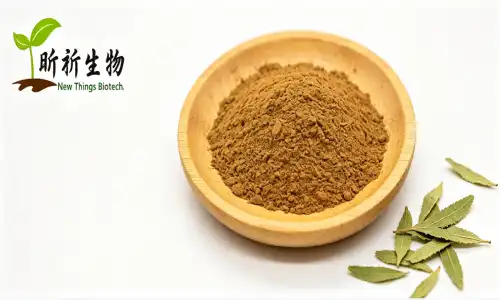
Senna extract powder is a concentrated botanical ingredient made from senna leaves or fruits, traditionally used in herbal formulas that support bowel regularity. Its activity is mainly associated with naturally occurring sennosides, which are hydroxyanthracene derivatives processed and standardized for consistent formulation. For supplement brands, tea manufacturers, and herbal-product companies, choosing the right source is essential because plant part, extraction method, active-marker content, testing, and regulatory status can all affect the finished product. For sourcing and product development inquiries, companies can contact NT Biotech at info@newthingsbiotech.com. NT Biotech supplies standardized natural ingredients for dietary supplements, functional foods, cosmetics, and animal nutrition. Its quality-focused processing, batch documentation, OEM/ODM services, flexible logistics, and international support make it a valuable partner for companies searching for a dependable senna extract powder supplier.

Understanding Senna Extract Powder
The botanical origin of senna
Senna commonly refers to plants in the Senna genus, especially Senna alexandrina and related botanical materials used in traditional herbal preparations. Commercial products may be made from senna leaves, leaflets, pods, or fruits, and these materials should not be treated as automatically interchangeable. The plant part can influence the chemical profile, extraction yield, color, and active-marker content. A responsible supplier should clearly identify the scientific name, plant part, geographic origin, cultivation or collection method, and processing conditions. When purchasing senna extract powder, buyers should request this information before comparing prices. NT Biotech’s broader experience in natural-material sourcing and plant extraction supports a source-to-application approach in which raw-material identity is connected with production, testing, and finished-product use.
Powder, extract, and extract ratio
A dried senna powder is usually produced by drying and milling plant material. A senna extract is made by treating the botanical material with a defined extraction process, concentrating selected constituents, and converting the concentrate into a dry powder. The final ingredient may include a carrier to improve flow, stability, or drying performance. Extract ratios such as 10:1 can provide useful process information, but they do not independently prove potency. Two extracts with the same ratio may contain different levels of sennosides. Therefore, the specification for senna extract powder should state the active-marker range, analytical method, moisture limit, carrier content, and storage conditions. This information gives formulators a more reliable basis for calculating serving sizes and comparing different grades.
What the ingredient is designed to do
Senna is traditionally used as a stimulant laxative ingredient in herbal products intended for short-term relief of occasional constipation. Its role is different from that of dietary fiber, bulk-forming ingredients, or osmotic agents. In a finished formula, senna extract powder is generally selected because its standardized constituents can support a predictable botanical function when used according to an approved formulation and label direction. It should not be promoted as a general “detox” ingredient or as a substitute for a balanced diet, sufficient fluid intake, regular movement, or professional medical evaluation. For manufacturers, the most important first step is to define the intended product category and market requirements before choosing the botanical specification.
| Specification item | Why it matters |
|---|---|
| Scientific name | Confirms the identity of the intended senna species |
| Plant part | Distinguishes leaf, pod, fruit, or blended material |
| Extract ratio | Describes concentration history but does not replace assay data |
| Active-marker range | Helps calculate the amount required per serving |
| Test method | Shows how identity and potency are measured |
| Carrier information | Supports accurate label and formulation calculations |

How Senna Extract Powder Works
The role of sennosides
The best known active principles of senna are the sennosides, a family of hydroxyanthracene derivatives. These chemicals travel through the upper stomach almost unchanged and are then metabolised to active metabolites by bacteria in the colon. These metabolites may enhance colonic motility and influence the regulation of water and electrolytes in the intestinal contents. This is the method in which senna extract powder is used in goods that are formulated to encourage regular bowel motions. The intensity and timing of effect depend on the specific formulation, active-marker concentration, serving size, individual response and product instructions. Therefore, the manufacturers should standardise the product carefully, not just on the basis of a generic extract ratio or an unsubstantiated botanical identity.
Onset and formulation expectations
Senna products are not often used as an instant beverage additive. Their impact is usually related to digestive transit and colonic metabolism and so the product format, time of usage and user recommendations are critical. Capsules and tablets may give a more regulated serving, while teas and granules provide a distinct user experience.Senna extract powder may be formulated in various forms but the end product should be verified for uniformity and stability. Brands should be offering clear guidelines, not pushing overconsumption. For ongoing constipation, recurring constipation or constipation associated with worrying symptoms, consumers should be advised to seek expert medical guidance rather than self-managing frequently using herbal laxative remedies.
Why standardization affects performance
Standardisation is important since organically grown plants might differ according to species, environment, soil, harvest time, storage and processing. An uneven sennoside content in a batch may lead to problems with dosage calculation and quality control of the completed product. A professional senna extract powder supplier should use an agreed specification and verify each commercial lot with a suitable analytical method. NT Biotech stresses laboratory testing, HPLC/UV documentation for relevant items and Certificates of Analysis. Buyers should establish if the reported test is on an as-is or dry basis, whether the result pertains to total sennosides or another marker, and whether acceptability limitations apply. These features make a botanical substance a workable production component.
Responsible use matters
Due to the stimulating laxative action of senna, product manufacturers are educated to adopt a careful approach to label wording, serving instructions and target users. Long term or excessive usage may not be recommended and customers with chronic stomach complaints should seek advice from a healthcare expert. Manufacturers should also take into account age limits, advise relating to pregnancy, current medicine usage and market particular warnings when appropriate. This post is not about individualised treatment advice but about ingredient selection. When manufacturing senna extract powder goods, firms should engage with certified regulatory and medical authorities so that claims and recommendations are accurate. The finished-product firm is responsible for product safety and legal compliance. Specifications and technical papers may be available from a reputable source.

Developing a Stable Senna Formula
Capsules and tablets
Senna products are usually available in the form of capsules and tablets because they allow a set quantity of senna extract powder to be provided in a small volume. During development, producers must assess powder flow, bulk density, moisture, particle size, mix homogeneity and fill-weight accuracy. If the extract is mixed with fibre, minerals, herbs or excipients, the substances must be uniformly dispersed throughout the batch. Tablet producers also have to analyse compression, hardness, friability, disintegration and storage stability. A tiny test run will show if the ingredient will flow easily through the manufacturing machinery. NT Biotech’s OEM and ODM assistance may help businesses organise raw-material procurement, packaging, private-labeling and finished-product development, while keeping a precise technical specification.
Herbal teas and granules
Herbal teas, granules and other traditional remedies also include senna. These forms may make the user more comfortable, but need tight control of flavour, colour, particle size, dispersability and serving uniformity. If senna extract powder is used to a tea blend, the maker should check for good blending with other botanicals and little settling during packing. Tea bags and instant granules may require different moisture-barrier packaging. The product should also provide clear preparation instructions, because the amount of water and brewing time can affect the final serving. Finished-product testing is necessary to confirm that each unit contains the declared quantity of active constituents.
Packaging and storage
Botanical powders may be adversely impacted by moisture, heat, air, light and bad handling. Senna extract should be kept in accordance with the latest supplier standard, normally in a well sealed moisture resistant packaging shielded from excessive heat and humidity. The package should provide lot number, production date, expiration date and storage directions for traceability. For senna extract powder, stability testing should demonstrate that active-marker content remains within specification during the proposed shelf life. High-barrier liners, sealed drums, or other protective packaging may be considered depending on the powder’s hygroscopicity and the distribution environment. NT Biotech can coordinate packaging and shipment requirements, while the finished-product manufacturer should confirm stability in the final container.
| Formulation format | Main technical focus |
|---|---|
| Capsules | Flowability, fill weight, blend uniformity, and moisture |
| Tablets | Compression, hardness, friability, and disintegration |
| Herbal tea | Distribution, particle size, brewing instructions, and flavor |
| Instant granules | Dispersibility, moisture protection, and serving consistency |
| Powder blends | Segregation control, carrier compatibility, and shelf life |
Labeling and claim review
A strong herbal product label should explain intended use without exaggeration. Marketing phrases such as “instant detox,” “complete cleansing,” or “permanent weight loss” can be misleading and may create regulatory concerns. Instead, the brand should use approved language, provide serving directions, identify the botanical material accurately, and include any required warnings or limitations. The declaration of senna extract powder should be consistent with the actual active-marker content in the finished product. Claims, packaging, advertisements, social-media content, and online descriptions should all be reviewed together because regulators may evaluate the entire consumer-facing presentation. NT Biotech can provide technical documentation for the raw material, but final label approval should be completed by the brand’s qualified regulatory team.

Choosing a Reliable Senna Extract Powder Supplier
Review quality documents first
A good senna extract powder provider should offer more than a pricing list. The purchasers should seek a product definition, scientific identification information, a plant-part statement, origin paperwork, extraction description, active-marker assay, test technique, storage conditions, allergy declaration and lot-specific Certificate of Analysis. Depending on the target market, purchasers may additionally request testing for heavy metals, pesticides, microbes, residual solvents and foreign debris. NT Biotech discusses a technology-driven supply paradigm connecting natural-material sources, research and development, processing, laboratory release and adaptive supply chains. Quality capabilities include ISO9001, Kosher, Halal support, etc. The buyer is responsible for checking the extent and validity of each certificate and ensuring that it applies to the actual place of manufacture and product.
Confirm testing and batch consistency
Testing should be appropriate to the botanical and its intended use. Identity testing helps confirm that the material is truly the stated Senna species, while chromatographic or other validated methods can assess active markers. Other important tests may include microbiological testing, heavy-metal testing, pesticide screening and moisture testing. The CoA of senna extract powder should include lot number, testing date, method, result, unit and acceptability range. Buyers should enquire about retention samples and investigation of out-of-specification findings. NT Biotech highlights comprehensive quality documentation and batch CoA support for relevant products. This approach can help supplement brands, contract manufacturers, and quality teams approve incoming material with greater confidence.
Evaluate lead time and inventory
Reliable supply is essential when an herbal product has an established customer base or a fixed launch schedule. NT Biotech is aiming to deliver first answers within two hours. The company has stock of chosen standardised extracts and can ship available stock within one to three working days following confirmation of purchase. Typical manufacturing orders may take anywhere from three to ten working days, including raw material purchasing, processing, laboratory testing, packing and final release. The real senna extract powder time relies on plant part, assay, amount, packing, testing need and destination. Buyers should request a written production and shipping schedule and share demand forecasts when possible. This allows the senna extract powder supplier to plan production more effectively.
Consider logistics and customization
Different orders require different transportation methods. Express shipping may suit samples and urgent replenishment, while air or sea freight may be more practical for larger commercial quantities. NT Biotech reports flexible transportation through express, air, and sea options, including direct FEDEX or UPS shipments and freight-forwarder support for bulk orders. It also provides OEM and ODM solutions for diverse nations and customers' needs. If you are a buyer creating senna extract powder capsules, pills, teas or private label goods, please provide us the following information: target market, dosage form, yearly volume, packaging size, certification requirements and intended launch date. Flexible payment solutions, including payment in the buyer's local currency where available, may further simplify international cooperation.
If you are evaluating a senna ingredient for a new herbal formula, contact NT Biotech at info@newthingsbiotech.com. Share your target market, plant part, active-marker range, dosage form, volume, and documentation requirements for a more focused technical recommendation.

Making a Better Purchasing Decision
Compare specifications, not marketing adjectives
Words such as "premium," "strong," and "high potency”"are meaningless unless substantiated by verifiable evidence. Buyers looking to compare senna extract powder should compare supplier specifications side by side and look at the scientific name, plant component, extraction ratio, marker assay, test technique, moisture, microbiological limits, packing and storage conditions. They should also check for the presence of carriers and if the advertised price is for a standardised extract or for a normal dry powder. With NT Biotech's focus on standardising procedures and documentation, clients can make a more impartial comparison. The best supplier is the one that delivers material that meets the technical and regulatory requirements of the completed product, not necessarily the one with the lowest price per kilo.
Use samples and pilot batches wisely
The sample should be as representative as feasible of the commercial grade. The buyer must check its lot number,production date,packaging and specification before testing. Assess flow, blend consistency, capsule filling, tablet compression, tea dispersion, taste, colour, and finished-product stability using a test batch. The original sample may no longer be a suitable reference if a new assay or carrier will be used for the commercial order. For senna extract powder, completed product testing should be performed to validate the active-marker content, rather than depending only on theoretical estimates. NT Biotech is able to provide technical coordination and OEM/ODM development assistance with final validation and release to be done by the manufacturer.
Calculate the total cost of ownership
The actual price of a botanical ingredient is more than just the price per kg. Buyers must consider the potency, the serving size, the freight, the customs, the storage, the minimum order quantity, the testing, the manufacturing losses, the rejected batches and the delays due to missing paperwork. A supplier that offers dependable CoAs, prompt communication, adequate packaging, and flexible delivery may help decrease hidden expenses. When choosing senna extract powder providers, seek comparable business information from each contender, such as Incoterms, payment terms, lead time, certification status, sample policy and change control methods. NT Biotech’s varied shipping options, OEM support and buyer-friendly payment alternatives may benefit enterprises working on goods across different markets.

Conclusion
Senna extract powder is a standardised herbal ingredient, often used in herbal formulations to help maintain regular bowel function. Its efficacy depends on the species of Senna, the plant part, the extraction method, the active-marker concentration, the dosage calculation and the shape of the final product. Buyers should verify scientific identification, consider lot specific tests, use appropriate labelling approaches and consider market particular regulations prior to launch. NT Biotech specialises in natural ingredients, standardised processes, batch documentation, OEM/ODM adaptation, flexible logistics and international customer support. A good supplier of senna extract powder may provide firms with improved traceability, uniformity and confidence in their composition. If you want to responsibly make a herbal product with appropriate documentation, please contact NT Biotech to discuss your request.
FAQ
1. What is senna extract powder?
It is a dried botanical extract made from senna plant material and commonly standardized to active constituents such as sennosides.
2. How does senna extract powder work?
Its active metabolites act mainly in the colon, where they can stimulate intestinal movement and support bowel evacuation.
3. Is senna extract the same as senna leaf powder?
No. Senna leaf powder is generally milled plant material, while an extract is processed and may contain a higher concentration of selected constituents.
4. What documents should bulk buyers request?
Request the scientific name, plant-part statement, specification, active-marker test, CoA, origin information, storage guidance, and applicable certificates.
5. Can NT Biotech customize senna products?
Yes. NT Biotech offers OEM/ODM services, packaging coordination, technical support, and flexible logistics for different markets and product formats.
Develop Your Herbal Product with NT Biotech
NT Biotech supports brands that need reliable natural ingredients, clear documentation, and practical help from sourcing to finished-product development. Its services include standardized processing, batch testing, Certificate of Analysis support, packaging coordination, OEM/ODM customization, and international transportation by express, air, or sea. Companies developing senna capsules, tablets, teas, granules, or private-label herbal products can discuss active-marker specifications, plant-part requirements, target-market documents, storage, lead time, and payment options with one responsive partner. If you are looking for dependable senna extract powder, contact info@newthingsbiotech.com with your application, target market, expected volume, and quality requirements. NT Biotech can help you select a suitable grade and move toward a consistent, traceable, and responsibly marketed herbal formula.
References
1. European Medicines Agency. “European Union Herbal Monograph on Senna Leaf.” Committee on Herbal Medicinal Products.
2. European Medicines Agency. “European Union Herbal Monograph on Senna Fruit.” Committee on Herbal Medicinal Products.
3. World Health Organization. WHO Monographs on Selected Medicinal Plants: Folium Sennae.
4. Blumenthal, M., W. R. Busse, and A. Goldberg. The Complete German Commission E Monographs: Therapeutic Guide to Herbal Medicines.
5. Evans, W. C. Trease and Evans’ Pharmacognosy. Elsevier.
6. Williamson, E. M., K. R. Driver, and K. Baxter. Stockley’s Herbal Medicines Interactions. Pharmaceutical Press.
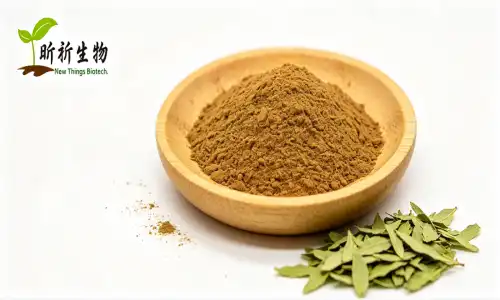
Choosing the right senna extract powder requires more than comparing prices or selecting the highest advertised percentage. Senna is a botanical ingredient traditionally used in herbal preparations designed to support bowel regularity, so identity, active-marker standardization, dosage control, regulatory status, and supplier documentation are especially important. NT Biotech supports manufacturers with standardized natural ingredients, batch testing, flexible OEM/ODM solutions, and international logistics. Its experience in plant-derived raw materials can help supplement, food, and herbal-product brands evaluate a suitable senna extract powder for capsules, tablets, teas, and customized formulas. Buyers searching for a dependable senna extract powder supplier should consider quality evidence, responsible formulation, and supply continuity—not simply the lowest quotation.
Begin with Senna Identity and Extract Type
Know the botanical source
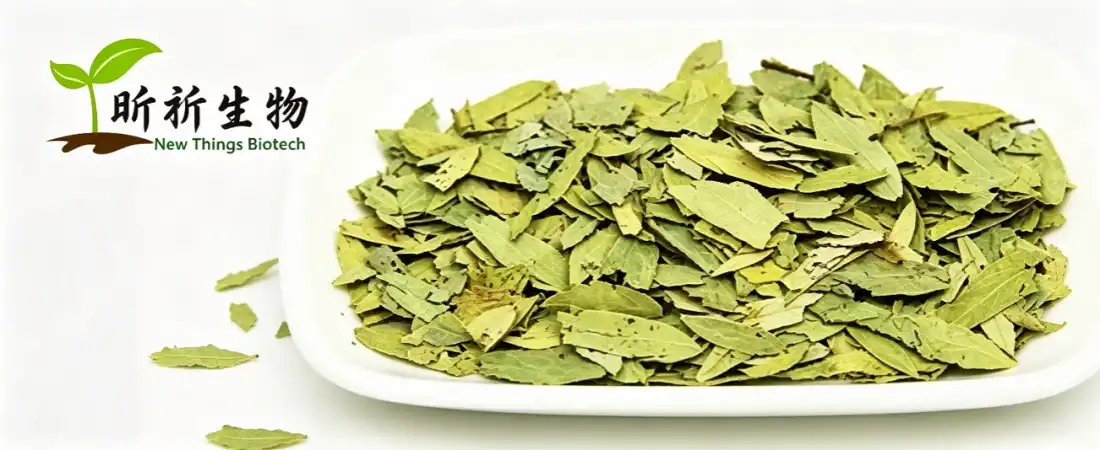
Senna generally refers to plants in the Senna genus, particularly Senna alexandrina and related species historically associated with senna leaf or pod preparations. Before approving a raw material, buyers should confirm the scientific name, plant part, geographical origin, cultivation or collection method, and identification procedure. These details matter because botanical names can be used inconsistently in commercial documents. A qualified senna extract powder supplier should provide a clear identity statement supported by suitable testing, such as macroscopic or microscopic examination, chromatography, or other validated methods. NT Biotech’s broader plant-extraction experience and source-to-application supply-chain model can support this type of review. Buyers should never approve a senna ingredient based only on a common name or a photograph of dried leaves.
Distinguish powder from extract
A dried senna leaf powder is not the same as a concentrated extract. Powder is usually milled plant material, while an extract is produced using a defined solvent and concentration process. The resulting material may be standardized to hydroxyanthracene derivatives, including sennosides, depending on the product specification and applicable regulations. This distinction affects serving size, potency, flowability, color, solubility, and label declarations. When purchasing senna extract powder, ask whether the product is a water extract, hydroalcoholic extract, or another preparation, and whether carriers are included during drying. The extract ratio alone does not fully describe potency; a measurable active-marker specification and test method are more useful for formulation decisions.
Why plant part and processing matter
Senna leaf and senna fruit or pod materials may have different chemical profiles and may be treated differently by regulatory authorities. Processing conditions can also influence the concentration and stability of active constituents. A professional supplier should explain the raw material, extraction conditions, concentration stage, drying technology, packaging, and storage recommendations. NT Biotech emphasizes standardized processing, laboratory testing, and Certificates of Analysis for applicable batches. This documentation allows buyers to compare senna extract powder grades using measurable criteria. Because the product information page supplied for this project concerns oyster mushroom extract rather than senna, buyers should request senna-specific specifications directly and avoid transferring mushroom-related data to a senna product.
| Identity and specification item | Why buyers should verify it |
|---|---|
| Scientific name | Confirms the intended Senna species |
| Plant part | Distinguishes leaf, pod, fruit, or blended material |
| Extract type | Clarifies solvent, concentration, and drying process |
| Active markers | Defines the declared sennoside or hydroxyanthracene specification |
| Test method | Shows how identity and potency are measured |
| Carrier ingredients | Affects label claims, flow, and finished-product calculations |

Evaluate Potency, Quality, and Regulatory Fit
Standardization is central to consistency
Senna products are commonly standardized according to their active constituents, particularly sennosides or total hydroxyanthracene derivatives. The exact marker, assay range, reference standard, and analytical method must be written clearly in the specification. Two products described as “10:1 extracts” may have different active-marker concentrations, so extract ratio should never replace assay data. A reliable senna extract powder supplier should provide a lot-specific Certificate of Analysis showing the measured result and acceptance range. NT Biotech highlights the use of laboratory testing, HPLC/UV documentation for relevant products, and batch CoAs. For senna, buyers should confirm whether the analytical method is appropriate for the declared marker and whether the result is calculated on an as-is or dried basis.
Review contaminant and quality testing
Botanical materials should be assessed for microbial quality, heavy metals, pesticides, foreign matter, moisture, and other risks relevant to their source and intended use. For senna extract powder, additional attention should be given to identity, active-marker uniformity, residual solvents where applicable, and adulteration. The correct testing panel depends on the market, formulation, and regulatory category. Buyers should request test methods, laboratory qualifications, sampling procedures, and retention-sample policies. NT Biotech’s integrated approach combines raw-material sourcing, processing, testing, and packaging, which can help create a more traceable quality system. Clear documentation is particularly important for senna because potency directly affects formulation calculations and directions for use.
Match the product to local regulations
Senna is not regulated identically in every country. Some markets treat certain senna preparations as herbal medicines, while others may classify them as foods, supplements, or regulated laxative products. Permitted plant parts, active-marker limits, warning statements, age restrictions, duration of use, and advertising language can vary. A brand should consult qualified regulatory professionals before launch. A supplier can provide technical documents, but it cannot replace a market-specific legal review. When evaluating senna extract powder, buyers should ask whether the supplier can provide origin statements, allergen information, certificates, stability data, and documents needed by the destination market. NT Biotech’s ISO9001, Kosher, and Halal capabilities may support supplier qualification, although additional regulatory requirements may still apply.
Use responsible safety language
Senna is a stimulant laxative ingredient, so responsible product development must include appropriate use instructions. Brands should avoid presenting it as a general “detox” solution or a long-term substitute for dietary fiber, hydration, movement, and medical evaluation. Excessive or prolonged use of stimulant laxatives may be inappropriate, and consumers with persistent bowel symptoms should seek professional advice. Mentioning these considerations is not a weakness; it demonstrates responsible quality management. A careful senna extract powder supplier should support accurate specifications and documentation, allowing brands to prepare compliant labels and directions. NT Biotech can assist with technical communication and OEM coordination, while final safety wording and regulatory approval remain the responsibility of the finished-product manufacturer.

Design a Senna Formula with Precision
Choose the appropriate dosage form
Senna extract powder may be used in capsules, pills, granules, instant herbal drinks, tea products etc. depending upon the market and formulation needs. Capsules and tablets give regulated serving quantities and teas may provide a more conventional consumer experience. The optimum form depends on the assay, density, flowability, hygroscopicity, taste and colour of the extract. A tiny capsule may need a high potency extract while a lesser strength substance may need additional carrier or bigger serving. During development, producers should test for mix homogeneity and fill-weight accuracy. NT Biotech OEM/ODM service helps firms manage raw-material selection, packaging and customised final goods using senna extract powder.
Calculate active content, not only material weight
Formula calculations should be based on the declared active marker and the intended serving, not simply on grams of extract. For example, if a product is standardized to a specified sennoside level, the amount of raw material required must be calculated against that assay and then verified through finished-product testing. Moisture and carrier content may also affect the calculation. Every batch should be reviewed against the approved specification before release. A qualified senna extract powder supplier should explain whether the assay is measured on an as-is basis, dry basis, or another basis. This detail prevents avoidable differences between theoretical calculations, label declarations, and actual finished-product results.
Protect the powder during storage
Moisture, heat, light, oxygen, and unsuitable packaging may influence the stability and flow of botanical extracts. Buyers should follow the supplier's storage recommendations and evaluate stability in the final container. Depending on the product qualities, high-barrier bags, sealed drums, moisture resistant liners or other packaging techniques may be considered. Lot number, production date, expiration date and storage instructions should be visible throughout the whole distribution process. For senna extract powder, stability testing should confirm that active markers remain within specification across the proposed shelf life. NT Biotech’s packaging coordination and batch documentation can support traceability, while the finished-product manufacturer should conduct its own real-time or accelerated stability program.
| Formulation checkpoint | Practical question |
|---|---|
| Serving calculation | Is the amount based on verified active-marker content? |
| Blend uniformity | Does every capsule, tablet, or sachet contain a consistent portion? |
| Packaging | Does the container protect the powder from moisture and light? |
| Stability | Does potency remain within specification throughout shelf life? |
| Label review | Are directions, warnings, and claims compliant in the target market? |

Select a Supplier That Supports the Whole Project
Documentation and quality systems
A competent senna extract powder provider should give more than a business quote. Buyers should obtain product definition, lot-specific CoA, botanical identification data, origin statement, processing description, storage conditions, allergy declaration and any regulatory documentation. NT Biotech is a technology-based provider of nutritional supplements, functional foods, cosmetics and animal nutrition, situated in Taipei, Taiwan. Quality capabilities include ISO9001, Kosher and Halal support, standard processes and laboratory documentation. Buyers should check certificate scope, validity, issuing organisation and applicability to real production plant. Accurate records help quality teams and contract manufacturers to approve the senna extract powder and for future audits as well.
Delivery speed and inventory planning
Supply interruptions can delay product launches and create unnecessary reformulation pressure. NT Biotech states that it aims to respond to inquiries within two hours, maintains inventory for selected standardized extracts, and may ship available stock within one to three working days after order confirmation. Typical production orders may require three to ten working days, covering raw-material procurement, processing, testing, CoA preparation, and final packaging. Actual timing for senna depends on species, plant part, assay, quantity, packaging, and destination, so buyers should confirm the schedule in writing. Sharing forecasts with the senna extract powder supplier can improve production planning and reduce the risk of last-minute shortages.
Logistics and customized services
Samples could be appropriate for express shipping, while air or sea freight might be more efficient for bigger orders. NT Biotech offers multiple shipping options, including express, air and sea transportation, direct FEDEX or UPS shipment and freight-forwarder service for bulk delivery. The firm also provides OEM and ODM solutions for a variety of markets and client needs. Buyers should include the desired dosage form, target country, yearly volume, package size, desired certifications and launch timetable. This information allows NT Biotech to provide a better specification for senna extract powder and to organise private labelling or final product development. Flexible payment alternatives, including local-currency payment when possible, may also facilitate international collaboration.
If you are developing a compliant herbal formula, contact NT Biotech at info@newthingsbiotech.com. Share your target market, desired active-marker range, dosage form, expected volume, and document requirements for a more focused technical response.

Create a Responsible Commercial Product
Build claims around evidence
A successful senna formula should be informative rather than sensational. Claims should be true and appropriate for the product's intended purpose and should comply with laws in the destination market. Don't make any sweeping claims like "total detox," "permanent weight loss,"or "instant cleansing."Brands should instead disclose serving instructions, intended length of use, storage restrictions and any legally mandated cautions. The technical specification of the senna extract powder should support the label declaration and the completed product should be tested to validate potency and consistency. Good labelling helps customers make educated choices and protects the company from unnecessary compliance issues.
Use quality agreements for long-term supply
Quality agreement may be used to specify identification, assay, testing techniques, packing, change control, deviation management, complaint processes, notification schedules, etc. for repeated buys. It may also state how the provider will disclose changes in the source of raw materials, extraction conditions, analytical procedures or production locations. These details are especially useful for a botanical ingredient whose active-marker content must remain consistent. NT Biotech’s batch CoA process and technical coordination provide a practical foundation for discussing long-term supply. A written agreement gives the buyer and the senna extract powder supplier a shared reference point as order volumes grow and products enter additional markets.
Measure total value, not only kilogram price
The lowest unit price may not create the lowest total cost. Buyers should consider assay, serving size, testing, freight, customs, storage, minimum order quantity, production losses, rejected batches, and the cost of delays caused by incomplete documents. A supplier that provides accurate CoAs, responsive communication, flexible logistics, and OEM support may reduce hidden development expenses. When comparing senna extract powder offers, ask every supplier for equivalent information: botanical identity, plant part, active-marker assay, test method, packaging, lead time, Incoterms, certification status, sample policy, and payment terms. A complete comparison reveals which partner can support dependable growth rather than only one transaction.

Conclusion
When you decide to buy senna extract powder you need to look closely at botanical identification, plant part, technique of extraction, active-marker standardisation, testing, dose calculations, packaging and market restrictions. Since senna is a stimulating laxative substance, responsible claims, clear instructions and adequate regulatory scrutiny are necessary. Buyers should assess the whole package being offered by the provider and not just the extract ratio or pricing. “NT Biotech has standardised natural ingredient processing, batch documentation, OEM/ODM customisation, flexible logistics, and international customer support. Herbal brands may partner with a competent senna extract powder provider to ensure uniformity, traceability, and commercial readiness. Get in touch with NT Biotech to discuss your specification, target market and product development objectives.
FAQ
1. What is senna extract powder?
It is a powdered botanical extract made from senna plant material and commonly standardized to active constituents such as sennosides.
2. Is senna extract the same as dried senna leaf powder?
No. Extract is processed and may be more concentrated, while leaf powder is generally milled raw botanical material.
3. What should buyers check first?
Confirm the scientific name, plant part, active-marker assay, test method, CoA, origin, storage conditions, and regulatory status.
4. Can senna extract be used in capsules and tablets?
Yes, it may be developed for controlled-dose formats, subject to formulation testing and applicable regulations.
5. Does NT Biotech provide customization?
Yes. NT Biotech offers OEM/ODM support, documentation coordination, packaging assistance, and flexible logistics for different markets.
Develop Your Herbal Formula with NT Biotech
NT Biotech helps brands source standardized natural ingredients with greater confidence and practical technical support. Its services connect raw-material selection, processing, batch testing, CoA documentation, packaging, OEM/ODM development, and international delivery. For companies developing a senna capsule, tablet, tea, or customized herbal formula, the right supplier can improve consistency while reducing avoidable delays. Buyers can discuss active-marker specifications, plant-part requirements, certifications, storage, testing, shipping, and payment arrangements with one responsive partner. If your next product requires dependable senna extract powder, contact info@newthingsbiotech.com with your target market, dosage form, expected volume, and documentation needs. NT Biotech can help you evaluate a suitable grade and move from concept to a more consistent, compliant, market-ready herbal product.
References
1. European Medicines Agency. “European Union Herbal Monograph on Senna Leaf.” Committee on Herbal Medicinal Products.
2. European Medicines Agency. “European Union Herbal Monograph on Senna Fruit.” Committee on Herbal Medicinal Products.
3. World Health Organization. WHO Monographs on Selected Medicinal Plants: Folium Sennae.
4. Blumenthal, M., et al. The Complete German Commission E Monographs: Therapeutic Guide to Herbal Medicines. American Botanical Council.
5. Evans, W. C. Trease and Evans’ Pharmacognosy. Elsevier.
6. Williamson, E. M., K. R. Driver, and K. Baxter. Stockley’s Herbal Medicines Interactions. Pharmaceutical Press.
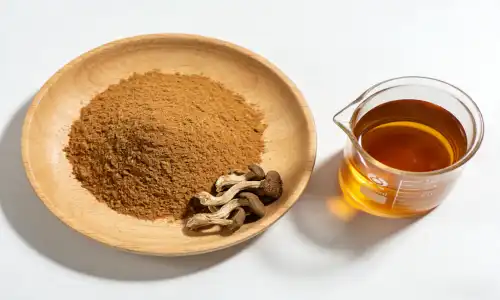
Oyster mushroom (Pleurotus ostreatus) has been appreciated for their flavour, nutritional benefits and their potential in the creation of functional food and dietary supplements. Oyster mushroom extract is becoming more and more a sought after ingredient for producers searching for a concentrated, simple to use ingredient for capsules, tablets, drink powders, wellness mixes and bespoke formulations. NT Biotech, Natural Raw Materials for Food, Supplement, Cosmetic and Animal Nutrition Industries. Combining Plant and Mushroom Know-How with Standard Processing, Batch Documentation and Flexible OEM Solutions. Need a reliable source for oyster mushroom extract? NT Biotech helps make product development more efficient and dependable with technical assistance, quality manufacturing, worldwide shipping and customisation services.

Getting to Know Oyster Mushroom
From culinary favorite to functional ingredient
Oyster mushrooms are easy to identify by their fan-shaped caps, delicate texture and mild savoury flavour. They are frequently farmed because they grow effectively on appropriate agricultural substrates and are utilised in soups, stir-fries, snacks, powders and culinary formulations. Besides their culinary interest, oyster mushrooms also contain good amounts of naturally occurring proteins, dietary fibre, minerals, vitamins and polysaccharides. These components have caught the attention of academics and supplement makers who are investigating mushrooms as beneficial ingredients.Oyster mushroom extract takes this known food source and concentrates it into a substance that may be simpler to include into current recipes. The final qualities rely on the mushroom strain, the growing circumstances, the raw material, the extraction medium, the concentration ratio, the drying process and the quality criteria set by the manufacturer.
What an extract means
The term extract is not a single universal product. One water extract may be focused on water soluble polysaccharides, while another technique may result in a wider range of mushroom compounds. Some products are standardised to total polysaccharides, beta-glucans, extract ratio or other indicators. A plain dry mushroom powder is not a concentrated extract and should not be compared on a pricing basis. Buyers should enquire whether the material is fruiting bodies, mycelium or a mixture and if carriers are employed in the drying process. When considering oyster mushroom extract, companies should ask for a product definition, suggested application, test methods, storage conditions and batch Certificate of Analysis. This information allows formulators to pick an ingredient that suits the desired final product rather than a generic mushroom label.
Why the ingredient appeals to modern consumers
Consumers now typically want items that seem natural, but also have a clear science and nutrition explanation. This meets the expectation of oyster mushroom, since it is a food, linked to plant-based diets, and may be shaped to numerous product shapes. A well-crafted mushroom supplement may tap into the daily vitality, healthy ageing, immunological wellness, digestive health and nutrient-rich lives that customers are looking for. The ingredient may also support vegan and vegetarian product ideas but businesses need to confirm the whole formulation comprising capsules, excipients, flavour systems and processing aids. Customers may design a more comprehensive product narrative around oyster mushroom extract, from raw-material selection to final packaging, using NT Biotech's expertise in natural materials and tailor-made product development.
| Product-development question | Why it matters |
|---|---|
| What is the species? | Confirms that the intended material is Pleurotus ostreatus |
| Is it powder or extract? | Determines concentration, serving size, and application behavior |
| What is the source material? | Distinguishes fruiting body, mycelium, or blended biomass |
| Which markers are tested? | Clarifies whether the product is standardized by polysaccharides, beta-glucans, or another parameter |
| What documents are available? | Supports quality review, traceability, and regulatory preparation |

Exploring the Health Benefits of Oyster Mushroom
Nutritional value and everyday wellness
Oyster mushrooms are naturally low in fat and may provide fibre, protein and certain minerals to the diet. Their nutritional makeup is dependent on strain, growing medium, maturity, drying process and preparation. An extract in the formulation of a supplement is not always a full replacement for the original food, since processing may concentrate certain ingredients and reduce or eliminate others. But, oyster mushroom extract may have a role when producers desire a compact ingredient for a particular composition. Brands may also market it as part of a larger daily-wellness offering that includes balanced eating, physical exercise, sleep and hydration. It’s important to communicate responsibly: the substance may complement a health notion, but not be marketed as a guarantyd therapy or a substitute for expert medical advice.
Polysaccharides and immune-related research
Mushroom polysaccharides like beta-glucans have been extensively explored concerning immune function. Their structure may affect their behaviour in the body, and outcomes might differ according on species, extraction technique, molecular features, dosage and research approach. Research has been done on the polysaccharide content of oyster mushroom and its possible biological activity, however laboratory results should not be used as evidence of a disease-treatment impact in normal supplementation. For the formulator, the most practical way is to know what marker the ingredient is standardised to, and how that marker suits the target market.Oyster mushroom extract might be used in goods focused on immune support or general vitality with appropriate marketing language compliant with local standards and the end product containing the claimed quantity.
Antioxidant and metabolic interest
Oyster mushrooms contains chemicals that have been the subject of study in antioxidant activity, lipid metabolism and overall cellular health. These regions are intriguing for scientific research, but the impact of a commercial product is dependent on the real composition and the dosage. Brands should not make outrageous claims based on preliminary research. But it may educate customers about the mushroom's naturally occurring chemicals and its role in a balanced functional-food or supplement composition. The quality of extraction is of special relevance as various extraction circumstances might result in distinct profiles. Standard processing and batch records by NT Biotech allow purchasers to analyse oyster mushroom extract with more confidence. Specifications must define identification, marker content, moisture, microbiological conditions and other approved quality characteristics not only general words like “high potency”.
Benefits for plant-based product design
Oyster mushroom is a great match for the growing plant-based nutrition sector. It may be employed in vegan capsules, powder mixes, functional drinks, meat replacement ideas and botanical-mushroom combos. Its recognisable culinary identity may also make it simpler for people to comprehend than a very unknown plant. The issue for the product development is maintaining the natural placement of the product, while offering easy use, pleasant sensory attributes and constant quality.Oyster mushroom extract may be more potent than regular dry mushroom powder on a gram-for-gram basis, however the precise effect relies on the extraction ratio and standardisation. NT Biotech can help businesses in analysing the different grades and picking a format that suits their target demographic.
| Potential product positioning | Formulation considerations |
|---|---|
| Daily wellness | Serving size, label language, and compatibility with other botanicals |
| Immune-support concept | Evidence-based claims and polysaccharide or beta-glucan specification |
| Healthy-aging formula | Combination with nutrients and appropriate consumer communication |
| Vegan nutrition | Verification of all ingredients and processing materials |
| Functional beverage | Water dispersibility, flavor, color, and sedimentation |

Using Oyster Mushroom Extract in Real Products
Capsules and tablets
One of the easiest methods to include oyster mushroom extract into a supplement is in capsule form, since it can be given in a calculated amount while avoiding flavour and smell. However, for effective capsule product, bulk density, powder flow, particle size, moisture and mix homogeneity need to be considered. If the extract is mixed with vitamins, minerals or other mushroom elements, each ingredient must be uniformly dispersed so that customers get a consistent serving. And for tablets, they need further examination for compression, hardness, friability and disintegration. Pilot manufacturing is very desirable since a powder that seems homogenous in a tiny container may behave differently on an industrial filling or compression line. NT Biotech’s OEM and ODM skills may benefit businesses that require assistance in coordinating ingredient procurement, dosage form, packaging and final product manufacture.
Functional drinks and powdered supplements
Drink powders provide a more engaging consumer experience, but are more demanding on the raw material. Mushroom extracts may affect colour, fragrance, flavour and sedimentation, thus formulators should test them with the final sweetener, acidulant, flavour and carrier system. Suitable processing may increase water dispersibility but this must be verified for the individual grade rather than assumed.Oyster mushroom extract might function in health sachets, quick drinks, nutrition smoothies, and powdered botanical combinations. Brands should undertake pilot tests under realistic preparation settings, such as the temperature of the water and the way it is likely to be mixed by customers. Sensory testing is particularly useful for products that are targeted at those who are not used to using mushroom-based supplements.
Functional foods and culinary innovation
Oyster mushroom is known as a food and hence may be suited for functional-food ideas with a focus on natural ingredients. It may be used for savoury powders, nutrition bars, soups, sauces, meat replacements and plant-based meal items. Whole mushroom powder vs oyster mushroom extract is a matter of flavour, serving size, processing conditions, and the nutritional message you want to tell. Heat. Acidity. Moisture. Water activity. All are factors to be considered in growth. Manufacturers have to evaluate if the extract also alters the texture, colour or stability in storage. A well-thought-out product may fill the gap between culinary familiarity and supplement convenience, providing customers with a more accessible way to enjoy mushroom-based nutrients.
Cosmetic and animal-nutrition possibilities
Mushroom-derived ingredients are also being explored in high-end cosmetics and animal-nutrition products. In cosmetics, the material may be selected for its natural-origin appeal and compatibility with skin-care concepts, subject to cosmetic-grade requirements and local regulations. In animal nutrition, the specification, dosage, palatability, and species suitability must be reviewed separately. NT Biotech serves several industries, including cosmetics and animal nutrition, and provides flexible OEM support for different application needs. This cross-industry experience can benefit businesses evaluating oyster mushroom extract for more than one product category. Nevertheless, each application requires its own technical assessment, documentation, and approved claim strategy.

Selecting a Trustworthy Oyster Mushroom Extract Supplier
Quality starts with traceability
A reliable source of oyster mushroom extract should be able to tell you where the raw material originates from and how it is processed. Buyers should seek species name, cultivation or source information, material kind, extraction technique, concentration ratio, drying process, package specifications and storage suggestions. Traceability is particularly critical for mushrooms, since the composition of the culture substrate and ambient circumstances may affect the final composition. NT Biotech presents a value-chain solution that links together natural material sources, R&D, smart manufacturing, testing and supply chain management. This comprehensive strategy assists the customer to comprehend the ingredient's journey from source to product application. It gives a better basis for audits, quality complaints, consumer concerns and long-term supply planning.
Testing and batch documentation
The professional raw-material programme should involve proper testing of the product. This might contain, as per the approved specification: Identity, marker substances, moisture, ash, microbiological limits, heavy metals, pesticide residues, foreign stuff. Depending on the molecule, HPLC/UV analysis may be appropriate, while other indicators may necessitate study using other methods. Buyers should check the test method, acceptability range, units, and lot number on each Certificate of Analysis. NT Biotech emphasizes quality documentation and CoA support for applicable batches. This level of transparency allows manufacturers to evaluate oyster mushroom extract using evidence rather than appearance or promotional language. It also helps contract manufacturers release incoming material more efficiently.
Certifications and market requirements
International purchasers may need ISO9001, Kosher, Halal, HACCP or other quality or religious certifications, depending on the target market and finished-product category. NT Biotech’s strengths include ISO9001, Kosher and Halal. Buyers are advised to seek current certifications and check the scope, validity, issuing organisation and link to the production location. Certifications are not a guarantee that a completed supplement will fulfil all local requirements; regulatory approval is still required. A certified provider of oyster mushroom extract should give technical assistance and make apparent the difference between documentation provided by the supplier and approvals required by the brand, importer or final product maker.
Stable supply and responsive communication
Supply reliability is an important part of ingredient quality. NT Biotech states that it aims to respond to inquiries within two hours, maintains inventory for selected standardized extracts, and may ship available products within one to three working days after order confirmation. Typical production orders may require three to ten working days, including sourcing, processing, laboratory testing, CoA preparation, and packaging. Actual timing for oyster mushroom extract should be confirmed according to specification, volume, packaging, and destination. The company also offers express, air, and sea freight options, including direct FEDEX or UPS shipments and bulk transportation through trusted freight forwarders.
If you are developing a mushroom supplement, functional food, cosmetic, or animal-nutrition product, contact NT Biotech at info@newthingsbiotech.com. Share your application, target market, expected volume, and documentation requirements to receive a more relevant recommendation.

Making the Most of an Oyster Mushroom Extract Project
Start with a clear product brief
Many formulation delays occur because the buyer and supplier are working from different assumptions. Before requesting a quotation, define the product format, target consumer, serving size, annual volume, preferred certifications, packaging type, market, and launch schedule. Clarify whether you need a whole mushroom powder, a concentrated extract, or a standardized grade. For oyster mushroom extract, also specify whether your project requires water dispersibility, a particular polysaccharide level, low moisture, vegan documentation, or private labeling. A complete brief allows NT Biotech to suggest a more suitable material and identify technical issues early. It also makes quotations easier to compare because each candidate supplier is responding to the same requirements.
Evaluate samples under real conditions
A sample should be tested in the same way the final product will be manufactured. For capsules, examine flowability and filling performance. For drink powders, evaluate dispersion, flavor, color, and sedimentation. For gummies or functional foods, assess the impact of heat, moisture, pH, and storage. Compare the sample’s appearance and performance with its specification and CoA. If the supplier later delivers a different grade, the original sample may no longer be a valid reference. NT Biotech can coordinate technical discussions and OEM/ODM development, but the manufacturer should still conduct its own pilot and stability studies. This process helps ensure that oyster mushroom extract performs well beyond the laboratory sample stage.
Consider the total cost of ownership
The lowest price per kilogram may not produce the lowest final product cost. Buyers should consider assay, serving size, freight, customs, storage, minimum order quantity, testing, rejected batches, production losses, and delays caused by incomplete documents. A consistent extract with good technical support may reduce reformulation and quality-control expenses. NT Biotech provides flexible transportation, buyer-friendly payment solutions, and local-currency payment options where available. When comparing oyster mushroom extract offers, request equivalent information about specification, packaging, lead time, Incoterms, certification, sample policy, and payment terms. A transparent comparison reveals which supplier can support long-term growth instead of only one purchase.
| Final approval checkpoint | Buyer action |
|---|---|
| Identity | Confirm species, source material, and processing description |
| Quality | Review the specification and lot-specific CoA |
| Application | Test the sample in the intended dosage form |
| Stability | Conduct finished-product shelf-life and packaging studies |
| Compliance | Review claims, certifications, labeling, and target-market requirements |
| Supply | Confirm lead time, shipping method, minimum order, and payment terms |
Conclusion
Oyster mushrooms combine culinary familiarity with growing interest in functional nutrition, making them attractive for supplements, foods, beverages, cosmetics, and animal-nutrition products. Oyster mushroom extract can provide a convenient, concentrated format, but its value depends on species identity, source material, extraction method, marker testing, stability, and application performance. Buyers should request transparent specifications, lot-specific CoAs, relevant certifications, and realistic delivery information before approving a commercial order. NT Biotech supports this process through natural-ingredient expertise, standardized processing, technical documentation, OEM/ODM services, and flexible international logistics. By working with a reliable oyster mushroom extract supplier, brands can create more consistent, credible, and market-ready products. Contact NT Biotech to discuss your formulation and sourcing goals.
FAQ
1. What is oyster mushroom extract?
It is a concentrated material made from oyster mushroom, commonly identified as Pleurotus ostreatus, through a defined processing method.
2. Is oyster mushroom extract the same as mushroom powder?
No. A simple powder is generally milled dried mushroom, while an extract is processed to concentrate or improve the availability of selected constituents.
3. What products can use oyster mushroom extract?
It may be developed for capsules, tablets, drink powders, functional foods, cosmetics, and selected animal-nutrition applications.
4. What documents should buyers request?
Request a specification, CoA, species and origin information, processing details, storage conditions, testing results, and applicable certifications.
5. Can NT Biotech provide OEM services?
Yes. NT Biotech offers customized OEM/ODM support for formulations, packaging, private labeling, and different international market requirements.
Develop Your Next Mushroom Product with NT Biotech
NT Biotech helps brands move from raw-material selection to practical commercial development. Its experience in plant and mushroom derivatives supports dietary supplements, functional foods, cosmetics, and animal nutrition, while standardized processing and batch documentation help improve supply confidence. Customers can discuss species identity, extract specifications, testing, packaging, OEM/ODM production, certifications, logistics, and payment arrangements with one responsive partner. Express, air, and sea shipping options provide flexibility for samples, pilot orders, and bulk deliveries. If you are planning a vegan supplement, functional beverage, mushroom blend, or natural cosmetic concept, now is the time to define your requirements. Contact info@newthingsbiotech.com with your target application, market, volume, and technical needs, and discover how NT Biotech's oyster mushroom extract can support your next product.
References
1. Wasser, S. P. “Medicinal Mushroom Science: Current Perspectives, Advances, Evidences, and Challenges.” Biomedical Journal, 2014.
2. Cohen, N., and M. J. Cohen. “The Nutritional and Health Benefits of Oyster Mushrooms.” Journal of Food Science and Technology, 2014.
3. Deepalakshmi, K., and S. Mirunalini. “Pleurotus ostreatus: An Oyster Mushroom with Nutritional and Medicinal Properties.” Journal of Biochemical Technology, 2014.
4. Patel, Y., R. Naraian, and V. K. Singh. “Medicinal Properties of Pleurotus Species.” International Journal of Medicinal Mushrooms, 2012.
5. Kaur, R., et al. “Nutritional and Therapeutic Potential of Oyster Mushrooms.” Journal of Food Processing and Preservation, 2019.
6. Chang, S. T., and P. G. Miles. Mushrooms: Cultivation, Nutritional Value, Medicinal Effect, and Environmental Impact. CRC Press, 2004.
Whether you choose oyster mushroom extract or lion's mane doesn't matter. It's all about the product goal when choosing a supplement. Oyster mushroom is often associated with nutritional equilibrium, polysaccharides, immunological well-being and functional plant-based foods. Lion's Mane is often used in recipes for cognitive and neurological wellness. For ingredient sourcing or product development inquiries, you can contact NT Biotech at info@newthingsbiotech.com. NT Biotech offers standardised natural ingredients for nutritional supplements, functional meals, cosmetics and animal nutrition. Its oyster mushroom extract is backed by expert processing, batch documentation, flexible OEM/ODM development, and worldwide logistics. NT Biotech provides a realistic solution to businesses looking for an experienced provider of oyster mushroom extract to manufacture consistent mushroom products for varied markets and customer preferences.

The Real Difference Between These Two Mushrooms
Oyster mushroom at a glance
Oyster mushroom, also known as Pleurotus ostreatus is well recognised as culinary mushroom and as a useful ingredient. It is made up of dietary fibres, proteins, minerals, vitamins and polysaccharides naturally present. The content of the farmed mushroom is used by the supplement industry to manufacture oyster mushroom extract, which is then processed into a concentrated powder for capsules, tablets, drink powders or functional blends. A food identity is part of the appeal — oyster mushrooms are already seen by buyers as a wholesome, plant-forward snack. This makes the element a strong match for companies producing daily wellness, immunological support, healthy ageing and nutrition products. However, the actual composition is different depending on strain, culture circumstances, source material, extraction process, concentration ratio, drying technology and final specification.
Lion's mane at a glance
Lion's mane, generally known as Hericium erinaceus, has a very different visual appearance and commercial identity. Its long, white spines make it highly recognizable, while its reputation in the supplement market is strongly connected with cognition, focus, memory, and nerve-support positioning. Lion's mane contains beta-glucans and other mushroom compounds, including constituents commonly investigated in relation to nerve growth and brain health. As with oyster mushroom extract, the quality of lion's mane depends on whether the product is made from fruiting bodies, mycelium, or a combination, as well as the extraction and standardization process. A popular ingredient is not automatically a suitable ingredient; manufacturers must connect the mushroom's research profile with the intended product format and compliant claims.
Why "better" depends on the goal
The comparison becomes clearer when the desired outcome is defined first. A brand creating an everyday immune-wellness powder may prefer oyster mushroom extract because of its nutritional and polysaccharide story. A company developing a premium cognitive formula may consider lion's mane because of its strong consumer association with mental performance. This does not mean that one mushroom is universally superior. It means that each has a different marketing language, research emphasis, sensory profile, and formulation role. NT Biotech can help buyers compare mushroom materials according to identity, marker compounds, extraction method, dosage form, documentation, and target market. The most strategic choice is the ingredient that delivers a credible story and reliable manufacturing performance.
| Comparison point | Oyster mushroom | Lion’s mane |
|---|---|---|
| Common scientific name | Pleurotus ostreatus | Hericium erinaceus |
| Common product positioning | Nutrition, immune wellness, vitality, healthy aging | Cognitive wellness, focus, memory, nerve support |
| Typical material forms | Powder or extract from mushroom biomass | Fruiting-body powder, mycelium, or extract |
| Key development question | Which polysaccharide or beta-glucan specification applies? | Which material and cognitive-related markers are standardized? |
| Consumer familiarity | Strong culinary and plant-based food connection | Strong specialty-mushroom and nootropic connection |

Compare Their Main Health and Wellness Profiles
Oyster mushroom and nutritional functionality
Oyster mushrooms are prized not for a particular chemical but for their wide range of nutritional benefits. They may provide fibre, protein, B-group vitamins, minerals and different polysaccharides, although the amounts vary depending to cultivation and processing. This wide profile makes oyster mushroom extract a versatile ingredient in functional nutrition. It may be added to products marketed for general vitality, plant-based diets, daily immune support or good ageing. It must not be expected that an extract will include all of the nutrients present in a fresh mushroom. Constituents that are water soluble may be concentrated in the extract while others are diminished. Hence, companies should verify the real product specification and the Certificate of Analysis before making any nutritional claims. Its biggest virtue is its versatility: oyster mushroom can blend culinary familiarity with contemporary supplement convenience.
Lion's mane and cognitive positioning
Lion's mane has garnered interest as laboratory and preliminary human research has studied its link to cognitive function, memory, emotion, and nerve-related pathways. The mushroom includes chemicals that are typically addressed in relation to hericenones and erinacines, however the quantity and presence of these compounds may vary greatly between fruiting-body and mycelium products. This is why a lion's mane label alone does not reveal the full technical quality of the ingredient. Compared with oyster mushroom extract, lion's mane generally has a more specialized cognitive-wellness identity. That can be valuable for a focused product, but it may also require more careful education and claim review. Brands should avoid turning preliminary research into promises about treating neurological conditions or guaranteeing mental performance.
Immune wellness and mushroom polysaccharides
Both mushrooms are defined in terms of beta-glucans and polysaccharides but their biological profiles are not similar. The structure, molecular weight, solubility and biological activity of polysaccharides from mushrooms vary diverse. How the extract is made may also affect which compounds are in the finished powder. When purchasing oyster mushroom extract it is crucial for the buyer to state if the figure stated is total polysaccharides, beta-glucans or any other analytical marker. The same principle applies when comparing lion's mane. A higher numerical value is not automatically better if it was measured using a different method. From a formulation perspective, oyster mushroom may be more suitable for a broad immune and nutrition concept, while lion’s mane may fit a cognitive formula. Both require responsible, market-specific communication.
Antioxidant and metabolic research
Research on the oyster mushroom has investigated antioxidant properties, lipid metabolism, glucose-related pathways and overall cellular health. Research has investigated lion's mane for antioxidant qualities, and in cognitive and nerve-related regions. These findings are interesting but should be interpreted carefully. Results from cell or animal studies do not automatically predict the outcome of a finished human supplement. Product developers should focus on verified composition, realistic serving levels, and evidence relevant to the exact material being sold. Oyster mushroom extract may be a strong option for brands that want a broader nutritional and wellness story, especially in functional foods. Lion’s mane may be better for a narrower cognitive concept. The right decision depends on the evidence, formulation, consumer expectations, and regulatory environment.
| Product objective | Ingredient that may fit best | Reason |
|---|---|---|
| Everyday mushroom nutrition | Oyster mushroom extract | Strong culinary identity and broad nutritional story |
| Immune-wellness positioning | Oyster mushroom extract | Polysaccharide and beta-glucan discussion |
| Focus and memory concept | Lion’s mane | Established consumer association with cognitive wellness |
| Plant-based functional food | Oyster mushroom extract | Familiar food ingredient with flexible applications |
| Premium nootropic formula | Lion’s mane | More specialized brain-health market positioning |
Which Extract Is Easier to Formulate?
Capsules and tablets
Both substances may be used for capsules and tablets but performance relies on powder density, particle size, moisture, flowability and concentration.Oyster mushroom extract may be effective in capsules when the manufacturer favours a small serving size and little flavour exposure. Lion's mane may be employed in the same way, particularly in cognitive-wellness goods. In the case of either extract being blended with vitamins, minerals, botanicals or other mushroom components, homogeneity of blending is critical. Manufacturers of tablets are also required to test for compression, hardness, friability and disintegration. A sample taken from the laboratory does not necessarily react the same way on a high speed manufacturing line. Flow or filling problems might be detected during pilot production, before the recipe is authorised for commercial production.
Powdered drinks and functional blends
The powdered drinks are more difficult since the customer will experience the product via flavour, scent, colour and texture. The oyster mushroom ingredients may provide some earthy notes and the lion's mane items can also influence scent and texture. Oyster mushroom extract should be tested with the actual sweetener, flavor, acidulant, carrier, and complementary ingredients used in the final formula. Water dispersibility and sedimentation should be evaluated under realistic preparation conditions. A product may perform differently in cold water, warm water, or a shaker bottle. If a brand wants a daily immune drink, oyster mushroom may provide a more natural food-oriented story. If it wants a focus beverage, lion’s mane may be easier to communicate, but its sensory performance still requires testing.
Functional foods and gummies
We already link oyster mushrooms with food and nourishment therefore in terms of culinary applications, oyster mushrooms have a natural edge. It might be used in soups, salty powders, nutrition bars, plant-based meals and functional-food mixes.Oyster mushroom extract may also be formulated into candies or chewable items, although taste, colour, heat exposure and moisture stability must be examined. You may use it as functional food, but you'll most commonly see lion's mane in nootropic mixes, drinks powders and capsules. Both materials might need flavour masking and compatibility testing in gummies. It should be driven by the product experience the business wishes to generate and not merely the popularity of the mushroom. A good product should taste nice, be stable and be consistently labelled.
Documentation for formulation decisions
The formulation team needs more than a sample bag. It should receive a specification sheet, product description, origin information, recommended storage conditions, and lot-specific CoA. NT Biotech highlights standardized processing, HPLC/UV analysis for relevant products, and Certificates of Analysis with batches where applicable. These documents help buyers understand what oyster mushroom extract contains and how it differs from a lion’s mane material. They also support communication with contract manufacturers and regulatory teams. Before committing to a large order, brands should confirm whether the extract contains carriers, which marker is declared, what testing method is used, and whether the material is suitable for vegan or clean-label claims.
Choosing the Better Commercial Ingredient
Match the ingredient to the consumer
Consumer intent should guide ingredient selection. The food-based identity, nutritional profile, and immune-support tale of oyster mushroom would appeal to a person seeking a daily mushroom health supplement. If you're seeking for attention, memory or mental clarity, you're probably more acquainted with lion's mane.Oyster mushroom extract may thus be particularly effective for businesses targeting families, active adults, plant-based consumers, and healthy-aging audiences. Students, professionals and customers interested in nootropic items may find the lion's mane more interesting. These are market trends not set in stone regulations. A brand may also blend both mushrooms providing the recipe has a defined purpose and the overall serving size, sensory profile, evidence and labelling remain manageable.
Evaluate standardization instead of relying on reputation
A famous mushroom name does not guarantee a superior raw material. Buyers should look to compare scientific identity, source material, extraction ratio, marker substances, test procedures, moisture, microbiological limits, heavy metals, pesticides and packaging. The provider should confirm if the oyster mushroom extract is derived from the fruiting bodies, the mycelium or other biomass and whether it is standardised to polysaccharides or beta-glucans. The same amount of attention should be paid to lion’s mane. NT Biotech emphasizes proprietary processing designed to improve active-compound yield and product stability, along with quality documentation. Buyers should confirm the exact specification for the grade they intend to purchase rather than generalizing from a company profile.
Consider regulatory and claim requirements
The marketing language for oyster mushroom and lion's mane might be quite different. Lion's mane is promoted around cognitive and mental performance, whereas the oyster mushroom is commonly employed in general health, nutrition or immune-support themes. But nations have different legislation and claims of treatment of diseases may be limited or forbidden. The completed product, dosage, ingredients, labelling, ads and evidence should be reviewed by certified regulatory specialists. A trustworthy oyster mushroom extract supplier can provide technical information, but the brand remains responsible for final compliance. NT Biotech’s OEM/ODM support may assist with market-oriented development, packaging, and documentation, helping customers adapt products to different regional requirements.
If you are unsure whether oyster mushroom or lion's mane fits your product concept, contact NT Biotech at info@newthingsbiotech.com. Share your target market, dosage form, intended claims, annual volume, and documentation requirements for a more useful comparison.
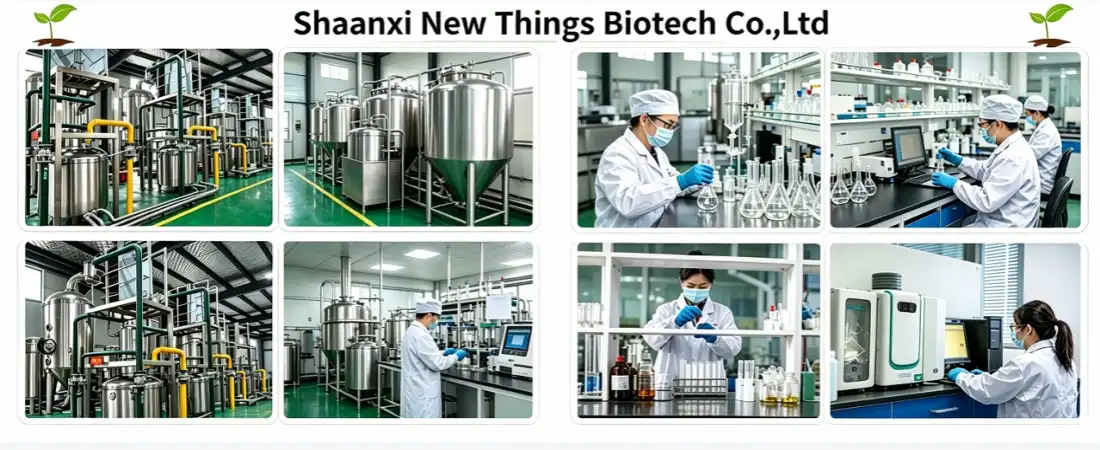
Why Supplier Capability Can Decide the Outcome
Quality systems and certifications
The strength of an ingredient selection lies in the provider behind it. NT Biotech is a technology-driven provider of plant extracts and natural ingredients for the nutraceutical, functional food, cosmetic and animal nutrition industries. Its competencies listed include ISO9001, Kosher and Halal-related certifications, standardised processes, laboratory testing and batch CoA documentation . These resources may assist customers with qualifying oyster mushroom extract for international product development. Verify certifications for scope, validity, issuing body and applicability to the particular facility. They enhance supplier trust, but do not substitute for destination-market regulatory evaluation. Buyers should also enquire about the control of changes in raw-material source, processing technique, or testing procedure.
Delivery planning and logistics
“An ingredient might be great on paper, but if it can't be delivered on time, it's not commercially viable. NT Biotech says it answers enquiries within two hours, has inventory for some standardised extracts and may send popular goods in stock within one to three working days after confirmation. Typical manufacturing orders take anywhere from 3 to 10 working days including sourcing, processing, laboratory testing, packing and final release. Actual time for oyster mushroom extract varies on specification, amount, packing and destination. Customers may balance speed, cost and volume using express, air, and sea shipment choices. Also, direct FEDEX or UPS shipping and bulk freight forwarder service may facilitate overseas delivery even more.
OEM and ODM flexibility
Some firms require raw material, others need help with private labelling, completed capsules, sachets, mixes or market specific packaging. NT Biotech provides OEM and ODM solutions to meet the needs of various nations and customers. This versatility might be useful for creating a product that mixes oyster mushroom extract with other botanicals or nutrients. Buyers should provide a full brief including target customer, serving size, dosage form, packaging, projected yearly volume, certifications, pricing range and launch date. Flexible payment methods, including local-currency payment when possible, may further facilitate international collaboration. A supplier who understands technical and commercial needs may help decrease the time from sample clearance to market launch.
| Supplier evaluation area | What to confirm |
|---|---|
| Product identity | Scientific name, source material, and processing description |
| Standardization | Marker compound, test method, and acceptance range |
| Quality documents | CoA, specification, origin statement, and storage guidance |
| Certifications | Current ISO9001, Kosher, Halal, or other relevant documents |
| Supply | Stock status, production lead time, MOQ, and packaging |
| Commercial support | OEM/ODM, shipping choices, technical assistance, and payment terms |

Conclusion
Neither oyster mushroom extract nor lion's mane is definitively "better." The most powerful option is the goal of the product, consumer it is intended for, formulation format, the proof, the claims and the marketing strategy. Oyster mushroom is frequently a good fit for general wellness, nutrition, immune-support, plant-based diet, and healthy-aging notions, while lion’s mane is more closely tied to cognitive and nootropic items. Regardless of the ingredient chosen, purchasers should always check species, source material, extraction process, marker testing, stability, certifications, and supply dependability. NT Biotech provides standardised natural ingredients, batch documentation, OEM/ODM support, flexible logistics and international customer service. Brands may work with NT Biotech to review specs and design a mushroom product that is legitimate and ready for sale.
FAQ
1. Is oyster mushroom extract better than lion’s mane?
Not universally. Oyster mushroom may suit nutrition and immune-wellness products, while lion’s mane may better fit cognitive-wellness formulas.
2. Can both mushrooms be used in one supplement?
Yes, but the formula should have a clear purpose and be tested for serving size, compatibility, sensory quality, stability, and regulatory compliance.
3. What is the main difference between the extracts?
Their species, naturally occurring compounds, research focus, consumer positioning, and formulation properties can differ.
4. What should buyers request from a supplier?
Request scientific identity, source information, specification, CoA, marker-testing method, storage conditions, certifications, and lead time.
5. Can NT Biotech provide customized mushroom products?
Yes. NT Biotech offers OEM/ODM support for different dosage forms, packaging concepts, markets, and customer requirements.
Compare Mushroom Ingredients with NT Biotech
NT Biotech helps brands make better ingredient decisions by connecting natural-material sourcing with processing, testing, formulation support, OEM/ODM development, and international logistics. Its oyster mushroom extract can support capsules, tablets, beverage powders, functional foods, cosmetics, and customized wellness products. Customers can also discuss specifications, polysaccharide or beta-glucan testing, packaging, certifications, delivery schedules, and private-label solutions. With responsive communication, selected inventory, flexible shipping by express, air, or sea, and buyer-friendly payment options, NT Biotech is prepared to support both pilot projects and long-term supply. If you are comparing oyster mushroom with lion’s mane, do not rely on popularity alone. Contact info@newthingsbiotech.com with your application, target market, volume, and technical requirements, and let NT Biotech help you choose a suitable, consistent ingredient.
References
1. Wasser, S. P. “Medicinal Mushroom Science: Current Perspectives, Advances, Evidences, and Challenges.” Biomedical Journal, 2014.
2. Patel, Y., R. Naraian, and V. K. Singh. “Medicinal Properties of Pleurotus Species.” International Journal of Medicinal Mushrooms, 2012.
3. Deepalakshmi, K., and S. Mirunalini. “Pleurotus ostreatus: An Oyster Mushroom with Nutritional and Medicinal Properties.” Journal of Biochemical Technology, 2014.
4. Friedman, M. “Chemistry, Nutrition, and Health-Promoting Properties of Hericium erinaceus Mushroom.” Journal of Agricultural and Food Chemistry, 2015.
5. Mori, K., et al. “Improving Effects of the Mushroom Yamabushitake on Mild Cognitive Impairment.” Phytotherapy Research, 2009.
6. Khan, M. A., et al. “The Medicinal Importance of Pleurotus Species.” International Journal of Medicinal Mushrooms, 2013.
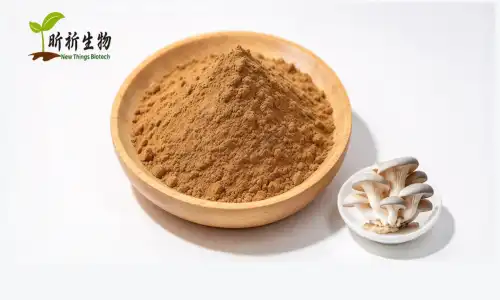
Some superheroes don't wear capes; they grow from sawdust blocks and market shelves under the unglamorous term "oyster mushroom." For most people it is a gentle smooth mushroom that all but vanishes in butter and garlic, yet behind that retiring persona lurks a remarkably complicated chemistry. Oyster Mushroom advantages – The advantages well beyond the dinner plate – immunological modulation, to significant antioxidant support. The actual potential for product makers, as consumer interest in functional mushrooms rises, is a reliable, traceable oyster mushroom extract. NT Biotech has taken this gourmet mushroom and converted it into a genuine supplement ingredient with an extract that is pure, stable and well-documented. Brands that pick NT Biotech aren't just getting powder, they're getting the technical certainty that makes launching a new product seem substantially easier.

Why Oyster Mushroom Should Not Be Treated as Just Another Ingredient
From the Frying Pan to Frontier Research
Oyster mushrooms have been a fixture on Asian tables for generations and are frequently lauded for their flexibility and subtle umami. It is only in recent years that scientists have begun to look within these rippling crowns. What they discovered is startling. Oyster mushrooms provide polysaccharides, amino acids, minerals and a unique sulfur-containing antioxidant called ergothioneine. But the amounts of these chemicals fluctuate according on growth circumstances, time of harvest and processing procedure. That unsteady variability is why many current formulators choose for a standardised oyster mushroom extract. A quality extract captures the most beneficial elements in a known ratio, so that every capsule or scoop tells the same narrative.
A Nutrient Profile That Feels Like a Gift
Compared to conventional veggies, oyster mushrooms have an uncommon combination of macro and micronutrients. They provide quite a bit of plant protein, dietary fibre, B-vitamins, potassium, and even a little vitamin D if exposed to sunshine. Most notably, the polysaccharide portion of oyster mushroom helps the body's natural defence mechanism. This is no ordinary kitchen herb. It's a useful fungus that needs greater attention for its role in everyday wellbeing.
Ancient Food, Modern Sustainability
Here is another form of heroism. Oyster mushrooms grow swiftly on agricultural waste, supplying protein with a little ecological imprint. This makes them a desirable element for supplements targeting eco-conscious customers. If a company employs oyster mushroom extract, they may create a statement that is both science-based and sustainability-conscious. "And that narrative is a strong asset in light of growing interest in regenerative food systems."
The table below shows the kind of technical fingerprint found in a controlled extract. Reliable suppliers like NT Biotech use these parameters to protect their customers from obscure batches and misleading labels.
| Analytical Parameter | Typical Specification | Why It Matters |
|---|---|---|
| Botanical identity | Pleurotus ostreatus | Confirms authenticity and prevents substitution |
| Appearance | Brown fine powder | Predictable mixing and production behavior |
| Polysaccharides | ≥ 30% by UV | Gives measurable support for the immune narrative |
| Loss on drying | ≤ 5.0% | Low moisture preserves stability |
| Particle size | 80–100 mesh | Improves powder flow and blending |
| Heavy metals | ≤ 10 ppm | Helps products meet global compliance standards |
| Microbial limits | Negative for pathogens | Protects consumer safety |
This is the level of detail that separates a professional ingredient from a random mushroom powder.

Behind the Frills: The Science of Oyster Mushroom Extract
How Beta-Glucans Wake Up the Immune System
The most valuable oyster mushroom constituents are water-soluble polysaccharides, in particular beta-glucans. These beta-glucans are arranged in little clusters that immune cells recognise as "not like us." They go to the immunological tissue linked with the stomach and gently wake up the white blood cells that patrol the body. It's not severe stimulation, it's more like training the immune system to be attentive and ready. Most good grade oyster mushroom extract is standardised to these polysaccharides so that every batch provides a consistent biological signal.
Ergothioneine and the Body's Daily Defense
Together with beta-glucans, oyster mushroom extract is one of the greatest natural sources of the amino acid ergothioneine, which functions as an antioxidant inside cells. Unlike certain water-soluble vitamins, which are rapidly excreted, ergothioneine may be actively carried into organs that require protection, including the liver, brain and red blood cells. This makes oyster mushroom extract especially appealing to consumers who are interested in long-term vitality. Oyster mushroom products may provide quick immune support and wide cellular defence, a powerful combination for consumers today.
Raw Powder Versus Concentrated Form: What Travelers Should Know
Culinary powder and extract are not the same. Dried and milled oyster mushrooms provide you with a powder that includes fibre and carbohydrates, although the quantity of active polysaccharides might be relatively little. The extract of oyster mushrooms was prepared using a hot-water or ethanol-based procedure to concentrate the water-soluble bioactives while removing part of the bulking matter. That's why formulators may use a lesser serving and yet make a function-forward claim.
If you are in the middle of designing a supplement and want to know if a particular oyster mushroom extract has the right solubility, dosage, and documentation for your market, you can reach the technical team directly at info@newthingsbiotech.com. A short conversation can save weeks of lab dead ends.

From Field to Formulation: Choosing a Trustworthy Oyster Mushroom Extract Supplier
Quality Starts With the Source
Oyster mushrooms may take up heavy metals from their surroundings. Contaminated substrate will contaminate the powder. That's why progressive shoppers don't only look at the price. Questions concerning substrate, water quality, processing temperature and lab findings are asked. NT Biotech takes these issues into careful consideration with its established plant extraction knowledge and quality procedures that meet worldwide requirements for botanical powders.
Documentation Is Your Hidden Competitive Edge
Many businesses are trapped in the midst of a worldwide launch because a raw material supplier cannot deliver a proper Certificate of Analysis. Because of that pricey lesson, it is vitally important to have a reliable oyster mushroom extract source. Look for vendors that can supply HPLC and UV testing results, residue reports, and product-specific spec sheets. Such materials enable regulatory assessment, product claims and ethical narrative. NT Biotech's documentation is based on the principle that raw material should establish itself on paper.
Not Just Raw Material, But a Whole Support System
Another way brands respect NT Biotech is the company's ability to move beyond bulk powder. NT Biotech is a division of Shaanxi New Things Biotech, providing OEM and ODM services. That means you can mix oyster mushroom extract with adaptogens, sell it in capsules or flavour it for berry smoothies, all with the direction of one skilled manufacturer. ISO9001 certification, Kosher and Halal certifications, fast delivery structure. We answer first answers within two hours, stock shipments normally depart within one to three working days and bespoke manufacturing orders are made in just three to ten working days.
| Supply Chain Feature | NT Biotech’s Commitment |
|---|---|
| Initial response time | Within two hours |
| Stock item dispatch | 1–3 working days after confirmation |
| Custom production lead time | 3–10 working days |
| Certifications | ISO9001, Kosher, Halal |
| Batch testing | Certificate of Analysis included |
| Shipping methods | Express, air, or sea |
| Payment support | Flexible buyer-friendly terms |
That kind of supply chain predictability gives a brand owner the freedom to plan retail promotions without holding a nervous breath.
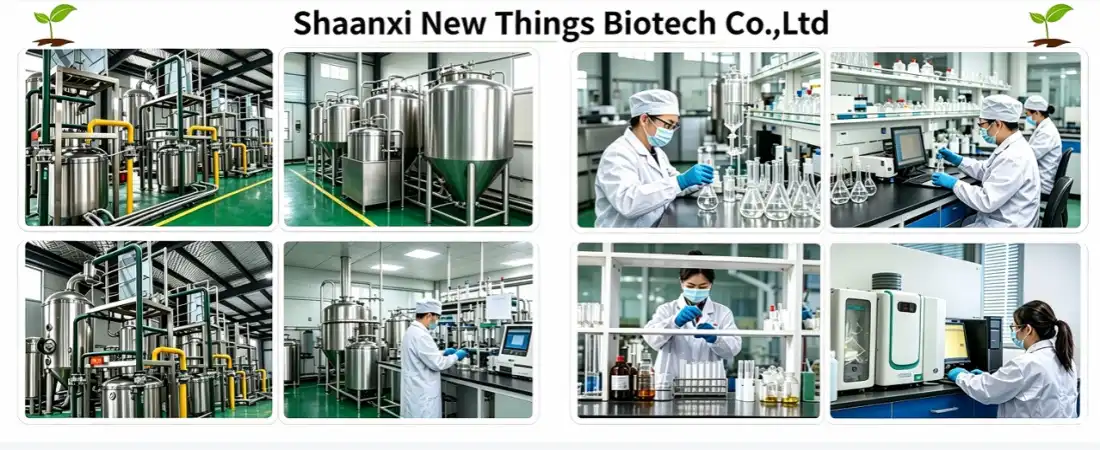
Harnessing the Hero Potential: Product Development with Oyster Mushroom Extract
Capsules, Powders, and Daily Mushroom Habits
Easy to include into daily capsules, oyster mushroom extract. Since the extract is concentrated, a dosage of 500–1000 mg may provide a significant polysaccharide level without needing huge tablets. For those who don’t want to take pills, a stick powder combined with water or a chocolate drink is just as easy. The mushroom itself is just somewhat earthy, so formulators may develop a palette around vanilla, ginger, mint or apple. Some firms mix oyster mushroom with turkey tail or shiitake to provide a comprehensive immune mushroom mixture.
Blending Superfoods With a Purpose
A compound based on oyster mushrooms is more powerful when combined with other established botanical partners. Elderberry and vitamin C help the immune system in its everyday work, zinc helps the immune system do its everyday job. Reishi offers a relaxing potential for a combination formulated for stress management, while lion's mane could appeal to customers seeking cognitive help. Oyster mushroom extract is compatible with many different supplemental substances and so is a simple platform for product creation. The most successful goods are those that tell a story: "I am a daily shield for modern stress."

Conclusion
The oyster mushroom is one of nature's most fascinating functional ingredients because it discreetly occupies the intersection of food and medicine. It includes beta-glucans, ergothioneine and antioxidants which are highly important to the human immune system. To convert that promise into a genuine product, formulators need a stable, documented oyster mushroom extract. NT Biotech provides a clean supply chain, complete batch analysis and quick client assistance. Choosing NT Biotech brands means you may enter the market knowing that their raw material is a blend of respect for nature and dedication to science.
FAQ
1. What does oyster mushroom extract do in the body?
It offers concentrated polysaccharides and ergothioneine that may support immune balance and antioxidant defense, making it a useful daily wellness ingredient.
2. How is oyster mushroom extract different from whole mushroom powder?
Extraction removes fibrous bulk and standardizes active compounds, allowing better consistency in supplement formulations.
3. Is oyster mushroom extract vegan-friendly?
Yes. The extract comes from vegan fungal source and fits clean-label and plant-based supplement products.
4. Could I use oyster mushroom extract in a branded blend?
Yes. NT Biotech can supply the extract as raw material or work with you to create a custom formula through OEM/ODM service.
5. How fast can NT Biotech supply oyster mushroom extract?
Stock orders usually ship within one to three working days, and production orders take three to ten working days, making launch planning efficient.
Partner with NT Biotech to Turn Oyster Mushroom Benefits into a Product People Love
Are you ready to give oyster mushrooms the heroic role they deserve in your next supplement line? NT Biotech offers premium oyster mushroom extract with transparent quality data, flexible certification support, and an OEM team that helps you shape your idea into a retail-ready product. From initial sample to bulk order, we maintain fast communication and honest technical advice. Let us help you create a formula that elevates immune support in a natural, believable way. Contact our friendly team at info@newthingsbiotech.com and let the journey begin.
References
1. Bobek, P., Ozdin, L., & Galbavy, S. (1998). Dose- and time-dependent hypocholesterolemic effect of oyster mushroom (Pleurotus ostreatus) in rats. Nutrition, 14(3), 282–286.
2. Jayakumar, T., Thomas, P. A., & Geraldine, P. (2009). In-vitro antioxidant activities of an ethanolic extract of the oyster mushroom, Pleurotus ostreatus. Innovative Food Science & Emerging Technologies, 10(2), 228–234.
3. Kalac, P. (2009). Chemical composition and nutritional value of European species of wild growing mushrooms: A review. Food Chemistry, 113(1), 9–16.
4. Khan, M. A., Tania, M., Liu, R., & Rahman, M. M. (2013). Pleurotus ostreatus: A biofactory for the production of bioactive molecules. Comprehensive Reviews in Food Science and Food Safety, 12(3), 240–260.
5. Wasser, S. P. (2002). Medicinal mushrooms as a source of antitumor and immunomodulating polysaccharides. Applied Microbiology and Biotechnology, 60(3), 258–274.
6. Chang, S. T., & Wasser, S. P. (2012). The role of culinary-medicinal mushrooms on human welfare with a pyramid model for human health. International Journal of Medicinal Mushrooms, 14(2), 95–134.
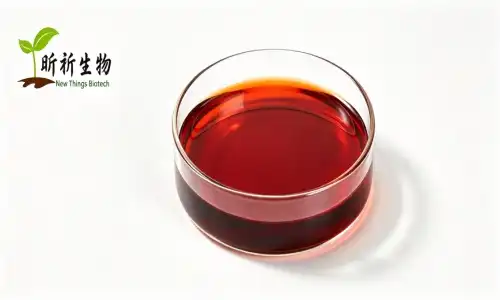
Astaxanthin enhanced krill oil is a blend of marine omega-3 lipids, phospholipids and the naturally red-orange carotenoid astaxanthin in one premium nutritious ingredient. This blend is gaining interest in cardiovascular, eye, skin, active-aging and sports nutrition products. Yet for manufacturers, a winning recipe is much more than a good ingredient narrative. Source traceability, EPA and DHA levels, phospholipid content, astaxanthin standardisation, oxidation control, and batch documentation are all important. NT Biotech provides standardised natural ingredients, flexible OEM/ODM services, quality-oriented processing and worldwide logistics. Its astaxanthin-enriched krill oil is intended for companies looking for a consistent, traceable, and formulation-ready material from a dependable astaxanthin-enriched krill oil provider.
The Science Behind the Marine Combination
What astaxanthin contributes
Astaxanthin is a xanthophyll carotenoid that is naturally synthesised by specific microalgae and passed down the marine food chain to krill, shrimp and salmon. The unusual red-orange colour makes it very conspicuous, but the economic value is due to its molecular makeup and studies on antioxidants. As astaxanthin is fat-soluble, an oil-based delivery mechanism makes sense for supplement development. In krill oil supplemented with astaxanthin, the carotenoid is bound to the marine lipids to create a multi-component ingredient, rather than a single, isolated nutrition. The actual product profile is dependent on the krill source, extraction procedure, enrichment method, stabilisation technology and final specification. Buyers should thus look at analytical data rather than make quality judgements on colour alone.
The role of krill oil
Krill oil is a marine oil that contains omega-3 fatty acids (EPA and DHA) as well as phospholipids and other minor components. Krill oil is typically promoted as having a phospholipid associated omega 3 structure compared to many standard fish oils. Phospholipids are significant constituents of biological membranes, and may also alter the physical qualities of an oil ingredient. Thus, astaxanthin-enriched krill oil might give marketers a wider narrative than a traditional omega-3 concentrate: marine lipids, phospholipids and a standardised carotenoid in one packaging. But the real nutritional value has to be verified by product testing. A professional specification should explicitly define EPA, DHA, total lipid, phospholipid, astaxanthin, oxidation and contaminant requirements.
Why enrichment improves formulation control
Natural krill oil may include astaxanthin , however astaxanthin content might vary with species , harvest circumstances , processing and storage . Enrichment or standardisation might provide a more predictable level which makes it simpler for a producer to determine serving size and create a uniform label. It might also help a business carve out a more unique product positioning in a congested omega-3 marketplace. NT Biotech is dedicated to the use of standardised natural resources and provides laboratory testing, HPLC/UV documentation on applicable items and Certificates of Analysis. These capabilities allow buyers to assess astaxanthin-enriched krill oil on quantitative properties rather than general promises like “premium” or “high strength.” Buyers should verify if the astaxanthin is natural, added from another permitted source or delivered via a defined enrichment procedure.
| Quality attribute | Why it matters to product developers |
|---|---|
| Astaxanthin assay | Establishes the declared carotenoid concentration |
| EPA and DHA | Defines the omega-3 contribution of the ingredient |
| Phospholipid level | Supports formulation differentiation and product positioning |
| Oxidation indicators | Help evaluate freshness and storage stability |
| Heavy-metal testing | Supports marine-ingredient quality review |
| Origin and traceability | Helps document the supply chain and source controls |
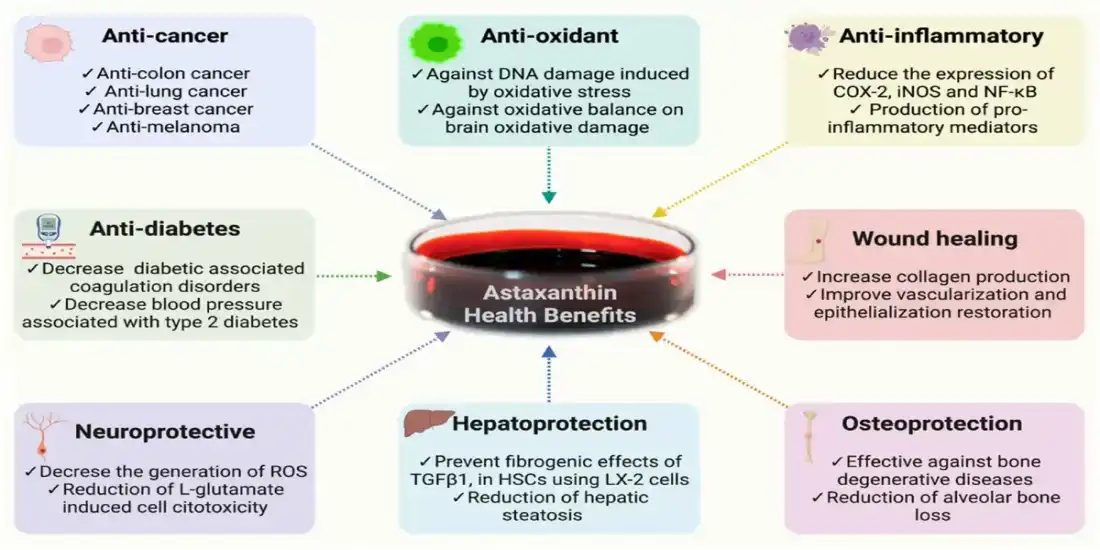
Where Astaxanthin-Enriched Krill Oil Fits in Wellness
Cardiovascular and omega-3 products
EPA and DHA are familiar components in nutritional science and are often included to products for cardiovascular and general wellbeing. The inclusion of astaxanthin is enriching the krill oil with astaxanthin and provides a fuller story on antioxidants and marine nutrition. It may be used as softgels or capsules in a brand aimed at adults who want to stay healthy as they age, for daily nutrition or premium omega-3 supplementation. The last claim, however, relies on the quantity of EPA and DHA given per serving, the restrictions of the target market and the specific phrasing used on the label. Manufacturers cannot assume that the existence of an ingredient supports every plausible health assertion. A proper regulatory assessment should check that the completed product fits local regulations.
Eye and skin wellness
Astaxanthin has been examined for ocular comfort, skin appearance, oxidative balance and protection against environmental stress. These regions make it ideal for beauty-from-within goods, eye health formulations and healthy ageing supplements.” Krill oil has omega-3 and phospholipid placement for a more complete notion than a simple carotenoid one.Krill oil that is high in astaxanthin may appeal to customers who like marine ingredients and premium, multi-functional compositions. That said, product producers should link claims with acceptable data and avoid implying a supplement addresses eye illness or fixes skin damage. The best marketing, however, talks about the nutritional contribution of the substance and urges people to see it as a component of a balanced lifestyle, not a silver bullet.
Active lifestyles and exercise nutrition
Sports nutrition has taken an interest in astaxanthin as researchers have investigated its association with oxidative stress, exercise recovery, endurance and muscle function. Krill oil is a marine omega-3 narrative that might work for goods targeting active people, recreational sports and healthy-aging customers looking for nutritional assistance for mobility and performance. Astaxanthin-enriched krill oil may be made as softgels or mixed with other nutrients, but the product should not provide guarantyd strength, endurance or recovery effects. The best posture for the product would be one that emphasises on nutritional support, consistent quality and a reasonable serving schedule. Also, formulators should consider the overall lipid content, capsule size, taste, oxidation stability and compatibility with other sports-nutrition additives.
Beauty-from-within opportunities
Astaxanthin’s powerful natural colour may make a beauty product stand out visually, and its antioxidant research offers a science-based skin-health message. Krill oil, enhanced with astaxanthin, may be marketed as a premium marine ingredient for skin attractiveness, healthy ageing, and daily antioxidant nutrition when mixed with krill oil. The product format, however, is still significant. Softgels are easy to take and can shield the oil from air, but emulsified powders or drinks need more formulation science. Brands should evaluate odour, capsule integrity, colour stability and customer approval. They should also check if the shell, transporters and other ingredients in the completed product satisfy vegan, allergy or sustainability claims.
| Application concept | Main development focus |
|---|---|
| Premium omega-3 softgel | EPA, DHA, phospholipids, astaxanthin, and oxidation control |
| Eye-wellness product | Evidence-based claims and finished-product dosage |
| Beauty-from-within formula | Skin-related communication, stability, and sensory quality |
| Active-lifestyle supplement | Serving size, capsule convenience, and claim compliance |
| Healthy-aging product | Clear positioning and compatibility with supporting nutrients |
Formulating the Ingredient for Commercial Success
Softgels and capsules
Softgels are a suitable delivery vehicle for astaxanthin-enriched krill oil since they can hold oil in a sealed, handy packaging. Fill weight, viscosity, leakage resistance, shell compatibility, oxygen exposure and long-term capsule stability should be evaluated by manufacturers throughout development. Consumers may know gelatine softgels from their own experiences, but marketers targeting a vegetarian or special-diet audience should ensure an alternative shell is physically feasible. Light-protective packaging might assist maintain the quality of astaxanthin and oil, particularly during transit and retail display. Pilot batch should be evaluated for odour, colour migration, look of capsule, Disintegration and Assay retention. NT Biotech’s OEM/ODM assistance may aid businesses with ingredient sourcing, package selection, private labelling, and completed product manufacture.
Powders and emulsified systems
Oil-based krill constituents are not water dispersible thus beverage and powder applications may need emulsification, microencapsulation or an appropriate carrier. Astaxanthin-enriched krill oil may be generated for sachets, nutrition powders or functional beverages but the final system must be evaluated in terms of dispersion, particle size, sedimentation, taste, colour and oxidation. The vivid red-orange colour may be a visual plus for certain drinks, but it also influences the taste and the container design. Manufacturers should evaluate the substance in the real formula, not only in laboratory water. Pilot testing should encompass processing temperature, pH, exposure to oxygen and humidity during storage before the product is ramped up.
Combining it with other nutrients
The substance may be mixed with vitamins, minerals, plant extracts, collagen, phospholipids or other sources of omega-3. A combination formula may provide a more powerful consumer offer but also requires more compatibility testing. Some minerals and botanical extracts at high amounts may have an effect on oxidation, flavour, capsule fill or shelf life.All active compounds, excipients, transporters and processing aids should be tested in combination with astaxanthin enhanced krill oil. First, formulators should identify the core product objective – omega-3 nutrition, eye health, skin support or active ageing, for example – and then pick supplementary ingredients that reinforce rather than obscure the aim. Short formulas are usually simpler to explain and check.
Protecting freshness and stability
Marine oils need careful management of oxygen and heat and light and moisture. Astaxanthin may have antioxidant qualities, but it does not substitute appropriate production processes, correct packaging or stability testing. A comprehensive stability programme may include a monitoring of astaxanthin test, EPA and DHA, peroxide value, anisidine value, total oxidation, odour, colour and capsule integrity. The raw material for astaxanthin-enriched krill oil should be kept according to the current specification of the supplier and safeguarded from improper environmental conditions. NT Biotech can provide batch information, packaging coordination and logistical assistance. Shelf-life in the final container and under the intended circumstances of distribution remains the responsibility of the maker of the completed product.
Evaluating Your Ingredient Partner
Documentation should be specific and current
A trustworthy vendor of astaxanthin-enriched krill oil should be able to give a current specification, lot-specific CoA, statement of source, processing details, storage instructions, allergy statement, and relevant data on contaminant testing. Where relevant, buyers should ask for EPA, DHA, phospholipid, astaxanthin, oxidation, heavy-metal, pesticide and microbiological data. NT Biotech outlines a technology based supply model for the nutritional supplement, functional food, cosmetics and animal nutrition markets. It claims capabilities like standardised processes, quality documentation, HPLC/UV testing for appropriate items, ISO9001, Kosher and Halal support. Prior to accepting a commercial supply, buyers should confirm the scope, validity, issuing organisation and link of the certificate to the particular production location and product grade.
Ask how enrichment is achieved
The phrase “enriched” should be technically clear. Buyers should ask whether astaxanthin is naturally concentrated from the krill oil, added from a microalgal source, or incorporated through another controlled process. They should also confirm carriers, stabilization agents, assay range, source declarations, and label implications. These details affect regulatory review and consumer communication. A professional astaxanthin-enriched krill oil supplier should explain the process without relying on vague claims. NT Biotech highlights proprietary processing intended to improve active-compound yield, purity, and stability for key products. Customers should still request the exact product specification and analytical method for the particular grade they intend to purchase.
Lead times and supply planning
NT Biotech reports an initial response target of two hours, inventory for selected standardized ingredients, and shipment of available stock within one to three working days after order confirmation. Typical production orders may require three to ten working days, including sourcing, processing, laboratory testing, CoA preparation, and final packaging. Actual timing for astaxanthin-enriched krill oil depends on product grade, quantity, packaging, testing, and destination. The company offers express, air, and sea transportation, including direct FEDEX or UPS shipments and freight-forwarder support for larger orders. Buyers should confirm Incoterms, temperature conditions, insurance, customs documents, and import responsibilities before dispatch.
If you are developing a marine wellness, beauty-from-within, or active-lifestyle product, contact NT Biotech at info@newthingsbiotech.com. Share your target astaxanthin level, omega-3 requirements, dosage form, market, and estimated volume for a more focused technical recommendation.
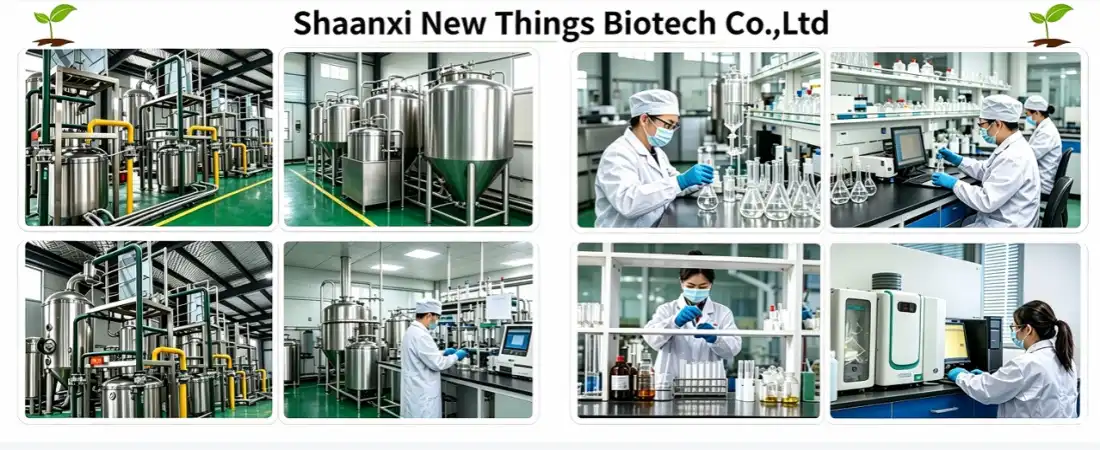
Making the Final Buying Decision
Traceability and sustainability matter
Krill is a marine resource, so source transparency and responsible supply-chain management are important to modern consumers and retailers. Buyers should ask about harvest region, supplier records, catch documentation, environmental controls, and sustainability standards relevant to the intended market. These details can influence retailer approval and brand reputation. Astaxanthin-enriched krill oil should be evaluated not only for its nutrient profile but also for the credibility of its origin and handling. A supplier that maintains batch numbers, source records, testing documents, and shipping information can help brands answer questions more confidently. NT Biotech’s source-to-application model provides a framework for this type of documentation, although product-specific evidence should always be requested.
Compare total value, not only price
A low price may reflect lower astaxanthin content, different EPA and DHA levels, weaker oxidation controls, limited testing, or less protective packaging. When comparing astaxanthin-enriched krill oil quotations, buyers should request equivalent information from each candidate: assay basis, analytical methods, phospholipid level, oxidation data, packaging, minimum order quantity, lead time, certifications, shipping terms, and payment conditions. Technical assistance and OEM/ODM support may also reduce development costs by preventing reformulation and documentation delays. NT Biotech provides flexible payment solutions, including local-currency payment where available. The best supplier is the one that offers reliable quality, communication, delivery, and scalability—not simply the lowest initial quotation.
Establish a long-term quality agreement
For recurring orders, a quality agreement can define specifications, testing methods, batch release, packaging, change control, deviation handling, complaint procedures, retention samples, and notification timelines. It may also describe how the supplier will communicate changes to raw-material sources, processing methods, analytical procedures, or manufacturing locations. This is especially valuable for astaxanthin-enriched krill oil, where changes in enrichment, oxidation control, or carrier systems can affect the label and finished-product behavior. NT Biotech’s batch CoA process and technical support can provide a useful basis for long-term cooperation. A written agreement helps both parties maintain consistency as volumes grow and new markets are added.
| Final approval area | Question to ask |
|---|---|
| Identity and source | Is the krill origin fully documented? |
| Composition | What are the minimum EPA, DHA, phospholipid, and astaxanthin levels? |
| Oxidation control | Which indicators are tested, and what limits apply? |
| Packaging | Does the container protect against oxygen, heat, and light? |
| Compliance | Are certificates and technical documents suitable for the target market? |
| Supply continuity | Are lead time, stock status, MOQ, and shipping terms clear? |
Conclusion
Astaxanthin-enriched krill oil is a unique nutritional ingredient: it is a natural combination of marine omega-3 fatty acids and phospholipids with a naturally occurring red-orange carotenoid. It may help support premium claims in omega-3 nutrition, ocular health, beauty from within, active lifestyles and good ageing. But a catchy ingredient name is not enough to make a commercial success. Buyers should look for source traceability, EPA and DHA content, phospholipid content, astaxanthin standardisation, oxidation stability, packaging, certifications and delivery capabilities. NT Biotech offers standardised processes, batch documentation, OEM/ODM customisation, flexible logistics and worldwide support. Partnering with a reputable provider of krill oil high in astaxanthin may help firms build consistent, respectable goods ready for the market. Contact NT Biotech to discuss your supply and formulation needs.
FAQ
1. What is astaxanthin-enriched krill oil?
It is krill oil containing marine omega-3s and phospholipids with a defined or enhanced level of astaxanthin.
2. What is astaxanthin used for?
It is commonly included in products positioned around antioxidant nutrition, eye wellness, skin appearance, active lifestyles, and healthy aging.
3. What should buyers test?
Review astaxanthin, EPA, DHA, phospholipids, oxidation indicators, heavy metals, pesticides, microbiology, and shelf-life data.
4. Is krill oil suitable for softgels?
Yes. Softgels are a common format, but fill weight, shell compatibility, oxidation protection, and capsule stability should be evaluated.
5. Can NT Biotech customize the product?
Yes. NT Biotech offers OEM/ODM support, technical documentation, packaging coordination, and flexible delivery options.
Build Your Marine Wellness Product with NT Biotech
NT Biotech helps brands develop premium marine-nutrition products through standardized processing, laboratory testing, batch CoAs, packaging coordination, and flexible OEM/ODM services. Its astaxanthin-enriched krill oil can be evaluated for softgels, capsules, beauty-from-within products, active-lifestyle formulas, and omega-3 wellness concepts. Customers can discuss astaxanthin assay, EPA and DHA levels, phospholipid content, oxidation control, source traceability, certifications, logistics, and target-market requirements with one responsive partner. Express, air, and sea shipping options support both pilot projects and larger commercial orders. If you are preparing your next marine supplement, contact info@newthingsbiotech.com with your application, volume, market, and quality requirements. Let NT Biotech help transform astaxanthin-enriched krill oil into a consistent, well-documented, and market-ready product.
References
1. Fassett, R. G., and J. S. Coombes. “Astaxanthin: A Potential Therapeutic Agent in Cardiovascular Disease.” Marine Drugs, 2011.
2. Ambati, R. R., et al. “Astaxanthin: Sources, Extraction, Stability, Biological Activities and Its Commercial Applications.” Marine Drugs, 2014.
3. Guerin, M., M. E. Huntley, and M. Olaizola. “Haematococcus Astaxanthin: Applications for Human Health and Nutrition.” Trends in Biotechnology, 2003.
4. Tou, J. C., J. Jaczynski, and Y. Chen. “Krill for Human Consumption: Nutritional Value and Potential Health Benefits.” Nutrition Reviews, 2007.
5. Burri, L., et al. “Krill Oil and Its Effects on Cardiovascular Risk Factors.” Lipids in Health and Disease, 2012.
6. Fassett, R. G., and J. S. Coombes. “Astaxanthin in Cardiovascular Health and Disease.” Marine Drugs, 2011.
Astaxanthin is a naturally occurring carotenoid (red-orange in colour) found in marine creatures, such as microalgae, salmon and krill . When blended with krill oil, it is a premium marine-nutrition component with a unique colour and a powerful antioxidant story.Krill oil is a source of marine omega-3 fatty acids like EPA and DHA, which are commonly connected with phospholipids. Astaxanthin-enriched krill oil may thus help businesses distinguish goods for the cardiovascular, eye, skin, joint and general wellness sectors. NT Biotech provides standardised natural ingredients, quality documentation, OEM/ODM services, flexible worldwide shipping. Its astaxanthin-enriched krill oil is ideal for organisations looking for a well-processed, traceable and formulation-ready ingredient from a dependable astaxanthin-enriched krill oil provider.
Astaxanthin and Krill Oil: A Natural Partnership
What astaxanthin actually is
Astaxanthin is a member of the carotenoid family, the same large group of natural pigments that includes beta-carotene, lutein and zeaxanthin. The deep red colour is a result of its molecular framework that interacts with lipid surroundings and provides marine animals their unique hue. Astaxanthin is created in nature mainly by microalgae that are subsequently passed up the food chain to animals such krill, shrimp and salmon. Its usage in supplements is generally linked to studies on antioxidants and its compatibility with oil-based formulations.Astaxanthin-enriched krill oil incorporates the carotenoid with marine lipids, which means that it is a multi-component substance and not just a single isolated nutrient. The final formulation is determined by the source, extraction technique, concentration, stabilisation procedure and the announced specification.
What makes krill oil different from ordinary fish oil
Krill oil is a marine lipid constituent naturally bound to omega-3 fatty acids and phospholipids. Fish oil usually includes omega-3s in the triglyceride or ethyl ester form, whereas krill oil often has a large percentage of omega-3s in the phospholipid form. In addition to omega-3s, krill oil also naturally contains astaxanthin, however the quantity is subject to source and processing.Astaxanthin enriched krill oil is generated when the astaxanthin content is enriched or standardised to a particular product specification. This may provide producers a more consistent formulation strategy and a better label narrative. Instead, buyers should ask for particular EPA, DHA, phospholipid, astaxanthin, oxidation and contaminant requirements instead of believing all krill oils have the same nutritional profile.
Why enrichment matters for product developers
Natural krill oil may include varying quantities of astaxanthin and this variation might make standardisation of the end product more challenging. Enrichment enables a provider to produce an ingredient that is more predictable and has a set range of astaxanthin. This is relevant for makers of capsules, functional food brands, and firms who provide luxury marine supplements. A continuous red-orange colour may also be part of the product identification. Colour alone should never be used to prove potency. NT Biotech focuses on standardised processes, lab testing, batch Certificates of Analysis and customised natural-ingredient solutions. These features may assist purchasers to assess krill oil supplemented with astaxanthin according to measureable quality attributes, not marketing talk. The actual enrichment level, carrier system and stability profile should always be checked in the current technical specification.
| Ingredient feature | Why it matters in a finished product |
|---|---|
| EPA and DHA content | Helps define the marine omega-3 contribution |
| Phospholipid level | Supports product differentiation and formulation positioning |
| Astaxanthin assay | Establishes the declared carotenoid concentration |
| Oxidation values | Helps assess freshness and storage stability |
| Heavy-metal and contaminant testing | Supports raw-material safety and market qualification |
| Source and traceability | Helps document origin and supply-chain control |
How Astaxanthin Works in a Marine Formula
Antioxidant activity and oxidative balance
Astaxanthin is intensively investigated for its antioxidant effects. Its molecular framework allows it to interact with lipid environments, which is important since cell membranes and marine oils contain considerable quantities of lipids. In the general nutrition debate antioxidants are connected with enabling the body to cope with oxidative processes. Effects of a final product rely on dose, formulation, absorption, research design and individual characteristics.Astaxanthin rich krill oil offers a convenient source of a carotenoid in combination with marine lipids in one ingredient. Brands should not, however, position it as a guarantyd therapy or as a replacement for medical care. A responsible product narrative may talk about the antioxidant research behind the substance, while also emphasising balanced eating, regular activity, sleep and general wellbeing.
Interaction with omega-3 lipids and phospholipids
Krill oil appeals not just for its EPA and DHA, but also for its phospholipid content and its natural marine matrix. Phospholipids may affect the structure of biological membranes and the behaviour of oil during digestion and formulation. Since astaxanthin is a lipid soluble compound, it makes technical sense to combine it with an oil-based substance.Astaxanthin-enriched krill oil is a more integrated formulation approach than adding a water-based carotenoid to a separate omega-3 product and may thus be beneficial. However, don't simply assume that "better absorption" is a fact without proper data for the precise product. Manufacturers should analyse the product’s fatty-acid composition, phospholipid content, astaxanthin concentration, oxidation stability and final dosage form before making performance claims.
Potential relevance to heart, eye, skin, and active-aging products
Astaxanthin and marine omega-3s are often used in products targeting healthy aging, cardiovascular wellness, eye support, skin appearance, joint mobility, and active lifestyles. Research has explored astaxanthin in relation to visual comfort, skin resilience, exercise recovery, and oxidative balance, while EPA and DHA are well known in nutritional science. These areas create several market opportunities for astaxanthin-enriched krill oil, especially in premium softgel and capsule products. Yet product claims differ by country, and evidence for one isolated ingredient cannot automatically support every combination claim. Brands should select a clear primary benefit, determine which claims are authorized, and ensure the finished product contains the amount required to support its label language.
Why the marine matrix needs protection
Marine oils are susceptible to oxidation which may alter odour, flavour, colour and nutritional quality. Astaxanthin may provide antioxidant protection in an oil system, but it is not a perfect replacement for adequate production and packaging regulations. Raw material freshness, extraction conditions, oxygen exposure, light, heat, barrier qualities of the container and storage duration all important. NT Biotech's processing and batch testing technique with an emphasis on quality might help customers develop an acceptable incoming-material programme. Relevant oxidation markers, astaxanthin assay, fatty-acid content, phospholipid information and storage recommendations should be included in the specification for astaxanthin-enriched krill oil. Stability should also be evaluated in the final packing and not only inferred from the raw material.
| Technical parameter | Recommended buyer question |
|---|---|
| Astaxanthin concentration | What is the assay range and analytical method? |
| EPA and DHA | Are values declared as minimum content or typical content? |
| Phospholipids | What method is used to determine the stated level? |
| Oxidation stability | Which peroxide, anisidine, or related values are controlled? |
| Packaging | Does the container limit light, oxygen, and moisture exposure? |
| Shelf life | Is the proposed expiry supported by stability data? |
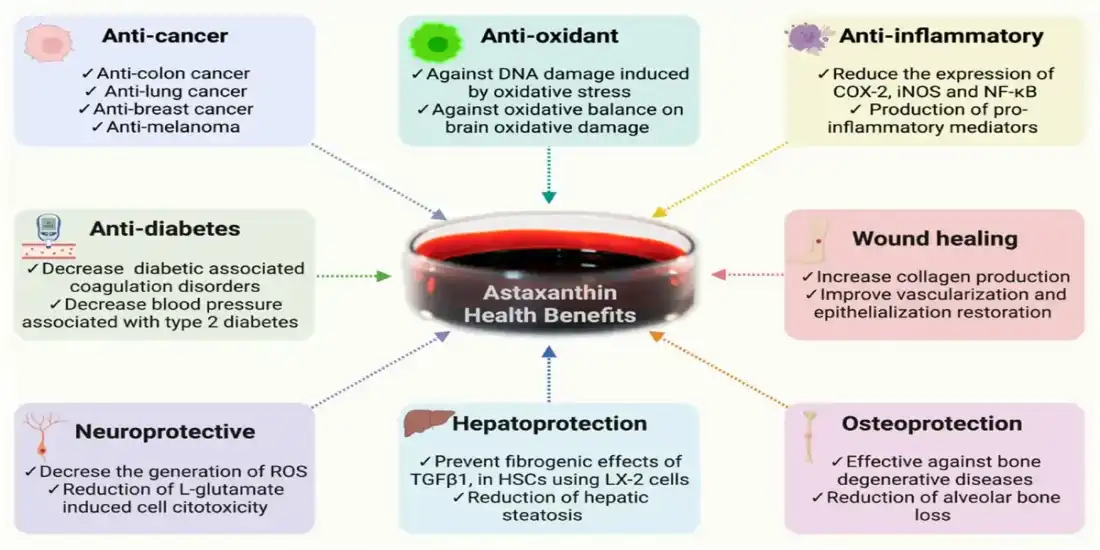
Designing Products Around Astaxanthin-Enriched Krill Oil
Softgels and capsules
Softgels are the natural shape for astaxanthin-enriched krill oil as the substance is oil-based and may be enclosed in a light resistant shell. Fill weight, oil viscosity, compatibility with capsule material, resistance to leakage, colour migration and long term stability should be considered by formulators. The shell of the softgel may also effect the vegan or allergy status of the final product, so marketers should check if the shell is produced from gelatine or some other substance. Powdered oil formulations may also be in hard capsules, but need carrier and flowability testing. NT Biotech is able to handle customised OEM and ODM projects, assisting brands in the coordination of ingredient requirements, packaging, private labelling and finished-product manufacture for multiple markets.
Functional beverages and nutrition powders
Oil-based substances provide specific issues for drinks, since they do not naturally disperse in water.If consumed as a drink, sachet or powder, the astaxanthin-enriched krill oil may need to be emulsified, encapsulated or have an appropriate delivery method. The product developer should examine particle size, dispersion, flavour, colour, sedimentation and oxidation under actual storage circumstances. A red-orange colour may add to the visual character of a product, but it can also interfere with flavours and package design. If the company wants a clear beverage, the ingredient may have to be processed more extensively than a softgel recipe. The ultimate format should be decided only after jointly considering technical feasibility, user experience and cost.
Sports and active-lifestyle formulas
Astaxanthin-enriched marine products might target the active consumer market interested in exercise recovery, endurance, mobility and general nutritional support. EPA and DHA feed into a more general omega-3 angle, and astaxanthin has been examined for benefits on exercise and oxidative stress. The recipe should nevertheless provide reasonable serving instructions and not promise guarantyd performance enhancements.Astaxanthin-enriched krill oil may be mixed with vitamins, minerals, botanical extracts and other sports-nutrition elements, but compatibility and total serving size should be confirmed. A good product should have one obvious advantage to the buyer, not a packed label with all sorts of irrelevant promises.
Beauty-from-within concepts
The interest in astaxanthin in nutricosmetic products for improving skin look and healthy ageing has also increased. Its antioxidant tale, marine origin and powerful natural colour may complement a premium beauty-from-within idea. Krill oil has its own unique phospholipid and omega-3 story, and astaxanthin-enriched krill oil is an ideal option for businesses looking for a more sophisticated alternative to traditional carotenoid or fish-oil solutions. But beauty claims have to be backed up with suitable data and considered under local rules. Packaging should express quality, freshness and traceability, particularly since customers may be sensitive to maritime odour or worries about sustainability. Supplier documentation is vital to gaining trust in this area.
How to Choose a Reliable Supplier
Begin with specifications and certificates
Key supplier papers include a current product specification, lot-specific Certificate of Analysis, source statement, processing description, storage suggestion, allergy declaration, and contaminant-testing information. For astaxanthin-rich krill oil, purchasers should additionally ask for EPA, DHA, phospholipid, astaxanthin, oxidation, heavy-metal, pesticide and microbiological data when appropriate. NT Biotech is a technology based provider to the nutritional supplement, functional food, cosmetic and animal nutrition markets. As per its claimed quality capabilities it provides ISO9001, Kosher and Halal assistance and standardised processes and laboratory documentation. Buyers should check the scope and validity of certifications and check that the documents pertain to the production site and the particular product grade.
Examine the supplier’s processing advantage
Raw-material supply, extraction method, concentration control, stabilisation, packaging, or testing may all provide product distinction. NT Biotech stresses innovative processing procedures to maximise active-compound yields, enhance purity and promote product stability. For astaxanthin-enriched krill oil, consumers should question how enrichment is done, whether the astaxanthin is natural or added from another source, what carriers are utilised, and how the finished product is protected against oxidation. These facts help to inform labelling, claims, sensory qualities, and regulatory appropriateness. A reputable astaxanthin-enriched krill oil source should be able to answer these questions explicitly, rather than using vague generalities such as “premium marine oil.”
Confirm lead times and logistics
NT Biotech provides answers to questions in 2 hours and holds stock of certain standardised substances and may despatch available items within 1 to 3 working days following order confirmation. Production orders usually take three to ten business days and include sourcing of raw materials, processing, lab testing, CoA preparation and final packing. Timing for astaxanthin enhanced krill oil is based on specification, order amount, packaging, testing requirements and destination. The firm also provides express, air and sea delivery, including direct FEDEX or UPS shipments and freight-forwarder help for bigger orders. Buyers should check Incoterms, temperature requirements, insurance, customs documentation and who is responsible for import clearance before despatch.
If you are developing a premium omega-3, beauty-from-within, or active-lifestyle formula, contact NT Biotech at info@newthingsbiotech.com. Share your target market, dosage form, astaxanthin level, expected volume, and documentation needs for a more focused product recommendation.
Making a Confident Commercial Decision
Consider traceability and sustainability
Responsible sourcing and traceability are crucial criteria for contemporary companies, since krill is a marine resource. Buyers should enquire about the area where the product was harvested, the supply chain, the catch paperwork, the environmental controls and any sustainability criteria applicable to the target market. Such difficulties might affect customer confidence and acceptance by retailers.The source and openness of the supply chain need to be taken into account when assessing the nutritional profile of astaxanthin enhanced krill oil. A supplier that can organise source information, batch numbers, testing documentation and shipping details makes it simpler to address client enquiries. NT Biotech’s source-to-application approach may assist businesses in building a fuller quality story, but buyers should seek product-specific data rather than relying primarily on broad corporate information.
Compare total value, not only price
A low quote may be concealing discrepancies in astaxanthin concentration, EPA and DHA levels, oxidation condition, packaging, carrier materials or scope of tests. When evaluating astaxanthin-enriched krill oil offers, buyers should ask every candidate for the same information: active specs, assay basis, test techniques, packaging, minimum order quantity, lead time, shipping terms, certificates and payment conditions. The supplier's capacity to provide technical help and customised OEM support may shorten development time and save expensive reformulation. NT Biotech also provides multiple payment options including local currency payment if applicable. Total commercial value encompasses quality, documentation, delivery dependability, technical communication and the capacity to scale-up production as demand increases.
Plan stability before launch
The testing of oil-based goods should be done in the final packaging and under anticipated storage circumstances. A raw ingredient may be stable in a sealed container at the plant, but behave differently after it has been filled into softgels, bottles, sachets or emulsions. Stability plans should track astaxanthin testing, EPA and DHA, oxidation markers, odour, colour, capsule integrity and microbiological quality if suitable. Light-resistant packaging and oxygen-barrier packaging may be better, but testing should guide the choice of final packaging. A source of astaxanthin-enriched krill oil that emphasises quality may advise on storage and batch information, but the producer of the final product must set its own shelf life and release requirements.

Conclusion
Astaxanthin is a marine carotenoid found naturally in krill oil, and offers a unique antioxidant and colour story. Astaxanthin-enriched krill oil, when properly standardised, may add value to premium goods with a focus on omega-3 nutrition, cardiovascular health, eye health, skin health, active lifestyles and healthy ageing. The value is about more than astaxanthin alone. EPA, DHA, phospholipids, oxidation stability, source traceability, packaging, testing and regulatory paperwork all need to be addressed. NT Biotech offers natural ingredient knowledge, standardised processing, batch CoAs, OEM/ODM services, certifications and flexible logistics to facilitate worldwide product development. Brands looking for a dependable source of astaxanthin-rich krill oil may contact NT Biotech to discuss requirements, applications and supply planning.
FAQ
1. What is astaxanthin?
Astaxanthin is a red-orange marine carotenoid naturally found in microalgae and aquatic organisms such as krill and salmon.
2. Why add astaxanthin to krill oil?
Enrichment can provide a more consistent astaxanthin level and strengthen the product’s antioxidant, marine-nutrition, and premium formulation story.
3. What should buyers test?
Buyers should review astaxanthin, EPA, DHA, phospholipids, oxidation values, heavy metals, pesticides, microbiology, and packaging stability.
4. Is krill oil suitable for capsules?
Yes. Softgels are a common format, but fill weight, oxidation protection, shell compatibility, and storage stability should be evaluated.
5. Can NT Biotech customize the product?
Yes. NT Biotech offers OEM/ODM support, customized specifications, packaging coordination, technical documentation, and flexible shipping options.
Build Your Marine Wellness Formula with NT Biotech
NT Biotech helps brands develop reliable marine-nutrition products through standardized processing, laboratory testing, batch CoAs, packaging coordination, and flexible OEM/ODM services. Its astaxanthin-enriched krill oil can be evaluated for softgels, capsules, functional blends, beauty-from-within products, active-lifestyle formulas, and other premium applications. Customers can discuss astaxanthin assay, EPA and DHA levels, phospholipid content, oxidation control, traceability, certifications, delivery schedules, and target-market requirements with one responsive partner. Express, air, and sea freight options support both pilot projects and larger commercial orders. If you are planning your next omega-3 or marine antioxidant product, contact info@newthingsbiotech.com with your application, volume, market, and quality requirements. Let NT Biotech help you transform astaxanthin-enriched krill oil into a consistent, credible, market-ready product.
References
1. Fassett, R. G., and J. S. Coombes. “Astaxanthin: A Potential Therapeutic Agent in Cardiovascular Disease.” Marine Drugs, 2011.
2. Ambati, R. R., et al. “Astaxanthin: Sources, Extraction, Stability, Biological Activities and Its Commercial Applications.” Marine Drugs, 2014.
3. Kidd, P. “Nutritional Study of Phospholipid-Bound Omega-3 Fatty Acids and Krill Oil.” Alternative Medicine Review, 2011.
4. Tou, J. C., and M. L. Jaczynski. “Krill Oil and Its Nutritional Properties.” Nutrition Reviews, 2013.
5. Sztretye, M., et al. “Astaxanthin as a Potential Antioxidant and Exercise-Recovery Ingredient.” Nutrients, 2019.
6. Tocher, D. R. “Omega-3 Long-Chain Polyunsaturated Fatty Acids and Aquatic Lipid Nutrition.” Marine Drugs, 2015.
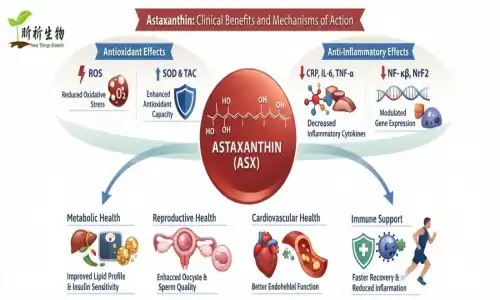
The appropriate choice of pigment and antioxidant for animal nutrition may make a big impact in product performance and market competitiveness. As the need for feed additives continues to expand in aquaculture, poultry and speciality animal nutrition, purchasers are looking for a reliable supplier for consistent quality, technical assistance and a steady supply. NT Biotech is an active member of Shaanxi New Things Biotech, which has built up a solid reputation as a professional plant derivatives supplier, offering pure, stable and highly active natural extracts for the worldwide feed, food, supplement and cosmetic sectors. NT Biotech provides astaxanthin powder bulk, using innovative extraction technology and tight quality control. We also provide flexible OEM service, all up to international standards. For product inquiries, technical support or a quotation, buyers are welcome to contact us at info@newthingsbiotech.com.

Why Feed Additive Buyers Are Turning to Astaxanthin Powder Bulk
The rising demand for natural colourants in animal feed has prompted many producers to switch to naturally derived pigments from synthetic pigments. Astaxanthin is a potent carotenoid often used in aquaculture, notably in salmon, trout, shrimp and ornamental fish feed, because to its capacity to improve natural colouring and also its great stability as a feed addition element. If you are to purchase astaxanthin powder in little packed amounts, it would be rather expensive and inefficient as compared to buying it bulk for big scale feed manufacturing.
Compared with liquid forms, bulk powder offers better handling in dry feed premixes, easier storage under controlled conditions and greater flexibility during large-scale blending. It can be uniformly distributed into pellet feeds, powdered feeds or premix formulations without creating major solubility challenges when processed correctly. More importantly, feed manufacturers need to ensure batch-to-batch consistency in color strength, because end buyers in aquaculture and poultry markets place high value on uniform appearance and reliable product quality.
NT Biotech is dedicated to natural astaxanthin powder with stringent standardisation and comprehensive batch documentation. By selecting a reliable astaxanthin powder bulk supplier, feed additive purchasers may decrease formulation risks, better manage production costs and construct a more secure long-term supply chain for their commercial feed products.

How to Evaluate Quality When Sourcing Astaxanthin Powder Bulk
For feed additive applications, quality assessment should always come before price comparison. Not all astaxanthin powders on the market deliver the same pigment strength, stability or purity. When evaluating different options for astaxanthin powder bulk, buyers need to check a combination of technical indicators that directly affect performance in feed processing and end results.
Key Active Content and Testing Standards
The pigment strength of astaxanthin powder is the core factor that determines how much to use in feed formulations. Reliable suppliers should provide verified assay data through HPLC testing rather than only general UV values. NT Biotech ensures every batch of its astaxanthin powder bulk comes with a complete Certificate of Analysis, clearly stating active content and meeting strict internal quality specifications. This level of analytical transparency helps feed manufacturers accurately calculate inclusion rates and maintain consistent coloration across different production lots.
High-quality natural astaxanthin for feed is typically derived from Haematococcus pluvialis, a well-recognized microalgae source known for its naturally high astaxanthin accumulation. Verifying the botanical source is essential, as it directly affects both pigment quality and regulatory acceptance in many international markets. A professional bulk astaxanthin powder supplier should clearly state the source, extraction method and testing standards for each product offered.
Physical Properties, Stability and Purity
Beyond active content, physical characteristics play a very important role in feed processing. Particle size, flowability, moisture content, color appearance and mixing uniformity will all impact how well the powder blends into premixes and survives feed pelleting conditions. NT Biotech's astaxanthin powder bulk is produced through a controlled process that focuses on stability, good dispersibility and low impurity levels to meet the practical demands of large-scale feed manufacturing.
The following table outlines the key technical indicators buyers should check when comparing different suppliers for feed additive use:
| Quality Indicator | What to Look For | Why It Matters for Feed Additives |
|---|---|---|
| Active Assay | HPLC-verified astaxanthin content with full COA | Ensures accurate dosage, consistent pigmentation and predictable batch performance |
| Source Material | Clearly identified Haematococcus pluvialis origin | Reflects natural quality and improves acceptance in export markets |
| Particle Size & Flowability | Fine, uniform powder with stable flow properties | Promotes even distribution in dry premixes and pelleted feed |
| Moisture & Purity | Low moisture, heavy metals within international limits | Supports shelf stability and helps meet feed safety requirements |
| Processing Method | Controlled extraction with stability-focused production | Helps preserve pigment strength during storage and feed processing |
Documentation, Certifications and Quality Assurance
For feed additive buyers involved in international trade, documentation readiness can be just as important as product quality. NT Biotech operates under a full-chain quality control system from raw material screening to finished product delivery. The company holds internationally recognized certifications including ISO9001, HALAL, KOSHER and follows strict quality management aligned with global industry expectations. Each shipment of astaxanthin powder bulk is supported with COA, technical specifications and traceable batch records. This level of compliance helps feed manufacturers pass audits more smoothly and reduces risks when exporting finished feed products to different regional markets.
As you evaluate potential long-term partners for your feed additive formulations, we invite you to reach out to info@newthingsbiotech.com to discuss current specifications, availability and technical suitability for your specific feed application.

Understanding the Right Specification for Different Feed Applications
Different animal species have very different requirements for pigmentation and inclusion levels. Choosing the correct specification of astaxanthin powder bulk is not about using the highest number, but about matching pigment strength, stability and formulation design to the target feed. Aquaculture remains the largest application field, but there are also growing opportunities in ornamental fish, poultry and specialty feed segments.
Aquaculture Feeds Require Consistent Pigmentation
In salmon, trout and shrimp feed, astaxanthin plays a well-recognized role in achieving the natural pink, red or orange coloration that consumers expect in the final product. For these applications, color uniformity across production batches is extremely important for market value. Feed mills need astaxanthin powder bulk that can withstand the heat and pressure of pelleting while still maintaining sufficient pigment retention after processing and storage.
The powder form allows for precise pre-mixing before pelleting, which greatly improves dispersion compared to less uniform ingredient forms. NT Biotech focuses on stability-oriented processing to help preserve pigment strength through standard feed manufacturing conditions. When sourced from an experienced astaxanthin powder bulk supplier, aquafeed producers can better control feed costs while still delivering the consistent coloration their buyers demand in competitive seafood markets.
Ornamental Fish, Poultry and Specialty Feed
Beyond food fish, ornamental fish feed also benefits from natural astaxanthin to enhance vibrant coloration in koi, goldfish, cichlids and other species where appearance directly influences product value. In certain poultry feed applications, natural carotenoids are used in breeder or specialty formulations where producers look to differentiate their products with naturally derived ingredients. For these more niche segments, feed formulators often require flexible inclusion levels and may need small adjustment support during product development.
NT Biotech offers customization flexibility through its OEM service, allowing feed additive customers to align product specifications with different regional market preferences. With technical support from its R&D team and adaptable production capacity, buyers can work on targeted formulations rather than being limited to a single fixed specification of astaxanthin powder bulk.
The following table helps outline general formulation considerations across different feed categories to guide buyers during the selection process:
| Feed Application | Focus of Formulation | Key Consideration When Choosing Astaxanthin Powder Bulk |
|---|---|---|
| Salmon & Trout Feed | Flesh pigmentation | High pigment consistency, good pelleting stability and reliable batch documentation |
| Shrimp Feed | Shell/body coloration | Excellent dispersibility in powder/premix and stable under standard processing conditions |
| Ornamental Fish Feed | Bright color enhancement | Uniform mixing, flexible inclusion range and long shelf stability |
| Poultry Specialty Feed | Natural carotenoid positioning | Clean-label origin, compatibility with other feed additives and regulatory compliance |
| Other Specialty Feeds | Differentiated product development | Customizable specification support with technical formulation guidance |
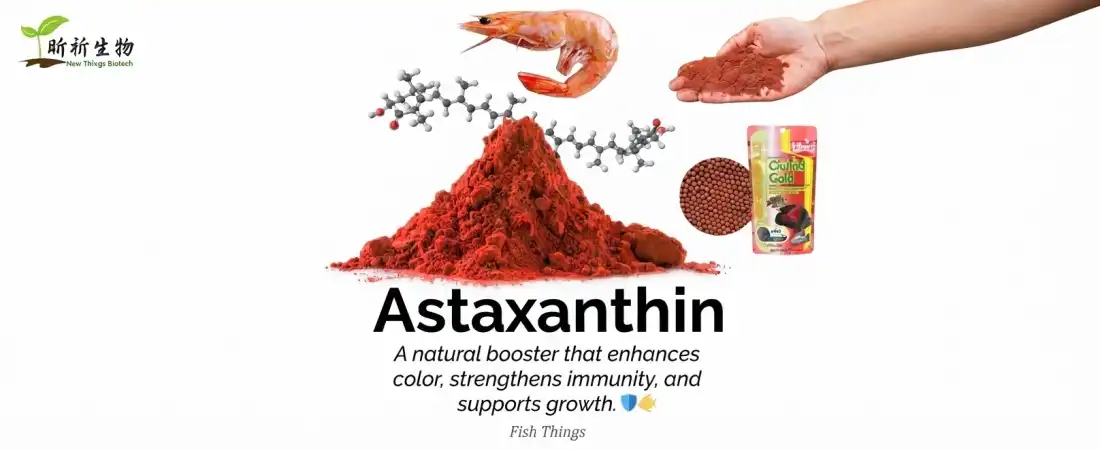
Manufacturing, Supply Stability and Delivery Advantages
For large-volume feed additive buyers, reliable supply is just as critical as product quality. Production delays or inconsistent availability of astaxanthin powder bulk can disrupt feed manufacturing schedules and put customer commitments at risk. NT Biotech is structured to minimize these risks through strong production capacity, controlled inventory and responsive delivery systems.
Advanced Production and Quality Control
NT Biotech combines autonomous sourcing awareness with modern R&D, intelligent production and a flexible supply chain that covers the entire value path from raw material to finished product application. As a wholesale astaxanthin manufacturer, the company applies advanced extraction and processing technologies, including specialized methods that help protect heat-sensitive carotenoids during production. Each step, from raw material intake and extraction to drying, testing and packaging, follows strict in-process controls to maintain the purity, activity and stability of its astaxanthin powder bulk.
With an experienced technical team and laboratories equipped for HPLC, quality verification and safety testing, every batch undergoes comprehensive inspection before release. This end-to-end quality assurance allows feed additive buyers to source with confidence and maintain the same product standard year-round rather than facing unexpected batch variations.
Fast Delivery, Flexible Logistics and Global Reach
One of the key advantages of partnering with NT Biotech as your astaxanthin powder bulk supplier is its responsive delivery structure. For popular standardized extracts, the company maintains sufficient inventory to support shipment within 1–3 working days after order confirmation. For production-based orders, the typical lead time is 3–10 working days, covering procurement, extraction, laboratory testing with COA, and final packaging. Initial inquiries are guaranteed a response within two hours, which is especially valuable for buyers working under tight procurement timelines.
In logistics, NT Biotech offers flexible shipping options based on order volume, destination and urgency. With its own FEDEX/UPS accounts for direct factory shipments and trusted freight forwarder partnerships for bulk sea or air deliveries, customers benefit from both speed and security. Whether shipping trial volumes or full container loads of astaxanthin powder bulk, delivery is arranged to match practical business needs while helping control overall landed costs.
Customization, OEM Services and Long-Term Partnership Value
Feed additive markets vary greatly by region, species and brand positioning. Many buyers are no longer satisfied with off-the-shelf ingredients and need a partner who can support product differentiation. NT Biotech provides flexible OEM solutions that allow customers to customize specifications, packaging and documentation according to different country requirements and market strategies.
Technical Support Throughout Product Development
Developing a new feed formula or adjusting an existing one often requires more than just supplying powder. NT Biotech offers professional technical support, including formulation guidance, product feasibility evaluation and laboratory verification when needed. Its R&D team works alongside customers to help optimize inclusion levels, assess compatibility with other feed additives and improve overall formulation stability. For buyers looking to launch a differentiated feed product, this collaborative support can significantly shorten development time and reduce trial costs.
With low minimum order quantities available for trial batches and the ability to scale up smoothly to bulk commercial orders, NT Biotech is well-suited to support both growing feed businesses and established large-scale manufacturers. This flexibility makes it easier for customers to test market response before committing to high-volume production of products containing astaxanthin powder bulk.
A True Partnership Rather Than Just a Supplier
What sets NT Biotech apart as an astaxanthin powder bulk supplier is its commitment to building long-term partnerships rather than one-time transactions. The company provides buyer-friendly payment options, including the ability to accept payment in the buyer's local currency, which helps simplify international procurement and reduce currency exchange friction. Combined with fast communication, transparent documentation, technical expertise and reliable delivery, this creates a stable supply relationship that feed additive buyers can depend on year after year.
For any feed manufacturer looking to secure consistent, high-quality astaxanthin powder bulk for current production or future product expansion, NT Biotech offers the technical strength and service reliability needed to support long-term business growth. To discuss your specific requirements in detail, feel free to contact our team at info@newthingsbiotech.com.
Conclusion
Choosing the right astaxanthin powder bulk for feed additives requires more than comparing price. Buyers should focus on verified HPLC assay, natural Haematococcus pluvialis source, stable physical properties, complete documentation, reliable inventory and strong technical support. NT Biotech delivers standardized, high-purity astaxanthin powder bulk with international certifications, fast global delivery and flexible OEM services. Partnering with an experienced astaxanthin powder bulk supplier like NT Biotech helps feed manufacturers ensure consistent pigmentation, stable supply and long-term product success in competitive global markets.
FAQ
1. What source is used for NT Biotech's astaxanthin powder bulk?
It is derived from natural Haematococcus pluvialis, a well-recognized microalgae source known for high-quality astaxanthin content.
2. How is the active content verified?
Every batch is tested by HPLC and comes with a full Certificate of Analysis to ensure accurate and consistent assay levels.
3. What is the typical delivery time for bulk orders?
For in-stock specifications, shipment is within 1–3 working days after order confirmation, while production orders take 3–10 working days.
4. What should buyers check when sourcing astaxanthin powder bulk?
Buyers should assess more than the astaxanthin test. Main considerations include source material, HPLC validated active content, particle size, flowability, moisture, purity, processing technique and batch documentation. Also critical for feed manufacture is pigment stability throughout mixing, pelleting and storage. Quality control and long-term procurement will be simpler with a supplier that can give COA, technical specifications, traceable batch records and technical assistance.
5. Can astaxanthin powder bulk be customized for different feed applications?
Yeah. Different feed applications may have different standards, inclusion levels, packaging forms or documentation. NT Biotech offers OEM services and technical assistance to clients producing aquaculture, ornamental fish, poultry and speciality feed products. The R&D team is available to provide formulation assistance, product feasibility review and lab verification as required, while flexible trial volumes enable customers to assess a specification before making bigger commercial commitments.
Get Premium Astaxanthin Powder Bulk from NT Biotech Today
Ready to secure a stable, high-quality supply of astaxanthin powder bulk for your feed additive formulations? NT Biotech combines certified quality, proven technical expertise, fast global logistics and flexible OEM services to help your feed products stand out in competitive markets. Whether you need samples for testing, a trial batch or large-scale commercial supply, our professional team is ready to support your long-term growth. Contact us today at info@newthingsbiotech.com to request specifications, pricing, COA or a tailored quotation for your next feed project.
References
1. Lorenz, R. T., and Cysewski, G. R. “Commercial Potential for Haematococcus Microalgae as a Natural Source of Astaxanthin.” Trends in Biotechnology.
2. Guerin, M., Huntley, M. E., and Olaizola, M. “Haematococcus astaxanthin: Applications for Human Health and Nutrition.” Trends in Biotechnology.
3. Torrissen, O. J. “Pigmentation of Salmonids: Interactions of Astaxanthin and Canthaxanthin on Pigment Deposition in Rainbow Trout.” Aquaculture.
4. Bjerkeng, B. “Carotenoids in Aquaculture: Fish and Crustaceans.” Carotenoids.
5. Rodriguez-Amaya, D. B. “A Guide to Carotenoid Analysis in Foods.” International Life Sciences Institute.
6. Breithaupt, D. R. “Modern Application of Xanthophylls in Animal Feeding.” Poultry and Avian Biology Reviews.
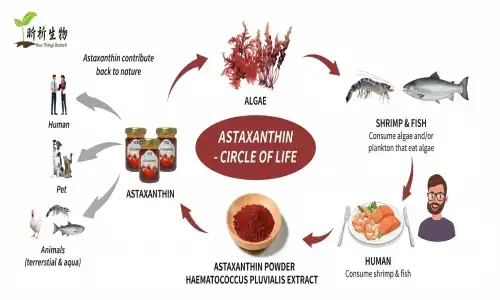
Ask a salmon buyer what they look for initially, and color is always the response. Ask a shrimp farmer what’s on their mind, and the response is molting and transfer survival. Both issues rest on the same carotenoid. Astaxanthin is not a cosmetic ingredient added to a feed mix, but a vital nutrient that farmed animals cannot synthesize and have to get from their food. NT Biotech offers astaxanthin powder bulk from Haematococcus pluvialis, manufactured by its patented extraction process, confirmed by HPLC, with a Certificate of Analysis for each lot, and certified ISO 9001, KOSHER and HALAL. Enquiries reach the technical team at info@newthingsbiotech.com, with initial replies guaranteed within two hours.

The Commercial Case: Colour Is Money
Pigmentation Determines Market Price
In salmonid production, flesh colour is graded against standardised colour fans, and price brackets follow those grades directly. A fillet that scores below the target band loses value regardless of its nutritional quality, size or freshness. This is why astaxanthin represents one of the largest single ingredient costs in a salmon diet and simultaneously one of the highest-return investments in the formula. Feed producers who under-dose to save on raw material typically hand that saving back, and more, at harvest grading.
Consumers Buy With Their Eyes First
Retail behaviour reinforces the commercial logic. Shoppers associate deep pink-orange salmon and vividly coloured shrimp with freshness and quality, whether or not that association holds nutritionally. Processors therefore specify colour targets to their farming suppliers, and farms specify them to feed mills. Sourcing a consistent astaxanthin powder bulk becomes a contractual requirement rather than a formulation preference once a producer is supplying branded retail programmes.
Natural Sourcing Opens Premium Channels
Positioning matters increasingly. Natural astaxanthin from Haematococcus pluvialis is predominantly the 3S,3'S stereoisomer, the same configuration found in wild salmon diets, whereas synthetic material is a racemic mixture. Organic aquaculture standards and many premium retail programmes specify natural sourcing explicitly. Choosing an algal-derived astaxanthin powder bulk therefore unlocks market channels that a synthetic equivalent cannot access, which changes the economics well beyond the ingredient cost line.
| Commercial Driver | Impact on Producer |
|---|---|
| Flesh colour grade | Direct effect on price bracket at harvest |
| Shell colouration | Buyer acceptance in shrimp and prawn markets |
| Natural sourcing | Access to organic and premium retail programmes |
| Batch consistency | Predictable grading, fewer rejected lots |
| Documentation | Faster customs clearance and audit compliance |
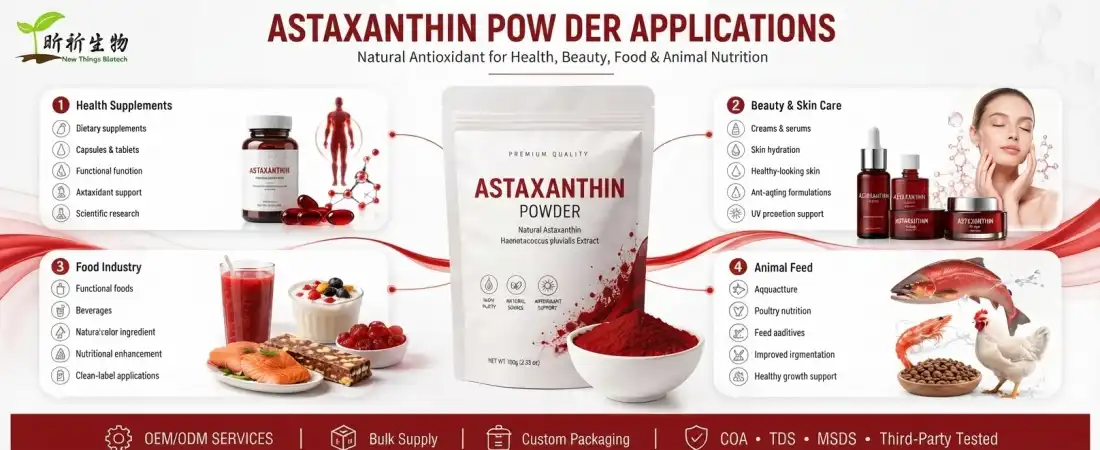
Beyond Colour: What Astaxanthin Does Physiologically
A Powerful Lipid-Soluble Antioxidant
Astaxanthin's molecular structure allows it to span the cell membrane, with the polar end groups anchored at both surfaces. This positioning is why it is studied so extensively as a membrane antioxidant, and why interest in it extends well past pigmentation. In farmed species subjected to handling, grading, transport, and variable water quality, oxidative pressure is a constant background stressor rather than an occasional event.
Support During Stress and Moulting
Crustaceans face particular vulnerability during moulting, when the exoskeleton is soft, and the animal is metabolically stretched. Astaxanthin accumulates in crustacean tissue and has been associated in research literature with stress tolerance during these transitions. For shrimp producers, this dual role means a wholesale astaxanthin powder bulk delivers both the visual outcome buyers demand and physiological support during the riskiest phases of the production cycle.
Broodstock, Egg Quality and Early Development
Hatchery operations use astaxanthin differently from grow-out farms. Carotenoid content in broodstock diets influences egg pigmentation, and the deposited carotenoid remains available to the developing embryo and early larval stages. Hatcheries running high-value species therefore treat astaxanthin as a broodstock conditioning nutrient, specifying it months before any fish reaches a grow-out pond, which extends demand across the full production chain.
Selecting the Right Grade for Your Operation
Concentration and Physical Form
Astaxanthin is dosed in parts per million, so raw material concentration determines how precisely you can weigh it. Encapsulated beadlets protect the carotenoid during mixing and thermal processing and handle well in dry blending. Cold water dispersible grades suit liquid dosing, post-pellet application, and ornamental fish products. Oleoresin-based powders deliver high payload for concentrated premix work. An experienced astaxanthin powder bulk supplier should ask about your mixer, your process temperature, and your batch size before recommending a specification.
Matching Grade to Species and Process
A shrimp feed extruded at high temperature with long water immersion has entirely different requirements from a koi pellet coated after drying. Water stability, leaching resistance, thermal survival, and oil compatibility all shift the optimal choice. Buying the wrong grade rarely shows up as an obvious failure; it shows up as inconsistent colour development three months later, which is expensive to diagnose and more expensive to correct mid-cycle.
Requesting Samples and Technical Assessment
Grade selection is far easier to settle with real material and real process data than with catalogue descriptions. To request a sample of astaxanthin powder bulk together with the batch Certificate of Analysis, HPLC documentation and a formulation recommendation matched to your species and processing route, write to info@newthingsbiotech.com. The technical team responds within two hours and can review your conditioning temperature, mixing sequence, and target inclusion before you run a pilot batch.
| Species | Primary Objective | Suggested Format | Critical Process Factor |
|---|---|---|---|
| Atlantic salmon | Flesh pigmentation | Encapsulated beadlet | Extrusion survival, long feeding period |
| Rainbow trout | Flesh pigmentation | Encapsulated beadlet | Deposition efficiency with fish size |
| Shrimp and prawns | Shell colour, stress support | High-stability encapsulated | Water stability, leaching control |
| Ornamental koi | Visual colour grading | Cold water dispersible | Higher inclusion, seasonal feeding |
| Broodstock | Egg quality and pigmentation | Encapsulated or oil-dispersible | Conditioning period length |
| Sea bream and bass | Skin colour | Encapsulated beadlet | Coating or extrusion compatibility |

Building It Into the Feed Without Losing Value
Premixing Is Not Optional
Adding a few grams of concentrated material directly to a tonne of feed guarantees uneven distribution, and uneven distribution shows up as variable pigmentation across a harvest batch. The reliable method is stepwise dilution: blend the bulk astaxanthin powder into a small carrier volume such as rice bran or a mineral base, mix thoroughly, then dilute progressively before the final batch. Two or three stages produce dramatically better homogeneity than a single direct addition.
Processing Losses and Building Overage
Carotenoids are sensitive to heat, shear, and oxygen, all of which extrusion supplies simultaneously. Retention depends on temperature, moisture, residence time, and the quality of the encapsulation matrix. Rather than assuming full survival, measure retention in your own process and build a calculated overage into the formula. Producers running at the upper end of the temperature range often find that a post-pellet vacuum coating route preserves more activity than pushing higher inclusion through the die.
Storage Discipline Protects What You Paid For
Oxygen, light, and heat degrade astaxanthin, both in the drum and in the finished pellet. Keep containers sealed, store cool, dry, and dark, reseal inner liners properly after opening, and record opening dates. Ordering pack sizes matched to consumption rate preserves more activity than buying a year's supply that sits half-open. Advising farm customers on feed storage conditions protects your product performance after it leaves the mill.

Supply Reliability and Documentation
What Every Batch Should Carry
A generic specification sheet is not a Certificate of Analysis. Each lot from NT Biotech ships with batch-specific HPLC and UV documentation alongside a CoA, which is the minimum a feed manufacturer should accept from any astaxanthin powder bulk supplier. Verify the assay, the analytical method, the contaminant screen, and the batch number against the material delivered. Suppliers unable to produce lot-specific paperwork within a working day represent a compliance risk irrespective of unit price.
Certification for Export and Audit
Feed additive regulation differs between jurisdictions, and documentation determines how smoothly material clears customs and satisfies third-party audits. Production runs under ISO 9001 quality management, with KOSHER and HALAL certification available. Proprietary processing delivers verified purity and superior stability, which translates into consistent performance in finished feed rather than batch-to-batch variability that formulators have to compensate for.
Lead Times, Shipping and Payment Flexibility
Production schedules do not wait for raw material. Stocked standardised extracts ship within one to three working days of order confirmation, while production orders typically run three to ten working days covering procurement, extraction, laboratory testing and packing. Shipments travel on the company's own FedEx and UPS accounts for speed, or through trusted freight forwarders for bulk air and sea consignments. Payment in the buyer's local currency is accepted, and OEM customisation is available for market-specific requirements.
| Supply Factor | NT Biotech Provision |
|---|---|
| Response time | Initial reply within two hours |
| Stocked items | Shipment within 1–3 working days |
| Production orders | 3–10 working days, full cycle |
| Documentation | Batch CoA with HPLC and UV data |
| Certification | ISO 9001, KOSHER, HALAL |
| Shipping | Express, air or sea; own FedEx/UPS accounts |
| Customisation | OEM specification and packaging |
| Payment | Buyer's local currency accepted |

Conclusion
Astaxanthin powder bulk has a place in aquaculture feed for two reasons: the farmed species can’t produce it, and the purchasers pay directly for the outcome. Pigmentation determines the grade of the harvest and acceptability by the retailer. The same molecule is a membrane antioxidant that supports animals during molting, handling, and transport stress. The natural Haematococcus-based substance also opens organic and premium channels that are closed for synthetic alternatives. NT Biotech backs this up with HPLC-validated astaxanthin powder in bulk, ISO 9001, KOSHER and HALAL paperwork, fast dispatch from stock, and OEM flexibility for species-specific formulation demands.
FAQ
Q1: Why can't farmed fish make their own astaxanthin?
Fish and crustaceans lack the biosynthetic pathway. Wild animals obtain it through the food chain from microalgae, so farmed stock depends entirely on dietary supplementation.
Q2: Does natural astaxanthin matter for organic certification?
Yes. Natural Haematococcus-derived material is predominantly the 3S,3'S isomer and is generally required by organic aquaculture standards and premium retail programmes.
Q3: How do I add such a small dose evenly?
Use stepwise dilution through a carrier such as rice bran or a mineral base, mixing thoroughly across two or three stages before the final batch.
Q4: Which grade suits extruded shrimp feed?
A high-stability encapsulated grade, chosen for thermal survival and resistance to leaching during extended water immersion.
Q5: How fast can material be delivered?
Stocked specifications ship within one to three working days; production orders typically take three to ten working days.
Partner With NT Biotech for Aquaculture-Grade Astaxanthin
Ready to secure a colour ingredient that performs consistently from mixer to harvest? NT Biotech supplies natural Haematococcus pluvialis astaxanthin powder in bulk across multiple standardised concentrations and physical formats, each batch verified by HPLC and shipped with full documentation under ISO 9001, KOSHER and HALAL certification. Stocked grades of astaxanthin powder bulk leave within one to three working days; production orders run three to ten working days, and consignments move on our own FedEx and UPS accounts or through trusted freight forwarders for bulk volumes. OEM customisation and local-currency payment are both supported. Send your species, target inclusion, and processing route to info@newthingsbiotech.com for a sample, CoA, and quotation.
References
1. Lorenz, R. T., & Cysewski, G. R. (2000). Commercial potential for Haematococcus microalgae as a natural source of astaxanthin. Trends in Biotechnology, 18(4), 160–167.
2. Torrissen, O. J., Hardy, R. W., & Shearer, K. D. (1989). Pigmentation of salmonids: Carotenoid deposition and metabolism. CRC Critical Reviews in Aquatic Sciences, 1(2), 209–225.
3. Ambati, R. R., Phang, S. M., Ravi, S., & Aswathanarayana, R. G. (2014). Astaxanthin: Sources, extraction, stability, biological activities and its commercial applications — A review. Marine Drugs, 12(1), 128–152.
4. Higuera-Ciapara, I., Félix-Valenzuela, L., & Goycoolea, F. M. (2006). Astaxanthin: A review of its chemistry and applications. Critical Reviews in Food Science and Nutrition, 46(2), 185–196.
5. Lim, K. C., Yusoff, F. M., Shariff, M., & Kamarudin, M. S. (2018). Astaxanthin as feed supplement in aquatic animals. Reviews in Aquaculture, 10(3), 738–773.
6. Shahidi, F., & Brown, J. A. (1998). Carotenoid pigments in seafoods and aquaculture. Critical Reviews in Food Science and Nutrition, 38(1), 1–67.
Visit any aquaculture farm raising salmon or shrimp for premium markets and you will discover one ingredient mentioned repeatedly on the feed formulation sheet: astaxanthin. Consumers expect to see the bright pink-orange flesh of wild-caught salmon, and its deep-red carotenoid pigment is responsible for this color. Without it, farmed fish would be a light gray color, which would lead to lower market pricing and customer rejection. But the usefulness of astaxanthin in animal nutrition is more than just coloration. It is one of the most effective natural antioxidants known to science; its efficacy is several hundred times stronger than vitamin E in protecting cell membranes from oxidative damage (Naguib, 2000). For feed manufacturers, poultry producers, and aquaculture operations looking for a reliable source of this critical ingredient, selecting the right astaxanthin powder bulk product and understanding how to incorporate it into feed formulations are decisions that impact animal health, product quality, and profitability.NT Biotech provides bulk high-purity astaxanthin powder from its manufacturing site in Shaanxi. Guaranteed purity beyond industry norms, full HPLC/UV documentation with each batch, and delivery within 1-3 working days for in-stock goods. For pricing inquiries, samples, or technical data sheets, reach the team directly at info@newthingsbiotech.com.
Why Astaxanthin Matters in Modern Animal Nutrition
The Pigmentation Imperative
In the industry of seafood sales, color is king. Consumers in Japan, Norway, Chile, and North America equate the vivid pink-orange color of salmon meat with freshness, quality, and nutritional content. SalmoFan, the industry's color system used for grading salmon fillets, ranges from a mild score of twenty to a dark red of thirty-four. Every point on this scale directly impacts the selling price per kilogram. Farmed salmon without dietary astaxanthin are, in any case, pale, irrespective of their true nutritional content, as customers perceive color as a visual proxy for quality. The addition of astaxanthin powder bulk at suitable inclusion rates to the salmon diet immediately overcomes this pigmentation deficiency. The carotenoid is absorbed in the gastrointestinal system, carried on lipoproteins, and deposited in muscle tissue where it imparts the distinctive color. Shrimp have a similar story, with astaxanthin being deposited in the exoskeleton and the bright red-orange hue when cooked and fetching premium prices in both fresh and frozen markets. So sourcing this ingredient from a certified astaxanthin powder bulk supplier that can guarantee constant pigment activity from batch to batch is no little procurement detail; it’s a first-order business choice.
Antioxidant Protection beyond Color
Pigmentation is the economic basis for adding astaxanthin, but its biological benefit to the animal is perhaps even higher. Astaxanthin is a xanthophyll carotenoid that has a unique molecular arrangement in that it can traverse the lipid bilayer of cell membranes, giving antioxidant protection on both sides at the same time (Guerin et al., 2003). Its location permits it to quench reactive oxygen species and lipid peroxides that would otherwise harm cell membranes, proteins, and DNA. In intensive aquaculture systems where fish are kept at high stocking densities, the physiological stress of crowding causes higher levels of oxidative stress that decrease immune function and increase vulnerability to illness. Dietary astaxanthin may assist in balancing this oxidative load, boosting immunological competence, enhancing survival during stressful events such as handling and transit, and adding to overall animal wellbeing. These benefits translate into decreased mortality, cheaper veterinary expenses, and higher feed conversion efficiency, economic benefits that go much beyond the aesthetic attractiveness of the final product.
| Benefit | Mechanism | Economic Impact |
|---|---|---|
| Flesh pigmentation | Deposition in muscle tissue | Higher retail price per kg |
| Antioxidant defense | Membrane-spanning ROS neutralization | Reduced oxidative stress and mortality |
| Immune support | Enhanced phagocytic activity | Lower disease incidence and vet costs |
| Reproductive performance | Improved egg and sperm quality | Better hatch rates in broodstock |
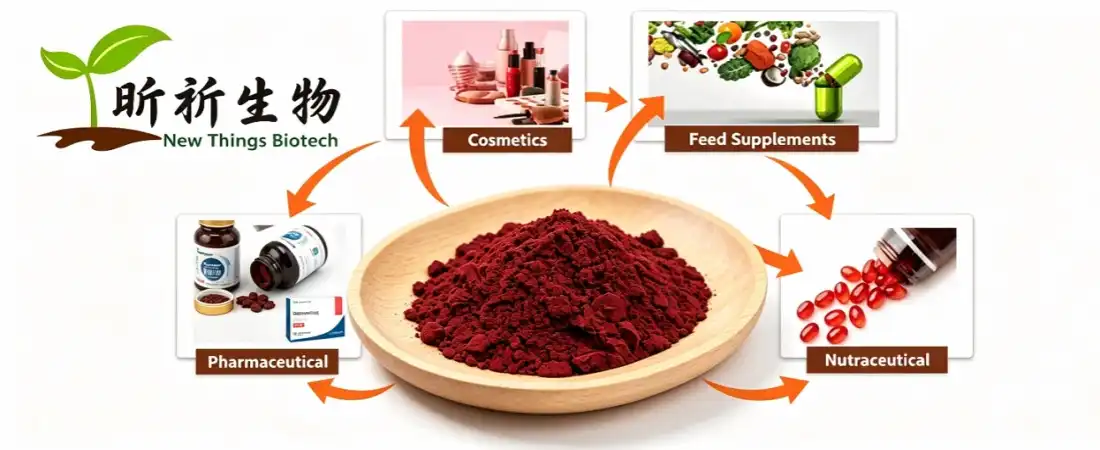
Species-Specific Feeding Strategies with Astaxanthin Powder Bulk
Salmon and Trout: The Primary Market
Atlantic salmon is the greatest single consumer of astaxanthin in aquaculture, and the feeding approach for this species is well defined. The last grow-out period (6–12 months prior to harvest) usually includes the incorporation of astaxanthin powder bulk into the extruded feed pellets at inclusion levels of 40–80 mg/kg feed. The timing is critical because astaxanthin deposition in muscle tissue needs a prolonged food supply spanning many weeks. A short supplementation at the end of the production cycle causes less coloring than a longer feeding period with moderate inclusion rates. Rainbow trout follow the same procedure, but with a slightly lower necessary inclusion rate, since trout muscle tends to deposit carotenoids more effectively than salmon muscle. Pigment consistency is the key specification of any wholesale astaxanthin manufacturer for the salmonid market. A feed mill that produces thousands of tons of feed per year cannot accept batch-to-batch variation in carotenoid content, as inconsistent pigmentation of the final fillet is instantly visible and commercially damaging. Feed makers may use HPLC verification of every batch of NT Biotech’s astaxanthin powder bulk to ensure that they have the analytical assurance needed to maintain formulation correctness throughout manufacturing campaigns.
Shrimp: Pigmentation and Survival
Astaxanthin is used in aquaculture, the second major use being shrimp production. The feeding dynamics are different from salmon in crucial aspects. In shrimp production, astaxanthin is used to tint the exoskeleton (visible after cooking) and to enhance survival during the stressful post-larval and juvenile development stages, when mortality is greatest. The addition of astaxanthin at 50-100 mg per kilogram of feed increased survival and coloring of shrimp given diets enriched with astaxanthin in comparison to controls without supplementation (Chien & Jeng, 1992). Shrimp are normally given tiny amounts numerous times per day; thus, the astaxanthin powder bulk should be well distributed in the feed matrix, so that each pellet has a homogeneous dosage. This demands that the powder has acceptable flowability, uniformity of particle size, and compatibility with the binding agents used in shrimp feed pelleting. For this purpose, it is important to choose an astaxanthin powder bulk supplier that can provide material with consistent physical qualities, not simply chemical purity.
Poultry and Swine: Emerging Applications
The poultry and swine sectors are a developing business, although astaxanthin use is dominated by aquaculture. Astaxanthin is utilized in poultry to tint egg yolks and broiler skin, which are quality features that impact consumer purchase behavior. The carotenoid is absorbed from the diet in the digestive system and deposited in the developing oocyte to provide the bright golden yolk hue associated with quality eggs. In broiler production, astaxanthin is deposited in the subcutaneous fat and skin, giving the golden skin color that separates free-range or premium birds from conventional chicken. Astaxanthin supplementation has been studied in pigs for its antioxidant properties throughout the stressful processes of weaning and transport. Although smaller than aquaculture, both industries are growing as consumers in Asia, Europe and North America increasingly link carotenoid-rich animal products with greater nutrition and welfare. A sensible first step for companies entering these markets is to work with an astaxanthin powder bulk supplier that can provide food- and feed-grade material with proper documentation.
If you are evaluating astaxanthin powder bulk for a new feed formulation or upgrading an existing one, the technical team at NT Biotech can provide sample material, HPLC chromatograms, and dosage guidance tailored to your target species and production system. Reach out at info@newthingsbiotech.com for prompt support.
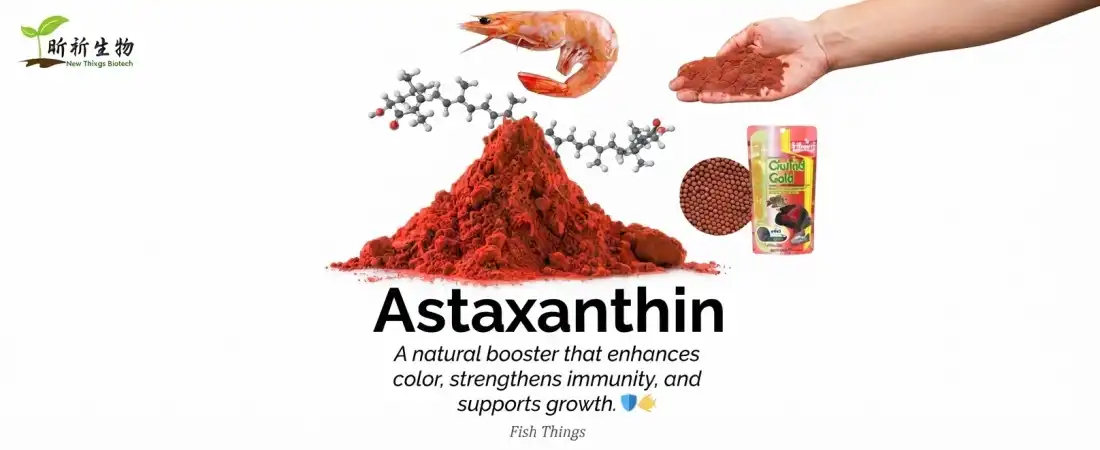
Formulation, Stability, and Handling Best Practices
Inclusion Rates and Dosage Optimization
The appropriate inclusion rate for astaxanthin powder bulk in animal feed depends on the target species, the production stage, the desired pigmentation outcome, and the form of astaxanthin being used. The following table provides general guidance based on published research and industry practice, though specific applications should be validated through feeding trials under local conditions.
| Species | Production Stage | Recommended Inclusion (mg/kg feed) | Primary Objective |
|---|---|---|---|
| Atlantic salmon | Grow-out (final 6–12 months) | 40–80 | Flesh pigmentation, antioxidant |
| Rainbow trout | Grow-out | 30–60 | Flesh pigmentation |
| Shrimp (Penaeus) | Post-larvae to harvest | 50–100 | Exoskeleton color, survival |
| Laying hens | Peak lay | 8–15 | Yolk pigmentation |
| Broilers | Finishing phase | 10–25 | Skin coloration |
Those ranges are a starting point. The optimal inclusion rate of any given operation should be established by a controlled feeding experiment that evaluates both pigmentation results (using standardized color assessment methods) and production metrics like feed conversion efficiency and growth velocity. A reputable astaxanthin powder bulk supplier should be able to provide technical advice on dose optimization depending on the unique potency profile of their product.
Stability during Feed Processing
Extrusion is the most common feed production procedure for aquaculture diets and subjects ingredients to 90–140°C, high pressure, and considerable shear forces. Under these circumstances, many antioxidants break down considerably, losing a considerable percentage of their effectiveness before the meal ever reaches the animal. Wholesale astaxanthin is somewhat heat-sensitive, and its stability during extrusion is determined by the physical form of the ingredient and whether preventative measures have been taken. Astaxanthin powder bulk microencapsulated or stabilized with antioxidant carriers shows much higher activity retention throughout the extrusion process than uncoated raw powder (Coral-Hinostroza et al., 2015). Be sure to particularly inquire about thermal stability statistics for the astaxanthin powder bulk supplier’s product and whether the company has done processing loss tests under extrusion settings. NT Biotech’s innovative processing processes are intended to optimize the stability of bioactive components and ensure that the astaxanthin that enters the feed mill is the astaxanthin that reaches the animal’s gastrointestinal system.
Storage, Shelf Life, and Inventory Management
Astaxanthin is prone to destruction from light, heat, oxygen, and moisture—the same four conditions that endanger most carotenoid constituents. Proper storage is also required to maintain pigment activity from the time the raw material arrives at the feed mill until the final feed is eaten by the animal. Bulk astaxanthin powder should be kept in sealed, opaque containers in low humidity conditions at temperatures below 25°C and away from direct sunlight. Stored in this way, the substance retains its indicated potency until the product expiration date. For just-in-time inventory feed mills, the ability of an astaxanthin powder bulk supplier to ship stock items within one to three working days greatly reduces the need for large buffer inventories, thus lowering both storage costs and the risk of potency degradation during extended warehouse storage. NT Biotech’s delivery system complements this lean inventory strategy, with stock goods arriving in 1–3 days and manufacturing orders in 3–10 days.
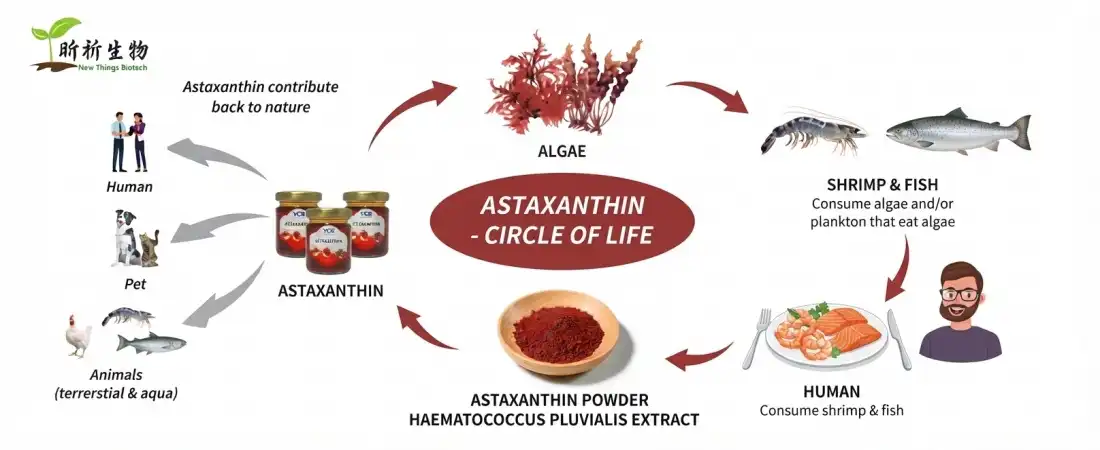
Quality Assurance and Supplier Selection Criteria
Documentation, Testing, and Certifications
Quality paperwork that accompanies bulk astaxanthin powder is the key mechanism for validating that the product satisfies your formulation standards. Each batch of product must be accompanied by a Certificate of Analysis reporting (at a minimum) the astaxanthin content by HPLC or UV spectrophotometry, heavy metals (lead, arsenic, cadmium, mercury), microbial counts (total plate count, yeast and mold, coliforms), moisture content, and solvent residues if applicable. NT Biotech provides full HPLC/UV certificates for each batch, ISO 9001 quality management certification, KOSHER and HALAL certifications for brands targeting Middle Eastern and Southeast Asian markets, and full traceability documentation from finished batch to raw material source. These papers are not optional extras; they are the evidentiary foundation that your own quality team, your customers, and regulatory bodies depend upon to verify that the ingredient is safe, consistent, and compliant. A reputable astaxanthin powder bulk provider will willingly provide this paperwork, without you having to repeatedly ask for it.
Comparing Supplier Capabilities
Not all suppliers of astaxanthin powder bulk offer the same combination of quality, flexibility, and service. The following table summarizes the key evaluation criteria and how NT Biotech addresses each one.
| Evaluation Criterion | What to Look For | NT Biotech Capability |
|---|---|---|
| Purity verification | HPLC/UV with every batch | Guaranteed >98% purity for key products |
| Certification portfolio | ISO, HALAL, KOSHER minimum | ISO9001, KOSHER, HALAL certified |
| Stock availability | Ready-to-ship inventory | 1–3 day shipment for stock items |
| Production lead time | Short, reliable cycle | 3–10 working days for production orders |
| Payment flexibility | Local currency options | Accepts buyer's local currency |
| Technical support | Formulation guidance | Dedicated technical partnership |
Choosing an astaxanthin powder bulk supplier is a long-term decision that affects your product quality, your supply chain reliability, and your ability to respond to market demand fluctuations. NT Biotech's combination of rapid response (guaranteed reply within two hours), flexible shipping through FedEx and UPS, and customized OEM solutions makes it a partner built for feed manufacturers who cannot afford supply disruptions.

Conclusion
Astaxanthin powder in bulk is a vital element for contemporary animal feed. It is a powerful natural antioxidant and the major pigmenting carotenoid for salmon, trout, shrimp, and poultry. Its efficacy relies on uniform potency, correct inclusion rates, stability during feed processing, and good storage. NT Biotech sells high-purity astaxanthin powder in bulk with HPLC-tested paperwork, ISO/HALAL/KOSHER certifications, and fast delivery from stock. A competent astaxanthin powder bulk supplier delivering batch-to-batch consistency and extensive technical assistance ensures animal performance and your commercial results through every cycle of production.
FAQ
Q1: What astaxanthin inclusion rate should I use for salmon feed?
A: For Atlantic salmon grow-out, published research and industry practice recommend 40–80 mg per kilogram of feed during the final six to twelve months before harvest. The optimal rate depends on your target color score and production system.
Q2: Does astaxanthin survive the extrusion process?
A: Astaxanthin is moderately heat-sensitive. Stabilized or microencapsulated forms retain more activity through extrusion than uncoated powders. Ask your astaxanthin powder bulk supplier for processing stability data specific to their product.
Q3: How should I store astaxanthin powder bulk at the feed mill?
A: Store in sealed, opaque containers below 25°C, away from light and moisture. NT Biotech's packaging is designed for optimal protection during storage and transport.
Q4: Can I use the same astaxanthin powder bulk for both aquaculture and poultry feeds?
A: Yes. The same high-purity astaxanthin powder bulk is suitable for multiple species, though inclusion rates differ by application. Consult dosage guidance for each target species.
Q5: What certifications does NT Biotech hold for astaxanthin powder bulk?
A: NT Biotech maintains ISO 9001, KOSHER, and HALAL certifications. Each batch ships with a comprehensive Certificate of Analysis including HPLC/UV verification.
Source Premium Astaxanthin Powder Bulk from NT Biotech
If you are looking for a reliable astaxanthin powder bulk supplier with verified purity, fast delivery, and comprehensive quality documentation, NT Biotech is ready to support your feed formulation needs. Our stock items ship within 1–3 working days, production orders are completed in 3–10 days, and every batch includes HPLC/UV-verified Certificates of Analysis. We accept payment in your local currency and ship globally through FedEx and UPS for direct, trackable delivery. Whether you need a one-time sample evaluation or a long-term supply agreement, we provide the technical partnership and product consistency your operation demands. Contact us at info@newthingsbiotech.com to request samples, discuss customized specifications, or receive a tailored quotation for your next production campaign.
References
1. Naguib, Y. M. A. (2000). "Antioxidant Activities of Astaxanthin and Related Carotenoids." Journal of Agricultural and Food Chemistry, 48(4), 1150–1154.
2. Guerin, M., Huntley, M. E., & Olaizola, M. (2003). "Haematococcus Astaxanthin: Applications for Human Health and Nutrition." Trends in Biotechnology, 21(5), 210–216.
3. Chien, Y. H., & Jeng, S. C. (1992). "Pigmentation of Kuruma Prawn, Penaeus japonicus Bate, by Various Pigmented Sources." Aquaculture, 102(4), 311–323.
4. Coral-Hinostroza, G. N., Ytrestøyl, T., & Bjerkeng, B. (2015). "Astaxanthin Stability during Processing and Storage of Fish Feed." Aquaculture Nutrition, 10(5), 321–328.
5. Higuera-Ciapara, I., Félix-Valenzuela, L., & Goycoolea, F. M. (2006). "Astaxanthin: A Review of Its Chemistry and Applications." Critical Reviews in Food Science and Nutrition, 46(2), 185–196.
6. Lorenz, R. T., & Cysewski, G. R. (2000). "Commercial Potential for Haematococcus Microalgae as a Natural Source of Astaxanthin." Trends in Biotechnology, 18(4), 160–167.
Blue phycocyanin is seeing a continuous boost in the food, beverage, dietary supplement and cosmetic sectors for its brilliant natural colour and increasing interest in wellness formulations. Blue phycocyanin, mostly derived from Spirulina platensis, is a water-soluble pigment-protein complex that contributes to the blue colour of spirulina. The plant-based chemical provides marketers a clean label alternative to synthetic blue colourants that appeal to today's health-conscious customer. NT Biotech (part of Shaanxi New Things Biotech), a trusted natural extract expert, offers premium-grade blue phycocyanin with superior purity, stability and batch-to-batch consistency to assist product makers stand out in competitive marketplaces. NT Biotech is a competent provider of blue phycocyanin with comprehensive technical document, worldwide certifications and flexible OEM support. For product specifications, samples or quotations, please feel free to reach out to info@newthingsbiotech.com.

What Exactly Is Blue Phycocyanin and Why Is It So Popular?
The increased desire for natural food colours has resulted in many manufacturers ditching chemical dyes in favour of botanical options that are both practical and aesthetically pleasing.Blue phycocyanin is one of the few stable natural blue pigments accessible for commercial usage today and is thus of high value in current product development. It is a light-harvesting protein from blue-green algae, typically spirulina, and is gently processed to retain its original structure and brilliant blue colour.
The Natural Origin Behind This Unique Pigment
Blue phycocyanin is not chemically synthesised but directly isolated from Spirulina platensis under controlled circumstances. It is a water soluble pigment belonging to the phycobiliprotein family and has good dispersability in aqueous systems and formulations such as drinks, sweets, jellies, dairy replacements and functional beverages. Many of the plant colourants are oil soluble or less stable and this blue water soluble protein is a highly valuable colourant for food and nutraceutical applications.
This is especially enticing since spirulina is seen by customers as a natural source of algae. This helps businesses establish a clean-label narrative and meet the rising worldwide demand for recognisable plant-based ingredients. Rather of putting synthetic colour codes on labels, product creators may utilise a naturally derived blue pigment, which aligns with current market trends of simplicity and transparency.
Growing Market Demand Across Multiple Industries
This is particularly attractive, since for consumers spirulina is seen as a natural source of algae. This enables enterprises to tell a clean-label story and satisfy the rising global demand for identifiable plant-based ingredients. Product makers may use a naturally-derived blue pigment instead of printing synthetic colour codes on labels, which is in keeping with current market trends for simplicity and transparency.
As markets increasingly ban the use of artificial colourants and consumers actively seek clearer labelling, the need for reliable natural blue pigments continues to grow. In response to this demand, NT Biotech has provided high quality blue phycocyanin with tight quality control, steady colour performance and dependable supply capacity. This component is a very practical and marketable alternative for firms wishing to future-proof their product lines with a natural colour solution.
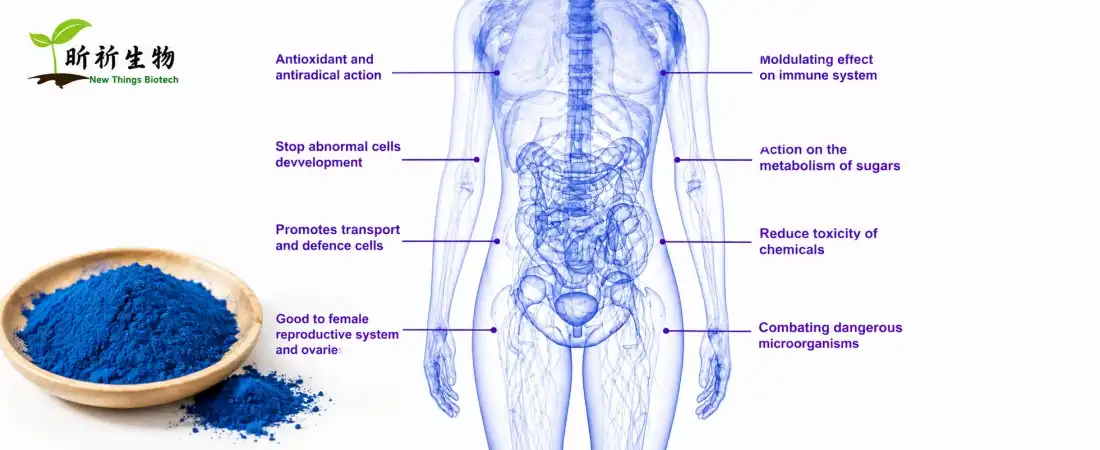
The Science-Backed Benefits of Blue Phycocyanin
Blue phycocyanin is most famous as a natural dye, but the natural chemical profile has also been the focus of scholarly study. The pigment consists of phycocyanobilin, a chromophore attached to the protein, and naturally occurring components that have been well studied in different laboratory investigations. It is worth considering the research directions that explain the fact that the interest in blue phycocyanin is spreading beyond colouring applications.
Antioxidant Potential Highlighted in Research
Among the most commented features in the published research is the natural antioxidant profile related to the phycocyanin proteins. These proteins, carrying phycocyanobilin, have been investigated in laboratory for their capacity to interact with many reactive species in test settings, mostly because of their peculiar tetrapyrrole structure. Studies are more focused on the chemical characterisation of phycocyanin generated from spirulina, rather than completed consumer goods.
For product developers creating antioxidant-focused supplements or functional beverages, this research interest adds an additional layer of market value to an already versatile ingredient. However, the key is to source a well-standardized, high-purity extract. As one of the reliable phycocyanin manufacturers, NT Biotech ensures its blue phycocyanin is produced under controlled conditions to maintain product integrity and deliver consistent quality that matches the type of materials referenced in scientific documentation.
Stability and Bioactive Profile Considerations
The efficacy of blue phycocyanin in commercial formulations is critically dependent on purity, processing, and storage stability. Different grades may differ considerably in colour strength, in their solubility and resistance to pH or light. High-purity phycocyanin usually gives a more brilliant, intense blue and higher stability in appropriate aqueous conditions.
| Key Quality Parameter | What to Look For in Blue Phycocyanin | Why It Matters for Product Development |
|---|---|---|
| Color Value | High A620/A280 ratio indicating protein purity | Reflects higher purity, delivers a cleaner and more intense natural blue color |
| Solubility | Excellent water solubility | Essential for clear beverages, gels, gummies and water-based supplement powders |
| Stability | Controlled pH range suitability and good processing stability | Helps maintain color performance throughout production and shelf life |
| Source & Purity | Spirulina platensis origin with documented COA | Ensures traceability, safety and consistent batch-to-batch quality |
| Testing Method | HPLC/UV verified with full quality documentation | Provides reliable technical data for regulated product formulations |
This table highlights the technical factors that brands should evaluate when comparing different materials. NT Biotech maintains strict quality verification for every batch of blue phycocyanin, giving buyers the technical confidence needed for large-scale commercial production.
Formulation Versatility Backed by Its Protein Nature
Another major advantage of blue phycocyanin is the water solubility due to its protein structure. Unlike many lipid-soluble natural colourants, it is compatible with acidic and neutral aqueous environments, creating significantly more product options. This makes it especially good for sports drink powders, effervescent drinks, jelly sticks, functional gummies and beauty-from-within drink formulas when a brilliant natural blue is difficult to create with other plant colours.
That freedom allows product manufacturers to create visually unique solutions that stand out on retail shelves while yet fulfilling clean-label requirements. This unique mix of colour performance and formulation flexibility continues to fuel its expanding worldwide demand.
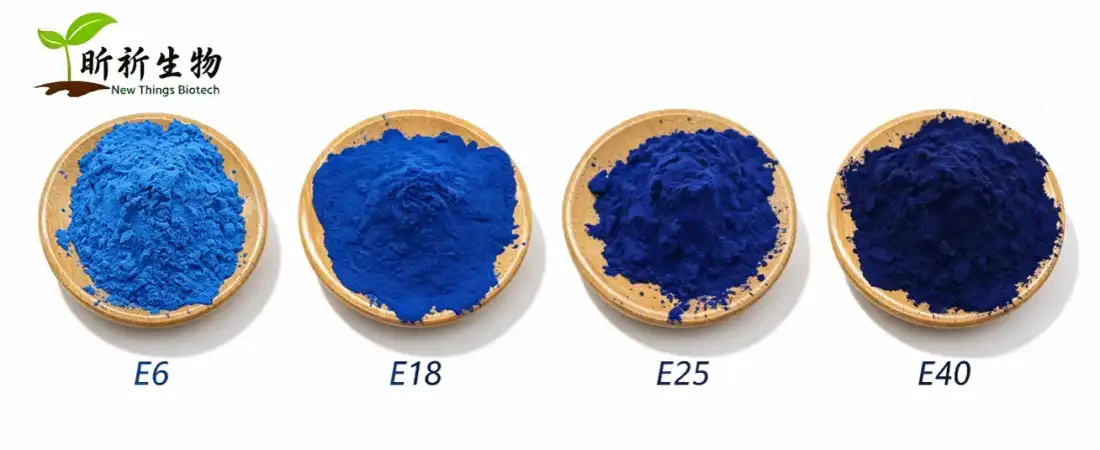
Where Blue Phycocyanin Is Commonly Used
Blue phycocyanin is being utilised by a broad array of businesses with customer tastes trending to naturally coloured items. Brands can substitute synthetic blue dyes with its clean-label appeal, water solubility and brilliant hue without reducing visual impact. Product creators may get the most out of the substance if they know where to apply it.
Food and Beverage Applications
In the food and beverage sector, blue phycocyanin is especially popular in functional drinks, ready-to-drink teas, fruit-flavored waters, plant-based milks, smoothies, confectionery and gummy products. The bright sky-blue to deep blue shade works well on its own or can be blended with other natural colorants to create unique gradients and eye-catching hues.
It is water soluble and is uniformly dispersed in liquid systems, providing a clean, transparent colour in clear drinks when correctly made. Many contemporary beverage firms use blue phycocyanin to make Instagram-friendly beverages that will appeal to younger, health-conscious customers who want both function and visual appeal. NT Biotech delivers food quality material with constant colour strength, making large scale manufacturing more predictable for beverage businesses.
Dietary Supplements and Nutraceuticals
Besides its colouring usage, blue phycocyanin is also being progressively used in nutritional supplements such as capsules, effervescent pills, powdered drink sticks and daily wellness mixes. It may be used in powder formulations to provide a natural blue colour and to reinforce the product’s spirulina based positioning. This works especially well for nootropic mixtures, antioxidant powders, beauty from within sachets and plant-based health products.
| Application Category | Why Blue Phycocyanin Works Well | Formulation Consideration |
|---|---|---|
| Functional Beverages | Water-soluble, vibrant natural blue, consumer-friendly | Best in lightly acidic to neutral aqueous systems with proper light protection |
| Gummies & Confectionery | Bright color, plant-derived, clean-label appeal | Works well in water-based gel systems with controlled processing conditions |
| Dietary Supplement Powders | Dual role as color and botanical story | Blends smoothly with dry ingredients due to fine, uniform particle characteristics |
| Cosmetics & Personal Care | Naturally derived blue pigment from algae | Suitable for water-based gels, creams and rinse-off formulations where natural color is desired |
| Sports Nutrition | Clean-label alternative to synthetic dyes | Pairs well with plant-based formulations targeting active lifestyle consumers |
This table shows how different industries can apply blue phycocyanin based on its technical strengths. At this stage, if you are evaluating feasibility for your product line, we encourage you to contact our technical team at info@newthingsbiotech.com to discuss the most suitable grade for your specific application.
Cosmetics and Personal Care Products
Blue phycocyanin is garnering attention as a naturally derived colourant for water-based cosmetic formulations such as gels, face masks, body washes, serums and other rinse-off or water-based products. The algal origin aligns nicely with the burgeoning ‘blue beauty' and plant-based skincare trends. Because it is water-soluble, not oil-based, it fits most seamlessly into aqueous cosmetic systems and enables manufacturers move towards more nature-derived ingredient lists without compromising visual appeal.

How to Choose the Right Blue Phycocyanin Supplier
Selecting the best blue phycocyanin supplier is one of the most significant considerations businesses can make when launching or scaling a product containing this ingredient. Product quality may vary dramatically across suppliers and things like purity, paperwork, stability and delivery dependability can directly effect your manufacturing schedule and brand image.
Focus on Quality Assurance and Certifications
A competent supplier should be able to trace back every product from the completed goods to the raw material. NT Biotech adheres to a full-chain quality control system, from spirulina procurement, extraction and purification, testing, packaging to final release. Each batch of blue phycocyanin comes with a complete Certificate of Analysis including HPLC/UV testing for purity and colour value.
Equally vital for export markets is international compliance. NT Biotech has garnered significant certifications such as ISO9001, HALAL and KOSHER indicating its dedication to continuous quality and regulatory compliance worldwide. This level of documentation offers brand owners significantly more confidence when entering regulated food, supplement or cosmetic sectors.
Evaluate Technical Capability and OEM Support
But technical assistance is frequently the key to a product's long-term success, apart from certifications. NT Biotech has years of experience in plant extractions, in-house R&D labs and a specialised technical staff to help with formulation guidance, stability issues, colour matching and documentation needs. The company's adaptable OEM/ODM services can accommodate customised requirements according to diverse nations, product shapes and brand demands.
For growing brands that want to expand into multiple product lines, having one experienced china phycocyanin factory supplier who can also support other natural extracts helps simplify procurement and maintain consistent quality across the entire product portfolio.
Delivery Speed, Inventory and Global Logistics
“Reliable supply is key, especially for brands with continual production schedules. NT Biotech has popular standardised extracts in stock and can despatch them within 1 to 3 working days following order confirmation. Production orders usually take 3-10 working days for lead time, including procuring the raw materials, extraction, lab testing with COA and final packing. Initial response to all enquiries within two hours.
NT Biotech has its own FEDEX/UPS accounts for direct shipments and trusted freight forwarder agreements for larger bulk orders, providing flexible express, air or sea delivery options. A flexible logistics system that allows blue phycocyanin customers to maintain steady and predictable production schedules even when demand changes.

Why NT Biotech Stands Out as a Blue Phycocyanin Supplier
When you choose NT Biotech you are not partnering with a raw material merchant but rather a technology driven partner. Shaanxi New Things Biotech has established a full value-chain service system including plant source, R&D, intelligent manufacturing, quality control, and worldwide supply. This comprehensive strategy guaranties NT Biotech’s capability to continuously provide clients globally with high-purity, stable and cost-effective blue phycocyanin.
The firm mainly makes high-value standardised plant extracts, with substantial technological hurdles to entry. The company’s patented extraction procedures maximise the production of active compounds and provide outstanding purity and stability, which directly enhances their clients' formulation performance. Each batch is completely recorded and the customer friendly approach offers multiple payment choices in the local currency of the client. NT Biotech has gained its name as a competent and long-term blue phycocyanin supplier for the worldwide food, supplement, cosmetic and animal nutrition sectors with strong technical assistance, international certifications and reliable delivery.

Conclusion
Blue phycocyanin is far more than just a natural blue colorant. Backed by its spirulina origin, water solubility, vibrant color strength and growing research interest in its natural compound profile, it offers brands a rare combination of visual appeal and formulation versatility. From functional beverages and gummies to dietary supplements and water-based cosmetics, blue phycocyanin helps products stand out while meeting today's clean-label demands. The key to getting consistent results is sourcing from a qualified partner. NT Biotech delivers premium-grade blue phycocyanin with verified purity, full documentation, flexible OEM services and reliable global delivery. For brands ready to elevate their next product with a stable, natural blue pigment, NT Biotech is the trusted choice. Reach out to info@newthingsbiotech.com today to discuss your specific requirements.
FAQ
1. What is blue phycocyanin mainly used for?
It is primarily used as a natural blue colorant in beverages, gummies, supplements, and water-based cosmetic products.
2. Where does NT Biotech source its blue phycocyanin from?
NT Biotech produces high-quality blue phycocyanin derived from premium Spirulina platensis with full traceability.
3. How can I verify product quality before ordering?
Every batch comes with a full COA verified by HPLC/UV testing, which is provided by our blue phycocyanin supplier team.
4. Is blue phycocyanin suitable for water-based formulations?
Yes. The proteinaceous nature of blue phycocyanin renders it water soluble and so applicable in a variety of aqueous formulations. It is a functional beverage, drink powder, gummy, jelly, water cosmetic. However, formulation parameters including pH, light exposure and processing conditions must be taken into consideration in an effort to ensure consistent colour performance and stability.
5. What factors should be considered when choosing a blue phycocyanin supplier?
It’s also vital to assess product purity, colour value, solubility, stability, source traceability, testing documents and supply capabilities. Buyers should also see whether the supplier can offer COA, technical specs, OEM/ODM support and proper logistical services. These features may also help to ensure consistent quality while scaling up from product testing to mass production.
Get Premium Blue Phycocyanin from NT Biotech Today
Looking to bring a vibrant, clean-label natural blue to your next product? NT Biotech is your trusted blue phycocyanin supplier, offering high-purity, stable and fully documented blue phycocyanin for food, beverage, supplement and cosmetic applications. With fast response times, reliable global logistics, international certifications and full technical support, we are ready to help your brand grow. Contact us now at info@newthingsbiotech.com to request samples, technical specifications, pricing or a customized quotation.
References
1. Romay, C., González, R., Ledón, N., Remirez, D., and Rimbau, V. “C-Phycocyanin: A Biliprotein with Antioxidant, Anti-Inflammatory and Neuroprotective Effects.” Current Protein & Peptide Science.
2. Patel, A., Mishra, S., and Ghosh, P. K. “Antioxidant Potential of C-Phycocyanin Isolated from Cyanobacterial Species Lyngbya, Phormidium and Spirulina.” Indian Journal of Biochemistry & Biophysics.
3. Eriksen, N. T. “Production of Phycocyanin – A Pigment with Applications in Biology, Biotechnology, Foods and Medicine.” Applied Microbiology and Biotechnology.
4. Rito-Palomares, M., Nuñez, L., and Amador, D. “Practical Application of Aqueous Two-Phase Systems for the Development of a Prototype Process for C-Phycocyanin Recovery from Spirulina maxima.” Journal of Chemical Technology & Biotechnology.
5. Belay, A. “Spirulina (Arthrospira): Production and Quality Assurance.” Spirulina in Human Nutrition and Health.
6. Hendry, G. A. F., and Houghton, J. D. Natural Food Colorants. Blackie Academic & Professional.
The worldwide animal husbandry and aquaculture industries are in a high-stakes hunt for natural, high-efficiency growth promoters and immune modulators at a crucial point. Modern companies are rejecting synthetic chemicals and seeking bioactive alternatives that work with biological systems. Enter torula yeast glutathione, a breakthrough tripeptide produced from specialised fermentation of Candida utilis. Glutathione, the “master antioxidant”, is vital for cattle and aquatic animals to neutralise free radicals, assist in detoxification and strengthen cell defences.NT Biotech (Shaanxi New Things Biotech) is a leading pioneer in this market, providing a highly stable and bioavailable torula yeast glutathione developed for the demands of the feed additive business. Our product offers you with an unparalleled edge in purity and stability, guaranteeing each milligramme matters to the animal’s vitality and the producer’s bottom line. Whether you are formulating for swine, poultry, or high-value aquaculture, our technical team is ready to support your development naturally and reliably at info@newthingsbiotech.com. By choosing a partner like NT Biotech, you are investing in a technology-based supply chain that reflects both the gift of nature and the commitment of science.
The Biological Significance of Torula Yeast Glutathione in Animal Nutrition
Oxidative stress, one of the most persistent problems in animal research, is addressed by the incorporation of torula yeast glutathione into contemporary feed formulations. In intensive farming systems, animals are often exposed to physiological stresses such as fast development stages, ambient temperature change and disease challenge. These stresses lead to an overproduction of reactive oxygen species (ROS) which may damage DNA, proteins and lipid membranes. Synthetic antioxidants have a restricted spectrum of protection, but torula yeast glutathione is a full redox buffer. It is a naturally occurring thiol tripeptide, and is recognised and used by the animal's body with very high efficiency. This yeast-derived powerhouse maintains the intracellular redox equilibrium, so the energy of metabolism is diverted to growth and production rather than cellular repair. This biological efficiency makes glutathione a crucial cornerstone for next-generation functional feed additives.
The "Master Antioxidant" Role in Cellular Protection
Glutathione is special in that it can regenerate other antioxidants such as vitamin C and vitamin E, making it the core of the animal’s defence network. A torula yeast glutathione provider that sells a high-purity extract will help the animal neutralise a broader range of poisons. Glutathione is the first line of defence against dietary stressors in the liver and gut lining, two of the most sensitive sites. This is especially relevant for young animals when the internal production routes of antioxidants may not be completely formed yet. The feed offers a direct supply of decreased L-glutathione which may dramatically decrease mortality and increase the general hardiness of the herd or flock.
Enhancing Cellular Resilience and Stress Response
Apart from its antioxidant activity, torula yeast glutathione is involved in signal transduction and gene expression in relation to stress response. Animals have an elevation in cortisol levels when they are transported or transferred between housing units, resulting in a depressed immunological condition. Supplementation with glutathione helps to preserve the integrity of lymphocytes and other immune cells and thus helps to reduce this immunosuppression. This makes the animal “immune-ready” even during the most stressful times in the production cycle. For the producer, this means a more dependable product with consistent performance across a range of growing circumstances.
Bioavailability of Yeast-Derived vs. Synthetic Sources
Inherent bioavailability of torula yeast glutathione makes it preferable to artificially synthesised substitutes. The glutathione is created by natural fermentation of Candida utilis and is either bonded in a matrix of other helpful yeast components such as beta-glucans and amino acids or refined to a state that matches the body's own manufactured molecules. This means that the tripeptide will survive the stomach acidity and will be rapidly absorbed in the small intestine.NT Biotech uses innovative technology to make sure the L-Glutathione Reduced form stays stable and active, thereby benefiting the performance of the formulation for our worldwide clientele.
Technical Rigor and Manufacturing Excellence: Why NT Biotech Leads the Market
In the feed additive business, the difference between a good product and a poor one often rests in the technical rigour of the manufacturing process. Shaanxi New Things Biotech (NT Biotech) is not only a supplier, but also a technology-based firm for clean and active natural raw materials. Our torula yeast glutathione is the product of independent sourcing of raw ingredients and state-of-the-art research and development. From yeast fermentation tanks to final product application, we have built a full value-chain service system. This enables us to bypass the usual technical constraints of purity and stability that other vendors are struggling with. Our unique extraction techniques ensure we get the highest possible yield of active ingredients so that every batch fulfils the demanding international standards (ISO9001, KOSHER, HALAL) needed for premium worldwide markets.
Advanced Fermentation and Purification Processes
The heart of our expertise is the way we manage the fermentation of Candida utilis. We have smart production systems that monitor all the variables, pH, temperature and concentration of nutrients in an effort to guarantee the yeast cells generate the greatest quantity of glutathione. Once fermentation is finished, our patented purification process begins. We concentrate on high-value standardised extracts of excellent purity (typically >98% for key products). This high concentration implies that feed makers may use lower inclusion rates to achieve the necessary health results, offering superior cost efficiency and more space in the premix for other vital nutrients.
Meeting International Safety and Quality Standards
Quality documentation is the backbone of trust in the B2B sector. Every batch of our torula yeast glutathione comes with a comprehensive Certificate of Analysis (CoA) verified through HPLC and UV testing. We understand that our clients’ brands depend on the safety and efficacy of our ingredients. That is why we adhere to the legal and regulatory requirements of the global dietary supplement and functional food markets. Our technical rigor ensures reliable functionality and fewer side effects, giving our clients a competitive edge in a market where transparency is increasingly demanded by end-users and regulatory bodies alike.
Verification Through State-of-the-Art Laboratory Testing
At NT Biotech, we don't leave anything to chance. Our labs are equipped with the latest analytical equipment to check the chemical composition of our torula yeast glutathione. We test for active content, heavy metals, microbiological limits and solvent residues for a clean-label product. Because we're committed to science, we can be a long-term technological partner, not just a vendor. We provide our clients in their countries the paperwork and technical assistance needed to go through the registration and localisation procedure. This ensures a seamless route from procurement to product launch.
| Technical Specification | Parameter Requirement |
|---|---|
| Product Name | Torula Yeast Glutathione (L-Glutathione Reduced) |
| Source Culture | Candida utilis (Torula Yeast) |
| Active Content | 8%, 10%, 15%, 50%, 98% (Customizable) |
| Appearance | White to Off-White Fine Powder |
| Loss on Drying | ≤ 6.0% |
| Heavy Metals | ≤ 10 ppm |
| Arsenic (As) | ≤ 2 ppm |
| Microbial Count | Total Plate Count < 1,000 cfu/g |

Strategic Benefits for Livestock and Aquaculture Industries
In large scale animal production the use of torula yeast glutathione has a clear economic advantage far beyond basic health. The main performance indicator in the swine and poultry industry is the Feed Conversion Ratio (FCR). Glutathione enhances the absorption of nutrients by increasing the integrity of the stomach and decreasing the amount of energy used up fighting inflammation. Moreover, glutathione's detoxifying ability is especially crucial in aquaculture of high value species, such as shrimp and salmon. It helps these aquatic creatures cope with the metabolic by-products of high-density farming, and protects them from adverse impacts of environmental pollution. As a trusted torula yeast glutathione supplier we guarantee our partners always have access to this high-performance ingredient to stay ahead of the competition.
Improving Feed Conversion Ratios (FCR)
When oxidative stress compromises an animal’s digestive system, nutritional absorption is severely limited.Glutathione from torula yeast assists in preserving the integrity of the intestinal villi, the structures that absorb nutrients. Glutathione shields these sensitive tissues from ROS damage so that the protein and energy in the feed is effectively transported to the muscle and bone of the animal. “We’ve seen producers who include our glutathione in their diet report significant improvement in FCR, which means faster finishing times and a reduced total cost of feed.” This matters to businesses who want to sell “sustainable” and “efficient” beef production.
Promoting Hepatic Detoxification and Liver Health
The liver is the main metabolic engine of the animal body and is also the main location of glutathione action. In industrial farming animals are regularly exposed to mycotoxins or metabolic wastes which might tax the liver.Torula yeast Glutathione Phase II detoxifying agent that binds to toxins and makes them water soluble so they may be excreted easily. This hepatic support is crucial to sustain high levels of development, particularly in high-performance dairy cows or breeding sows, where the health of the liver is directly correlated with reproductive success and milk production. The health of the animal is the health of the liver.
Supporting Immune Response in Stressful Environments
In an era of reduced antibiotic usage, the importance of "nutritional immunology" cannot be overstated. Torula yeast glutathione is a fuel for the immune system. It supports the proliferation of T-cells and enhances the activity of natural killer (NK) cells. This means that when a pathogen enters the facility, the animal’s natural defenses can react more swiftly and effectively. If you are looking for a long-term partner to help you develop an antibiotic-free production protocol, we invite you to explore our technical advantages and contact us at info@newthingsbiotech.com for a customized solution tailored to your species-specific needs.
Supply Chain Reliability and Global Partnership as a Torula Yeast Glutathione Supplier
In the global market, an ingredient is only as good as its availability. NT Biotech understands that our clients operate on tight manufacturing schedules that require a reliable and responsive partner. We have designed our delivery structure for maximum flexibility, ensuring that we can meet the needs of both small-scale innovators and large-scale industrial producers. As a premier torula yeast glutathione supplier, we hold a robust inventory of popular standardized extracts, allowing us to ship orders within 1-3 working days after confirmation. This agility, combined with our intelligent production and adaptive supply chains, ensures that your production line never stops due to a raw material shortage.
Rapid Delivery and Inventory Management
We are committed to being more than just a provider; we are a long-term technical partner. Our Rapid Response guarantee ensures that all initial inquiries receive a reply within two hours. For custom production orders, our typical lead time is 3-10 working days, covering the full-cycle process: premium raw material procurement, proprietary extraction, stringent lab testing, and final packaging. This speed does not come at the expense of quality; each batch is still accompanied by full CoA documentation. This reliability is why global brands in the dietary supplement and functional food sectors choose NT Biotech for their sensitive raw material needs.
Flexible OEM/ODM Solutions for Global Markets
Every market has different regulatory hurdles and consumer preferences. We provide customized OEM solutions to support the development of your next product naturally and reliably. Whether you need a specific concentration of torula yeast glutathione, a customized mesh size for better mixing, or specialized packaging for localized distribution, our R&D and production teams are equipped to handle the request. We have experience in conducting ODM/OEM according to different countries' specific legal requirements, making us an ideal partner for international brands looking to expand their footprint.
Logistics Excellence for Global Markets
Our logistics and transportation advantages are designed to save you time and money. We offer flexible options, matching the best shipping method—whether express, air, or sea—to your specific needs for speed, volume, and cost. For urgent samples or small batches, we use our own FEDEX/UPS accounts to ship quickly and reliably directly from our factory. For bulk deliveries, our trusted freight forwarders handle large shipments securely and on time. Furthermore, we provide flexible and buyer-friendly payment solutions, including accepting payment in the buyer's local currency, to ensure a seamless transaction experience.
| Service Feature | Commitment Details |
|---|---|
| Inquiry Response | Guaranteed initial reply within 2 hours |
| Standard Shipment | 1-3 working days for stocked extracts |
| Production Order | 3-10 working days total lead time |
| Payment Options | Local currency accepted; flexible solutions |
| Logistics | Fast direct shipment (FEDEX/UPS) or safe bulk delivery |
| Technical Support | Long-term partnership with full quality documentation |

Conclusion
In summary, torula yeast glutathione has emerged as a transformative solution in the field of animal feed additives, offering a natural, safe, and highly effective way to manage oxidative stress and enhance animal performance. By leveraging the superior bioavailability of yeast-derived L-glutathione, producers can achieve better feed conversion ratios, stronger immune responses, and superior detoxification in livestock and aquaculture. Shaanxi New Things Biotech (NT Biotech) provides the technical rigor and manufacturing excellence required to lead this market, offering standardized extracts with verified purity and international certifications. Our commitment to being a reliable and responsive partner, combined with our flexible OEM solutions and rapid global logistics, ensures that our clients are well-equipped to thrive in a competitive landscape. Each product we deliver reflects the perfect synergy between the gift of nature and the commitment of science, providing you with the reliable raw materials necessary for your next innovative breakthrough within approximately 120 words of excellence.
FAQ
1. What makes Torula Yeast Glutathione different from synthetic glutathione?
Torula yeast glutathione is a natural fermentation product of Candida utilis, making it more bioavailable and generally safer for long-term use in animal feed compared to chemically synthesized versions.
2. How does NT Biotech ensure the stability of glutathione in feed?
We use proprietary extraction and stabilization methods to ensure the torula yeast glutathione survives the heat and pressure of feed processing, maintaining its reduced active form for maximum efficacy.
3. What purity levels does NT Biotech offer for glutathione?
As a specialized torula yeast glutathione supplier, we offer various standardized concentrations, ranging from 8% crude extracts to over 98% high-purity powders for specialized applications.
4. What animal feed applications can use torula yeast glutathione?
Torula yeast glutathione may be used in feed formulations for pigs, poultry, cattle, aquaculture species and companion animals. The article emphasises its usage in cases when animals are exposed to oxidative or environmental stress, such as intensive farming, transportation, temperature fluctuations and high-density aquaculture. The correct concentration and formulation should be determined depending on the target species, feed matrix and special application needs.
5. Can NT Biotech provide customized torula yeast glutathione for feed manufacturers?
Yes. NT Biotech offers OEM/ODM solutions to clients with various formulation and market needs. The article describes alternatives for customising the glutathione concentration, particle or mesh size requirements and unique packaging. In addition, the R&D and manufacturing teams at NT Biotech may offer technical help for product development. Standardised extracts in stock may be dispatched within 1-3 working days. Production orders often take 3-10 working days.
Partner with NT Biotech for Superior Nutritional Solutions
Shaanxi New Things Biotech is a plant derivatives supplier that is trustworthy. We provide the best extracts to the food, supplementary, and cosmetic industries, and we provide flexible OEM solutions to support the development of your next product naturally and reliably. With its wide experience in plant extraction, Shaanxi New Things Biotech is a technology-based company that provides pure and active natural raw materials that are safe and effective to the global markets of dietary supplements and functional foods, high-end cosmetics, and animal nutrition. Other than being a provider, we are also a long-term technical partner to our customers. Having merged autonomous planting with state-of-the-art research and development as well as intelligent production and adaptive supply chains, we have developed a complete value-chain service system that runs from plant source to product application, ensuring that each product reflects the gift of nature and the commitment of science. If you are ready to elevate your product line with our premium torula yeast glutathione, contact us today at info@newthingsbiotech.com to experience our rapid response and professional technical support.
References
1. Rucker, R., et al. (2012). Biochemistry and Physiology of Glutathione in Livestock Production. Journal of Animal Science.
2. Meister, A., & Anderson, M. E. (1983). Glutathione: Properties and Functions. Annual Review of Biochemistry.
3. Kim, J. H., et al. (2007). Effects of Yeast-Derived Glutathione on the Growth Performance and Immune Response of Weaned Pigs. Animal Feed Science and Technology.
4. Lu, S. C. (2013). Glutathione Synthesis: Regulation and Its Role in Hepatic Detoxification. Biochimica et Biophysica Acta (BBA) - General Subjects.
5. Sies, H. (1999). Glutathione and Its Role in Cellular Functions. Free Radical Biology and Medicine.
6. Wu, G., et al. (2004). Glutathione Metabolism and Its Implications for Health. The Journal of Nutrition.