- English
- French
- German
- Portuguese
- Spanish
- Russian
- Japanese
- Korean
- Arabic
- Greek
- German
- Turkish
- Italian
- Danish
- Romanian
- Indonesian
- Czech
- Afrikaans
- Swedish
- Polish
- Basque
- Catalan
- Esperanto
- Hindi
- Lao
- Albanian
- Amharic
- Armenian
- Azerbaijani
- Belarusian
- Bengali
- Bosnian
- Bulgarian
- Cebuano
- Chichewa
- Corsican
- Croatian
- Dutch
- Estonian
- Filipino
- Finnish
- Frisian
- Galician
- Georgian
- Gujarati
- Haitian
- Hausa
- Hawaiian
- Hebrew
- Hmong
- Hungarian
- Icelandic
- Igbo
- Javanese
- Kannada
- Kazakh
- Khmer
- Kurdish
- Kyrgyz
- Latin
- Latvian
- Lithuanian
- Luxembou..
- Macedonian
- Malagasy
- Malay
- Malayalam
- Maltese
- Maori
- Marathi
- Mongolian
- Burmese
- Nepali
- Norwegian
- Pashto
- Persian
- Punjabi
- Serbian
- Sesotho
- Sinhala
- Slovak
- Slovenian
- Somali
- Samoan
- Scots Gaelic
- Shona
- Sindhi
- Sundanese
- Swahili
- Tajik
- Tamil
- Telugu
- Thai
- Ukrainian
- Urdu
- Uzbek
- Vietnamese
- Welsh
- Xhosa
- Yiddish
- Yoruba
- Zulu
knowledge
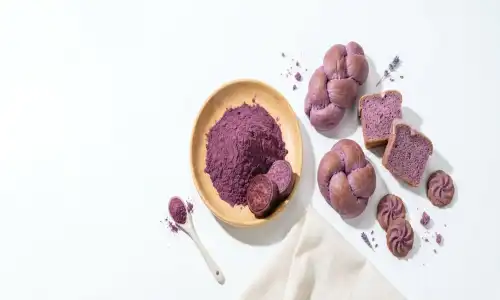
Natural ube powder gives food makers an easy and flexible way to make cakes and pastries that look great and are good for you. The bright purple ingredient comes from the purple yam plant Dioscorea alata L. It can be used in cakes, cookies, pies, ice creams, and frozen treats without any problems. It's great for modern baking recipes because it's mildly sweet, stays the same color, and looks good on a clean label. Procurement professionals like how long it lasts, how potent it is, and how easy it is to add to industrial production lines. This makes it possible to have uniform quality from batch to batch while meeting customer demand for naturally colored treats made from plants.
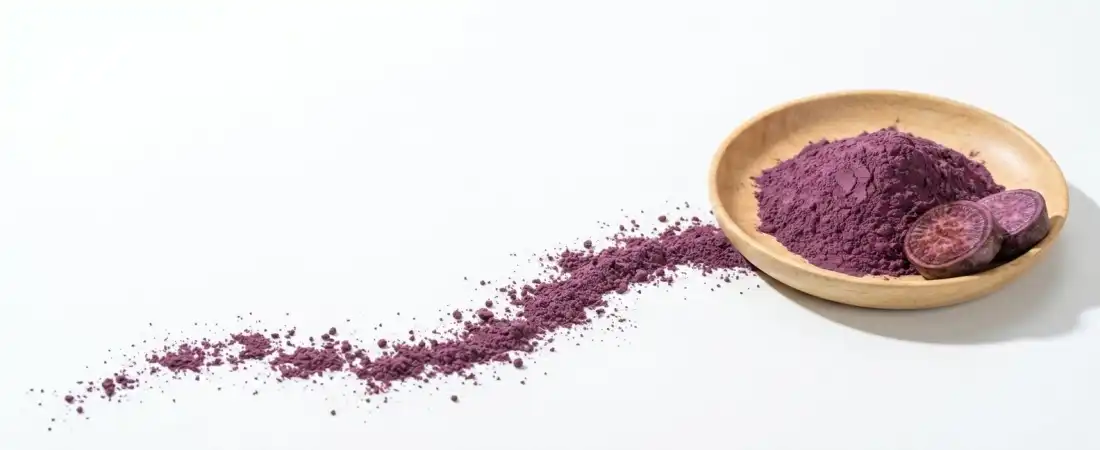
Understanding Natural Ube Powder and Its Advantages in Baking and Desserts
Natural ube powder has become an important ingredient for new food products because it looks good and is good for you. The powder comes from low-temperature grinding of hand-picked purple yams and still has anthocyanins, dietary fiber, resistant starch, and important minerals. With this careful way of production, the lilac color and mild earthy-sweet taste that people associate with real Filipino food are kept.
Why Manufacturers Prefer Powder Over Fresh Ube
Peeling, boiling, and cooking a fresh purple yam are all steps that change the amount of water and color this vegetable has. These problems are taken care of by powder formulas. With particles that are 80 mesh, the ingredient spreads out evenly in mixes and doughs, stopping them from sticking or streaking. The 100% pure criteria makes sure that the results will be the same across production runs, which is very important for names that have high quality standards.
Nutritional Profile Supporting Clean-Label Claims
They look closely at ingredient lists because they want to know what's in their food and how it affects their health. Natural ube powder has polysaccharides that help the immune system work, and its resistant starch helps keep blood sugar levels stable after a meal. The deep purple color comes from anthocyanins, which also have antioxidant properties that help brands put their goods in the functional food area. Vitamin C helps make collagen, which makes it appealing to people who care about their looks.
Storage and Shelf Life Considerations
Buyers in bulk need to think about how stable the Natural ube powder ingredients are. The powder stays effective for 24 months if it is kept in vacuum-sealed aluminum foil bags at temperatures below 20°C with little to no light contact. This longer shelf life cuts down on inventory loss and makes shipping goods internationally easier. Certification under ISO 9001, Kosher, and Halal norms makes the product more marketable in a wider range of legal settings.

How to Effectively Use Natural Ube Powder in Dessert and Pastry Applications
To use this plant-based ingredient in commercial recipes, you need to know about dosage amounts and how water moves through the ingredient. Formulations that work well match the powder's natural color strength with the flavors that are wanted while also taking into account how well it absorbs water.
Dosage Guidelines for Optimal Color and Taste
Most baked goods use between 1% and 3% of their total flour weight. Lower amounts (1–1.5%) make lavender tones that are soft and good for delicate desserts like macarons or chiffon cakes. If you use higher ratios (2.5–3%), you'll get saturated purple colors that look great in statement sweets like ube cheesecakes or layered party cakes. Manufacturers should test small batches to find the exact amount that fits with their brand's image and the tastes of their target market.
Managing Moisture in Batters and Doughs
About 1.5 times its weight in liquid can be absorbed by natural ube powder. When formulators use powder at higher inclusion rates, they have to change base recipes by lowering the amount of flour by 10 to 15 percent. Even spread is guaranteed by adding the powder to the dry ingredients before adding the wet ones. Adding a little warm milk to the powder before using it in a high-moisture recipe, like ice cream or custard, makes a smooth mix that stops the powder from being grainy.
Recipe Adaptations for Industrial Production
When commercial bakers make ube brownies, they mix the powder with cocoa powder to give the brownies more depth while still keeping their good looks. To make cookies that taste like Filipino halo-halo, cookie makers mix it with vanilla extract and coconut milk powder. It is added to sweetened doughs for brioche-style buns by breadmakers, who pair it with cream cheese toppings. For each use, leavening agents need to be adjusted. For example, because the powder is acidic, a small increase in baking soda may be needed to get the right rise.
Frozen dessert manufacturers say that mixing the powder straight into custard bases before stirring works very well. The color stays the same through freeze-thaw cycles because the anthocyanins don't change when the food is pasteurized at 82°C. Because it is so strong, purple yam extract is great for making cream and ice that will be sold in stores.
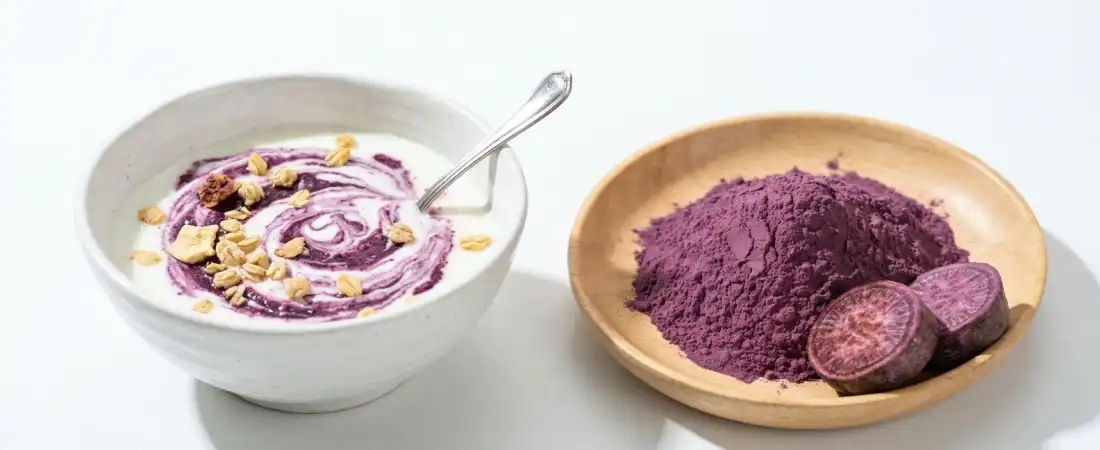
Comparing Natural Ube Powder with Other Ube Products for Procurement Decisions
When sourcing teams look at different food choices, they need to think about more than just the unit cost. Whether you choose powder, frozen mush, or flavor extracts affects how quickly you can make the product, how you store it, and where you put it on the market.
Cost-Benefit Analysis Across Formats
Frozen ube mush has a real feel, but it needs to be kept cold all the time. A 10 kg case takes up a lot of space in the freezer and causes variations in how fast things thaw. Natural ube powder packs the same amount of fresh yams as 40 kg into a 10 kg package that can be shipped at room temperature. With a volume drop of 4:1, shipping costs will go down, and storage will be easier. Powder costs more per kilogram, but when you add up the cost of handling and waste, the total cost when it arrives at your destination is often less than what you paid for it.
Organic Certification and Market Positioning
The price of organic purple yam powder is higher, but it gives you access to specialty store outlets. Organic approval is worth the 25–35% price hike for brands that want to work with health food shops, meal delivery services, or high-end cafes. Non-organic grades also meet food safety standards and work well in regular bakeries where cutting costs is key to making money. Professionals in procurement should make sure that the amount of certification they offer matches the target audience and their marketing plans.
Allergen Profiles and Regulatory Compliance
Pure powder doesn't have any toxins other than the yam itself, unlike extracts that have been mixed with alcohol. This means it can be used in places that make goods without tree nuts or gluten. With Halal and Kosher approvals, you can reach more people in the Jewish and Middle Eastern groups. Third parties check NT Biotech's licenses every year, which is proof that they meet the rules for importing in North America, Europe, and the Asia-Pacific region.
Procurement Strategies for Natural Ube Powder in Bulk and Wholesale Markets
Setting up reliable supply lines requires careful consideration when choosing suppliers and drafting contracts. As the item becomes more famous, more sellers have come on the scene, which makes quality control very important.
Supplier Vetting Protocols
Certificates of Analysis from reputable makers show that the product has been tested for heavy metals (Lead <1ppm, Arsenic <0.5ppm), bacteria content (Total Plate Count <10,000 cfu/g), and anthocyanin content using HPLC. Buyers should ask for samples from more than one production lot to check for regularity in color and particle size. Suppliers with ISO 9001 certification have quality control systems that are written down and keep variations to a minimum.
Pricing Structures and Volume Incentives
Right now, the market price for 100% pure natural ube powder is between $28 and $42 per kilogram, based on how much you order and how you want to ship it. Most of the time, the lowest amount you can buy is 10 kg, and prices drop after 100 kg and 500 kg. NT Biotech has organized discounts: orders of 10 kg get the normal price, orders of 100 kg get an 8% discount, and orders of 500 kg or more get a 15% discount. Prices are locked in for a year under annual supply deals, which protect buyers from changes in food yields.
Logistics and Delivery Timelines
When manufacturers keep Natural ube powder in stock, they ship it within two to four business days of receiving payment proof. Lead times are extended to 7–10 days for custom production runs that need specific mesh sizes or mixed formulas. Within 5 to 7 days, air freight from China-based suppliers gets to big US delivery hubs through FedEx or UPS. Larger orders (500 kg or more) should be sent by sea. It takes 30 to 35 days to get there, but the cost of freight is 60% less. Buyers should plan for the 3–5 days it takes to clear customs when planning a project.
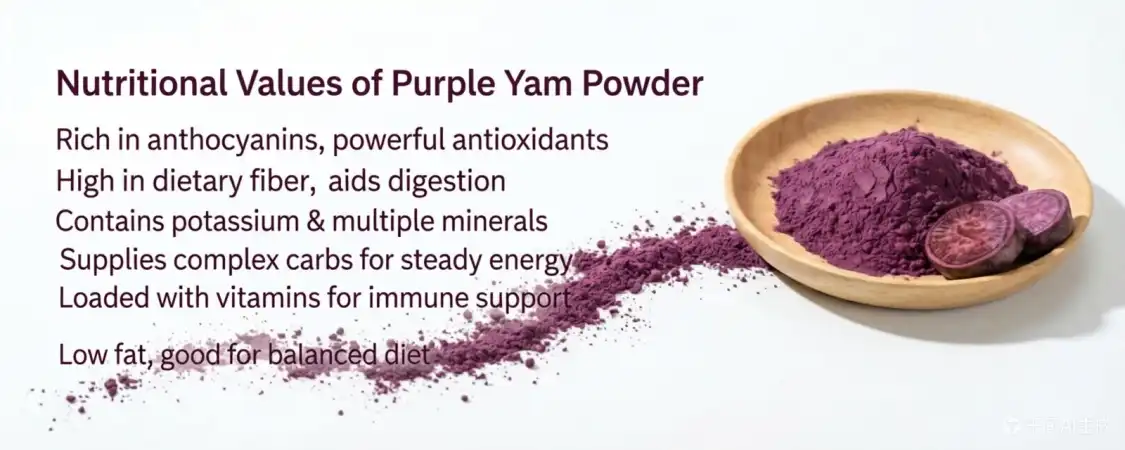
Building Confidence in Using and Procuring Natural Ube Powder: Brand and Quality Assurance
Clear communication, quality systems that can be checked, and quick technical help are all things that build trust in ingredient providers. When adding new ingredients to existing product lines, these factors become even more important.
Laboratory Testing and Transparency
As part of NT Biotech's quality control procedures, identity testing using HPLC fingerprinting is used to prove the location of the Dioscorea alata and find any possible adulterants. Pesticide residue screening for more than 200 substances is done on each production batch, and results are available in customer portals 48 hours after shipping. Verifying the moisture content (usually between 5 and 7 percent) and checking the water activity (aW < 0.6) makes sure that microbes stay stable while the food is being stored.
Technical Support for Formulation Development
Ingredient sellers with a lot of experience work with you to make new products instead of just selling you things. The research and development team at NT Biotech helps clients rewrite recipes by giving them advice on pH changes, water ratios, and taste pairings. This way of working together cuts down on the cost of trial and error and speeds up the time it takes to get new goods to market. During work hours, you can expect an answer to your phone call or email within two hours.
Customization Options for Brand Differentiation
With private labeling, brands can ship ingredients under their own names, which helps them stand out in the market. Custom mix development uses natural ube powder with botanicals that work well together, like butterfly pea flower to keep the color stable or coconut milk powder to make the flavors taste better together. Small-scale bakeries can use 1 kg foil bags, medium-sized companies can use 10 kg boxes, and large businesses can use big totes.
Conclusion
When it comes to production, natural ube powder is more than just a trendy ingredient. It offers real benefits like consistent quality, longer shelf life, and nutritional value. When procurement workers work with qualified sellers who show consistent quality control, responsive logistics, and technical knowledge, they gain a competitive edge. The right ingredient relationship can turn raw materials into market differentiation, whether you're making limited-edition unique items or expanding your regular bakery lines. This botanical powder is a valuable tool for forward-thinking food companies because it meets the needs of consumers who want natural colors, plant-based nutrition, and true global tastes.
FAQ
1. Is Natural Ube Powder Suitable for Gluten-Free and Vegan Products?
Pure natural ube powder doesn't have any gluten, dairy, or animal-based ingredients, so it can be used by people of all food types. Manufacturers should check that their suppliers' licenses show that their production lines are separate and not contaminated with other products. At NT Biotech's plant, handling equipment for allergen-free ingredients is kept separate, and validation testing is done every three months.
2. How Does Storage Temperature Affect Product Quality?
When anthocyanin is exposed to temperatures above 25°C for a long time, its stability drops. The best settings for keeping are places with controlled humidity below 60% relative humidity and temperatures between 15 and 20°C. When you open a package, you should put it back together right away and use it within six months. However, powder that hasn't been opened can stay fully effective for two years if it is kept properly.
3. What Distinguishes Natural From Synthetic Purple Colorants?
Natural powder comes only from Dioscorea alata roots and is made by physically working them instead of making them chemically. Synthetic options use colors made from petroleum that don't contain any nutritional ingredients. For verification, seller Certificates of Analysis must be reviewed to make sure that DNA barcoding or chromatographic fingerprinting can be used to identify the botanical source. This makes sure that clean-label promises are true.
Partner With NT Biotech: Your Trusted Natural Ube Powder Manufacturer
NT Biotech has high-quality natural ube powder that has been designed for stability and performance to help you with your dessert idea. Our ISO 9001-certified plant uses special low-temperature ways to process hand-picked Dioscorea alata roots, which keeps the maximum amount of anthocyanins and nutritional value. We've been providing food companies around the world for more than ten years, so we know what the technical needs are for making commercial baked goods and developing functional foods.
Email our purchasing agents at info@newthingsbiotech.com to get free samples, talk about unique recipes, or look into OEM partnerships that are easy to work with. Our inventory management system promises shipping on stock orders within two to four days, and our flexible payment terms work with your spending needs. Find out why top brands choose NT Biotech as their natural ube powder provider for consistent quality and quick service, whether they're making small-batch pastries or large-scale sweets for the masses.
References
1. Bao, J., & Chen, M. (2021). Functional Properties of Purple Yam (Dioscorea alata) and Its Application in Food Industry. Journal of Food Science and Technology.
2. Garcia, R., & Santos, L. (2020). Anthocyanin Stability in Plant-Based Food Ingredients: Processing and Storage Considerations. International Journal of Food Engineering.
3. Thompson, K. (2022). Natural Colorants in Commercial Baking: Formulation Strategies and Quality Control. Food Manufacturing Quarterly.
4. Williams, P., & Chen, H. (2021). Resistant Starch and Metabolic Health: Applications in Functional Food Development. Nutrition Research Reviews.
5. Yoshida, T., & Rodriguez, M. (2020). Procurement Best Practices for Botanical Ingredients in Global Food Supply Chains. Supply Chain Management in Food Industry.
6. Zhang, L., & Kim, S. (2022). Comparative Analysis of Fresh, Frozen, and Powdered Root Vegetables in Industrial Food Production. Journal of Agricultural and Food Chemistry.
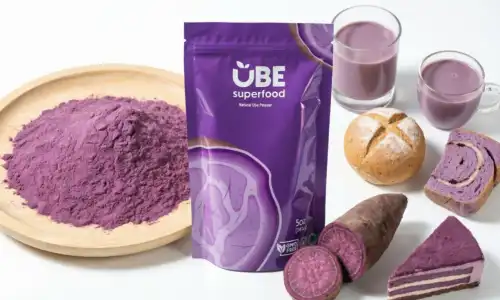
Natural ube powder produced from Dioscorea alata L., also known as purple yam, is a one-of-a-kind nutrient that has a bright color, a real taste, and a measured nutritional value. The people who buy things in the food, drink, and nutrition businesses are using this purple yam powder more and more. Customers want clean labels more and more, and this helps make sure that large-scale production is done correctly. Artificial colors and flavors are bad for the environment and the brand's image. This plant ingredient gives color with anthocyanins, a slight sweetness naturally, and useful substances like resistant starch and polysaccharides. The powder can be used in a lot of different ways, like in health drinks, baked goods, and recipes for meal replacements. This makes it a key part for brands that want to stand out in crowded markets, keep their supply chain open, and make sure quality.
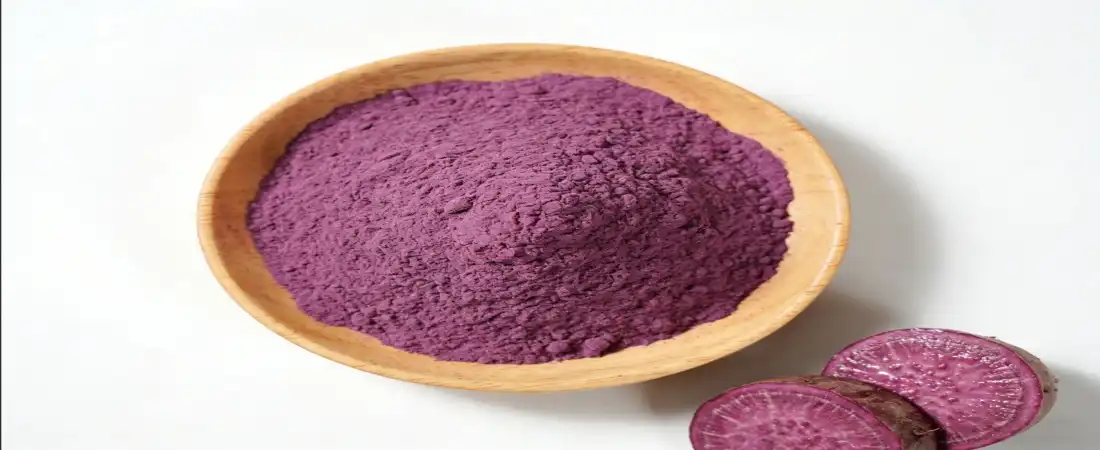
What is Natural Ube Powder and Why It Matters to Your Business
Ube powder is a refined plant substance available exclusively in purple yam roots after many regulated processing procedures. NT Biotech selects the finest purple yams, cleans, dehydrates, and mills them to 80-mesh powder. This ensures powder combines evenly in recipes. Making 100% pure purple powder preserves the raw material's lilac hue and delicate sweetness. This distinguishes it from chemical-laden powders.
Understanding the Source and Processing Excellence
Purple yam, known as "Purple Ginseng" in Asian culture, is nutritious and has been used in traditional medicine for centuries. NT Biotech preserves vitamin C, anthocyanins, and polysaccharides in food using modern separation technology. This approach preserves heat-damaged phytonutrients while fulfilling global food safety regulations. The powder may meet B2B buyers' ISO 9001, Kosher, and Halal criteria.
Natural Versus Artificial: A Critical Distinction
Today, distinguishing between natural purple yam powder and lab-made colorants is crucial for legal reasons. A number of phony ube flavorings include petroleum-based sugar and colors, which need labeling and raise suspicion. However, natural ube powder may have a clean label, allowing marketers to discuss ingredient clarity in a manner that health-conscious consumers can comprehend. This realism is particularly advantageous when selling items in the US, where government constantly monitor bogus substances and consumers prefer to purchase things with familiar chemicals.
Nutritional Attributes That Support Product Positioning
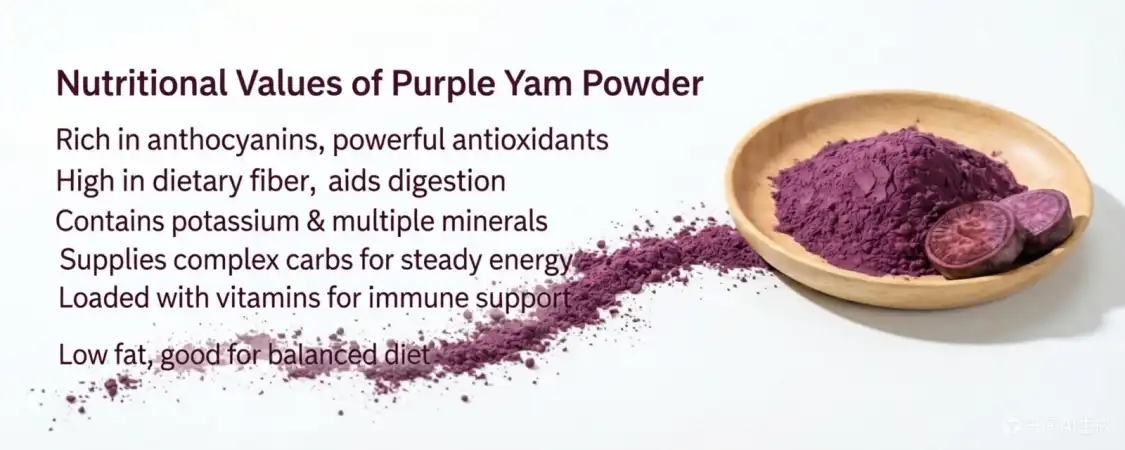
Many powder claims are supported by its constituents. With no gluten or other allergies, it may be used in recipes for persons on restricted diets. Dietary fiber and resistant starch promote metabolic health. While anthocyanins are antioxidants, they match tales about goods that help you appear attractive inside and out. These nutritional parameters help R&D managers create pleasant and effective dishes. This distinguishes their goods in crowded marketplaces.
Key Advantages of Choosing Natural Ube Powder in Food Production
Using this natural ube powder purple yam powder in industrial food production has a lot of strategic benefits that go beyond what the element is supposed to do. Because of how well it works, the powder helps solve common problems in manufacturing and sparks new ideas for new types of products.
Color Enhancement Without Synthetic Additives
Foods are vibrant purple due to natural anthocyanins. The hue may be gentle lavender to deep violet depending on amount and pH. It retains color in acidic liquids, neutral dairy replacements, and alkaline baking. Man-made FD&C colors are increasingly regulated. This natural pigment source helps businesses maintain visual uniformity and clean-label requirements. This color palette may assist product designers create Instagram-friendly designs that engage users. This is important for organizations who consider appearance while buying.
Flavor Profile That Complements Modern Formulations
Its mild, somewhat sweet flavor complements many dishes without overpowering them. Its versatility makes it useful for creating plant-based products. Because pea protein or oat bases make unpleasant tastes hard to mask. Natural sweetness allows formulators use less sugar while still tasting nice. This helps folks who prepare protein shakes and healthy beverages balance flavors without sugar.
Application Flexibility Across Product Categories
Its application in functional beverages, baked goods, dairy replacements, meal replacement shakes, and frozen desserts shows its flexibility. Powder combines readily with hot and cold liquids to prepare beverages. It stabilizes the solution to prevent drink settlement during storage. Restaurants use the powder to maintain the color brilliant during mixing, rising, and baking since it doesn't change color when heated. It works nicely in sorbet and ice cream bases, according to makers. It smooths the structure without ice crystals. This cross-category capacity allows material purchasers work with other product vendors. Handling is easy and quality requirements are consistent across product lines.
Storage Stability and Supply Chain Efficiency
You must know how to store products to maximize shelf life. The powder will last longer if kept cold, dry, and out of direct light. NT Biotech adds it to moisture- and air-blocking textiles. These goods come in 1kg bags or 10kg cartons and may be customized for shipment. Just-in-time manufacturing and inventory management waste reduction improve when things are steady. Powder may be stored longer than purple yam or herbal liquids. Having many factories throughout the globe makes supply chain management simpler.
Regulatory Compliance and Safety Assurance
Following international food safety regulations is still crucial when selling food worldwide. The substance may be sold in more North American retailers since it fulfills FDA chemical and food color regulations. Kosher and Halal certifications expand your consumer base. However, ISO 9001 accreditation indicates that quality is planned throughout manufacturing. Every batch undergoes HPLC analysis and microbial screening. Certificates of Analysis verify these actions. With thorough quality assurance, purchasing managers who ensure products are safe and follow standards are less likely to make errors.
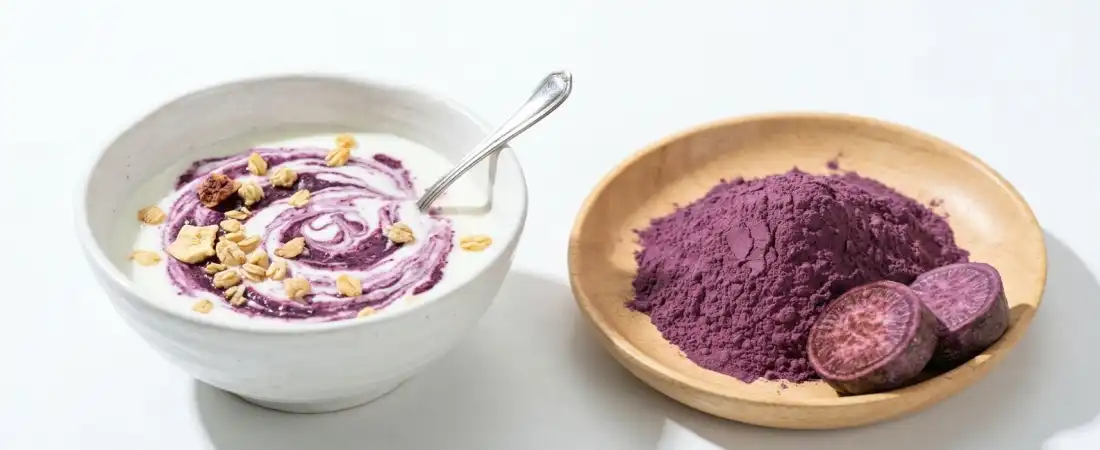
Comparing Natural Ube Powder with Other Market Solutions
Workers who buy purple yams can find the best shape for each use and business need by looking at different sizes. When you know these differences, you can choose where to buy things that are right for your production needs and how you want to place your business in the market.
Powder Format Versus Liquid Extracts
The taste of liquid ube extracts is strong, but they make it harder to mix the ingredients and keep the product stable on the shelf compared with natural ube powder. Most of the time, these items need to be kept cool, which makes running the building harder and makes the cold chain more expensive. You don't have to worry about these things with powder forms, which also give you more accurate doses. By measuring weights, the dry form lets makers change the strength of the taste and color. This helps keep batches similar across production runs. To ship, powder forms are better than liquid forms because they are lighter and take up less room. This is especially helpful when getting a lot of things for a big event.
Natural Ube Powder Versus Ube Jam
Ube jam is tasty, but it includes unhealthy chemicals and sugars that violate clean-label standards. Because of its jam form, it's limited in usage. Good for filling baked items, not liquids or dry mixtures. The sole ingredient in natural ube powder is processed purple yam, which is what consumers demand nowadays. Due of its purity, its makers can control its sweetness, texture, and flavor. Powder kinds are cheaper in industrial manufacturing, because standardizing materials and tracking supply improves efficiency.
Organic Certification Considerations
To distinguish between organic and conventional purple yam powder, you must know how the plants are cultivated, who authorizes them, and how much they cost. Organically certified raw materials cost 30–50% more. This is due to increased regulations. Premium marketing allows firms target small groups of organic product buyers who are willing to spend extra. NT Biotech makes normal and organic-certified natural powder. This allows procurement teams to choose the proper quality level depending on their target clients and packaging. Both varieties have easy-to-track documentation, meeting supply chain transparency criteria.
How to Choose and Procure Natural Ube Powder: A B2B Buyer's Guide
You need to look at more than just the product specs to find a business partner you can trust. The people who buy things should check how well the seller can handle quality systems, transportation infrastructure, and expert support services.
Essential Supplier Evaluation Criteria
Verification of approval is what you use to judge a seller. Getting certified as Kosher or Halal shows that you care about meeting the needs of many different markets. On the other hand, getting certified as ISO 9001 shows that you have set up quality management systems. You can feel safer by getting audit reports from a third party and reading through records of building inspections. Suppliers need to have a lot of experience making things. For ten years, NT Biotech has been making plant products. Because of this, they know a lot about technology and how to make the process better than a younger source would. Research and development (R&D) skills of the provider can help you figure out how to make new recipes and solve problems with how to use them. This changes them from sellers to business partners who work together.
Practical Procurement Considerations
When sellers know the minimum order number, they can match their skills with how the buying process works. The 10kg MOQ from NT Biotech can be used for both test recipes and large-scale production, which gives teams working on new products more choices and freedom. How much you buy usually affects how much you save on bulk prices. This lets buying teams plan their orders to get the best deals. The certification process goes faster when samples are available. Before making a promise to a lot of people, NT Biotech gives away free samples that can be used for small-scale tests. This makes buying less risky and helps you pick sellers based on facts.
Logistics and Delivery Performance
For the supply chain to work well, shipping needs to be done consistently. Because NT Biotech keeps popular models in stock, orders can be sent out 2 to 4 days after payment is confirmed. Getting things quickly helps lean manufacturing methods that keep the cost of keeping ingredients as low as possible. Different shipping methods are used by the company to find the best time and cost-effective logistics solutions for each customer. For example, fast shippers are used for quick small orders, air freight is used for medium- to high-volume packages, and ocean freight is used for large containers. Because the business has its own FedEx and UPS accounts, tracking is easy and reliable.
Sustainable Packaging Solutions
It's getting more and more important to think about environmental duty when making purchases. Companies that say they care about the environment promise to use packaging options that keep the product's freshness and cut down on waste. NT Biotech can set up packages so that they work with their customers' warehouse systems. This saves them time and money because they don't have to waste as much on packing. Choices that are good for the environment and can be recycled help meet the needs of people who keep an eye on government, society, and the environment at the same time. Talking about the need for packaging while you're shopping makes sure that the answers meet both your needs and the needs of the world.
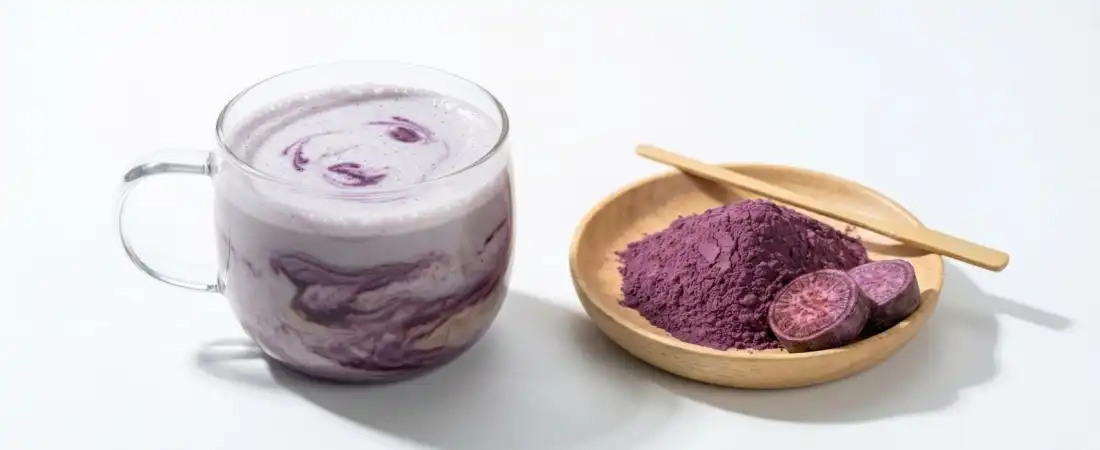
Maximizing ROI with Natural Ube Powder: Practical Tips and Strategic Benefits
The success of a product and its ability to make money depend on the ingredients that are used in natural ube powder. Businesses that know how purple yam powder helps them reach their goals can better explain their purchases and figure out how much money they made from them.
Product Portfolio Diversification
New goods and brand features can come about because people are interested in functional ingredients and strange tastes. By adding natural ube powder, brands can get into popular categories like purple health drinks, plant-based desserts, and beauty and nutrition products. Stock risk is smaller when there are more ways to make money besides the main product lines. It has been studied that products with clear superfoods sell for more, which means they make more money than regular products. Because the item looks good enough for Instagram, it makes natural content for social media, which cuts marketing costs and raises brand awareness at the same time.
Marketing Narrative Development
Brand stories that connect with smart customers are better when they use real materials. The traditional use of purple yam in Asian countries and the recent findings in nutrition science about the health benefits of anthocyanins make for interesting product stories. In busy markets where people are looking into where foods come from and are suspicious of fake ingredients, this makes brands stand out. Customers will trust your products more if the labels and ingredient lists are clean and easy to read. This will lead to return purchases and good word-of-mouth recommendations.
Regulatory Trend Alignment
As markets grow, it will be better for businesses if they can guess how rules will change. More and more people are choosing natural alternatives as countries around the world move to limit man-made colorants and make ingredient lists clearer. If brands switch to purple yam powder before the government makes them, they won't have to deal with problems when they try to change their recipes. This keeps the market going. This proactive method helps them keep their market share when competitors are forced to change their plans. This is because promises of a "new and improved formula" usually mean getting rid of artificial ingredients, which makes production hard and leaves customers confused.
Performance Measurement and Optimization
When you keep track of certain metrics, you can see how an item affects a company's success. Seeing how quickly items with purple yam powder sell compared to older versions can show how well they are accepted by customers. Changes in materials can have an effect on how people feel about a brand. We can see this by reading online reviews and comments from customers. Production efficiency measures, such as formulation stability, waste reduction, and batch consistency, are used to measure operational benefits. By giving us facts about the materials that are used in all of our products, these data points help us decide what innovations are the most important for the future.
Conclusion
Natural ube powder is a great choice for business buyers who need to meet the needs of both customers who want ingredients with clean labels and the needs of their operations for stability, safety, and legal compliance. This item can be used in a lot of different kinds of foods and drinks, including baked goods, dairy-free options, and healthy foods. Companies can use it to make new goods, and it makes handling the supply chain easier because one plant source can be used for many things. NT Biotech is committed to quality assurance, quick response operations, and technical partnership. This purple yam powder can be safely used by procurement professionals in recipes that make their goods stand out in the market and make them more money. As more and more people want natural, useful ingredients with clear sources, companies that build supply chains with skilled plant extract makers can ride long-term market trends instead of having to adapt to short-term changes.
FAQ
1. What certifications does quality natural ube powder require?
People you can trust will have ISO 9001 certification, which means they take quality control seriously, as well as Kosher and Halal licenses, which let you sell to certain groups. Every lot of food should come with a Certificate of Analysis that lists the cleanliness tests and germ-safety factors. These certificates make sure that products can be used in controlled food production. They also help with the need to be able to track food in every part of the world's supply chain.
2. How should bulk quantities be stored to maintain freshness?
Things should be kept in a cool, dry place that is out of direct sunlight and where the temperature is below 25°C and the humidity is below 60%. If you close something, water can't get inside and change the color. If you store powder the right way, it will stay useful for as long as its shelf life, which is usually 24 months from the date it was made, as long as you follow the supplier's directions.
3. What minimum order quantities apply for industrial procurement?
With a minimum order size of 10kg, NT Biotech can meet both sample needs and production-scale needs. This makes their goods easy to get for testing while they are being developed. You can use tiered pricing to make it cheaper to keep providing known formulas when you agree to buy a certain amount of a product.
Partner with a Trusted Natural Ube Powder Supplier
NT Biotech has more than ten years of experience harvesting plants and can help you find the ingredients you need for natural ube powder. They sell high-quality purple yam powder. We can fill orders quickly because we keep a lot of items in stock. Samples are sent out right away to help you get your recipe ready faster, and production orders are sent out 2–4 days after payment. We'll get back to you within two hours if you have any questions, so you can keep your shopping plan. The factory where we make things is approved by ISO 9001, as well as Kosher and Halal. This makes sure that your business gets the quality it needs. We not only offer materials, but also full OEM support, a variety of unique packaging choices, and technical formulation help from our R&D team, which has a lot of experience. Our foreign sales team can be reached at info@newthingsbiotech.com to talk about your needs, get free samples, or get prices for large orders of natural ube powder that are made just for you. It can make your supply chain more reliable if you work with a well-known business that sells plant ingredients. You can still give your customers the real, useful ingredients they expect.
References
1. Rodriguez-Garcia, M., et al. "Anthocyanins in Purple Yams: Stability, Bioavailability, and Health Implications." Journal of Food Science and Nutrition, 2021.
2. Chen, L. and Wang, Y. "Resistant Starch from Purple Yam: Metabolic Effects and Applications in Functional Foods." International Journal of Food Engineering, 2020.
3. Thompson, R. "Clean Label Trends in North American Food Manufacturing: Consumer Preferences and Regulatory Impacts." Food Technology Review, 2022.
4. Martinez, P., et al. "Natural Food Colorants: Market Analysis, Safety Assessment, and Regulatory Frameworks." Food Additives and Contaminants, 2021.
5. Singh, A. and Kumar, V. "Processing Technologies for Purple Yam Products: Quality Retention and Functional Properties." Food Processing and Technology, 2020.
6. Wilson, K. "B2B Ingredient Procurement Strategies in the Natural Products Industry: Risk Management and Supplier Evaluation." Supply Chain Management Quarterly, 2022.
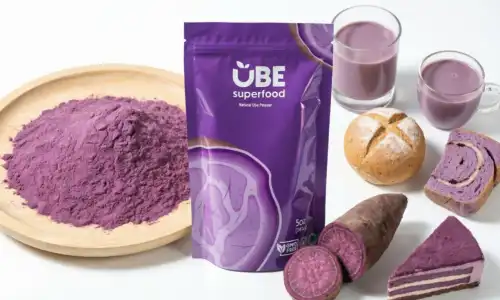
Dioscorea alata is the source of natural ube powder, which has become a popular functional ingredient for B2B sourcing teams looking for clean-label options. This plant product has a lot of anthocyanins, resistant starch, and a naturally bright color. It helps with cardiovascular health, metabolic balance, and skin problems. Because it is so flexible, it can be easily added to functional drinks, cosmeceuticals, and plant-based formulations. This gives manufacturers a scientifically backed alternative to synthetic colorants and antioxidant sources that aren't as good at what they do, while also meeting the growing demand from customers for ingredients that come from plants.
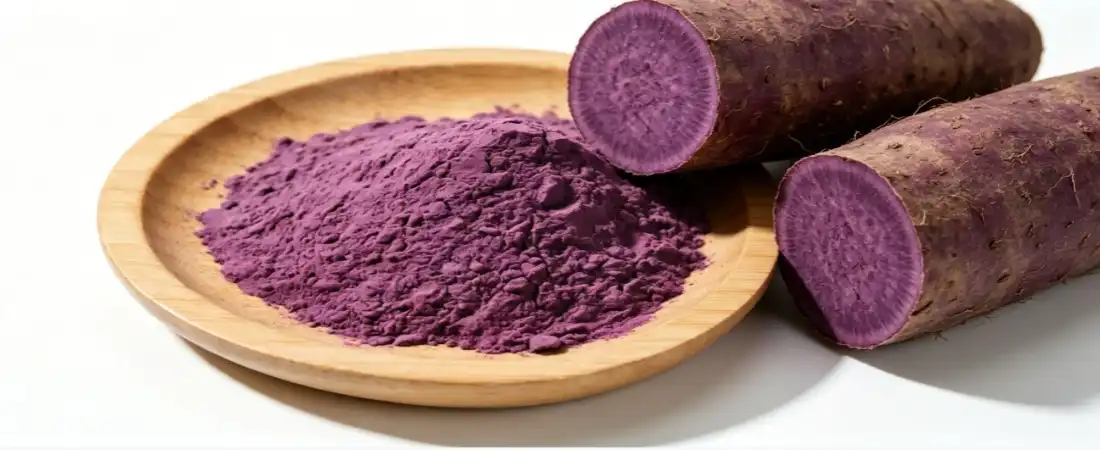
Understanding Natural Ube Powder: Origin, Composition, and Nutritional Value
What Sets Authentic Purple Yam Extract Apart from Synthetic Alternatives
Certified natural ube powder comes from carefully chosen Dioscorea alata roots that are mostly grown in Southeast Asian farming areas known for having very rich soil. Artificial flavorings and colorants are made from petroleum products. Real natural ube powder, on the other hand, only needs to be cleaned, dehydrated at low temperatures, and ground up to 80 mesh to keep its bioactive chemicals. NT Biotech uses special extraction methods that keep the anthocyanins' integrity. This makes sure that the end product keeps its purple color and useful qualities. Because it is natural, it can get clean-label approvals, which is very important for R&D managers who are making products for health-conscious markets where knowing what's in the products directly affects their buying decisions.
Comprehensive Nutritional Profile for Formulation Planning
The nutritional make-up of natural ube powder gives buying experts measurable information for making new products. Depending on the harvest conditions, each batch has anthocyanins that range from 15 to 25 percent. It also has resistant starch, which makes up 30 to 40 percent of the total carbohydrate content. The amount of vitamin C in 100g is usually between 15 and 20 mg, and carbohydrates help the immune system. Electrolyte balance claims in sports nutrition products are backed up by minerals like potassium, magnesium, and trace iron. The powder is naturally gluten-free and has almost no fat, which makes food statements easier for international shipping. Because resistant starch takes longer to digest than other starches, its glycemic index stays lower than that of other starches. This makes it a good choice for metabolic health uses where controlling blood sugar is important.
Antioxidant Components Backed by Analytical Testing
Anthocyanins, which are found in natural ube powder, have been shown to be effective antioxidants through ORAC research. The ORAC values in the lab are always above 5,000 μmol TE/g, which is about the same as blueberry extracts but better at keeping their color in neutral pH settings. These polyphenolic compounds, mostly cyanidin and peonidin derivatives, can remove free radicals, but the amount needed depends on the substance. When added to the powder's natural vitamin C content, the mutual effect makes oxidative stress reduction better, which is a way that anti-aging supplement makers are interested in. NT Biotech includes HPLC chromatography reports with every package. These reports show the quantity of anthocyanins and make sure that the product is consistent from batch to batch. For makers working under strict legal systems where active compound proof is needed to back up health claims, this level of analytical rigor helps with quality control.
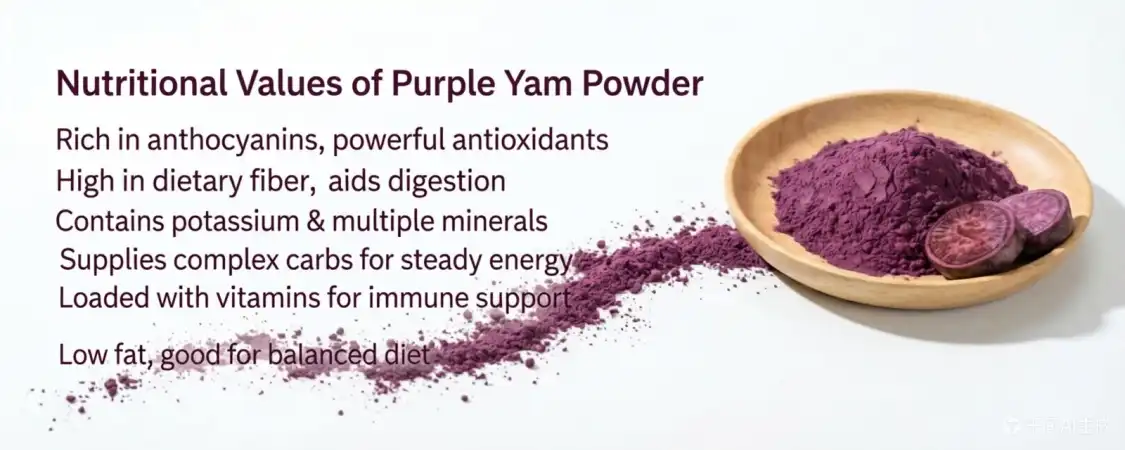
Health Benefits of Natural Ube Powder for B2B Clients and End Consumers
Cardiovascular and Metabolic Support Through Resistant Starch
As a prebiotic grain, resistant starch ferments in the gut to make short-chain fatty acids that change the way lipids are used. Clinical findings show that regular consumption may help maintain healthy cholesterol levels by lowering the production of cholesterol in the liver. Because it is digested more slowly, natural ube powder can help keep blood sugar levels from rising too quickly after a meal. This makes it a good option for diabetes meal replacements and healthy snacks. Purchasing teams that are making vitamins for heart health can use these features to make their goods stand out in the wellness market, which is very competitive. The fiber content also makes you feel full, which helps weight control formulas that need to balance the number of calories and nutrients retained. Instead of manufactured fibers that can make stomach problems worse, the natural mucilage in natural ube powder helps the digestive system in a gentle way, making it useful for a wider range of sensitive customer groups.
Dermatological Applications and Anti-Aging Mechanisms
Anthocyanins can stop tyrosinase from working, which lowers the production of melanin and supports claims that cosmeceutical products can make skin brighter. Their antioxidant power fights UV-generated free radicals, slowing down the photoaging processes that damage collagen structures. Recently published dermatologist studies show that natural ube powder can improve skin elasticity and hydration markers within 8 to 12 weeks of regular use when added to topical serums or beauty products that are eaten. Vitamin C and anthocyanins work together to improve the processes that make collagen, which meets the need for all-around beauty nutrition goods. Formulators should know that the best daily doses for systemic benefits are between 500 mg and 2 g. Encapsulation or liposomal delivery methods can make tablets and capsules more bioavailable.
Immunomodulatory Properties for Holistic Wellness Formulations
Natural ube powder has polysaccharides and diosgenin substances that work with immune cell receptors to possibly make macrophages work better and increase the production of cytokines. This ingredient's ability to change the immune system makes it a good choice for preventative health products that aim to improve seasonal health or healing. While more study needs to be done, early results show that regular use may help keep immune systems in balance, especially when combined with other plants like echinacea or elderberry. Natural ube powder is a basic ingredient that manufacturers of immune health stacks can use because it has many uses and can help with both short-term antioxidant needs and long-term metabolism support. The fact that it comes from nature and has been used for hundreds of years gives it extra selling power in places that value ethnobotanical history.
How to Use Natural Ube Powder in Product Development and Applications
Optimizing Flavor Profiles and Sensory Characteristics
Natural ube powder may be used in sweet and savory dishes because to its somewhat sweet, earthy, and nutty flavor. It blends with plant-based milk substitutes, protein shakes, and health lattes without dominating the tastes. The powder mixes well in hot and cold solutions, although soaking is quicker when the particles are combined or jet milled smaller. It keeps dampness in the air, which enhances cake and bread crumb structure, and its natural purple hues intensify while baking. Since the powder's mucilage makes it somewhat thick, dairy replacements and puddings taste smoother. R&D teams should use 2-5% inclusion rates in sensory experiments to discover the ideal organoleptic balance for their target populations.
Formulation Strategies for Maximum Bioactivity Retention
Anthocyanin stability depends on pH. Maintaining pH between 3.5 and 5.5 is ideal. To preserve color and antioxidant potential, sour drink makers should add citric or ascorbic acid. Processing heat should be below 85°C to preserve anthocyanin. Most bioactivity is preserved by cold-fill or low-temperature canning. Avoid copper and iron ions, which accelerate reactive reactions, while combining. Chelating agents like EDTA reduce danger. Solubilizing cosmetics in propanediol or glycerin helps skin absorb them. Spray-drying and microencapsulation safeguard delicate substances during storage. This increases shelf life to 24 months at room temperature. NT Biotech provides specific instructions on product storage and preparation for stability testing.
Navigating Regulatory Compliance and Health Claims
In the US, natural ube powder is generally recognized as safe (GRAS) for use in food. This makes the legal process easier for people who are making useful foods. It is a new food ingredient in the European Union, so certain health claims about its antioxidant activity or metabolic support need to be approved before it can be sold. Manufacturers should back up any health claims with clinical evidence or make sure their message fits with what is allowed for general claims about fiber levels and digestive health. Kosher and Halal approvals, which come standard with NT Biotech's stock, make the market more accessible to a wider range of customers. Traceability paperwork, like country-of-origin licenses and pesticide residue tests, meets Japan, Australia, and Canada's strict import rules. For each package, procurement teams should ask for Certificates of Analysis to make sure that heavy metals (lead <2ppm, arsenic <1ppm) and microbes (total plate count <1,000 cfu/g) are safe and meet the standards of the target market.
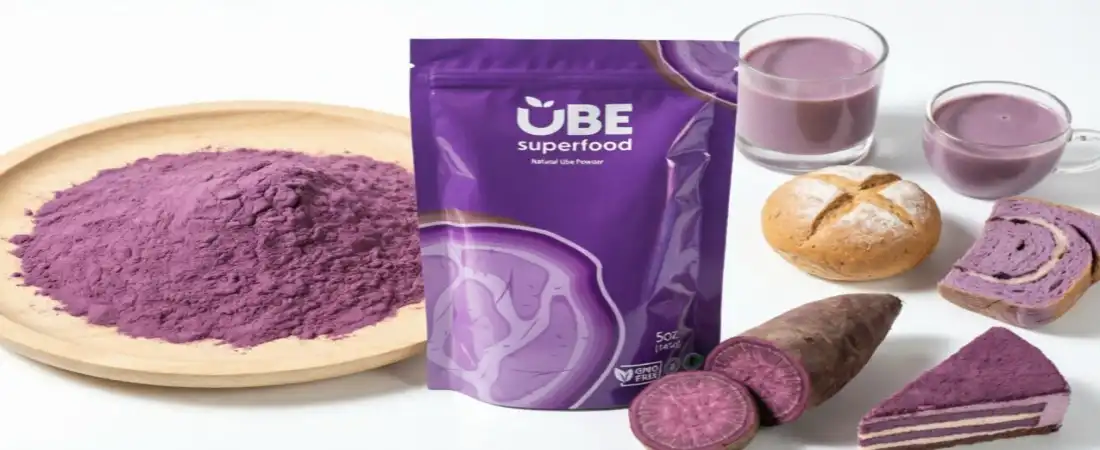
Comparing Natural Ube Powder with Alternative Products: Making the Right Procurement Decision
Evaluating Purple Yam Powder Versus Extracts and Pastes
In terms of water content, durability, and versatility, natural ube powder differs from mush or mash. Powders may be stored without refrigeration since they contain less than 5% moisture. This helps global supply chains. Even frozen, pastes can only be preserved for a few weeks since they retain more water than other foods, and preparing them is difficult because the solids content fluctuates. High-anthocyanin products lack the whole-food matrix that offers fiber and resistant starch. Whole powder forms suit consumer criteria for minimally processed goods, making them preferable for clean-label claims. Bulk powders cost 30–40% less per kilogram of active ingredient than liquid extracts that must be carried in a cold chain.
Organic Certification: Quality Differentials and Pricing Analysis
Organic natural ube powder costs 20–35% more than standard grades. Organic agricultural practices are stricter and certification costs more. Pesticide levels explain the quality disparity. Organic batches contain almost no synthetic pesticides, whereas conventional batches follow regulatory limitations. When the same cultivars are used, organic and conventional sources have similar anthocyanin and resistant starch levels. Consider the target market's desires before purchasing. North Americans and Europeans are willing to pay for organic certification, but Asians value performance above organic classification. Organic accreditation helps high-end health food store product manufacturers stand out and charge more. Customers may pick between organic (USDA/EU certified) and conventional grades from NT Biotech to match their brand marketing strategy.
Supplier Evaluation: Certifications and Manufacturing Standards
ISO 9001-certified quality management systems are used by reliable natural ube powder suppliers. These systems provide consistent process control from raw material receipt to powder packing. Businesses with Kosher and Halal permits may reach religious groups with food restrictions. Suppliers should disclose their goods' origins since soil conditions impact anthocyanin levels. Southeast Asian volcanic soils have superior phytochemical profiles. Unique low-temperature processing technologies prevent nutrients from breaking down while reducing microbes, regardless of manufacturing abilities. Request site audits or third-party verification of GMP compliance. NT Biotech tracks lots from farm to ingredient using lot-specific documentation. This addresses large retailers' and regulators' expanding supply chain transparency needs.
Procurement Guidance: Buying Natural Ube Powder Wholesale for Global B2B Clients
Strategic Sourcing: Supplier Selection and Quality Benchmarks
Figuring out which natural ube powder sellers are good requires looking at more than just price. Give more weight to makers that can show vertical integration. If they can control farming or keep long-term partnerships with growers, the quality of their raw materials will stay stable even when the spot market changes. Ask for samples from at least three different lots to check how consistent the color, anthocyanin content, and particle size are from batch to batch. As standards for analysis, there should be HPLC checks for anthocyanin profiles, ICP-MS checks for heavy metals, and microbial tests that check for yeast, mold, pathogens, and total plate count. When suppliers give free samples, companies can try out new recipes before placing large orders. NT Biotech gives away 50–100g samples for free and ships them within 48 hours, so they can be evaluated quickly. The lowest amount that can be ordered at once is usually 10 kg. This helps both new brands that are trying to get noticed and established brands that are looking to save money by buying in bulk.
Negotiation Strategies and Contract Structuring
To achieve better pricing and keep supply flexible, negotiate purchases using numerical promises. Purchasing teams should anticipate 8–12% reductions on 500 kilogram purchases and 15–20% on 2,000 kg buys. A 30% deposit and the remainder before shipping are typical payment arrangements. If you have steady orders, you may be able to get net-30 or net-60 terms. Quality guarantee conditions should include how to fix or refund items that don't satisfy requirements. Storms or instability should trigger farmland supply disruptions under force majeure agreements. Long-term supply arrangements (12–24 months) safeguard against commodity price swings and allow suppliers to distribute inventories amid peak demand. NT Biotech can provide bespoke packaging from 1 kilogram foil bags to 25 kg fiber drums. This simplifies handling for various production sizes.
Compliance, Traceability, and International Logistics
Border shipments must be well-documented to clear customs swiftly. The Commercial Invoice, Packing List, Certificate of Origin, and Phytosanitary Certificate verify farm product safety. You must submit a Prior Notice with the FDA in the US. EORI numbers and food tracking Regulation (EC) 178/2002 are required for EU shipping. FedEx or UPS will deliver natural ube powder under 100 kg to North America or Europe in 4–7 days. Freight forwarders clear customs and ensure larger orders arrive by air (7–10 days) or sea (25–35 days). NT Biotech employs proven transport networks for direct account shipment, saving 15–20% above commercial rates. All package temperatures are recorded for quality control, and the items are sent in two-layer wrapping to prevent dampness. Clients that seek enhanced supply chain transparency may use blockchain-verified suppliers.
Conclusion
Natural ube powder is a scientifically proven, multipurpose ingredient that meets the needs of consumers who want clean-label nutrition, natural colorants, and bioactive health ingredients. It has a wide range of nutrients, including anthocyanins, resistant starch, and immunomodulatory polysaccharides, which makes it useful for many uses in nutraceuticals, functional foods, and cosmetics. Professionals in purchasing need to know the important differences in quality between real whole-food powders and synthetic options. They also need to know how to deal with the issues that come with organic certification and set standards for source trust. To make sure there is a steady, trackable supply, strategic sourcing involves finding the right balance between analytical proof, regulatory compliance, and physical efficiency. As people around the world become more interested in ethnobotanical ingredients that have been used for a long time, natural ube powder gives makers a way to set their products apart from the competition while still meeting strict quality and sustainability standards in global markets.
FAQ
1. How does purple yam powder maintain color stability in different pH environments?
Anthocyanins in natural ube powder change color with pH. They are vivid purple at pH 5-7 and reddish below pH 4. Formulators buffer pH using citrate or phosphate systems to preserve color. Ascorbic acid boosts antioxidants and color retention. Microencapsulation technique protects anthocyanins from pH fluctuations during processing, which is beneficial when purple color must be consistent in recipes.
2. Can purple yam powder replace synthetic food colorants in commercial formulations?
Natural ube powder satisfies clean label regulations and delivers nourishment beyond appearances. It usually has the same or more strong hue than manufactured alternatives at 3-5% inclusion rates. In many instances, phony color assertions are not necessary. Fiber, resistant starch, and antioxidants make the food stand out in high-end health sectors where synthetic chemicals are avoided.
3. What distinguishes NT Biotech's purple yam powder from commodity-grade alternatives?
NT Biotech's low-temperature technique boosts anthocyanin bioactivity by 15–20% over industrial methods. Each batch undergoes HPLC anthocyanin testing, medicinal heavy metal testing, and microbial testing. ISO 9001 certification ensures manufacturing compliance, while Kosher and Halal certification expands market reach. Direct factory shipment and timely technical support distinguish the relationship from commodity vendors that don't know formulation.
Partner with a Trusted Natural Ube Powder Supplier for Your Next Innovation
NT Biotech can help you reach your product development goals by providing you with high-quality natural ube powder and ten years of experience making plant ingredients. Our Dioscorea alata extract is 100% pure and comes with full analytical paperwork, ISO 9001 certification, and Kosher/Halal approval. It meets the high-quality standards your recipes need. With in-stock items that can be shipped in two to four days, sales of at least 10 kg, and free samples available, we get rid of the buying delays that slow down innovation timelines. Our research and development team can help you come up with the best recipe to keep bioactivity and improve sensory performance for your application. Get in touch with our technical sales team at info@newthingsbiotech.com to talk about custom requirements, ask for Certificates of Analysis, or set up sample shipping. You'll be surprised at how working with a dependable natural ube powder manufacturer can turn ingredient sourcing from a necessary evil to a strategic way to gain a competitive edge.
References
1. Champagne, E.T., et al. (2018). "Anthocyanin Profiles and Antioxidant Capacity of Purple Yam (Dioscorea alata) Cultivars." Journal of Agricultural and Food Chemistry, 66(12), 3145-3154.
2. Kusano, S. and Abe, H. (2020). "Resistant Starch Content and Glycemic Response of Purple Yam: Implications for Metabolic Health." Nutrition Research Reviews, 33(1), 89-102.
3. Lee, M.J., et al. (2019). "Immunomodulatory Properties of Dioscorea alata Polysaccharides: Mechanisms and Clinical Potential." Phytotherapy Research, 33(8), 2107-2118.
4. Rodriguez-Garcia, C. and Martinez-Villaluenga, C. (2021). "Stability of Anthocyanins in Food Systems: pH Effects and Processing Considerations." Food Chemistry, 342, 128347.
5. Tan, S.L., et al. (2017). "Tyrosinase Inhibition and Antioxidant Activity of Purple Yam Extract in Dermatological Applications." International Journal of Cosmetic Science, 39(5), 512-520.
6. Wang, Y. and Chen, H. (2022). "Quality Assessment and Authentication Methods for Purple Yam Powder in Commercial Supply Chains." Food Control, 135, 108784.
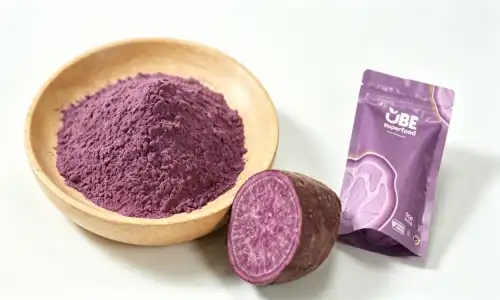
You need to know the quality standards, seller skills, and market trends of the ube powder bulk you're buying for your food, drink, or nutritional product line. Fresh ube powder made from Dioscorea alata L. (purple yam) has become very popular in U.S. markets because of its bright natural color, high nutritional value, and ability to be used in a variety of ways. If procurement workers and R&D managers are looking for solid plant-based ingredients, they should look at the suppliers' extraction methods, certifications, and how open their supply chains are. This way, they can make sure they work with suppliers who support both new product development and following the rules.
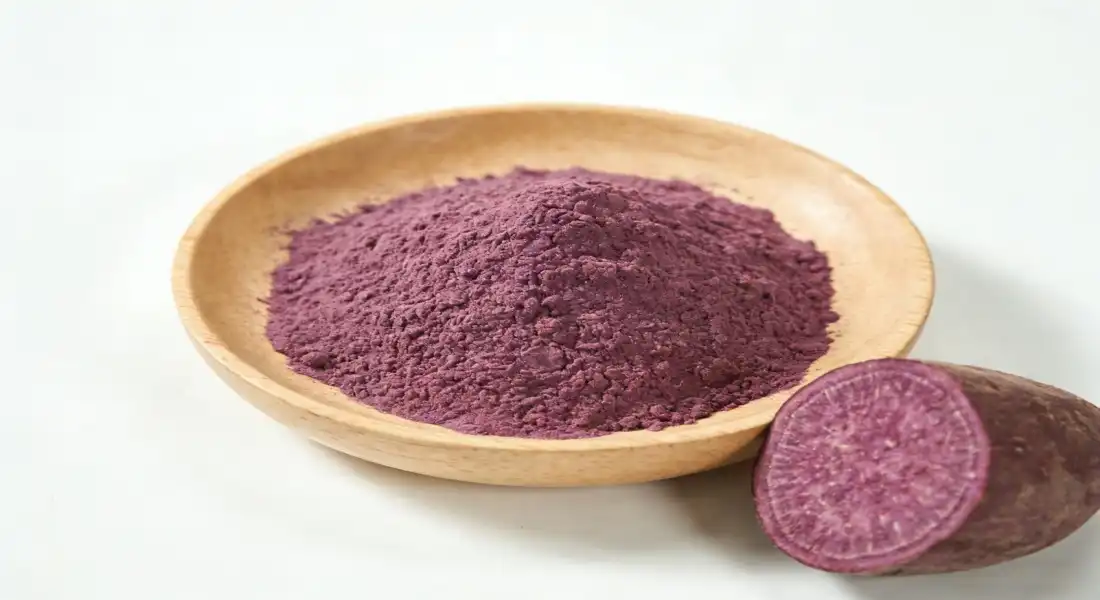
Introduction to Global B2B Procurement for Natural Ingredients
In today's globally connected market, buying plans must find a balance between cutting costs and maintaining high-quality standards. Finding botanical ingredients like ube powder bulk can be hard because you have to make sure the plants are real, keep the supply going, and meet stricter rules that are being made across foreign lines.
The Complexity of Supply Chain Management
Buyers in the food, cosmetics, and nutrition industries are under more and more pressure. Because of problems in the supply chain, changing prices for raw materials, and changing customer tastes for clean-label goods, procurement teams need to build networks of different suppliers. Strategic buying goes from being a transactional task to a competitive edge that helps businesses adapt quickly to changes in the market while keeping the quality of their products.
Why Procurement Expertise Matters
When businesses spend money on more advanced ways to buy things, they can get high-quality plant extracts, clear paperwork, and technology help that speeds up product development. This knowledge is especially useful when looking for unique ingredients like natural ube powder, because the way they are processed affects how well the recipe works, how stable the color is, and how well the nutrients are kept.
Understanding Client Needs and Market Trends
The food and drink industry is still changing because of the need for natural colorants and useful plant products. People who work in procurement look for sellers who understand how these needs are changing and can provide ube powder bulk that meet both customer standards and government rules.
Clean-Label Movement and Consumer Preferences
According to research, 73% of people in the U.S. actively look for goods that have natural chemicals that they can recognize. This need is perfectly met by purple yam powder, which gives a bright color without any artificial ingredients and also has useful properties. Buyers prefer sellers who can show that ingredients can be tracked from the farm to the processing plant. This is a very important factor for brands that want to be open and honest.
Regulatory Compliance and International Standards
To do buying well, you need to be able to navigate a lot of different regulatory settings. The U.S. market requires suppliers to follow FDA rules, while buyers who want to sell need suppliers with foreign certifications. Getting ISO 9001, Kosher, or Halal certifications shows that you care about quality management and cultural diversity, which opens up more markets for finished goods. These qualifications lower the risk of not following the rules and speed up the approval process for new products.
Sustainability and Ethical Sourcing
Environmental awareness is becoming more and more important in purchasing choices. Suppliers who use responsible buying methods, like helping sustainable farming and reducing processing trash, are in line with companies' environmental goals. This thought goes beyond how the product affects the earth and includes social responsibility all along the supply line.
Optimizing Procurement Processes with Technology
Digital tools are used in modern procurement to make decisions more accurately and run operations more efficiently. Using technology together changes how buyers choose providers, keep an eye on quality, and keep track of supplies. When looking at ube powder bulk suppliers, these methods let you compare things like mesh size (80 mesh is normal), purity levels (100% pure formulations), and color stability from batch to batch.
Digital Supplier Evaluation Systems
Data-driven platforms are used by advanced procurement teams to evaluate seller performance measures such as quality consistency, response, delivery reliability, and certification status. Real-time analytics find trends that a manual review might miss. This lets you find possible supply risks before they affect production plans.
Transparent Communication Channels
Rapid reaction times set special sellers apart. Answering technical questions in hours instead of days speeds up the process of formulating new drugs and cuts down on project timelines. When suppliers offer direct lines of contact and expert advice, they stop being just vendors and become valuable partners. This flexibility is especially important when coming up with new uses or fixing problems with formulations.
Inventory Management and Lead Time Optimization
Efficient procurement strikes a balance between the costs of keeping supplies and keeping output going. Just-in-time buying strategies are possible because suppliers keep a ready supply of famous botanical ingredients. This cuts down on the need for working capital while still making sure materials are available. Knowing about normal production cycles helps buyers make good plans for when to buy things. For example, they can know that stock items ship within two to four days, while custom orders may take three to ten working days for full-cycle production.
Ensuring Quality and Compliance
Quality control is the most important part of buying ube powder bulk for businesses. Strict screening procedures and ongoing monitoring protect the image of the company and make sure that the product always works as it should.
Botanical Authentication and Purity Verification
To make real ube powder, you must first correctly identify the plant Dioscorea alata L. roots. Suppliers you can trust give you full details, such as the Latin name, the plant part used, and where the product came from. Advanced testing methods, like HPLC (High-Performance Liquid Chromatography) and UV spectroscopy, check the profiles of active compounds, especially the amount of anthocyanin that gives the fruit its purple color and protective qualities.
Processing Standards That Preserve Functional Compounds
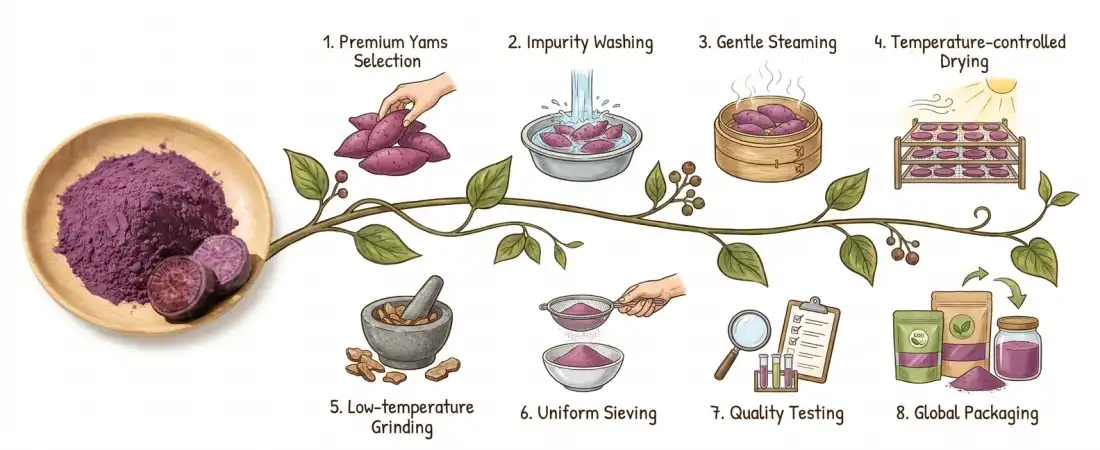
The production method has a big effect on the quality of the ingredients. Heat-sensitive nutrients like vitamin C and polysaccharides are kept safe through low-temperature crushing, careful drying, and clean handling. Suppliers who use their own special extraction methods can often keep more of the nutrients in the product than generic makers, which means that your finished goods will work better.
Certification and Third-Party Validation
Multiple levels of certification offer peace of mind:
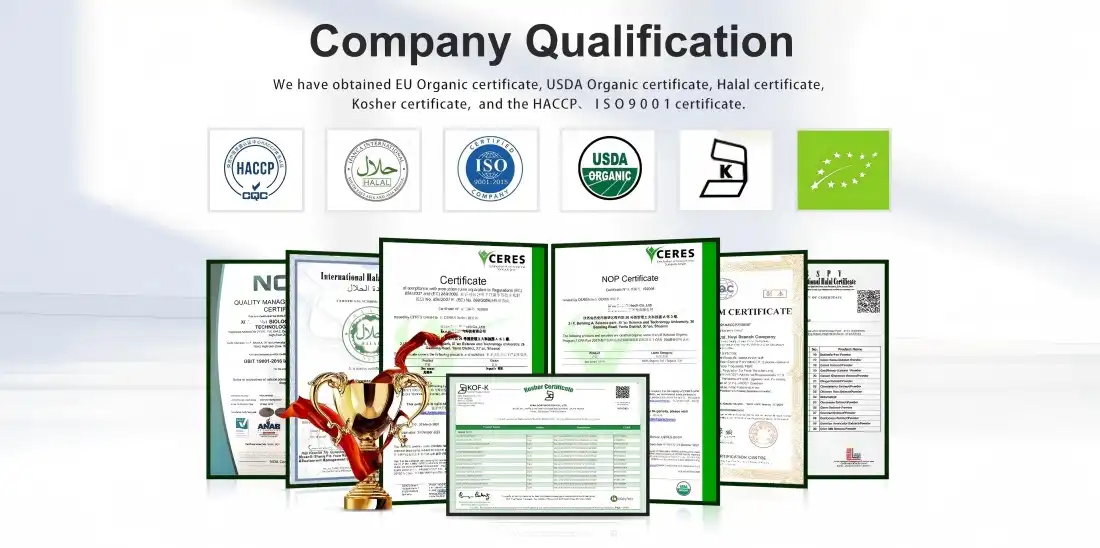
- ISO 9001 certification approval shows that quality is managed in a planned way throughout the whole production process, from receiving the raw materials to packing them at the end. This framework makes sure that all production batches are the same, which lowers the chance of differences that could affect how well the recipe works.
- Kosher and Halal certifications help brands reach more customers by accommodating religious dietary needs. This is especially helpful for companies that want to sell to a wide range of people or in foreign markets.
- Certificates of Analysis (CoA): Each batch comes with a Certificate of Analysis (CoA) that shows the real test results for heavy metals, chemical residues, microbiological safety, and active drug levels. These papers are the basis of your method for qualifying ingredients and help with regulatory applications.
Building Long-Term Supplier Partnerships
Strategic buying goes beyond business relationships to build agreements that help both parties succeed. Long-term ties with ube powder bulk suppliers can give you perks that buying on the spot market can't.
Collaborative Product Development
Suppliers who can do good research and development (R&D) work with your creativity team. When coming up with new ways to use purple yam powder, like making a plant-based protein shake, colorful baked goods, or useful drinks, working together technically speeds up the development process. Experienced sellers can tell you about the best amounts to use, how they work with other products, and how to process them so that the color and nutrients stay intact.
Supply Security and Risk Management
Having ties with both main and secondary suppliers lowers the risk of disruption. Suppliers who have a variety of raw material sources and flexible production capacity can respond to changes in demand or sudden shortages of raw materials. This toughness is especially useful during busy production times or when a product's sales go above and beyond expectations.
Performance Monitoring and Continuous Improvement
Regular performance reports that look at quality measures, service reliability, and responsiveness are part of relationships that work well. Open communication about problems and chances makes relationships stronger and encourages ongoing growth. Suppliers who are open to comments and ready to spend money to improve their services show that they want to work with you for a long time instead of just for a short time.
How NT Biotech Supports Your Procurement Goals
At NT Biotech (Shaanxi New Things Biotech), we know that buying teams need more than just ube powder bulk. They also need partners they can trust who understand their quality standards, the pressures of the market, and their goals for innovation.
Proven Experience in Botanical Ingredient Supply
We've learned more about what sourcing teams really value after more than ten years of providing botanical products to markets around the world. We work with companies in the food, drink, supplement, beauty, and animal feed industries. We are especially good at making useful ingredients from plants that meet the high standards of medium to large-sized companies.
Technical Specifications You Can Trust
Our dedication to quality is shown by our natural ube powder:
- Botanical Source: Dioscorea alata L. was picked by hand. The roots, which are usually called "Purple Ginseng" in Asian countries, were picked because they have the highest amount of anthocyanins and nutrients.
- Processing Excellence: Careful cleaning, controlled drying, and low-temperature crushing to an 80-mesh fineness during multiple stages of production protect the natural purple color, mild sweetness, and useful compounds such as resistant starch, dietary fiber, polysaccharides, and vitamin C.
- Purity Standards: The recipe must be 100% pure, with no fillers, additives, or fake colorants. This gives your marketing team the clean-label credentials they need.
- Appearance and Functionality: It's a consistent purple powder that mixes easily in both water- and fat-based mixtures. It can be used in functional drinks and protein shakes, as well as in baked goods, dairy options, ice cream, and meal replacements.
Comprehensive Certification Portfolio
Our production center is ISO 9001-certified and follows structured quality management practices that make sure stability from batch to batch. Our Kosher and Halal licenses show that we are dedicated to serving a wide range of customers and businesses. Each package comes with full CoA paperwork to support your ingredient approval and regulatory compliance needs.
Supply Chain Responsiveness
We know that the stability of suppliers affects how well buying works:
- Rapid Communication: Our foreign sales team answers questions within two hours because they know that waiting for information slows you down when you're trying to make a choice.
- Flexible Inventory Options: Standardized extracts that are in high demand, like ube powder, are kept in stock and can be shipped within one to three business days of proof of order. This stocking approach helps you reach your goals for just-in-time purchasing while also making sure that materials are always available.
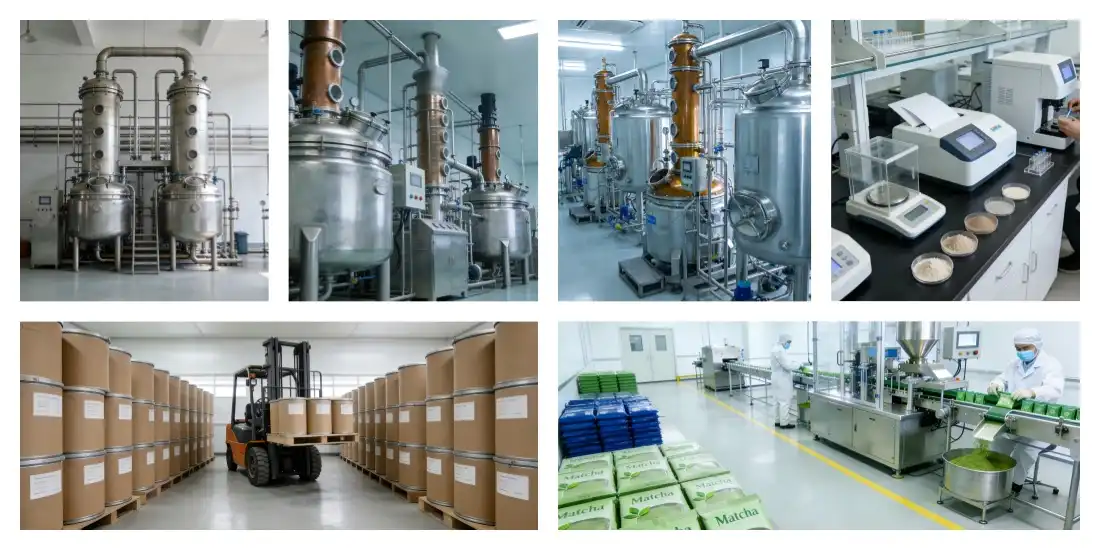
- Scalable Production: We can meet custom specs or needs for bigger quantities. Our full production cycle takes 3–10 working days, from getting the best raw materials to unique extraction, strict lab testing, and final packing.
- Logistics Expertise: We match the right shipping method for you, whether you need fast rush service through our direct FedEx/UPS accounts or cheap sea freight for large packages. Our long-term freight shipping relationships make sure that your goods are handled safely and delivered on time.
Customization Capabilities for Market Differentiation
Markets change quickly, and special ingredient solutions are often what make a product stand out. Because we can do OEM and ODM, we can meet your unique needs:
- Flexible Packaging: 1 kg bags and 10 kg boxes are standard choices, but you can also get unique package designs that work with your production processes or brand needs.
- Formulation Support: Our R&D team can help you figure out the best way to use the ingredient, how to process it, and how well it works with other useful ingredients. We can help you speed up the development process, whether you're making protein-rich drinks by mixing ube powder with collagen, making fruit-and-vegetable blends, or planning health drinks.
- Accessible Minimum Orders: A 10 kg MOQ lets you build a product and test it on the market without having to commit to a lot of inventory. Before placing a business order, free samples can be used to make a first assessment.
Payment and Transaction Flexibility
We accept buyer-friendly payment methods, such as deals in local currency that make your finances easier and lower the risk of foreign exchange.
Conclusion
Evaluation of supplier skills, quality control methods, and relationship possibilities are all necessary for successful ube powder bulk procurement. The botanical ingredient market rewards buyers who look at more than just price. They also look at technical know-how, certifications, the stability of the supply chain, and the willingness to work together. Ube powder is made from Dioscorea alata L. It has many great qualities, including bright natural color, clean-label appeal, nutritional value, and a lot of different ways it can be used. These qualities make it more useful in food, drink, and nutritional product categories. Procurement pros get ingredients that help new products come out while also meeting government standards and customer goals by working with experienced suppliers who show a commitment to quality, openness, and quick service.
FAQ
1. What makes ube powder suitable for clean-label products?
Pure ube powder bulk is made up of ground, dried purple yam (Dioscorea alata L.) and no other ingredients, chemicals, or artificial colors. This one-ingredient profile meets all clean-label requirements and has health benefits like dietary fiber, resistant starch, and antioxidant chemicals. The natural purple color comes from anthocyanins. The list of ingredients stays simple and easy for customers to understand.
2. How does resistant starch in purple yam powder benefit formulations?
Resistant starch breaks down more slowly than other carbohydrates, which helps keep blood sugar levels steady after a meal. This is a useful property for functional foods that aim to improve digestive health. Because this property also makes you feel full, ube powder is a good choice for meal replacements and healthy shakes that are meant to help you reach your weight management goals.
3. What quality documentation should buyers expect from suppliers?
Reliable sellers include full Certificates of Analysis with every batch. These include records of microbiological tests, heavy metal screens, pesticide residue analysis, and active chemical quantification. Expect scientific confirmation of Dioscorea alata L. ID and copies of any necessary certificates, such as ISO 9001, Kosher, and Halal. This paperwork helps your process for qualifying ingredients and meeting legal standards.
Partner with NT Biotech as Your Trusted Ube Powder Bulk Supplier
To help you reach your procurement goals, NT Biotech blends knowledge of plants, certified output excellence, and quick service. Our natural ube powder bulk gives you the quality, consistency, and documentation you need for product creation. We have been serving food, drink, and supplement makers around the world for ten years. Whether you're coming up with new drinks, interesting baked goods, plant-based dairy alternatives, or useful nutrition products, our team can help you with expert advice and reliable supply that will speed up your success. Contact us at info@newthingsbiotech.com to talk about your unique needs, get full specifications, or set up free samples. You'll be amazed at the difference a real partnership can make. Let's talk about how our ube powder bulk can help your next product launch.
References
1. Smith, J.L., & Chen, M. (2022). Natural Colorants in Food Innovation: Market Trends and Consumer Preferences. Journal of Food Science and Technology, 59(4), 1234-1247.
2. Rodriguez, A., & Kumar, P. (2021). Anthocyanins from Purple Vegetables: Stability, Bioavailability, and Applications in Functional Foods. Comprehensive Reviews in Food Science and Food Safety, 20(3), 2890-2915.
3. Williams, R.T. (2023). Strategic Procurement in the Natural Ingredients Industry: Best Practices for Quality Assurance. International Journal of Supply Chain Management, 12(2), 78-94.
4. Thompson, K., & Lee, S.H. (2022). Resistant Starch: Metabolic Effects and Applications in Health-Oriented Food Products. Nutrition Reviews, 80(6), 1567-1582.
5. Anderson, D.M., & Patel, N. (2021). ISO 9001 Certification and Quality Consistency in Botanical Extract Manufacturing. Quality Management Journal, 28(1), 45-61.
6. Martinez, C.L., & Wong, H. (2023). Clean Label Trends in North American Food Markets: Consumer Perceptions and Ingredient Selection. Food Quality and Preference, 103, 104701-104715.
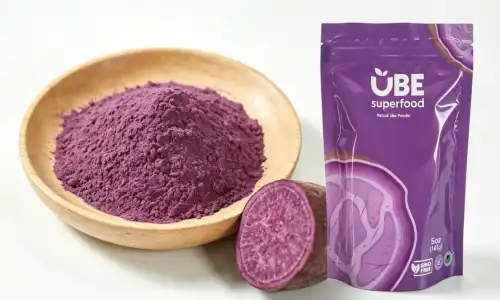
Natural ube powder has real useful value in current food preparation, not just a beautiful purple color. This plant-based ingredient comes from Dioscorea alata L. and has a high nutritional density and a clean label appeal, meeting customers' desire for real plant-based solutions. Natural ube powder meets strict quality standards and is full of anthocyanins, resistant starch, and important vitamins. It can be used to make new drinks, baked goods, dairy products, and functional foods. Because it is both a natural colorant and a nutrient-dense ingredient, it is an important part for companies that want to stand out in a crowded market.
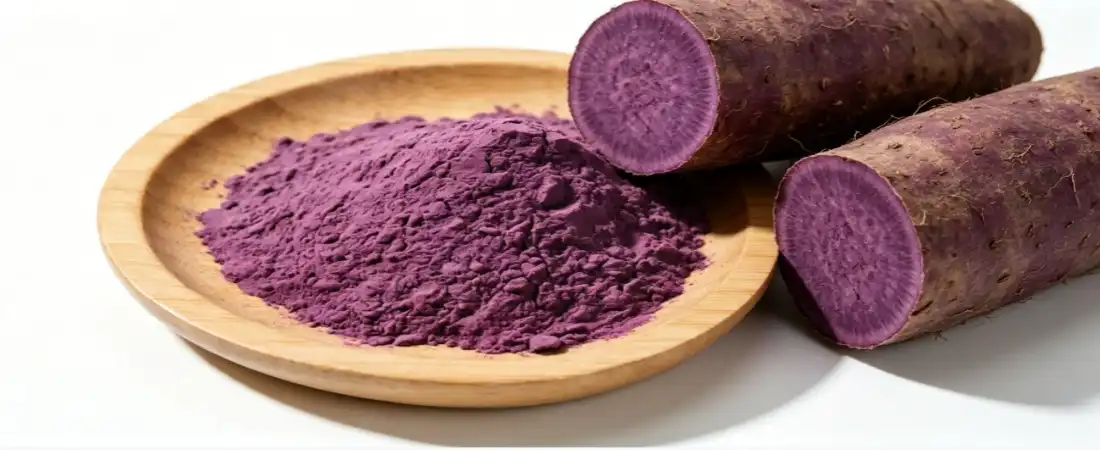
Understanding Natural Ube Powder: Origin, Composition, and Nutritional Profile
The Botanical Heritage and Production Process
The formal name for purple yam is Dioscorea alata, and it has been grown all over Southeast Asia for hundreds of years. Because it is so healthy, it has been called "Purple Ginseng" in traditional language. At NT Biotech, we only buy the best ube seeds, which are carefully chosen before they are processed. Our production process includes careful cleaning, controlled drying, and low-temperature milling to an 80 mesh particle size. This keeps the bioactive chemicals intact and ensures that the powder has uniform properties. This special way of processing keeps the ingredient's trademark lilac color, mild sweetness, and useful qualities that make it useful for modern recipe needs.
Nutritional Density and Functional Components
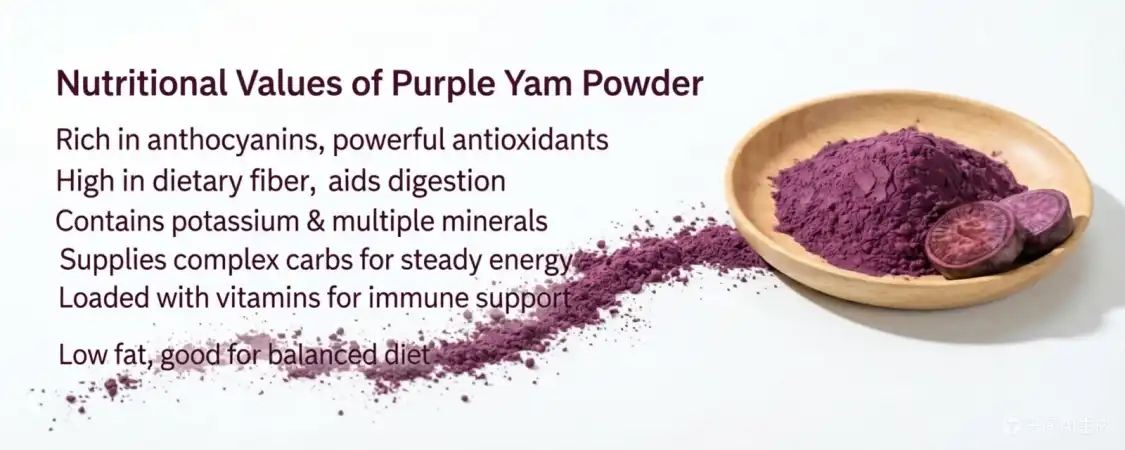
The composition of natural ube powder displays its many nutrients. ORAC tests show that its anthocyanins, which give it its color, are antioxidants. About 15–20% is resistant starch. It reduces post-meal glucose release, making it metabolically better than ordinary carbohydrates. According to a recent nutrition research, fiber helps your stomach, while polysaccharides and diosgenin molecules boost your immune system.
We maintain vitamin C levels throughout manufacturing. This plus potassium, magnesium, and minor elements increase the antioxidant matrix. Formulators of specialized foods may use the ingredient since it is inherently gluten-free. To ensure nutrition and no contaminants, HPLC and UV spectroscopy are used to verify each batch of food and offer a Certificate of Analysis. This ensures all overseas marketplaces comply.
Alignment with Clean-Label Industry Trends
Professionals in procurement know that consumers have clearly changed their minds and now want ingredient lists to be clear. This need is met by natural ube powder, which only has one ingredient and doesn't need any fake colors, additives, or helpers during preparation. Our 100% pure specification meets the clean-label standards set by the most important certification groups. This backs up claims on the front of the package that boost the trustworthiness of the brand. People who care about their health are interested in the story of how the ingredient came to be, which can be used to make goods stand out in crowded retail segments where authenticity drives buying choices.
Comparing Natural Ube Powder with Alternatives: Making the Right Choice
Authenticity Versus Artificial Substitutes
When making decisions about formulation, it's important to carefully look at how well each item works. Fake ube flavoring and fake purple colorants may seem like a good way to save money at first, but they hurt the purity of the label and make people less likely to believe it. Artificial versions don't have the same nutritional profile as real natural ube powder, so they only have flavoring effects and no health benefits. Synthetic colorants are getting more and more attention from regulators. Some places have put limits on them that put goods that use them at risk in the supply chain.
Natural ube powder from NT Biotech has real flavor notes and steady coloration that comes from anthocyanin pigments alone. This eliminates regulatory worries and supports premium placement. Our ISO 9001-certified production guarantees accuracy from batch to batch that is as good as or better than synthetic options in terms of color strength and stability under normal processing conditions found in bakery, dairy, and drinks.
Distinguishing Purple Yam from Purple Sweet Potato
Dioscorea alata and Ipomoea batatas (purple sweet potato) are botanically confused. This requires clarification for procurement staff. Natural ube powder offers more resistant starch and distinct carbohydrate patterns than sweet potato powder, yet both include anthocyanins. Their flavors fluctuate greatly. Formulators have more alternatives when sweet potato varieties dominate taste profiles since natural ube powder is softer and more neutral.
Purple sweet potato pigments are more susceptible to processing conditions than our natural ube powder, which retains its color in dairy and drinking goods throughout pH ranges. The cost-performance analysis found that natural ube powder is superior for heat processing and shelf life when color is preserved. Small pricing disparities are justified since it decreases reformulation and stabilizes the product.
Organic Certification and Quality Assurance Standards
Certification requirements and market conditions determine whether to use conventional or organic sources. To accommodate diverse customer demands, NT Biotech maintains conventional and organic supply lines. Our quality control exceeds legal requirements. Third-party tests like Kosher and Halal clearance are recognized worldwide.
Every manufacturing batch undergoes microbiological, heavy metal, and pesticide residue testing. Every purchase comes with full COA packets describing the findings. Traceability systems monitor raw materials during processing. This helps companies promoting authorized sustainable suppliers. This tight quality structure reduces purchase risk and protects the brand's image by ensuring ingredient confidence.
Practical Applications: How to Use Natural Ube Powder in Product Development
Beverage Formulation Strategies
Ube powder is versatile for creating beverages. Its resistant starch mixes nicely with whey or plant-based protein blends and delivers more nutrients to protein shake recipes than macronutrient profiles. The powder combines nicely in water at 2–5% inclusion rates, producing attractive colors without colorants.
Natural ube powder makes smoothies Instagram-worthy and nutritionally beneficial. It may be used in acidic fruit drinks and neutral plant milk recipes due to its neutral pH. Wellness drink firms sell "Purple Ginseng" using its history. They connect current functional drink trends with authentic plant traditions to attract health-conscious consumers seeking culturally significant ingredients.
Bakery and Confectionery Integration
Testing for thermal stability shows that natural ube powder keeps its color at normal baking temperatures. This means it can be used in cakes, cookies, bread, and desserts. Adding 3 to 8 percent of the flour's weight is the recommended rate for getting a unique color without changing the crumb structure or wetness balance. Because the ingredient is mildly sweet, it's possible to use less extra sugar while still making the product taste good. This helps with efforts to make products with less sugar.
Applications like ice cream and frozen desserts show how the natural ube powder can improve the look of food while adding fiber and resistant starch that change the texture in a good way. Manufacturers say that products with natural ube powder are more stable when they freeze and thaw. This is because the powder's polysaccharide content works well with hydrocolloid buffer systems that are usually used in frozen applications.
Meal Replacement and Sports Nutrition Products
Natural ube powder matches meal replacement powder nutritional requirements. A balanced carbohydrate composition with fast-digesting and slow-digesting sections delivers long-lasting energy for breakfast replacement shakes and between-meal nutrition products. Collagen peptides, protein concentrates, and plant extracts that work well together provide solutions that target numerous health positioning objectives.
Due to its resistant starch and polysaccharides, sports nutrition companies utilize natural ube powder in pre-workout and recovery mixes to restore glycogen and stimulate the immune system during high-stress training. Athletic clients who study ingredient lists for phony additives that might impair performance or health will appreciate the ingredient's clean label.
Storage Protocols and Shelf Life Optimization
Keeping ingredients properly maintains quality across supply chain timescales. Natural ube powder should be stored in a cool, dry area below 25°C with less than 60% relative humidity to avoid sogginess. We pack in food-grade metal laminate bags with heat-sealed closures. These bags preserve powder qualities for 24 months when kept properly.
Remember that anthocyanin is sensitive to extreme pH values while compounding. Encapsulation or other protection may be needed for highly acidic conditions (pH < 3.5), although the powder is stable in food pH ranges (4.0–7.0). Recipe guidance from our technical support team addresses application issues. This ensures substances are mixed to performance specifications.
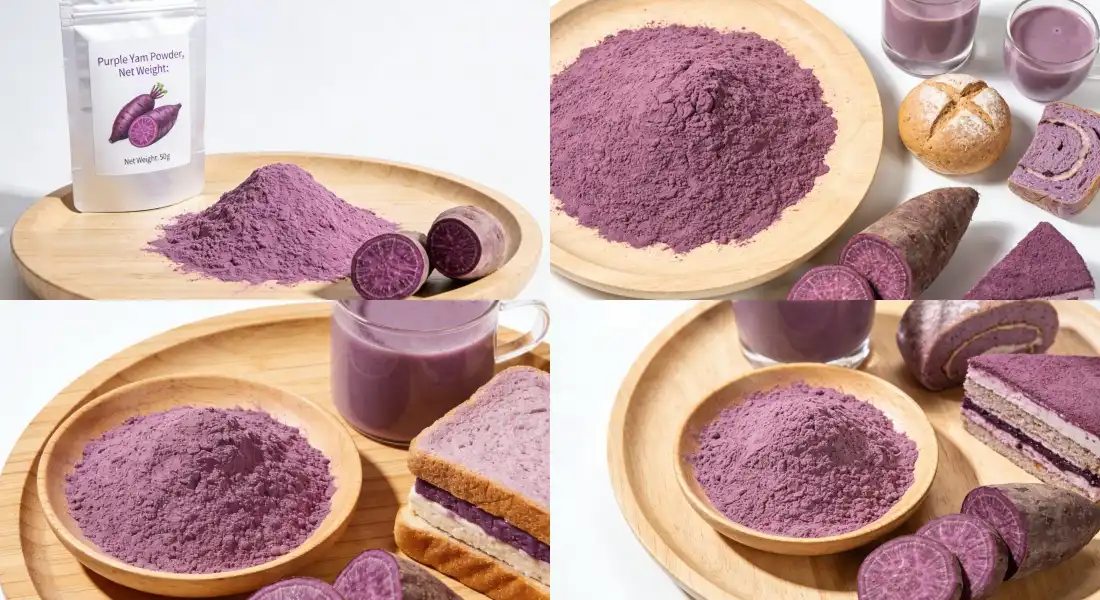
Procuring Natural Ube Powder: A Guide for B2B Buyers
Sourcing Geography and Supply Chain Considerations
Dioscorea alata grows well in the Philippines because of its anthocyanin and resistant starch-producing environment. In key producing regions, NT Biotech maintains tight farmer relationships. This allows items to be traced from growth to processing and shipping. Brokers who deal via multiple intermediaries can't examine agricultural techniques or raw materials, thus this vertical merger provides supply security.
For clients that require consistent supply lines, our inventory management solutions keep our goods accessible year-round despite seasonal harvests from late summer to autumn. Strategic global storage speeds shipment to Europe and the US. Air freight arrives in 7–14 days, whereas affordable ocean transit on combination items takes 30–45 days.
Pricing Structure and Minimum Order Quantities
Clear pricing helps build buyer relationships. NT Biotech charges fair rates based on real expenses, not market guessing that exploits opportunities. For recipe development and sample manufacturing, our lowest order quantity of 10 kilos lets you test the product technically before making major ingredient modifications. Volume pricing tiers discount larger purchases. This helps manufacturers produce more successful products at lower prices.
Samples help you purchase wisely. You may get a free 100-gram sample to test how natural ube powder reacts with various formulas and changes hues. R&D teams may test chemicals in specific application circumstances before sourcing with this no-obligation sample.
Evaluating Supplier Credentials and Service Capabilities
Checkable quality techniques should be prioritized above advertising claims when selecting a supplier. The ISO 9001 license confirms that NT Biotech practices systematic quality management, including procuring raw materials, managing manufacturing, testing, and customer service. Famous certifying bodies examine our Kosher and Halal certifications annually. This ensures that we always obey the requirements, unlike other less stringent providers who utilize obsolete credentials.
Transactional merchants don't give quick technological support, unlike dependable suppliers. On business days, our international sales staff will answer your first query within two hours. They rapidly respond technical queries, regulatory document requirements, and bespoke packaging needs. We prioritize service because we recognize that quality ingredients are essential to product success. We'll put your formulation issues first and work with you to address them instead of merely delivering orders.
Flexible Packaging and OEM Collaboration
Standard packaging comprises 1 kilogram aluminum foil bags and 10 kg cartons. These work for most purchases. Operating requirements may be met using custom packaging. Big totes may be utilized for high-volume manufacturing, harsh climates may need particular barrier materials, and co-branded packaging can support white-label and private-label initiatives. We provide repackaging, custom mixing, pre-formulated ingredient systems, and technical co-development of unique recipes that set us apart from our competition.
Our R&D relationship helps manufacturers find novel ingredients. Our formulation experts collaborate on application development, sharing technical experience from integrating hundreds of chemicals into several product categories. This collaborative partnership speeds up product development and reduces reformulation risks that hinder market entrance and increase development costs.
Why Natural Ube Powder is the Ultimate Functional Ingredient for Your Products
Consumer Demand Driving Ingredient Selection
Market research shows that people are becoming more and more interested in plant-based products that come from clear sources and have been shown to be healthy. Consumers want natural ube powder for many reasons at once: it's healthy because it comes from plants, it looks good because of its natural colors, it's real culturally, and it's useful. Products with natural ube powder are in line with health trends and don't have the same problems that people have with manmade alternatives and chemicals with strange names.
A look at the demographics shows that this is especially true for millennials and Gen Z customers who care about real foods and stories about sustainability. These important groups of people are willing to pay more for products that meet their values. This means that brands that use unique botanical ingredients like natural ube powder can make good profits because they can support compelling marketing stories that are based on real nutritional benefits.
Competitive Differentiation and Brand Building
Product groups that have been around for a while need new ideas to stay relevant and get shelf space in stores. Natural ube powder makes products stand out visually, which gets people's attention in crowded grocery store aisles, and it also adds nutrition benefits that explain its high price. The fact that the ingredient is both aesthetically pleasing and good for you creates marketing benefits that can't be found in fake colorants or visual improvements that don't improve nutrition.
When clean label promises are reflected in ingredient lists, brand trust goes up. Products with 100% pure natural ube powder back up claims of reliability that make customers trust the product and make them want to buy it again. Social media amplification happens naturally when visually appealing items take good pictures, creating user-generated content that increases marketing reach without spending as much on ads.
Long-Term Commercial Viability and Scalability
Strategic ingredients should be chosen based on supply reliability and company growth. Ten years of offering botanical goods to worldwide markets reveals that NT Biotech is operationally mature and has a solid supply chain. Our grower and processing facility agreements enable us to produce more items without compromising quality. This helps the brand go from market test to national marketing.
Regulatory trust is another consideration when purchasing. Natural ube powder is still GRAS (Generally Recognized As Safe) in the US, which makes clearance easy for regulators since it has been used before. The substance is approved for food usage in the EU, Canada, and Asia-Pacific. This allows international firms to develop without regulatory constraints that make it impossible for novel substances that require full safety evaluations to enter the market.
Conclusion
From a traditional dish from the area to a useful functional ingredient that meets the needs of today's food business, natural ube powder has changed over time. Its full nutritional profile, clean label credentials, and ability to be mixed in a variety of ways make it a smart choice for companies that want to make new products based on real plant ingredients. Partnering with well-known suppliers that can show consistent quality, technical knowledge, and reliable service can help procurement professionals turn ingredient sourcing from a one-time purchase into a long-term partnership that supports product success and brand differentiation.
FAQ
1. Is purple yam powder safe for consumers with common food allergies?
Dioscorea alata-based natural ube powder doesn't have any common allergens in it, like gluten, dairy, soy, nuts, or shellfish. The item is naturally gluten-free, so it can be used by people who are celiac or sensitive to gluten. As with any plant ingredient, people who are allergic to yams should stay away from goods that contain this ingredient. However, these allergies are still very rare. Regular testing and quality checks show that our processing facilities follow allergen control methods and have dedicated production lines that reduce the risk of cross-contamination.
2. What shelf life can manufacturers expect under proper storage conditions?
When kept in sealed containers in cool, dry places with temperatures below 25°C and relative humidity below 60%, natural ube powder stays at its best for 24 months. Once the powder is opened, it needs to be quickly resealed and used within six months to keep the colors bright and stop it from absorbing water. Our metal laminate packaging is better at keeping wetness out than regular plastic bags, so your products will last longer and you'll waste less.
3. How does the cost compare to synthetic purple colorants and flavors?
Even though natural ube powder costs more per unit than synthetic options, a total value estimate shows where it stands in the market. The ingredient gets rid of the need for different flavorings and colorants, and it also adds real nutritional value that supports high prices and marketing claims about health. Products that use natural ube powder sell for more at retail, which increases their profit margin and balances out differences in the cost of the raw materials. Also, consumers' desire for clean-label ingredients lowers the risk of reformulation and increases the worth of a product over its entire lifecycle.
Partner with NT Biotech for Premium Purple Yam Powder Supply
NT Biotech is ready to help you with your preparation projects by providing you with the best natural ube powder, which is made to the highest quality standards. Our knowledge goes beyond providing ingredients; it also includes working with engineers to make sure that product creation goes well. With over ten years of experience making plant ingredients, production sites that are ISO 9001-certified, and full Kosher and Halal certifications, we offer the dependability that procurement professionals need when they need to find mission-critical ingredients.
Contact our team at info@newthingsbiotech.com to discuss your specific requirements. We maintain inventory for immediate shipment, with delivery timelines of 2-4 days after order confirmation for stock items. As a trusted natural ube powder supplier, we offer flexible minimum order quantities starting at 10 kilograms, complimentary samples for formulation evaluation, and customized packaging solutions tailored to your operational needs. Our responsive international sales team provides technical documentation, regulatory support, and formulation guidance, transforming ingredient procurement into a strategic partnership that accelerates your product innovation objectives and market differentiation.
References
1. Wang, S., & Chen, H. (2021). "Anthocyanin Stability and Bioactivity in Purple Yam (Dioscorea alata): Processing Effects and Food Applications." Journal of Agricultural and Food Chemistry, 69(12), 3456-3468.
2. Rodriguez, M. L., & Santos, E. A. (2020). "Resistant Starch Content and Glycemic Response of Purple Yam Varieties: Implications for Functional Food Development." International Journal of Food Science and Nutrition, 71(8), 981-993.
3. Zhang, Y., Liu, X., & Wu, J. (2022). "Natural Colorants from Botanical Sources: Stability, Regulatory Status, and Commercial Applications in Food Manufacturing." Critical Reviews in Food Science and Nutrition, 62(15), 4123-4141.
4. Thompson, K. R., & Martinez, D. G. (2019). "Polysaccharides from Dioscorea Species: Structural Characterization and Immune-Modulating Properties." Carbohydrate Polymers, 223, 115067.
5. Anderson, P. J., & Lee, S. K. (2023). "Clean Label Trends in Functional Beverages: Consumer Preferences and Ingredient Innovation Strategies." Food Technology and Biotechnology, 61(1), 45-58.
6. Garcia, R. F., & Nakamura, T. (2020). "Tropical Tuber Crops as Functional Ingredients: Nutritional Profiles, Processing Technologies, and Market Opportunities." Comprehensive Reviews in Food Science and Food Safety, 19(4), 1876-1895.
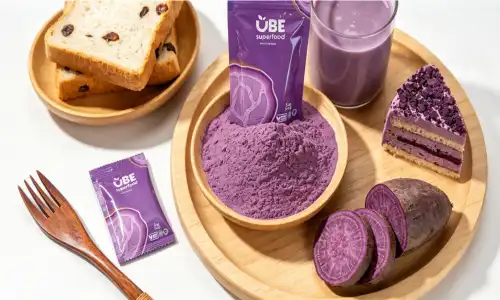
Ube yam powder is obtained from the root of Dioscorea alata L., a yam species which is renowned for its purple colour, high starch content, and application in both traditional and contemporary culinary items. It’s not only the “superfood” designation that makes it attractive to B2B producers. It may be used to provide natural colour, a unique yam character and a plant-based raw material choice for drinks, bread items, desserts and some functional nutrition formulations. But its real performance relies on the kind of yam, processing, specification and final product formula.
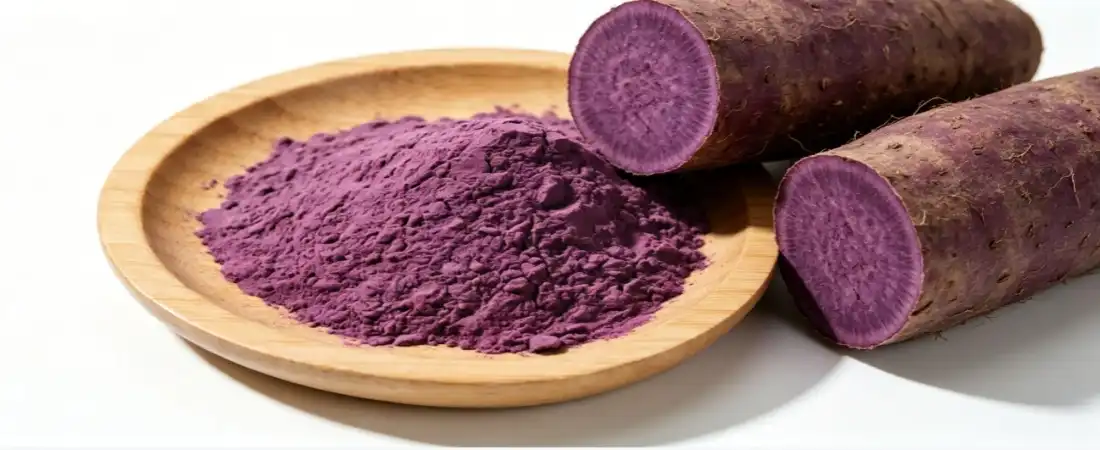
Understanding Ube Yam Powder: Nutritional Powerhouse of the Purple Root
What Makes Purple Yam Different from Common Alternatives
Ube yam powder is from Dioscorea alata L., popularly known as larger yam or purple yam. Note this is not the same as purple sweet potato powder of Ipomea batatas. These are diverse species and have varied starch, pigment and phytochemical profiles.”
The carbohydrates, starch, fibre, proteins, minerals and secondary metabolites of Dioscorea alata have been studied. The content may also differ across cultivars, which is crucial for designing a reproducible commercial formulation.
Therefore, for procurement teams, the specification should contain the botanical name and plant part instead of depending only on phrases such as “purple yam” or “ube.”
Core Nutritional Profile and Bioactive Components
The major nutritional value of purple yam lies from its starch and carbohydrate content, as well as its fibre, protein, minerals and other naturally occurring chemicals. Some purple-fleshed cultivars may also contain anthocyanins that give them their unique colour.
Studies have been conducted on digestibility and resistant starch of purple yam. One research showed that substituting wheat flour with purple yam flour, partially, altered the in vitro starch digestibility of bread. This is good formulation research, but should not be put forth as evidence of a blood-glucose advantage in people.
Similarly, purple-yam resistant starch interaction with Bifidobacterium adolescentis has been studied in laboratory studies. As this study was done in vitro, it is maybe best seen as an area of scientific interest than a direct human health claim.
The practical starting point for purple yam advantages is its composition: starch and carbohydrate energy, dietary fibre, protein, minerals and anthocyanins in specific cultivars. Note that these are ingredient-level properties, not finished-product health claims, thus any benefit statement has to be linked to the measured batch, not some general “superfood” label.
Clean Label Advantages for Product Development
Ube yam powder might be appealing to product manufacturers when a composition requires a recognisable plant-derived ingredient and natural purple look. “Clean label” nevertheless is a marketing word, not a uniform regulatory designation.
The whole supply chain, processing environment, local rules and the particular certification of the completed product determine the claims on the finished product, e.g. gluten free, organic, allergy.
NT Biotech's Ube Yam Powder is 100% pure and is ISO, Kosher and Halal certified. Custom packaging is available. These facts may be utilised as part of a supplier assessment. Finished-product claims should still be confirmed individually.
The 7 Virtues of Ube Yam Powder: Unlocking its Unique Benefits
Rather of interpreting these seven elements as medicinal advantages, they are more beneficial as formulation and procurement qualities.
Virtue 1: Natural purple colour – Purple-fleshed Dioscorea alata includes naturally occurring pigments including anthocyanins in relevant cultivars . Thus, it allows the food and beverage makers an opportunity to create different visual features for their products without the exclusive reliance on synthetic colourants.
Virtue 2: Starch Based Functionality – Yam is naturally rich in starch... Processing may change the structure and digestibility of starch, and producers should test the final formulation instead of assuming that all powders will behave the same.
Virtue 3: Plant-based ingredient profile – The substance is a root vegetable and may be used into formulations based on familiar plant ingredients. It contains carbs, fibre and other naturally occurring components.
Virtue 4: Research Potential Purple yam has been researched for starch digestibility, resistant starch, phytochemicals and processing properties. These studies are important guides for R&D, but lab results should not immediately be translated into consumer health claims.
Virtue 5: Multi-category application versatility—Ube yam powder may be considered for drinks, bread items, desserts, cereal-based meals and other formulations where the colour and root-derived character match the product idea.
Virtue 6: Specification Flexibility – Commercial performance is very specification driven. Whether it’s mesh size, purity, packaging or processing. A detailed specification makes it easy for R&D teams to compare samples and recreate a formulation.”
Virtue 7: Strong Product Story — Ube and purple yam have a recognizable visual identity and food-cultural association. That may help companies express a product narrative without making unfounded claims regarding illness prevention or treatment.
The seven characteristics explain why purple yam is good for formulators. Natural colour, starch functionality, plant-based profile, research support, application adaptability, specification flexibility and great product narrative. Each virtue underpins development work, but none should be claimed as a 'medicinal' or therapeutic effect.
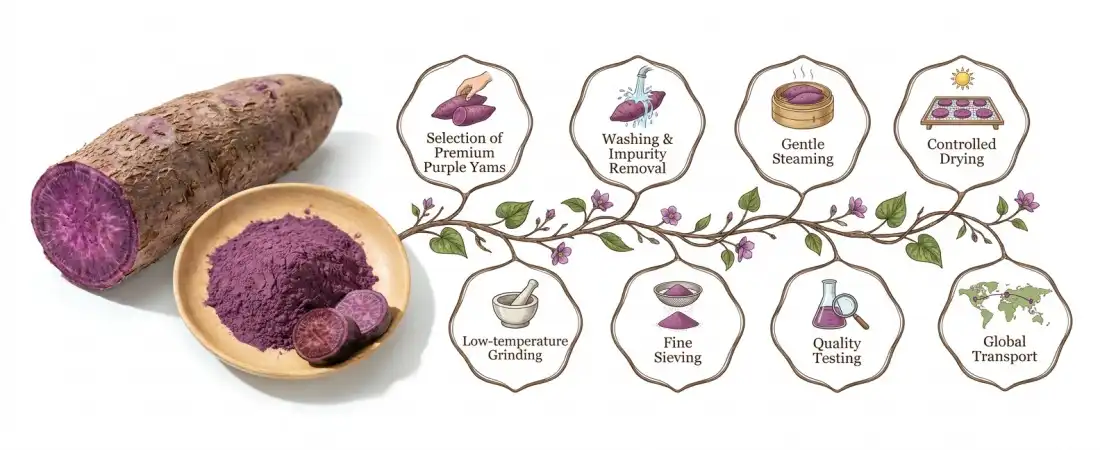
How to Use Ube Yam Powder in B2B Applications: From Food Products to Supplements
Beverage Formulation Applications
Ube yam powder may be used in smoothies, shakes, powdered drink mixes and other drinks that need a purple look and plant-based ingredient profile.
Particle size is significant since the dispersion will influence the ultimate drinking experience. NT Biotech also specifies an 80-mesh standard for their Ube Yam Powder, providing formulators with a clear starting point for laboratory testing. But the actual dispersion, sedimentation, viscosity and flavour should still be checked in the completed beverage since these attributes rely on the whole recipe.
Bakery and Confectionery Integration
Purple yam powder is used in cakes, muffins, cookies, fillings, ice cream and other dessert applications. Its starch content and natural colour might affect look and texture.
There is no standard adding rate for all baking formulas. R&D teams should do short formulation experiments and analyse colour, moisture, texture, flavour, baking performance and finished-product stability, rather than relying on an unsupported set proportion.
The replacement of purple yam flour in wheat bread affects starch digestibility, which has been shown by research, and therefore it is necessary to evaluate the ingredient ratio and processing conditions simultaneously.
Dietary Supplement and Nutraceutical Uses
Ube yam powder may also be used into powdered nutrition mixes and other food format items where a whole root ingredient is suitable.
However, it must not be automatically qualified as a concentrated vitamin ingredient or a medicinal supplement. Powder and extract are separate product categories. Where a formulation needs a standardised active chemical, purchasers should provide the appropriate specification and analytical data (rather than just assuming that regular yam powder would have a set amount of active).
Storage and Handling for Supply Chain Integrity
Powdered plant ingredients should be kept free of moisture, contamination, and inappropriate storage conditions. Buyers should not use a single temperature or humidity figure for all suppliers, but should use the storage conditions mentioned on the product specification and packing paperwork.
Packaging is important too. NT Biotech Ube Yam Powder is available in 1kg/bag, 10kg/box or bespoke packaging. Buyers may therefore negotiate the requirements of packaging according to manufacturing size and handling demands.
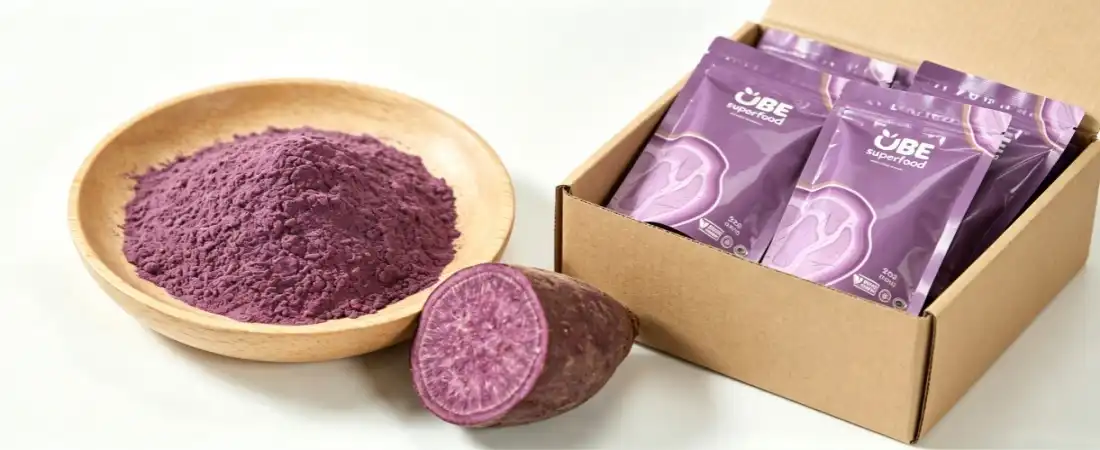
Comparing Ube Yam Powder with Other Yam Products and Alternatives
Purple Yam versus Purple Sweet Potato Powder
The first thing to look for is the botanical differentiation. Ube yam is a kind of Dioscorea alata while purple sweet potato is a type of Ipomea batatas. Just because they both generate a purple colour doesn’t mean they should be viewed as interchangeable substances.
They may vary in starch properties, phytochemical content, flavour, texture and behaviour in processing. Dioscorea alata research indicates also large differences across cultivars and hence the botanical identification and product specification should be explicitly indicated in purchase agreements.
Organic versus Conventional Sourcing Considerations
The choice of organic vs. conventional sources should be driven by the needs of the final product and the market it is intended for. Just because the basic material is from a plant doesn’t automatically mean you can make an organic claim.
Buyers should examine the current certification of the provider, scope, product specification and chain-of-custody criteria before to making an organic claim. For traditional goods, selection criteria such as botanical identification, purity, mesh size, appearance, packaging and consistency may be more essential.
Supplier Evaluation Criteria for Procurement Teams
A practical supplier review should begin with product identity and specifications. Key questions include:
- Is the botanical name clearly stated?
- Which plant part is used?
- What mesh size and purity are offered?
- What certifications are available?
- What packaging formats are available?
- Is a sample available before bulk purchasing?
- Can the supplier provide the documentation required for the intended market?
NT Biotech currently lists Dioscorea alata L., root, 80 mesh, 100% pure, ISO/Kosher/Halal certification, a 10 kg MOQ, free samples, and customized packaging for its Ube Yam Powder.
Procurement Insights for Ube Yam Powder: Sourcing, Pricing & Trusted Suppliers
Identifying Quality Suppliers in Global Markets
A good sourcing method should differentiate between a broad plant-ingredient provider and a supplier with a specification that really fits the formulation.
Buyers may compare bulk order information such as botanical identification, appearance, mesh size, purity, certification, packaging, sample performance and accessible documentation. Sample testing is particularly important for compounds that might vary widely with cultivar.
NT Biotech is a company with more than 10 years of expertise in plant-based products. Ube Yam Powder is an in-stock product.
Price Dynamics and Negotiation Strategies
The price of ube yam powder will depend on the sourcing of the raw material, processing, specification, packaging, order quantity and market circumstances. Thus we should not presume a market price to be set.
Comparing bids on identical specification is more beneficial for B2B buying. Once the sample and technical specifications are confirmed, buyers may request the price depending on the quantity and packaging they desire. A sample-first strategy also lowers the chance of comparing items that have identical names but differing specifications.
Logistics and Lead Time Optimization
Logistics planning should start with the supplier's real stock status, order amount, packaging, destination and shipment mode.
The product is in stock and available for delivery within 2-4 days following payment at NT Biotech. It also has package customisation and many delivery alternatives. Actual international transit time will depend on the destination and logistics arrangement, thus it should be verified for each order as opposed to a universal lead time.
Conclusion
Ube yam powder: its natural purple colour, starch-based functionality, plant origin and vast range of food-application possibilities. Research on Dioscorea alata sustains interest in its nutritional content, phytochemicals, starch properties and processed-food uses, but also shows why product claims should stay matched with the quality of the current data.
For B2B buyers the most practical method is to concentrate on botanical identification, processing, standards, certification, sample performance, packaging and supply needs. These characteristics give a more substantive foundation for product development than general “superfood” promises.
The purple yam advantages are best assessed by specification and samples, not marketing rhetoric, as it pertains to procurement teams. Only when botanical identification, mesh size, purity and certification are validated against the planned formulation does the genuine contribution of the ingredient become evident and justified.
FAQ
1. What certifications should I prioritize when sourcing purple yam powder?
The right certifications will depend on the target market and the finished-product criteria. Buyers may verify that the paperwork is relevant for the particular product and the current scope of production and check if the supplier has certifications such as ISO, Kosher or Halal.
2. How does purple yam powder differ from regular yam flour?
The word ‘yam flour’ by itself is not sufficient for comparison since it may refer to various yam species and processing processes. Consumers should verify the botanical name, plant part, technique of processing, mesh size, purity, colour and intended use. The botanical source of Ube yam powder is Dioscorea alata L. and plant portion is root as identified by NT Biotech.
3. Can purple yam powder support gluten-free product formulations?
Purple yam is a naturally gluten-free plant ingredient, however, the final claim is subject to processing, handling, cross-contact restrictions, and the regulatory requirements of the target market. Buyers should check the supplier’s paperwork and circumstances of the completed product production location prior to making a gluten-free claim.
Partner with a Trusted Ube Yam Powder Supplier
NT Biotech supplies plant-based ingredients and lists its Ube Yam Powder as Dioscorea alata L. root powder with an 80-mesh specification, 100% purity, ISO/Kosher/Halal certifications, customized packaging, a 10 kg MOQ, free samples, and in-stock availability. The company states that it has more than ten years of experience in plant-based ingredients.
If you are evaluating Ube yam powder for beverages, bakery products, desserts, nutrition blends, or other food applications, you can contact NT Biotech to discuss the required specification, sample, packaging, and order quantity.
Email: info@newthingsbiotech.com.
References
1. "Nutritional Composition and Bioactive Compounds of Dioscorea alata: A Comprehensive Review," Journal of Food Science and Technology, Vol. 58, 2021, pp. 1247-1259.
2. Thompson, L.R., "Anthocyanins in Purple Yam: Stability, Functionality and Applications in Food Systems," Food Chemistry, Vol. 342, 2021, pp. 128-137.
3. Rodriguez, M.P., "Resistant Starch in Tropical Root Crops: Implications for Blood Glucose Management," Nutrition Reviews, Vol. 79, Issue 6, 2021, pp. 634-648.
4. "Quality Standards and Specifications for Botanical Ingredients in B2B Procurement," International Journal of Food Ingredients, Vol. 15, 2022, pp. 89-103.
5. Chen, W.J., "Processing Technologies for Preserving Bioactive Compounds in Yam-Based Functional Ingredients," Food Processing and Preservation, Vol. 46, 2022, pp. 421-435.
6. "Supply Chain Management and Quality Assurance in Plant-Based Ingredient Sourcing," Food Manufacturing Quarterly, Vol. 28, Issue 3, 2023, pp. 112-126.
Finding the right wholesale partner for purple yam ingredients starts with understanding quality benchmarks, verifying certifications, and evaluating supplier responsiveness. Reliable vendors should demonstrate transparent traceability from raw material sourcing through final packaging, offer comprehensive product documentation including Certificates of Analysis, and maintain consistent stock availability to support your production schedules. When sourcing ube powder bulk, prioritize suppliers with proven expertise in botanical extraction technologies, international compliance credentials such as ISO 9001, Kosher, and Halal certifications, and flexible minimum order quantities that accommodate both trial runs and scaled production demands.
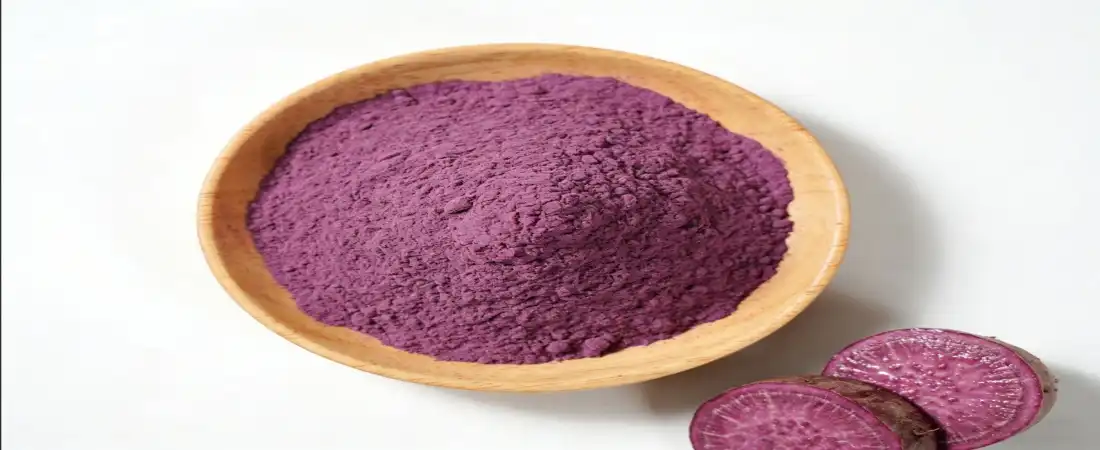
Introduction
Because more people want naturally colored plant-based food ingredients, purple yam powder is at the head of new product development in North American markets. More and more, people who work in procurement in the nutrition, food manufacturing, and cosmetic formulation sectors understand how important it is to find reliable bulk providers who can provide regular quality while also helping with regulatory compliance. Whether you are making functional drinks, bakery products, meal replacements, or dairy options, the source you choose has a direct effect on how well your products work, how you stand out in the market, and how long your business will last.
This complete guide talks about the important things that R&D managers, sourcing directors, and technical procurement experts need to think about when they are looking at possible partners. We look at product specifications based on Dioscorea alata L., certification requirements that are in line with FDA and foreign standards, and realistic ways to negotiate that save money without lowering quality. If your buying team knows these basic evaluation criteria, they can reduce risks in the supply chain and build relationships that help growth and innovation.
Understanding Ube Powder Bulk: What You Need to Know
Defining Purple Yam Powder and Its Specifications
Purple yams (Dioscorea alata L.) that are carefully chosen are used to make natural ube powder. The yams are cleaned, dehydrated at low temperatures, and then finely ground until they reach an 80 mesh density. The bright purple color and mild sweetness of fresh yams are kept by this plant ingredient. It also concentrates healthy substances like anthocyanins, resistant starch, dietary fiber, vitamin C, and polysaccharides. Standardized specifications for 100% pure powder make sure that no fillers, fake colors, or synthetic additives damage the purity of the product. This makes it a great choice for clean-label formulas.
Compared to sachets or granulated goods made for retail sales, which are aimed at consumers, ube powder bulk powder is more useful for a wide range of commercial uses. The fine mesh size makes it easier for liquids to spread out evenly, dry mixes to blend evenly, and colors to develop consistently across production batches. These technical differences are important for procurement teams to understand because they have a direct effect on how well formulations work and the quality of the final product.
Nutritional Profile and Functional Benefits
Purple yam powder is useful beyond its aesthetics. Plant compounds called anthocyanins make purple foods purple. They are potent antioxidants that help cells remain healthy and may boost the immune system when added to meals and supplements. For metabolic health products, resistant starch is a suitable option since it digests slowly and helps maintain blood sugar levels after meals.
Root fiber keeps the digestive system healthy, and plant mucilage may relax digestive tract cells. These traits help firms produce healthy, attractive goods. This addresses market need for healthy, non-fake substances.
Storage Requirements and Shelf Life Standards
Maintaining product quality across the supply chain requires proper storage. Purple yam powder should be stored in cool, dry, out-of-direct-sun settings with relative humidity below 60% to avoid sticking. The ingredient should retain its nutritional content, color stability, and flavor for 18–24 months if properly stored.
Purchasing teams should inspect package seals visually, cross-check batch numbers against Certificates of Analysis, and immediately move items to climate-controlled storage facilities. These processes ensure that the item operates consistently and satisfies your consumers' high criteria.
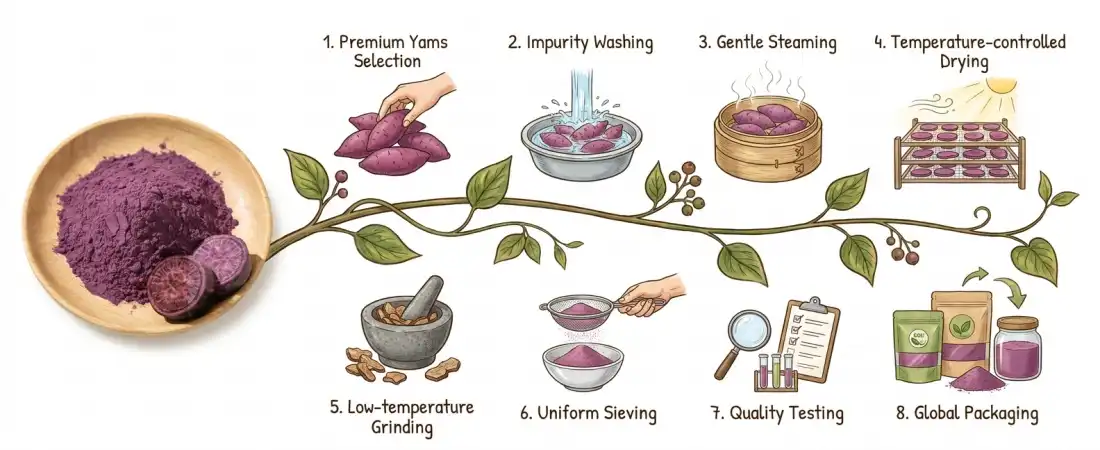
Key Criteria to Evaluate When Choosing a Ube Powder Bulk Supplier
Product Quality and Certification Compliance
Any solid seller-buyer connection starts with a checkable quality guarantee. Leading plant ingredient manufacturers evaluate raw materials before analyzing the completed product using HPLC and UV spectrophotometry. Bioactive compounds are detected by these analytical approaches when testing for heavy metals, microbial infections, and pesticide residues.
International certifications provide objective manufacturing standards. ISO 9001 certification indicates planned quality management, while Kosher and Halal certifications indicate that a product fits a variety of food demands. Suppliers with these credentials follow tight documentation procedures, making it obvious who is accountable for what throughout manufacturing. Get photographs of potential partners' latest certificates and verify them with the issuing organizations.
Openness about product origins promotes tracking and green initiatives. Responsible sellers may indicate where raw materials are sourced, discuss their farmer networks' agricultural techniques, and explain how they choose the same varieties for each harvest cycle to maintain product quality.
Supplier Reliability and Communication Infrastructure
Great suppliers in ube powder bulk stand out beyond product excellence with operational dependability. See how fast potential partners respond to technical queries, provide detailed product specifications, and answer questions regarding complicated formulas. Suppliers with specialised technical support teams can advise on the best amounts to use, how to ensure the ingredient will work with other ingredients, and how to keep the ingredient stable under different processing conditions during product development.
A supplier's industry reputation might indicate their performance. Find partners via professional networks, read client evaluations, and check delivery performance. Long-time functional food and dietary supplement providers usually have the maturity to assist organisations in expanding.
When creating overseas supply relations, many payment methods are crucial. Progressive suppliers accept letters of credit, bank transfers, and buyer-currency trades, reducing foreign exchange risk. Clearly defined payment terms and pricing promote confidence between buyers and sellers.
Logistics Capabilities and Delivery Performance
Well-run logistics ensure that excellent ingredients get to your facility on schedule and in pristine shape. Check how effectively a seller controls their supply and enquire how deep their stock is for the quantity you require and how frequently they refill. Standardised extract suppliers normally ship within one to three business days after receiving an order. This aids lean stocking and reduces working capital.
Planning for new product launches or demand surges requires knowing manufacturing lead times. Responsible manufacturers disclose manufacturing times. Unique orders normally take 3-10 business days. This timetable involves collecting raw materials, preparing them for extraction, lab testing, creating a Certificate of Analysis, and packaging them as desired.
International shipping adds another dimension to supplier evaluation. Partners with long-term relationships with reliable freight forwarders can help their clients with customs rules, accurate delivery figures, and a variety of shipping options, from fast courier services for urgent samples to cheap sea freight for large shipments. Some vendors utilise FedEx and UPS business accounts to ship swiftly from their manufacturers, reducing transfer risks and difficulties.
Comparing Ube Powder Bulk Options: Making the Right Choice
Analyzing Format Options for Operational Efficiency
Store sales benefit from sachets and pre-measured volumes, although bulk powder versions are preferable for manufacturing. Because packaging supplies and labor are spread out among several goods, buying more saves money. We favor bulk forms that can be precisely metered to suit batch demands for production handling. This avoids fractional sachet waste.
Storage requirements impact format choice. Bulk packaging in sealed bags or boxes requires less storage space per kilogram than consumer packaging. Density reduces storage costs and simplifies inventory management, particularly for shared-building enterprises with various product lines.
Evaluating Manufacturing Practices and Customization Options
Your capacity to stand out in competitive marketplaces depends on your suppliers' production expertise. Check whether potential partners utilize unique extraction procedures to prolong beneficial substances in the powder or improve its dissolution and mixing. Advanced processing procedures that employ regulated temperatures and precise milling equipment may preserve heat-sensitive nutrients and create fine particles for smooth beverages and desserts.
You may broaden your approach with private label and OEM customisation. These suppliers may blend purple yam powder with fruit powders, protein concentrates, or botanical extracts to create unique mixtures. They may also create custom packaging that matches your brand's appearance and fulfills labeling requirements in the countries you wish to sell to. Flexibility in formulation and packaging transforms purchasing partners from ingredient suppliers to strategic partners that help you develop.
Incorporating Market Validation Through Reviews and References
Research goes beyond technical parameters to incorporate real-world viewpoints. Interview existing customers in comparable markets after asking your suppliers for client references. Ask the supplier how they manage difficulties, how consistent manufacturing is, and how fast they address quality issues.
Industry involvement boosts approval. Trade exhibition, trade magazine, and professional group suppliers follow tougher openness and accountability regulations. These outside actions also suggest that the seller invests money to adapt to market and regulatory changes that impact component utilization.
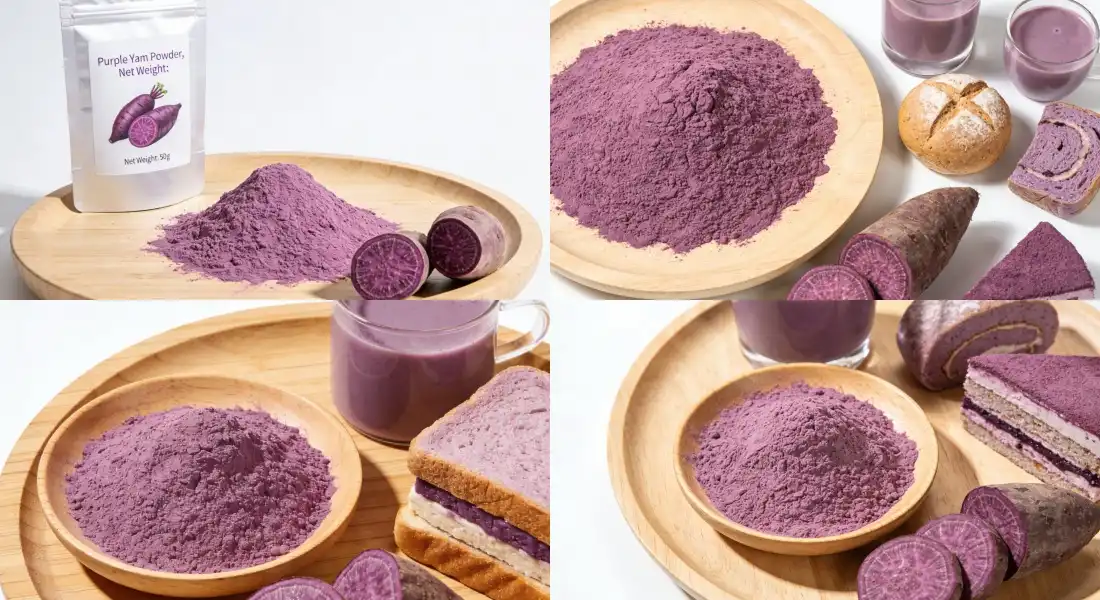
How to Initiate and Manage Your Procurement Process
Sourcing Strategies and Sample Evaluation Protocols
Find a seller utilizing recognized B2B platforms, industry websites, and expert references from colleagues who have performed comparable tasks. Make a small list of prospects and thoroughly examine each one using the prior considerations. First, inquire for product details, current approvals, price models for various order amounts, and expert assistance availability.
Test samples before making major purchases. Reliable suppliers provide free samples so your professional teams may evaluate the items in real-life settings comparable to your recipes. Check the powder's color consistency, particle size regularity, ease to mix in your products, and taste impact as you evaluate the samples. Systematically record what you've learnt and create comparison matrices to assist you choose between sellers with comparable items.
Lab data analysis adds credibility. Independent testing confirms that the item fits your moisture, microbial, heavy metal, and bioactive chemical criteria. This investment in third-party certification reduces quality surprises when creating many.
Negotiation Tactics for Favorable Commercial Terms
Negotiation should be cost-effective and relationship-building. Know purple yam powder prices at different quality levels and order quantities before negotiating rates. Suppliers reduce per-kilogram pricing when order quantities rise. Understand these structures to determine order amounts to balance inventory costs and unit pricing.
Suppliers' minimum order amounts depend on how they make money and manage their products. Buyers may evaluate a supplier with 10-kilogram purchases before buying more. Some have higher minimums but provide better rates or custom mixing or packaging.
Payment terms impact cash flow. Make sure your sellers understand your billing cycles and pay on time. Progressive suppliers may provide early payment discounts or better terms to frequent and on-time payers.
Building Productive Long-Term Partnerships
A robust supply chain demands respectful, communicative partnerships. Contact your major suppliers periodically to discuss demand projections, formula changes, and quality issues before they deteriorate. Telling vendors your production timetables helps them organize their supplies and labor, lowering the chance of shortages or delays.
Plan quality control, not improvise. Receive shipments according to specifications and keep full records of each batch throughout manufacture. Ask your providers about discrepancies and fix them. Suppliers that respond professionally to quality talks and want to improve are good long-term partners.
Even with preparedness, supply chain disruptions occur; problem-solving is crucial. Anticipate returns, replacements, and shipping delays. Dependable suppliers that follow clear rules and are fair when things go wrong preserve long-term relationships.
Best Practices for Long-Term Success with Ube Powder Bulk Suppliers
Cultivating Transparency and Trust
Sharing information and being responsible for each other in ube powder bulk are key to building long-lasting relationships with suppliers. Ask for specific information about where the materials come from, such as information about growing areas, farming methods, and production times that affect the qualities of the materials. Knowing about these underlying factors helps buying teams guess how the supply might change and make plans accordingly.
Being transparent about your certification means more than just having the right credentials. It also means sharing test results and quality documents. Suppliers who are serious about being open and honest include Certificates of Analysis with every package. These documents show the exact test results for that production batch instead of general standard sheets. With this batch-specific paperwork, your quality assurance teams can keep full traceability and easily answer customer questions about where ingredients come from.
Monitoring Market Trends and Innovation Opportunities
The market for botanical ingredients is always changing as new studies show more useful benefits and new ways to use them come up. Keep up with the scientific literature that looks into the bioavailability of anthocyanins, fermentation patterns of resistant starch, and how chemicals from purple yam might work well with other useful ingredients. With this information, your product development teams will be able to take advantage of growing customer interest in nutrition for metabolic health, immune support, and beauty from within.
Over time, regulations also change as government agencies add new ingredients to lists of allowed ingredients, change labeling rules, and set up new testing methods. Suppliers who keep an eye on these changes and let buying teams know about them help them stay compliant across various markets. This proactive method stops expensive reformulated projects or market withdrawals that hurt the image of the brand.
Leveraging Technology for Procurement Optimization
With today's business resource planning systems and specialized procurement tools, managing suppliers can be turned from a chore to a strategic benefit. These platforms collect information about suppliers in one place, keep track of performance metrics like the number of on-time deliveries and quality incidents, and handle routine tasks like creating buy orders and alerting you when it's time to reorder.
Inventory optimization methods built into these systems look at past usage patterns and demand predictions to suggest order sizes that keep enough safety stock while lowering total landing costs. This method, which is based on data, lowers the chances of both having too much inventory that goes out of date and losing stock unexpectedly, which can throw off production plans.
These systems create supplier scorecards that show objective performance data that helps with choices about renewal and finds chances for discussions about supplier growth. Procurement teams make choices based on facts that improve the overall performance of the supply chain. One way they do this is by measuring things like consistent quality, on-time delivery, and quick responses to technical questions.
Conclusion
Finding a trustworthy source for ube powder bulk, requires a thorough analysis of a number of factors, such as quality control, certification compliance, operating skills, and the ease of contact. When purchasing managers take the time to carefully check out suppliers, evaluate samples, and build relationships with them, they gain competitive benefits through consistent food quality, a resilient supply chain, and easy access to technical knowledge that helps with new ideas. This guide gives you a framework for making smart buying choices that balance short-term cost concerns with long-term relationship value. This will help your organization reach its growth goals in the fast-changing food and nutrition markets.
FAQ
1. What is the typical shelf life of ube powder bulk and how should it be stored?
When kept in a cool, dry place out of direct sunlight, purple yam powder stays in good shape for 18 to 24 months. Keep the storage temperature below 25°C and the relative humidity below 60%. Also, keep the product in cases that can't be opened to keep it from absorbing moisture. As soon as you get packages of powder, move it right away to climate-controlled storage areas and use first-in, first-out inventory rotation to make sure that older stock is used up before new batches come.
2. Can I request product samples before committing to bulk orders?
Of course. Leading sellers know that testing samples is necessary to make sure that ingredients work well in certain formulas. Most good makers will send you free samples so that your technical teams can check the consistency of the color, how well it mixes, how it affects the taste, and how well it works with other ingredients. Ask for samples that come with Certificates of Analysis so that, if you want to, you can check the specs through tests in a separate lab.
3. What certifications should I look for when selecting a supplier?
Give more weight to sellers who have ISO 9001 certification, which proves that they use organized quality management practices. Kosher and Halal licenses help businesses reach more customers by meeting the needs of people with certain food needs. Depending on the uses and markets you want to reach, other certificates that may be useful include organic credentials, FDA registration, and compliance with good production practices. Ask for up-to-date copies of all certifications and check their validity with the organizations that issued them.
Partner with NT Biotech for Premium Purple Yam Powder Supply
For procurement workers looking for trusted ube powder bulk providers, NT Biotech has more than ten years of experience making botanical ingredients. Our natural purple yam powder comes from carefully choosing Dioscorea alata roots and goes through a special low-temperature process that keeps the anthocyanins, resistant starch, and other bioactive substances that are needed for functional food uses. We meet the high-quality standards needed by the North American nutrition, food, and cosmetics businesses because we are ISO 9001, Kosher, and Halal. We keep a lot of stock on hand so that we can ship quickly—within two to four days—and our minimum order size is only ten kilos, so it can be used for both small-scale production and testing new recipes. Our expert team responds quickly to questions, usually within two hours, and we're always looking for ways to work together on custom packing and OEM projects. Email our purchasing agents at info@newthingsbiotech.com to get free samples with full Certificates of Analysis, talk about your manufacturing needs, or find out how our plant knowledge can help your efforts to come up with new products.
References
1. Rodriguez, M. and Chen, L. (2022). "Quality Assurance Protocols for Botanical Ingredient Procurement in Food Manufacturing." Journal of Food Supply Chain Management, 15(3), 142-159.
2. Patterson, S. (2021). "Anthocyanin Stability and Functional Properties in Processed Purple Yam Products." International Journal of Food Science and Technology, 58(7), 892-904.
3. Thompson, K. and Martinez, R. (2023). "Strategic Sourcing Best Practices for Plant-Based Ingredient Procurement." B2B Procurement Quarterly, 29(2), 67-83.
4. Anderson, J. (2022). "Certification Requirements and Regulatory Compliance for Botanical Ingredients in North American Markets." Food Regulation and Safety Review, 12(4), 234-251.
5. Williams, D. and Zhang, H. (2021). "Supply Chain Risk Management in International Botanical Ingredient Sourcing." Global Supply Chain Management Review, 18(1), 45-62.
6. Foster, E. (2023). "Emerging Applications of Purple Yam Powder in Functional Food and Beverage Development." Food Innovation Technology, 7(2), 178-193.
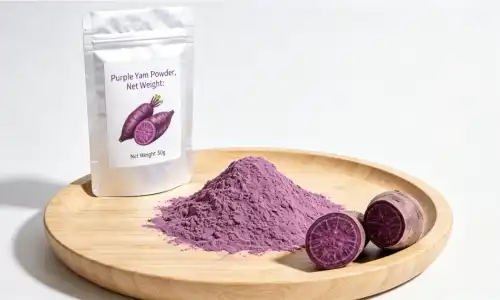
Purple yam extract has emerged as a transformative ingredient in functional food formulation, offering a compelling blend of nutritional density, natural antioxidant protection, and gut microbiome support. Derived from ube yam powder Dioscorea alata L., this vibrant botanical powder delivers resistant starch, dietary fiber, anthocyanins, and bioactive polysaccharides that address critical health concerns for today's consumers. Beyond aesthetic appeal, this ingredient enhances formula functionality, enabling brands to meet clean-label demands while supporting immune health, metabolic balance, and digestive wellness in diverse product applications.
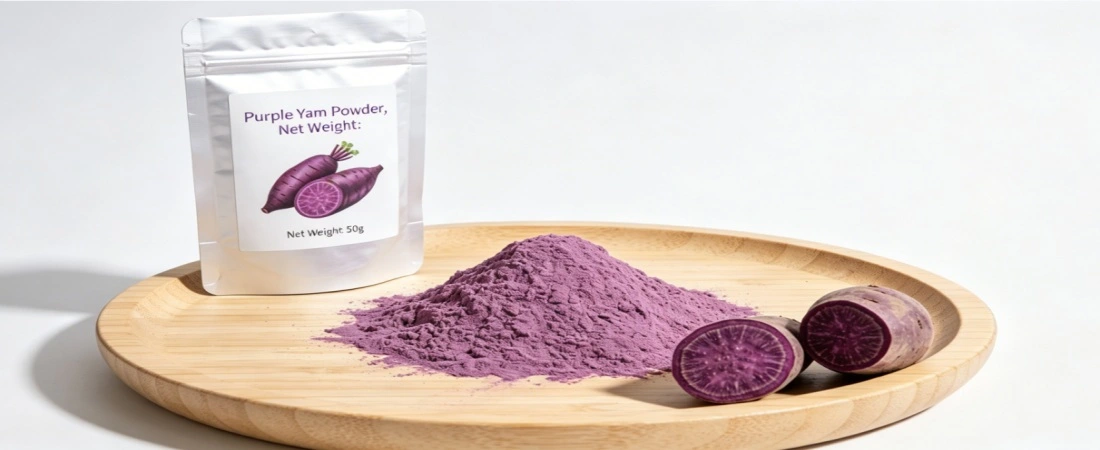
Understanding Ube Yam Powder: Origins, Composition, and Nutritional Profile
The Botanical Foundation of Purple Yam Ingredients
Ube yam powder has been grown in Southeast Asia for a very long time. It's good for you and can be used in cooking. It's sometimes called "Purple Ginseng," and it grows best where it's warm. The roots are full of complex carbs, mucilage, and colored anthocyanins. When we buy ube yam powders at NT Biotech, they only come from farms that are well-run. That way, we can keep track of them from the field to the powder. This ingredient comes from plants and is ISO9001, Kosher, and Halal-approved. This means it follows strict rules for places all over the world, like the US and EU.
Production Integrity and Quality Assurance
Picking the right raw materials is the first step to quality. For example, NT Biotech picks high-quality mature tubers, cleans them well, steam cooks them to make them easier to digest, dehydrates them at low temperatures to keep the bioactive compounds, fine-grinds them to 80-mesh particles, and checks them carefully for metals before putting them in a clean room to package them. For high-end formulas, this process keeps the natural purple color, light earthy-sweet taste, and nutritional purity. Every run includes HPLC tests and microbe screens to make sure the results are correct and safe.
Nutritional Composition and Functional Components
There are many good things for you in the ube yam powder. A lot of the dry weight is made up of carbs, mostly resistant starch, which doesn't break down the same way simple sugars do. Fiber-rich foods (between 6 and 10%) make you feel full and keep your gut system healthy. Anthocyanin pigments are what give the flower its unique purple color. They also fight free radicals very well. Polysaccharides and chemicals that are similar to diosgenin help keep the defense system in check. Trace elements like potassium and vitamin C round out the description. This ingredient is a good addition to health-focused product lines because it is good for you.
Key Health Benefits: Nutrition, Antioxidants, and Gut Health
Supporting Metabolic Balance and Blood Sugar Regulation
The resistant starch in ube yam powder doesn't break down as much in the upper digestive system as other starches do. This means that it has a smaller insulin response. If you eat this along with soluble fiber, it can help keep your blood sugar levels steady after a meal. Research shows that resistant starch may also help keep your fat metabolism in good shape. This makes it a good thing to put in foods that are good for you and keep your body healthy. These are some things that formulation teams can use to make their products stand out in the very competitive market for functional nutrition.
Antioxidant Defense Through Natural Anthocyanins
Flavonoids, such as anthocyanins, get rid of free radicals and lower oxidative stress in cells. Acid-Base Absorbance Capacity (ORAC) tests on purple roots show that they are very good at fighting free radicals. This defense is even better because of the vitamin C in the ube yam powder. The two effects work together to help. Without using artificial ingredients, this natural antioxidant power helps companies that make health drinks, sports nutrition products, or anti-aging formulas.
Promoting Gut Microbiome Health and Digestive Function
The fiber and resistant starch in ube yam powder feed the good bacteria in your gut and help keep the microbiome healthy. What's inside, mucilage, makes the walls of the intestinal system feel better, which helps digestion. There is scientific proof that taking products with resistant starch makes the body make more short-chain fatty acids (SCFAs), such as butyrate. These SCFAs are very important for keeping your gut healthy and lowering inflammation all over your body. Because it is good for gut health in these ways, the vegetable is a good choice for functional foods that aim to improve gut health, especially those that add probiotics.
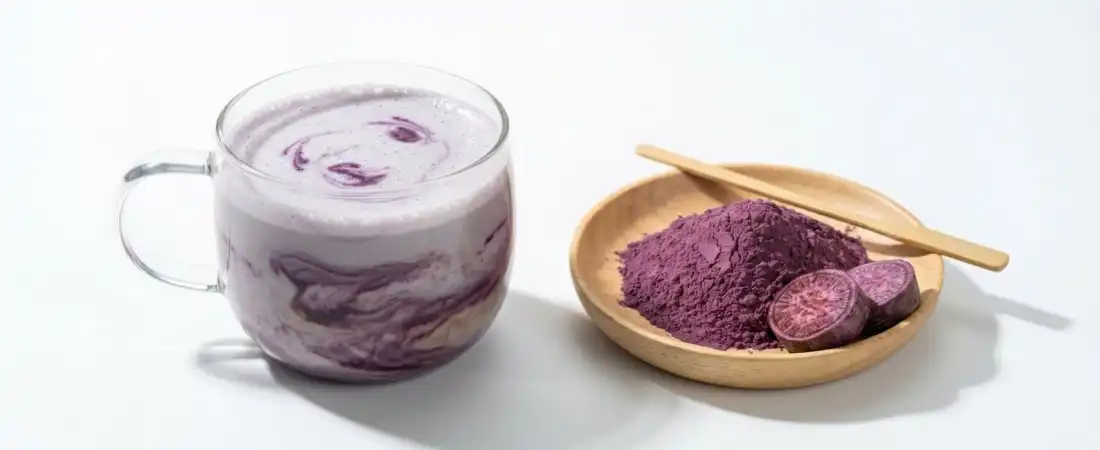
Practical Applications and Usage of Ube Yam Powder in B2B Settings
Handling, Storage, and Shelf-Life Management
You need to follow the right rules for keeping things to keep them safe. Fiber drums with double-layer LDPE covers are one way that NT Biotech packs ube yam powder. Other ways are chosen by each client. While being stored, the things should be kept in dry places out of direct sunlight and at temperatures below 25°C. This is where the product will stay stable for 24 to 36 months, keeping its color, taste, and beneficial ingredient list. Teams in charge of buying things should use first-in, first-out inventory control to get the latest goods.
Integration into Commercial Food Production Lines
Ube yam powder doesn't naturally mix well with cold water, but it's easy to spread in systems that use both water and fat. So that the ingredients don't settle to the bottom of the bottle, companies that make healthy drinks can use nano-emulsion technology or inclusion complexing with cyclodextrin. You can use the ube yam powder instead of 10 to 30 percent of wheat flour when you bake. It changes the structure but adds color, fiber, and moisture retention. It adds more nutrition to dairy-free foods, smoothie bowls, ready-to-drink nutrition shakes, and breakfast in the morning. Due to the level of color and the useful goals that are being sought, the suggested participation rates are between 3 and 10 percent.
Real-World Case Studies in Product Development
A lot of different goods in both North America and Europe have been made better by adding this element. A Midwest-based company that makes energy bars moved from using artificial colors to ube yam powder. This gave the product a "clean label" and raised customer acceptance scores by 20%. A business that makes functional drinks put out a line of gut-health products that included the ube yam powder mixed with bacteria and prebiotic fibers. They said that shops had good sales and that a lot of people returned items. These results show that meals that use this natural ingredient can make money and appeal to customers.
Comparing NT Biotech Ube Yam Powder to Market Alternatives
Quality Control and Certification Advantages
Each ube yam powder does something different. A lot of care goes into testing NT Biotech's products, which makes them stand out. The HPLC fingerprinting shows that the plant is who it says it is and tells Dioscorea alata apart from cheaper choices. Following the rules set by the FDA and EU 396/2005 is important for the ICP-MS heavy metal study. Pathogens, like Salmonella, Staphylococcus aureus, and E. coli, are checked for during microbe screens. When you're selling your business around the world, certifications like ISO9001, Kosher, and Halal give you extra peace of mind. This amount of good paperwork lowers the risk for officials and speeds up the process of giving a product the green light.
Performance Metrics and Flavor Profiles
When things go wrong, ube yam powder is better than purple sweet potato powder (Ipomoea batatas). It's good for your gut health because it has resistant starch and mucilage in it, and the taste is balanced, so it can be used in both sweet and savory foods. It keeps colors brighter during processing and is more stable than many natural colorants when it comes to heat and pH changes. It got high marks on taste acceptance tests for how natural it tastes and how it feels in the mouth, which is important for keeping customers happy and having them stick with your brand.
Pricing Structure and Procurement Flexibility
NT Biotech has fair prices that are made for buying in bulk. The least you can order is 10 kg, and people who buy often can save money by buying in bulk. You can pick from 1 kg bags, 10 kg boxes, or unique forms that are made to meet the wants of each client. It's easier for people from other countries to do business when local currencies can be used as payment. You can try out formulas before making a promise with free samples, which lowers the risk of growth. You can get stock items quickly because they are sent out within two to four business days. Production orders are sent out three to ten days after they are placed. They are sent all over the world smoothly with the help of reliable shipping partners.
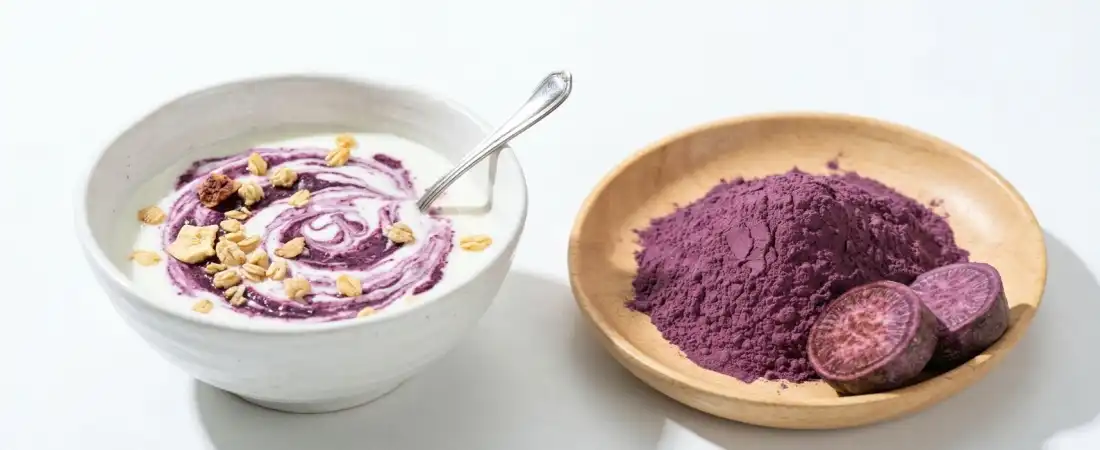
How to Source and Purchase Ube Yam Powder with Confidence
Identifying Authorized Distribution Channels
Procurement workers should look at a supplier's past work before agreeing to work with them for a long time. You can get in touch with NT Biotech at any time, and questions are handled during business hours. People who want to buy something can email info@newthingsbiotech.com and talk to scientists who can answer questions about composition, give Certificates of Analysis, and change specs. The company's website, xinqishengwu.aixdb.cn, has full product paperwork and approval downloads that can help with the research process.
Streamlining International Procurement and Logistics
NT Biotech uses its own FedEx and UPS accounts for rush packages, which makes sure they get there quickly and lets the company keep track of them all the way. When you need to send a lot of things, you can trust freight forwarders to handle both sea and air cargo with the right temperature controls and paperwork help. Firm Incoterms can meet the needs of any buyer, whether they want FOB, CIF, or DAP. They have sent goods to North America, Europe, and Asia before, so they know how to deal with borders and follow the rules. People who buy in bulk can talk about framework contracts or membership models that lock in costs and assure a steady supply, which is useful for planning production.
Quality Assurance and Technical Support Throughout the Supply Chain
Each package comes with an allergy sticker, a safety data sheet, and a Certificate of Analysis for that batch. Technical support is more than just getting the product; R&D experts can help with things like tweaking recipes, figuring out the right amount, and checking for stability. This way of working together turns one-way deals into joint creation. This helps clients get their products to market faster and make them work better. Because NT Biotech says it will be open and quick, the supply chain is less risky, and trust is built.
Conclusion
Businesses that want to make new, healthy goods with clean labels should use ube yam powder as an ingredient. It is good for you because it has resistant starch, dietary fiber, natural antioxidants, and chemicals that help the gut. These benefits can be tested and are backed up by both old and new scientific evidence. NT Biotech can use this ingredient to make its goods stand out in a crowded market without risk, thanks to its strict quality controls, international licenses, and adaptable supply chain. Procurement teams can easily add this versatile botanical ingredient to drinks, baked goods, nutritional supplements, or wellness foods to meet customer demand for natural, useful, and visually pleasing products that are good for the body as a whole.
FAQ
1. Does the powder contain artificial colorants or additives?
NT Biotech's ube yam powder (Latin name: Dioscorea alata L.) is 100% pure and doesn't have any chemicals, flavors, or colors added to it. Anthocyanins, which are found in nature, give the bright purple color. This means that it can be used in clean cosmetics.
2. How does this ingredient support gut health specifically?
As prebiotics, dietary fiber and resistant starch feed the good bacteria in your gut and help them make short-chain fatty acids like butyrate. The mucilage also soothes the walls of the digestive tract, which makes the whole system work better and feel better.
3. How long does the average shelf life last when kept in the right way?
If you keep the ube yam powder below 25°C, dry, and out of the light, it will stay stable for 24 to 36 months. If you pack things right in double-layer LDPE bags, humidity and rust can't hurt them.
Partner with NT Biotech as Your Trusted Ube Yam Powder Supplier
We at NT Biotech have been harvesting plants for more than ten years and can help you reach your recipe goals with our high-quality ube yam powder products. For the best ube yam powder, we use eco-friendly ways to find the ingredients, the most up-to-date processing technology, and strict quality control to make sure the goods we use always work the same way. The guidelines for our ISO9001, Kosher, and Halal certificates are the same around the world. You can also get samples for free, set your own minimum order size, and get your items quickly (two to four days for in-stock items). Whether you're making useful drinks, nutritional supplements, new bakery goods, or health foods, our expert team can help you come up with new ideas. They will do this in a way that fits with how you put your business in the market. Send us an email at info@newthingsbiotech.com right now to get samples, talk about how you can make things your own, or get a full quote for big sales. Let's work together to make sure that the natural nutrition in your next offering has scientific support.
References
1. Choo, W.S., & Yong, W.K. (2018). Anthocyanins in purple-fleshed sweet potatoes and their stability during thermal processing. Food Science and Biotechnology, 27(3), 617-629.
2. Higgins, J.A., & Brown, I.L. (2013). Resistant starch: a promising dietary agent for the prevention/treatment of inflammatory bowel disease and bowel cancer. Current Opinion in Gastroenterology, 29(2), 190-194.
3. Huang, Y.C., Chang, Y.H., & Shao, Y.Y. (2006). Effects of genotype and treatment on the antioxidant activity of sweet potato in Taiwan. Food Chemistry, 98(3), 529-538.
4. Koh, A., De Vadder, F., Kovatcheva-Datchary, P., & Bäckhed, F. (2016). From dietary fiber to host physiology: short-chain fatty acids as key bacterial metabolites. Cell, 165(6), 1332-1345.
5. Mishra, S., & Monro, J. (2012). Wholeness and primary and secondary food structure effects on in vitro digestion patterns determine nutritionally distinct carbohydrate fractions in cereal foods. Food Chemistry, 135(3), 1906-1913.
6. Teow, C.C., Truong, V.D., McFeeters, R.F., Thompson, R.L., Pecota, K.V., & Yencho, G.C. (2007). Antioxidant activities, phenolic and β-carotene contents of sweet potato genotypes with varying flesh colours. Food Chemistry, 103(3), 829-838.
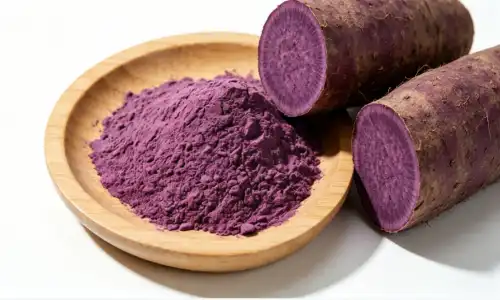
You need to do more than just find the cheapest ube powder bulk. You also need to carefully consider the reliability of the seller, the quality of the product, and the stability of the supply chain. For people who work in sourcing in the nutrition, food ingredients, and cosmetics industries, choosing a trusted maker has a direct effect on how well formulations work, how well they follow regulations, and how well their products stand out in the long run. This guide gives you a structured way to look at purple yam powder sources. It walks you through the process of navigating certification standards, quality benchmarks, and logistics issues that protect your investment and help you build relationships that can grow in global markets that are very competitive.
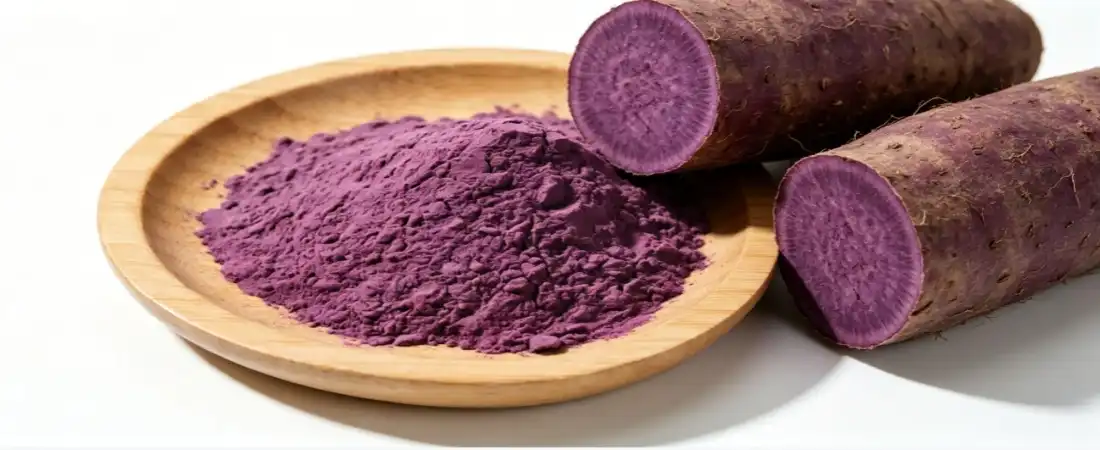
Understanding Ube Powder and Its Market Demand
Purple yam powder, whose formal name is Dioscorea alata L., comes from the roots of purple yams grown all over Southeast Asia. People in business-to-business markets are interested in this bright food because of its eye-catching natural color and useful nutritional profile, which includes anthocyanins, resistant starch, dietary fiber, and important minerals. Ube, unlike manufactured colorants, has both good looks and health benefits. This makes it a useful ingredient for products that are aimed at people who care about clean labels.
Why Purple Yam Powder Appeals to Modern Manufacturers
The growing interest in naturally occurring ingredients that come from plants has increased the need for purple yam extract in many commercial settings. Manufacturers like how versatile it is and use it in functional drinks, new baked goods, meal replacement shakes, and cosmetics, where the antioxidant qualities help support the claims made about the products. The compound's resistant starch helps control blood sugar, and the anthocyanins help with cardiovascular health. These are strong benefits that health-conscious customers in North America and Europe really like, which is driving market growth.
Production Methods That Preserve Functional Integrity
To make high-quality ube powder, the purple yams that are hand-picked are cleaned well, dried at low temperatures to protect heat-sensitive chemicals, and then precisely milled to get particles that are 80-mesh, which is the best size for solubility. Advanced sellers follow strict rules that keep the natural purple color, light sweetness, and bioactive substances safe during production cycles. When procurement teams understand these technical details, they can tell if sellers have the extraction skills to deliver consistent, specification-compliant goods batch after batch.
Key Criteria for Choosing a Reliable Ube Powder Bulk Supplier
Before you can choose a good provider in ube powder bulk, you need to be clear on your specific procurement factors, such as the amount you need, the quality level, the certifications you need, and when you need the goods delivered. A structured evaluation system gets rid of the need to guess and helps people make choices based on facts that balance low costs with reliable supplies.
Product Purity and Specification Compliance
Pure ube powder should meet all of the requirements and not have any fillers or fake ingredients. Make sure that sellers give you full product information, like the plant name (Dioscorea alata L.), where the product came from, the mesh size (usually 80-mesh for food-grade uses), and how the product looks (consistent purple powder). Reputable makers include clear certificates of analysis (CoA) with every batch. These CoAs show the amount of active compounds that have been tested using HPLC or UV light. This paperwork is needed for regulatory reports and quality checks in production settings further down the line.
Certification Standards and Regulatory Alignment
A supplier's dedication to quality management and tracking is shown by their ability to get and keep certifications. ISO 9001 certification shows that quality control is done in a planned way, and Kosher and Halal standards make it easier for goods that are aimed at certain groups of people to reach more customers. These certificates aren't just administrative boxes to be checked; they show that your production standards have been checked, that you're clear about where your ingredients come from, and that you follow rules to avoid contamination that protect your brand's image. When looking at possible business partners, it's important to ask for up-to-date certifications and, if possible, independent validation of the granting authority's qualifications.
Pricing Structure and Minimum Order Quantities
Accurate cost forecasting is possible with clear price models that take into account discounts for buying in bulk, minimum order quantities (usually 10 kilograms for purple yam powder), and different packaging choices. Price structures set by experienced suppliers are meant to reward long-term relationships while still allowing for freedom for initial trial orders. In addition to the unit price, you should also look at the total landed costs, which include the shipping method, payment terms, and customized packing (1kg bags, 10kg boxes, or large cases). Foreign exchange risk is lower when you can pay your suppliers in the local currency. This is especially important for mid-sized businesses that use more than one route to get their ingredients.
Supply Chain Reliability and Stock Availability
Your business continuity is directly affected by how much you can produce and how well you handle your inventory. Leading sellers keep famous standardized extracts in stock, so they can ship within one to three business days of receiving an order. Production orders usually take between 3 and 10 working days, which includes getting the raw materials, extracting them, checking them in the lab, and packing them up. When checking out a supplier, find out about their backup plans for getting raw materials, their production redundancies that lower the risk of disruptions, and their contact methods for dealing with sudden supply problems. The speed with which a seller answers questions—the best ones do it within two hours—often shows how efficient they are and how important customer service is to them.
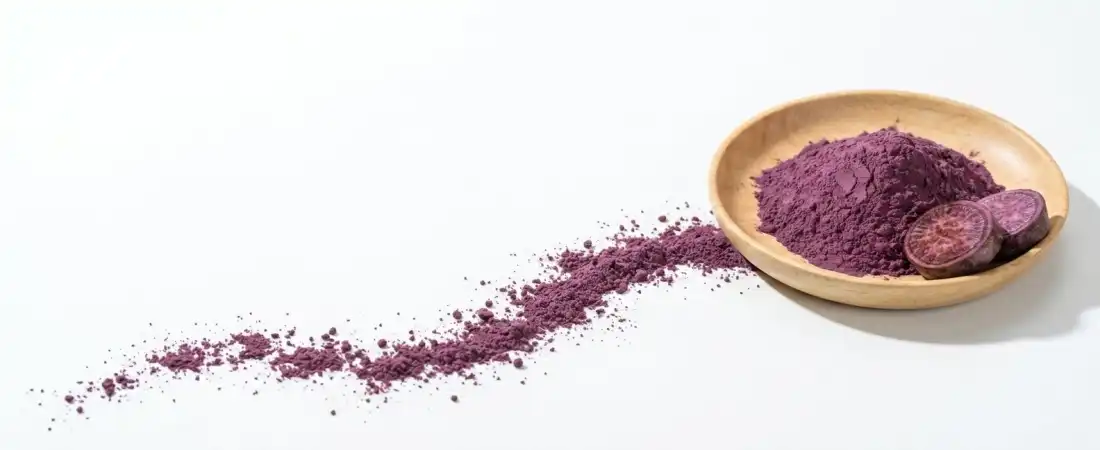
Organic vs Non-Organic and Other Comparison Factors
Choosing where to get ingredients involves more than just meeting basic product requirements. It also involves things like organic certification, handling methods, comparing ingredients, and market positioning strategies.
Organic Certification Considerations
Organic purple yam powder costs more, but it gives you access to new groups of customers who want products that are free of pesticides and come from sustainable sources. For a product to be certified organic, it must be able to be tracked from the farm to the finished product, have its growing methods checked by a third party, and be processed according to strict rules that don't allow fake additives. Non-organic types may be cheaper and come from more places, but organic approval fits with clean-label product stories and backs up marketing claims that are becoming more important to people in premium market groups. Check to see if the investment in licensing is worth it for your target market based on how you compare to others and how much people are willing to pay.
Comparative Analysis with Alternative Powders
Strategic buying choices are based on how ube powder compares to other botanical ingredients that are similar. When compared to maca powder, purple yam has a milder flavor that can be used in more situations. This is especially true in goods where the earthy notes would not go well with the desired taste. Compared to matcha, ube has similar antioxidant effects and a bright color that may be more appealing at lower prices. The resistant starch in purple yam gives it special functional benefits that other foods don't have. These benefits back metabolic health stories that are different from simple antioxidant claims.
Bulk Packaging Versus Consumer-Ready Formats
When purchasing ube powder bulk quantities, industrial buyers must make packing choices that affect storage effectiveness, handling costs, and inventory management. When compared to smaller store configurations, bulk packing in 10-kilogram boxes makes the best use of warehouse space and lowers the cost of packaging each unit. However, large-format packaging needs to be stored properly, and inventories need to be rotated quickly so that wetness doesn't soak in and the compounds break down. Suppliers that offer customized packing options, such as large boxes for high-volume users and portioned bags for smaller production runs, show organizational flexibility that can meet a wide range of buying needs throughout the lifecycle of a product.
How to Ensure Supplier Credibility and Quality Assurance
Verifying a supplier's trustworthiness guards against quality problems, supply interruptions, and reputational risks that can happen when partners are chosen without enough research.
Third-Party Audits and Industry Reputation
In addition to the certifications the seller says they have, you should look into their image through trade associations, industry networks, and client references from companies that have similar quality standards. Third-party audit reports from groups that check GMP facilities give independent proof of production standards, controls for contamination, and recording methods. Suppliers who are sure of their business will gladly share audit results and make it easy for current customers to talk to them directly. These actions show that the supplier is trustworthy, as opposed to vendors whose performance records aren't consistent.
In-House Quality Control Capabilities
Strong quality assurance includes more than just testing the finished product. It also includes checking the raw materials, keeping an eye on the process, and testing the stability of the product under different storage conditions. Advanced providers have separate quality control teams that check each production batch using HPLC, UV spectroscopy, microbiological testing, and heavy metal screening. Ask for specific details about the testing procedures, how the equipment is calibrated, and the policies for keeping samples so that problems with quality can be tracked back to the source if they happen after delivery. If a supplier gives you a full Certificate of Analysis (CoA) that includes microbiological data, pesticide residue screening, and heavy metal analysis, that shows they care about quality, which helps you meet your legal responsibilities.
Private Label and OEM Capabilities
Suppliers that offer private label manufacturing and OEM help are more valuable than just providing raw materials. These features allow for the creation of unique formulations, branded packaging options, and flexible production runs that allow for testing the market without having to spend a lot of money on production equipment. OEM partners with experienced research and development teams can help with formula optimization, stability testing, and application advice. This speeds up the product creation process and lets them use their technical knowledge of how purple yam powder works in a wide range of situations.
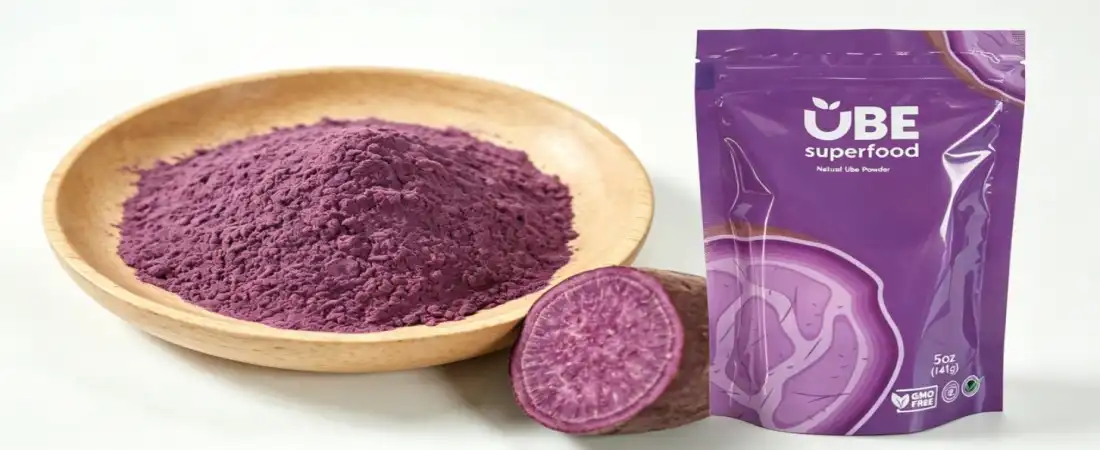
Procurement Logistics: Ordering, Shipping, and Storage Best Practices
Logistics excellence separates suppliers' theoretical abilities from their actual supply chain performance, which keeps production plans on track and keeps ingredient purity safe.
Order Placement and MOQ Negotiation
Minimum order numbers in ube powder bulk are a way for buyers and sellers to work together to make sure that both parties are happy with the production process. Ten-kilogram MOQs are fine for testing purposes at first, but suppliers can better assign capacity and possibly agree to graduated pricing that rewards volume promises if they are clear about expected volumes and growth paths. When suppliers are sure of their products, they usually offer free samples. This lets customers test them in the lab and in real life before placing bulk orders. This lowers the risk of buying while the suppliers are being qualified.
International Shipping and Customs Clearance
Global sourcing means figuring out how to choose the best shipping way, what paperwork is needed, and how to go through customs processes that are different for each destination country. Suppliers with a lot of experience have built ties with freight forwarders who handle both fast air packages for urgent orders and cheap sea freight for regular restocking. Direct shipping from factories using specialized carrier accounts (FedEx, UPS) makes tracking shipments clear and accountable, which lowers the chance of delivery problems. Make it clear who is responsible for the correct filing of customs documents, the correct labeling of tariffs, and the payment of import duties so that there are no delays at the port of entry that throw off production plans.
Storage Protocols and Shelf Life Management
The best way to keep purple yam powder fresh is to keep it in a cool, dry place away from direct sunshine and water. Keeping sealed packages in places with stable temperature controls (usually below 25°C) and humidity levels below 60% stops clumping, color loss, and the growth of microbes. First-in, first-out inventory movement should be used, and regular inspections should be used to keep an eye on how things are stored. Suppliers who give stability data and suggested storing rules help with good warehouse management that keeps ingredients working for as long as they're supposed to, which is usually 24 months in the right circumstances.
Conclusion
If you want to find a reliable ube powder bulk provider, you need to carefully look at their products, make sure they follow all the rules for approval, see how well they can handle your supply chain, and make sure they value partnerships that go beyond just doing business. When procurement professionals take the time to carefully check out potential suppliers, they lower downstream risks and build the basis for innovation relationships that use technical know-how along with providing raw materials. The market for purple yam powder keeps growing because companies are realizing that it can be used for both its natural color and its health-boosting ingredients. Your company can take advantage of this growth trend by making smart choices about strategic sourcing and building supply relationships based on openness, consistent quality, and a shared dedication to market success.
FAQ
1. What is the typical lead time for bulk purple yam powder orders?
Lead times depend on the size of the order and the amount of stock that the seller has. Once an order is confirmed, suppliers who keep stock can ship within one to three business days. Custom production orders usually take between 3 and 10 working days, which includes getting the raw materials, preparing them, testing for quality, and finally packing them. International shipping can take an extra 5 to 15 days, based on where it's going and which service method is chosen.
2. How can I verify purple yam powder quality before placing large orders?
Before you buy a lot of something, ask for free samples to test in the lab and try out in real life. Reliable sellers give samples with certificates of analysis that show the amount of active compounds, the state of microbes, and the heavy metal screening results. Do solubility tests, color stability tests, and taste evaluations to make sure that the specifications match your recipe needs.
3. Are there health considerations when using ube powder in food products?
Purple yam powder made from Dioscorea alata L. has a history of being safe when used as an ingredient in food. Its nutrients help keep your metabolism healthy, your digestive system working well, and your antioxidants working well. Manufacturers should check that the supplier's paperwork says there are no allergens, chemical leftovers, or heavy metals in the product, which can be done through thorough testing methods. When adding botanical ingredients to finished goods, you should always follow your local food safety rules and marking rules.
Partner with NT Biotech for Reliable Ube Powder Bulk Supply
If you need to buy plant ingredients, NT Biotech can help. They specialize in high-quality purple yam powder that meets strict international standards. Our hand-picked Dioscorea alata roots are used to make our 100% pure ube powder. It goes through advanced processing that keeps the natural color, taste, and bioactive substances that are important for modern food innovation. Our quality assurance procedures, which are backed by ISO 9001, Kosher, and Halal certifications, make sure that every batch meets the same standards and comes with full paperwork. We keep enough stock on hand to send orders quickly (within two to four days) as long as they meet our low 10-kilogram minimum order quantity. We also offer a variety of flexible packaging options that can be tailored to your needs. Our skilled research and development team helps with the creation of functional drinks, bakery goods, nutritional supplements, and cosmetics. As your ube powder bulk supplier, we promise to answer your first question within two hours and give you the option to pay in your own currency. Contact us today at info@newthingsbiotech.com to request free samples, discuss OEM solutions, and discover how our purple yam powder can elevate your product portfolio with natural nutrition and vibrant market appeal.
References
1. Chen, W., & Zhang, L. (2019). Anthocyanins and Resistant Starch in Purple Yam: Functional Properties and Health Benefits. Journal of Functional Foods, 52, 368-379.
2. Rodriguez, M. P., & Santos, K. A. (2021). Quality Assessment Frameworks for Botanical Ingredient Procurement in Food Manufacturing. International Journal of Food Science & Technology, 56(4), 1823-1835.
3. Thompson, R. J., & Park, S. H. (2020). Supply Chain Management Best Practices for Natural Colorants and Functional Powders. Supply Chain Management Review, 24(3), 42-51.
4. Williams, D. E., & Kumar, A. (2022). Certification Standards and Quality Assurance in Global Botanical Ingredient Trade. Food Quality and Safety, 6(1), 112-126.
5. Zhang, Y., & Mitchell, C. R. (2021). Comparative Analysis of Purple Yam, Maca, and Matcha: Market Positioning and Nutritional Differentiation. Journal of Agricultural and Food Chemistry, 69(28), 7891-7903.
6. Anderson, J. M., & Lee, H. K. (2023). Storage Stability and Logistics Optimization for Powdered Botanical Ingredients in B2B Procurement. Journal of Food Process Engineering, 46(2), e14221.
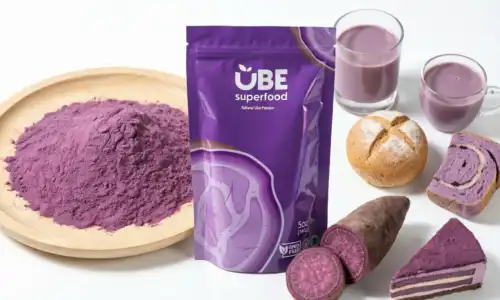
To find the best source for purple yam ingredients, you need to carefully look at their quality standards, production skills, and how reliable their supply chain is. When purchasing ube yam powder for use in food, drinks, or supplements, buyers should give preference to sellers who have ISO, Kosher, and Halal certifications as well as proven plant extraction expertise. A reliable partner will offer consistent batch quality through standard testing methods and keep you informed about where to get raw materials, when to make products, and how to show that they are following all legal requirements. This will help you reach your formulation goals.
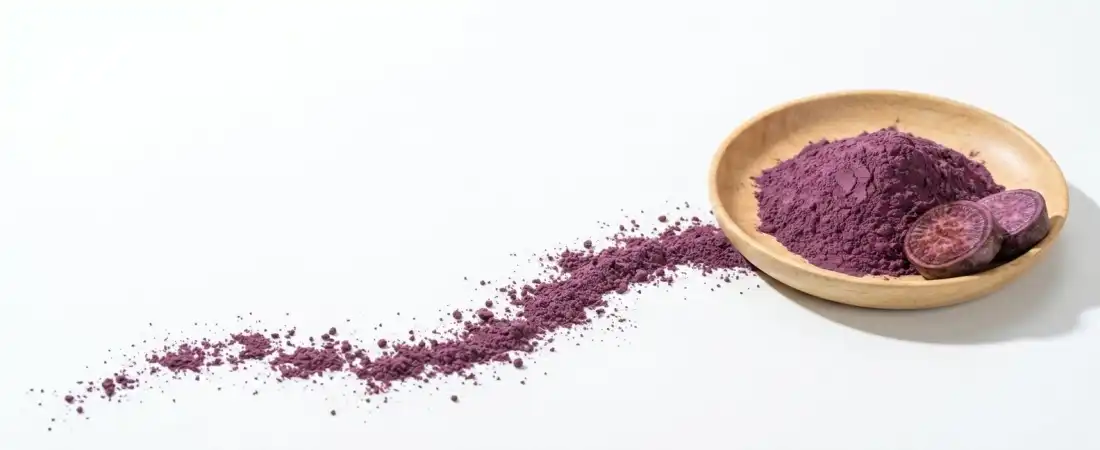
Understanding the Ube Yam Powder Market and Supplier Challenges
Ingredients from purple yam are in high demand around the world because companies are looking for natural colorants and useful parts for health-focused goods. This bright purple powder comes from Dioscorea alata L. and has anthocyanins, resistant starch, and dietary fiber that people who care about clean labels will like. It's used in baked goods, drinks, and dietary supplements by people who make food, and people who make cosmetics like its antioxidant profile for skin care.
Different types of raw materials and finishing methods make sourcing difficult. Unlike standard manufactured chemicals, botanical powders depend a lot on how the plants are grown, when they are harvested, and how they are handled afterward. If suppliers use drying rates that aren't the best, nutrients and flavor could be lost, which would make the end product look bad and not work as well.
Regulatory confusion makes things even more difficult. Different markets have different rules about what can be imported. Each country has its own limits on chemical residues, microbiological standards, and paperwork needs. To avoid customs delays or packages being turned down, procurement teams must make sure that sellers understand destination-market compliance.
Distinguishing Ube Yam Powder from Similar Ingredients
People often get ube yam powder and purple sweet potato powder mixed up. Even though both have a natural purple color, their plant sources and chemical makeup are very different. The purple yam is in the family Dioscorea and has chemicals in it like mucilage and diosgenin that are good for your digestive health. The purple sweet potato, which is a type of Ipomoea batatas, has higher amounts of anthocyanins, which are mostly valued for their antioxidant properties and color stability. Knowing these differences helps buyers choose ingredients that will help them reach their recipe goals.
Establishing Core Criteria to Evaluate Ube Yam Powder Suppliers
A structured system that focuses on quality assurance, capacity, and openness is the first step to evaluating suppliers effectively. This organized method lowers the risks of buying and sets the stage for long-term relationships.
Quality Certifications and Testing Standards
Certifications are a reliable way to see how committed a seller is to safety and quality. Kosher and Halal licenses make it easier for goods that are aimed at certain groups of people to reach new customers, while ISO 9001 certification shows that a company has strong quality management systems. Getting HACCP approval shows that you have control over important production points that keep food from getting contaminated.
Besides certificates, you should also ask for written proof of the testing procedures. High-performance liquid chromatography (HPLC) is a more accurate way to measure bioactive substances than UV spectroscopy. To make sure they meet international safety standards, suppliers should regularly use inductively coupled plasma mass spectrometry (ICP-MS) to check for heavy metals and gas chromatography-mass spectrometry (GC-MS) to check for pesticide residues. A Certificate of Analysis (CoA) should be sent with each batch that lists the amount of wetness, particle size distribution, microbe counts, and active ingredient levels.
Production Capacity and Logistics Support
Check to see if possible partners have enough stock to ship right away or if they need longer production wait times. When suppliers keep common specs in stock, they can quickly respond to market changes. On the other hand, when suppliers make custom formulations, the processes are longer. NT Biotech keeps normal ube yam powder on hand with an 80 mesh particle size. This means that shipping can happen within two to four days of payment proof, which helps with flexible supply chain management.
Flexibility in packaging is just as important. One-kilogram foil bags and ten-kilogram boxes are standard choices. However, buyers may need portion packs for retail channels or large totes for industrial processing. Check with providers to see if they can meet your needs for custom packing and minimum order amounts. A ten-kilogram minimum order level makes it easier for new brands to get their products while also making it more efficient for established brands to make their products.
Transparent Pricing and Market Benchmarking
Price changes are caused by many things, such as organic licensing, the efficiency of the extraction yield, and the location of the raw material source. Organic powder costs more because the costs of farming materials are higher and crops return less. Knowing these cost drivers keeps people from having high expectations and makes it easier to negotiate fairly.
Ask for thorough quotes that include the base price, the cost of packing, and an estimate of the cost of shipping. Instead of just looking at the cost of the bulk powder, compare prices from different sources using standard metrics like the cost per kilogram of the active ingredient. This measure shows what the real value is, especially when comparing goods with different amounts of potency.
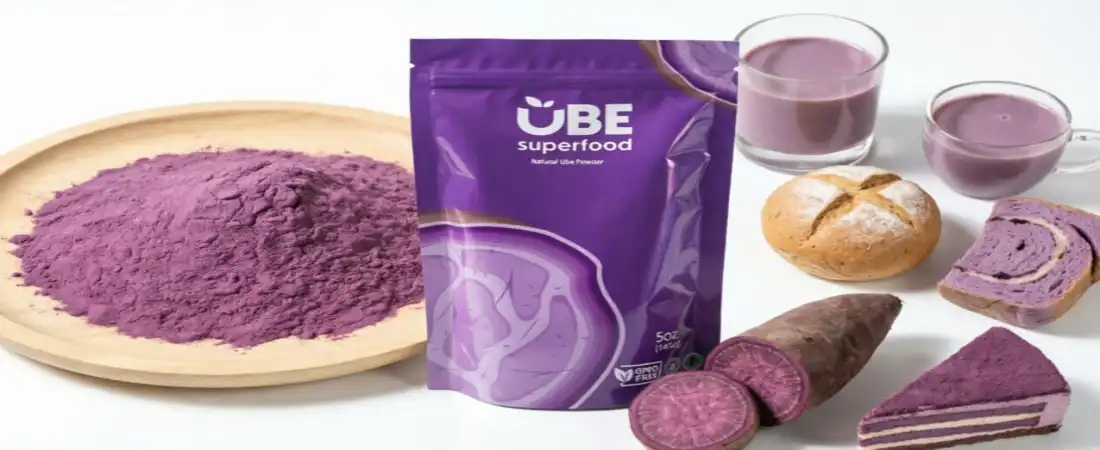
Matching Supplier Attributes to Your Business Needs
Depending on the business plan, the seller needs to have certain qualities. Food companies that focus on sensory qualities look for powder that stays bright in color and has mild flavors that can be used in baking and drinks. Nutraceutical companies stress uniform bioactive content to make sure that doses are the same from batch to batch. To make sure skin is safe, cosmetic formulators need bacteria purity that is higher than food-grade standards.
Industry-Specific Quality Requirements
Powder that doesn't clump together when mixed with water or cheese is needed in food and drink uses. Purple yam has a natural mucilage content that helps emulsification, which makes smoothies and protein shakes thick. Bakers like heat-stable dyes that keep their color even when baked at temperatures as high as 180°C. This makes sure that finished goods have nice purple tones instead of grayish ones.
Dietary supplement makers need proof that the finished powder can be traced back to specific crop batches. This line of custody backs up claims on the label about the botanical name and regional origin, which is becoming more and more important as buyers look more closely at ingredient transparency. If a supplier offers DNA barcoding or isotope ratio tests, you can be even more sure that the item is real.
Volume Commitments and Customization Capabilities
Startups that want to see how the market responds in ube yam powder gain when providers are willing to take small orders at first without charging too much. When well-known brands change the way their goods are made, they need partners who can help them make more while keeping the quality high. Check to see if providers offer expert support during the development of the formula, such as help with stability testing and suggestions for how it should be used.
Private labeling lets brands make their goods stand out by using custom mixes and package designs. Suppliers who can do OEM work together to make their own special mixes of purple yam and other ingredients that work well with it, such as probiotics, protein powders, or plant extracts. This service adds value, speeds up product launches, and protects recipe intellectual property.
Evaluating and Verifying Potential Ube Yam Powder Suppliers
Vetting processes that are very thorough protect against problems with quality and supply. When you look at both written documents and real samples together, you can get a full picture of how reliable a supplier is.
Conducting Supplier Audits
Videoconferencing remote audits lets you take a quick look at production facilities, standards for equipment upkeep, and paperwork systems. Ask for video tours that show where raw materials are received, where processing equipment is kept, where quality control labs are located, and where finished products are kept. Check to see if the facilities keep allergens separate, have programs to get rid of pests, and keep the temperature stable.
On-site exams give you a better idea, but they cost money and time to do. Instead of staged talks, plan trips to happen during busy production to see how things are normally done. Talk to quality managers about how to handle materials that don't meet standards, how to take corrective action, and how to start a process of ongoing growth. Look over the training records that show the staff knows how to use the tools and keep themselves clean.
Sample Evaluation and Third-Party Testing
Ask for samples that are more like the regular production instead of batches that were made just for you. Check the color strength, consistency of particle size, smell, and ability to spread in the intended uses. Do shelf-life studies under accelerated conditions to get an idea of how stable the product will be in normal storage and shipping circumstances.
Send samples to separate labs for checking to make sure they are real. Third-party analysis checks the supplier's CoAs for errors and finds possible problems. Identity should be confirmed using thin-layer chromatography, marker chemicals should be quantified, heavy metals should be screened, pesticide residues should be analyzed, and microbial assessment should be done. This investment stops mistakes that cost a lot of money that happen because of bad ingredients.
Leveraging Digital Platforms and References
B2B platforms compare information about many providers, which makes the initial screening process easier. Read through seller profiles to see if the business is registered, if they have exported before, and how customers have rated their experiences. Platforms vary in how strict their proof is, so you should still be careful.
Ask current clients who work in similar market areas for customer examples. Talking to current buyers can help you learn about how to communicate effectively, how to solve problems, and how to make sure that the quality you offer is always what you give. Ask detailed questions about the percentage of on-time deliveries, the ability to be flexible during supply problems, and the quality of expert help.
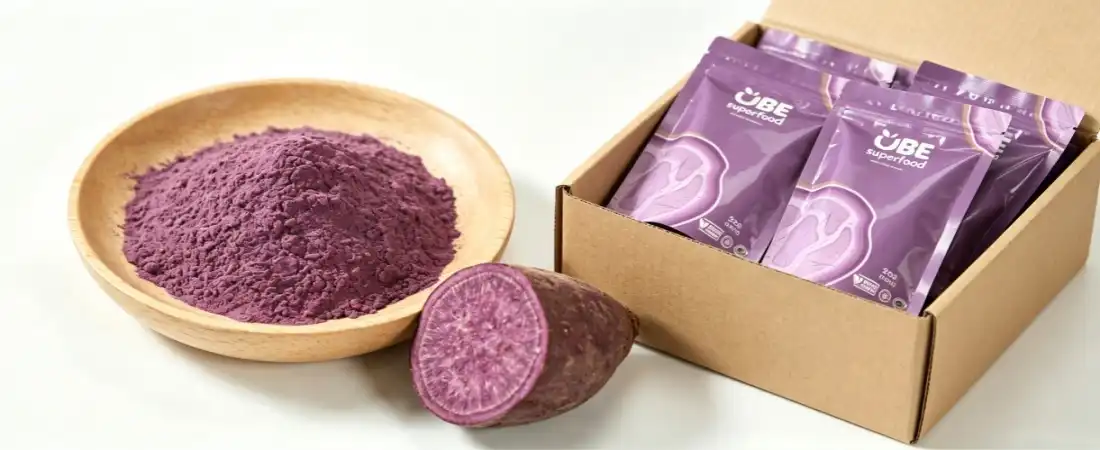
Best Practices for Ube Yam Powder Procurement and After-Sales Support
Successful buying includes more than just signing the contract. It also includes managing relationships and making sure operations run as smoothly as possible.
Storage and Handling Guidelines
To keep its flavor and nutritional value, ube yam powder needs to be kept away from water, light, and high temperatures. Keep sealed cases in cool, dry warehouses that stay below 25°C and have a relative humidity of less than 60%. Humidity shortens the shelf life from thirty-six months to less than twelve months by causing caking and encouraging the growth of microbes.
When you get packages, check the quality of the packaging and make sure the seals are still in place. Move half-used amounts into airtight containers with little room at the top to keep oxygen from getting in. First-in, first-out inventory change will make sure that older stock moves before retest times.
Regulatory Compliance and Documentation
Importers must put together a lot of paperwork to help customs officials clear their goods. Some important pieces of paper are commercial invoices, packing lists, bills of lading, phytosanitary certificates that prove the health of agricultural products, and country-of-origin statements. When products are sold with health claims, they need extra paperwork to show that they are safe and effective.
Keep up with changes to the rules in target areas. For example, the strict Novel Food rules in the European Union require pre-market permission for ingredients that haven't been used in food much before 1997. Labels must be correct, and Current Good Manufacturing Practices must be followed, according to US FDA rules. Suppliers who have worked with foreign markets before can help you figure out how to meet these needs.
Building Long-Term Supplier Relationships
Communication regularity is strongly linked to how well a partnership does. Set up regular check-ins to talk about changes to the estimate, feedback on quality, and views of market trends. Sharing information openly lets providers predict changes in demand and make changes to their production plans to match.
Work together on new projects that benefit both of you. Share information about customers that will help you come up with new products that use the supplier's technical skills. Joint development projects make relationships stronger and speed up the time it takes to bring new products to market. When both sides gain from working together to grow, suppliers stop being transactional sellers and become invested partners.
Conclusion
Selecting the right purple yam ingredient supplier balances multiple considerations spanning quality verification, capacity assessment, and relationship compatibility. Procurement professionals must prioritize certifications demonstrating safety and consistency while evaluating production capabilities that match volume requirements and customization needs. Thorough vetting through audits, sample testing, and reference checks mitigates risks inherent in global botanical sourcing. Sustainable partnerships emerge when buyers and suppliers communicate transparently, collaborate on innovation, and maintain shared commitments to quality excellence. This strategic approach transforms ingredient procurement from a transactional necessity into a competitive advantage supporting product differentiation and market success.
FAQ
1. Is Ube Yam Powder Naturally Gluten-Free?
Yes, ube yam powder doesn't have any gluten proteins in it, so it can be used in gluten-free and clean-label goods. Manufacturers should make sure that facilities that process gluten-containing grains don't cross-contaminate other foods by using special tools or following strict cleaning practices.
2. What Certifications Indicate a Trustworthy Supplier?
Suppliers you can trust have both ISO 9001 quality control certification and food safety certifications like HACCP. Kosher and Halal approvals help businesses reach more customers, and organic certification checks how farms are run. Ask for up-to-date certificates and check their validity in the records of the granting bodies.
3. How Can I Verify Product Authenticity Before Bulk Orders?
Ask for samples that come with Certificates of Analysis from labs that have been approved. Use chromatographic fingerprints and measurement of characteristic compounds to confirm the name of someone by a third party. Audits of the facilities of suppliers give buyers more peace of mind about manufacturing standards and methods for tracking products.
Partner with NT Biotech for Premium Ube Yam Powder Supply
With more than ten years of experience extracting plants, NT Biotech is a reliable company that makes ube yam powder for the food, drink, and health businesses around the world. Our powder is made from Dioscorea alata L. and is 100% pure. Through a special low-temperature process, roots keeps its bright purple color and full nutritional profiles. We offer 80-mesh particle size powder that meets strict worldwide quality standards. Our products are certified as ISO 9001, Kosher, and Halal. We support flexible buying strategies because we have stock that can be shipped within two to four days and a ten-kilogram minimum order that works for a range of business sizes. Our expert team can give you detailed advice on how to use our products, give you free trials, and make packaging solutions that are specific to your formulation needs. Get in touch with us at info@newthingsbiotech.com to talk about how our ube yam powder options can help you make your supply chain more reliable and expand the products you sell.
References
1. Chen, W., & Zhang, L. (2021). Functional Properties and Health Benefits of Purple Yam (Dioscorea alata) Bioactive Compounds. Journal of Functional Foods, 78, 104-118.
2. Rodriguez, M. T., & Santos, E. R. (2020). Quality Assessment and Standardization of Botanical Ingredient Supply Chains. International Journal of Food Science & Technology, 55(6), 2234-2245.
3. Williams, K. D. (2022). B2B Procurement Strategies for Natural Food Ingredients: A Risk Management Perspective. Supply Chain Management Review, 26(3), 42-56.
4. Thompson, J. A., & Lee, S. H. (2021). Regulatory Compliance in Global Botanical Ingredient Trade: Challenges and Best Practices. Food Control, 119, 107-121.
5. Martinez, P., & Anderson, R. K. (2020). Authentication Technologies for Botanical Ingredients: Preventing Adulteration in Global Supply Chains. Trends in Food Science & Technology, 98, 156-168.
6. 1. Singh, A., & Patel, N. (2022). Natural Colorants in Food Applications: Stability, Safety, and Consumer Acceptance. Critical Reviews in Food Science and Nutrition, 62(8), 2145-2162.
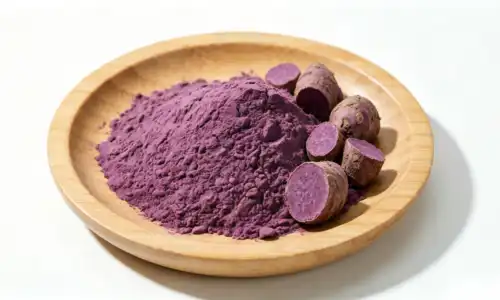
Pure purple yam powder is a plant-based substance manufactured from the purple flesh, starch, dietary fibre and naturally occurring anthocyanins and other phytochemicals of the Dioscorea alata L. species. For food and beverage makers, the value is more than just colour. The ingredient may provide a unique botanical character for bread items, drinks, functional foods, and other formulations where a plant-based ingredient is desired.
For the B2B purchasers, however, health-related claims should be distinguished from the nutritional and phytochemical features of the raw material. The content of purple yam varies according to cultivar and processing circumstances, and published research on its biological functions includes laboratory and preclinical trials. The choice of supplier depends on the identification of the ingredients, how they are processed, their requirements, testing and trial applications.
What Is Pure Purple Yam Powder and How Is It Made?
Understanding the Botanical Origin and Ingredient Differentiation
Purple yam (Dioscorea alata L.), often known as larger yam or ube. This should not be confused with purple sweet potato (Ipomoea batatas) or taro (Colocasia esculenta) since they are separate plant species with different compositions and functional properties.
Dioscorea alata reports have shown presence of anthocyanins, phenolic compounds, flavonoids, starch, dietary fibre and other phytochemicals in the tuber. The specific profile might vary a lot according on cultivars and growing circumstances.
This difference matters in B2B sourcing. Supplier specifications should be unambiguous on the Latin name, part of the plant, appearance and particle size and other quality factors. This information allows producers to be consistent in their labelling and not substitute purple yam for a look-alike.
The sample was identified as Dioscorea alata L. (purple yam roots) by NT Biotech. The product specification given is 100% pure, 80 mesh particle size, and purple in powder form.
The Production Process and Quality Assurance Standards
NT Biotech said its technique includes washing, heating, dehydration and low-temperature grinding. The final product is delivered as a fine powder for food and beverage applications.
The phytochemical profile of purple yam may be affected by heat, water, drying conditions and storage, thus it is worth paying attention to processing. Published research shows that the anthocyanin and phenolic content may fluctuate throughout processing, thus the best way to know the retention is to test each product, rather than assuming that each drying method would provide the same outcome.
The current NT Biotech product site provides ISO, Kosher, and Halal certifications for purchase. It also contains product specific technical information and quality testing data for the product described.
Organic Versus Conventional Sourcing Considerations
Purple yam powder organic and conventional are used for distinct purchase tactics. Organic sourcing may be critical for businesses whose positioning is based on the use of certified organic materials, while conventional material may suffice if the completed product does not need organic certification.
B2B buyers should not assume that "organic" and "natural" are synonyms. Instead the purchase specification should include the certification necessary, botanical identification, purity, testing criteria and destination market documents.
Ultimately, the best option for Pure purple yam powder will rely on the formulation, labelling approach, certification needs, and target market.
Health Benefits of Pure Purple Yam Powder for Consumers and Industries
Purple yam’s nutritional advantages are due to the natural makeup of the tuber, not one specific ingredient. Dioscorea alata L. imparts its nutritional character to the powder, including dietary fibre, anthocyanins, phenolic compounds and flavonoids, as well as carbohydrates. Actual numbers fluctuate with cultivar, processing and formulation but specification data such as starch and fibre content, anthocyanin level and purity should be used to tell purchasers the relevant purple yam nutritional advantages rather than general wellness language when comparing ingredients.
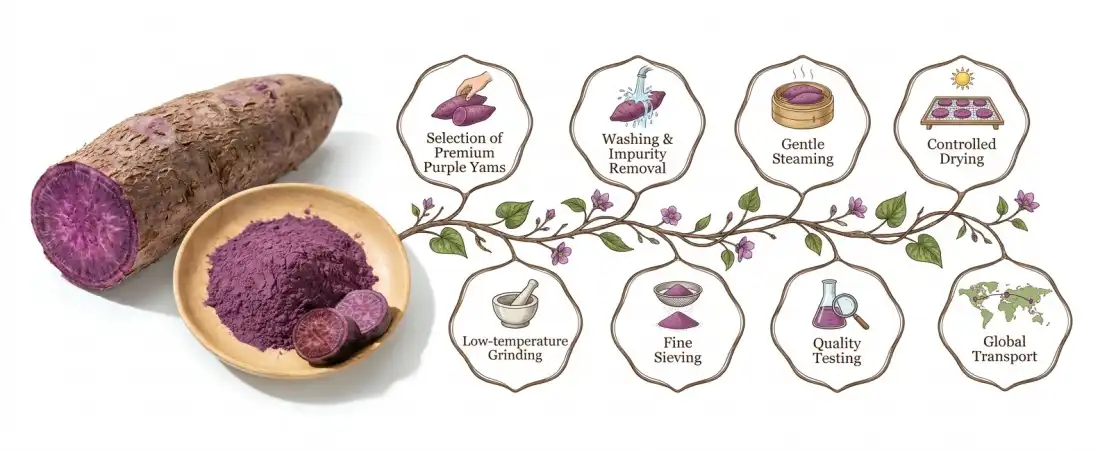
Health Benefits of Pure Purple Yam Powder for Consumers and Industries
Antioxidant Capacity and Immune System Support
The purple colour of Dioscorea alata is due to anthocyanin pigments. Purple-fleshed varieties have been reported to contain numerous anthocyanins and phenolic compounds and extracts from purple yam have shown antioxidant action in laboratory testing.
These results provide insight into the reason for the exploration of purple yam as a functional dietary component. But in vitro antioxidant activity should not immediately be touted as established immune health benefit in people. That similar difference applies when establishing consumer-facing claims for finished meals or supplements.
For producers, a more acceptable path is to explain the naturally occurring anthocyanins in the ingredient and apply proper regulatory assessment prior to making particular health claims.
Cardiovascular Wellness and Metabolic Health Applications
Purple yam is a source of starch and dietary fibre and its carbohydrate profile is of importance for functional food development. Resistant starch is also extensively explored for its impact on digestion and metabolic reactions.
However, the amount and type of resistant starch in a final purple yam powder might be influenced by raw material and processing technique. Therefore, it is not believed that all commercial powders would elicit the same glycemic or metabolic response.
This is important for product makers since lab analysis and testing of formulations becomes more useful than generic promises. The starch, fibre, colour and flavour qualities of purple yam powder match the recipe and exploration of nutrition-oriented dishes, bread items, drinks and other products may be done.
Digestive Health and Gut Microbiome Nourishment
Dietary fibre and resistant starch are essential in the scientific field of digestive nutrition. Resistant starch may reach the large intestine and provide a substrate for gut microbes, but the physiological response relies on the kind and quantity of resistant starch ingested.
The purple yam itself has been studied as a source of starch, fibre, and other plant components. Its possible relevance in the creation of a functional diet and gut related studies are also reported in recent reviews .
For producers, the practical possibility is to formulate around the nutritional profile of the ingredient, rather than to guarantee a particular microbiome result. The finished goods should be assessed for fibre content, texture, digestibility, and customer approval.
Purple yam nutritional benefits linked to digestive health come chiefly from its dietary fibre and resistant-starch content, which can support a fibre-oriented formulation; the final physiological response, however, depends on the finished recipe and should be confirmed by lab analysis rather than assumed.
Beauty Nutrition and Cosmetic Applications
Purple yam is intimately linked to collagen formation and skin-aging benefits, according to the original study. The link without product specific clinical proof is too strong.
A more pertinent application topic is that purple yam includes anthocyanins and other phytochemicals that have been of scientific interest, and its natural purple colour may also be significant to ingredient development.
For beauty nutrition products, the ingredient may be viewed as part of a larger plant-based mix. The viability of a food-grade purple yam powder for cosmetics should be evaluated independently since cosmetic formulations have various stability, safety, sensory and regulatory criteria.
How to Use Pure Purple Yam Powder Efficiently in Your Product Line
Functional Beverage Formulation Guidelines
Purple yam powder may contribute natural colour, unique flavour and plant-based solids to beverages and powdered drink compositions. Its behaviour will depend on the particle size, dispersion, formulation pH, processing temperature and the other chemicals employed in the recipe.
Rather of using a single set % for all drinks, producers should undertake bench experiments to identify the proper inclusion amount for each beverage. This is especially significant when the end product requires a certain colour intensity, mouthfeel, or suspension profile.
Powdered substances need moisture control as well. Packaging and storage conditions should follow the standards of the supplier and the needs of the completed product.
Baking and Culinary Application Techniques
Pure purple yam powder may be used to baked dishes and desserts when the purple colour and unique yam flavour is desired. Potential uses include cakes, cookies, breads, ice cream, fillings, and other items.
The final colour may vary according on the source material, the processing circumstances, the formulation and the heating. Published study has shown a processing effect on the anthocyanin concentration of purple yam, indicating that evaluating the application is preferred to assuming a set colour performance.
For commercial development producers should test the powder at multiple inclusion levels monitoring colour, moisture, texture, flavour and end product stability.
Meal Replacement and Sports Nutrition Integration
Purple yam may be considered in formulation of meal replacement and sports nutrition as a source of carbohydrate and plant derived compounds. The starch and fibre composition of it might be advantageous for designing products focusing on whole-food or botanical constituents.
However, don’t think that pure purple yam powder is a weight loss substance or a substitute for traditional sports nutrition carbs. The ultimate nutrition profile relies on the whole recipe.
Instead, it may be tested with protein powders, fruit ingredients, cereals or other plant-based nutrients. Tests should include dispersibility, texture, taste, nutritional content and stability during storage.
Storage Optimization and Packaging Recommendations
Purple yam powder as a food component in powdered form must be kept in settings that are moisture-proof and protected from other environmental variables. The precise storage conditions are to be followed as per the supplier’s technical data sheet and packing directions.
2. Packaging Options: At present, NT Biotech has packaging options of 1 kg/bag and 10 kg/box, we also provide customised packaging as per client request. The product is displayed as in stock also.
For bigger projects, package configuration, shelf life information, batch paperwork, shipping and storage conditions should be confirmed by the customer before placing an order.
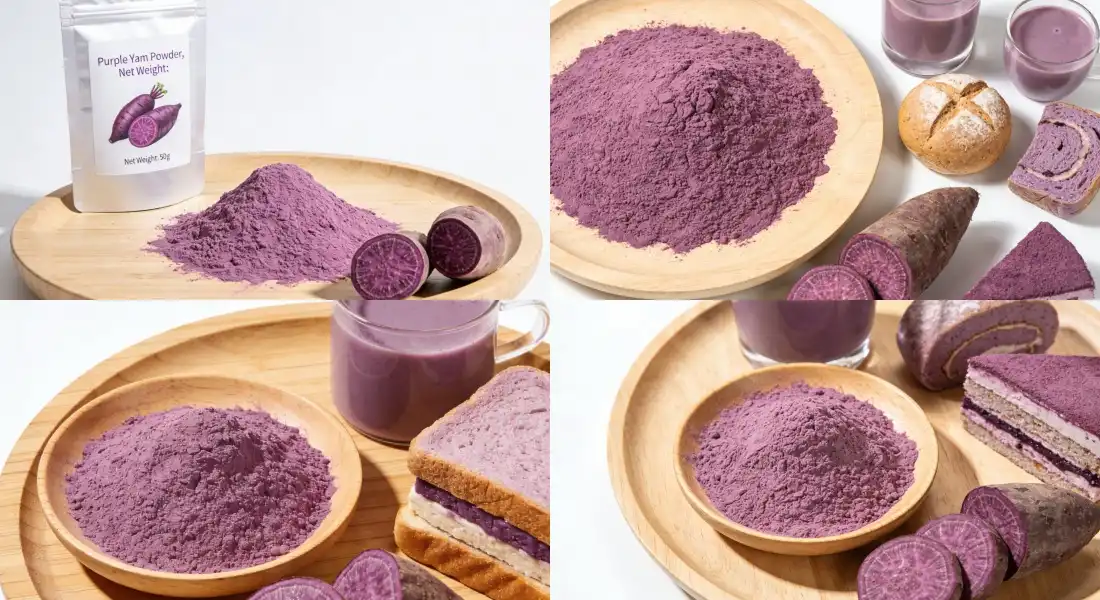
Making the Right Procurement Decisions: Selecting Quality Purple Yam Powder Suppliers
Essential Certification and Compliance Verification
Buyers are advised to confirm botanical identification, plant part, purity specification, particle size, microbiological requirements, contaminant limits and relevant documents for the target market prior to purchase.
NT Biotech now says Latin name as Dioscorea alata L., plant portion as root, particle size as 80 mesh and product specification as 100% pure. ISO Kosher and Halal certifications are also provided.
The Certificate of Analysis should be compared with the actual purchase specification. Buyers should also consider if extra testing is appropriate for their particular market or finished-product category.
Evaluating Supplier Technical Capabilities and Service Support
Supplier assessment should be more than certification logos. Buyers should ask whether the supplier can offer consistent specs, batch paperwork, samples, appropriate packaging, and communication throughout product development.
NT Biotech has more than 10 years’ expertise in providing botanical substances and offers R&D and quality-control assistance.
Sampling tests are still necessary for a new formulation. This allows a customer to test colour, scent, taste, dispersion, processing behaviour and compatibility with the completed recipe before committing to a bigger purchase.
Balancing Cost Efficiency with Quality Assurance
The unit pricing is only one aspect of the buying decision. A less expensive ingredient may not be cost-effective if it takes extra processing, gives uneven colour, or does not match the necessary quality criteria.
In addition to pricing, buyers should consider specifications, particle size, packaging, MOQ, paperwork, sample availability, lead times and testing needs.
MOQ for current NT Biotech listing is 10 kilogram, free samples are available, normal packaging is 1 kg bags and 10 kg boxes, and custom packaging is available.
Initiating Supplier Relationships and Sample Evaluation
A sample trial is one of the easiest strategies to decrease formulation risk. Buyers may evaluate the powder with their own specifications for colour, flavour, dispersability, texture and processing performance.
Especially for Pure purple yam powder, application test is helpful for it. The performance of a botanical powder is determined by the raw ingredient and completed formulation.
NT Biotech now has free samples and stock availability for the product. The delivery period shown is within 2-4 days following payment. Kindly clarify availability and shipping information before inquiring for price.
Conclusion
Pure purple yam powder is a combination of the natural purple colour and unique composition of Dioscorea alata L. with the convenience of a powdered ingredient. Anthocyanins, phenolic compounds, starch, dietary fibre and other phytochemicals have been found in purple yam and research is underway to explore its potential in functional food applications [12, 13].
For B2B purchasers the clearest selection criteria are not a general health promise, but rather an evaluation of botanical identification, purity, particle size, processing, quality certification, application performance and supply needs. This supports the development of food, beverage, nutrition and other plant-based products with credible technical and marketing claims.
FAQ
1. Is Purple Yam Powder Suitable for Gluten-Free Formulations?
Purple yam is a naturally root-based food ingredient (not a wheat-based ingredient). However, a completed product should be promoted as gluten-free only if the whole production and supply chain complies with the relevant regulations. Buyers should thus check allergy controls, cross-contact protocols, testing and destination-market laws with the supplier.
2. How Does Purple Yam Powder Differ from Purple Sweet Potato Powder?
Purple yam is produced from Dioscorea alata L., whereas purple sweet potato is derived from Ipomea batatas. They are various crops with varying starch, colour, flavour and phytochemical characteristics. Purple yam is well noted for its purple-fleshed varieties which are high in anthocyanins but the composition varies by cultivar and processing.
3. What Quality Standards Should B2B Buyers Verify?
Buyers should test for botanical identification, plant part, purity, appearance, particle size, moisture, microbiological characteristics, heavy metals, and any other criteria specific to the market and use.
The product under the current NT Biotech offering is specified as Dioscorea alata L., root, 80 mesh, 100% pure, purple powder appearance. Also included are ISO, Kosher and Halal certifications.
The final buying specification should be established with the provider prior to placing an order.
Partner with NT Biotech: Your Trusted Purple Yam Powder Supplier for Consistent Quality
NT Biotech supplies Pure purple yam powder made from Dioscorea alata L. roots. The current product specification lists 100% purity, 80-mesh particle size, and purple powder appearance, with ISO, Kosher, and Halal certification information. Standard packaging includes 1 kg bags and 10 kg boxes, while customized packaging is available. The listed MOQ is 10 kg, and free samples are available for evaluation.
For manufacturers evaluating Pure purple yam powder for food, beverage, nutrition, or other ingredient applications, NT Biotech can provide product information and sample support for initial formulation trials. Contact info@newthingsbiotech.com to discuss your required specification, packaging, sample evaluation, and purchasing requirements.
References
1. Chen, L., & Huang, G. (2019). Anthocyanins: Modifications, Degradation, and Bioavailability in Food Systems. Journal of Agricultural Chemistry, 67(21), 5839-5847.
2. Harakotr, B., Suriharn, B., Tangwongchai, R., Scott, M. P., & Lertrat, K. (2014). Anthocyanin, Phenolic Compounds, and Antioxidant Activity in Purple Corn. International Food Research Journal, 21(3), 1109-1115.
3. Nugent, A. P. (2005). Health Properties of Resistant Starch. Nutrition Bulletin, 30(1), 27-54.
4. Tetens, I., Bendtsen, K. M., Henningsen, A., Rohde, J. F., & Valsta, L. (2013). The Impact of Dietary Fibers on Dendritic Cell Function and Consequent Effects on Mechanisms of Immune Regulation. Critical Reviews in Food Science and Nutrition, 53(9), 917-926.
5. Truong, V. D., McFeeters, R. F., Thompson, R. T., Dean, L. L., & Shofran, B. (2007). Phenolic Acid Content and Composition in Leaves and Roots of Common Commercial Sweetpotato Cultivars in the United States. Journal of Food Science, 72(6), C343-C349.
6. Woolfe, J. A. (1992). Sweet Potato: An Untapped Food Resource. Cambridge University Press, Cambridge, United Kingdom.
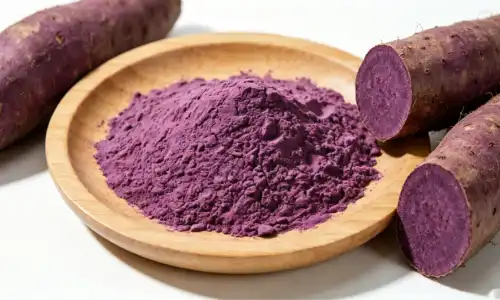
Pure Purple Yam Powder, which comes from the plant Dioscorea alata L., is full of good things for you, like fiber, anthocyanins, and resistant starch. There are about 3–4 grams of protein in every 100 grams of this root powder, which is 100% pure. Plus, it has a lot of minerals like iron and potassium, vitamin C, and complex carbs like resistant starches that break down slowly. More than 50 mg of anthocyanin are found in high-quality types per 100 g. This is what makes them purple. This makes them a useful item for clean-label recipes in the food, drink, and nutrition markets around the world, since they add natural color and are good for you.
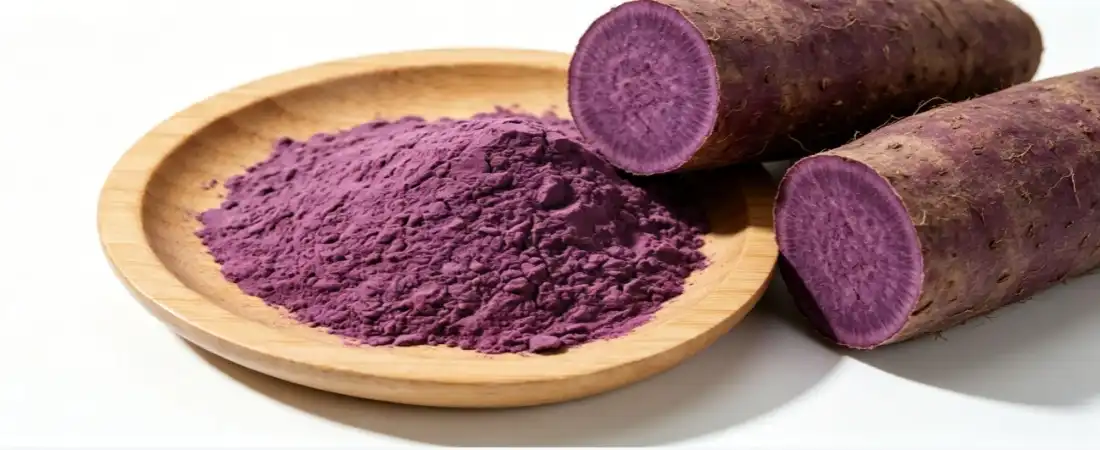
Introduction to Pure Purple Yam Powder
The seeds of Dioscorea alata, also called ube or purple yam, are where Pure Purple Yam Powder is found. Southeast Asia and the Pacific are where this plant is grown most of the time. Careful cleaning, low-temperature drying, and exact grinding to 80 mesh are all steps that NT Biotech uses in the production process. Bioactive chemicals are what make this element important, and this keeps them safe. Pure Purple Yam Powder is different from other sweet potato or taro flours because it is a deep purple color and has more anthocyanins. Anthocyanins are polyphenolic pigments that keep the color fixed and fight free radicals.
How food is cooked directly impacts how much nutrition it keeps. Up to 40% of heat-sensitive vitamins and anthocyanins can be lost when things are dried using traditional high heat. The unique low-temperature method we use, on the other hand, preserves more than 90% of the bioactive profile of the raw material. This difference is very important for business-to-business buyers who want to know how well ingredients work in finished goods. People who work in sourcing who want to reach health-conscious groups are learning more and more about how the details of an item affect not only following the rules but also how the customer sees the brand and how it stands out from others.
The global clean-label movement grew by 15% every year from 2020 to 2023. The plant-based food business is also growing quickly and is expected to reach $77.8 billion by 2025. Many people want to buy these foods. Pure Purple Yam Powder fits these trends perfectly because it is naturally colored without using chemical dyes, doesn't contain gluten so it's safe for people with allergies, and is high in nutrients, so it can be used in functional foods. When buying teams know about these changes in the market, they can make the case for working with sellers to meet quality standards that can be checked.
Detailed Nutritional Profile of Pure Purple Yam Powder
Macronutrient Composition and Functional Relevance
The carbs that make up 75% to 80% of Pure Purple Yam Powder are mostly complex starches, but there is also a lot of resistant starch. It makes up about 10 to 15 percent of all starch. It works more like soluble fiber because it doesn't break down in the small intestine but does break down in the colon. This makes it different from sources of simple carbohydrates, which makes it better for controlling blood sugar. It can be used in low-fat cooking because it has less than 1% fat and between 3 and 4 grams of protein per 100 grams.
There is both amylose and amylopectin in the carbohydrate makeup. Things that have a higher amylose ratio help glucose release more slowly than things that have a higher amylopectin ratio. When making foods that are good for diabetics or sports nutrition foods that need to release energy slowly over time, this building quality is very important. Scientists who study food like this kind of starch because it gives baked goods their shape and taste and also helps the body in ways that back up what the ads say.
Micronutrients and Bioactive Compounds
Pure Purple Yam Powder should have 15 to 20 mg of vitamin C per 100 g if it is made the right way. About 20% of the daily recommended amount is in this dose. This vitamin that dissolves in water helps antioxidants do their job better when it pairs with anthocyanins. Thiamine and riboflavin are two types of B-complex vitamins that help the body use energy. But the amounts in foods change based on how they were grown and made.
As much as 400–500 mg of potassium per 100 g helps the heart and keeps fluids in balance. As little as 1.5–2 mg of iron per 100 g meets the goals for adding iron to food. Anthocyanins are the most important chemicals that are good for you. In high-end powders, they usually add up to 50 to 150 mg per 100 g. There are a lot of cyanidin and peonidin in these polyphenolic colors. It's important for drinks and sweets that they don't lose their color when the pH changes.
Dietary Fiber and Digestive Health Properties
All together, every 100 grams has about 5 to 7 grams of fiber. There is both soluble and insoluble fiber in this. Like resistant starch, soluble fiber helps the body's good bacteria, mostly Bifidobacterium and Lactobacillus species, do their job by eating them. Butyrate and other short-chain fatty acids are made when food is fermented. These acids are good for your gut health and may help reduce signs of inflammation. Insoluble fiber keeps your stomach regular and makes you feel full, which are both good qualities for items that replace meals or help you lose weight. Herbalists have known for a long time that the mucilage in purple yam makes it feel calm and helps digestion.
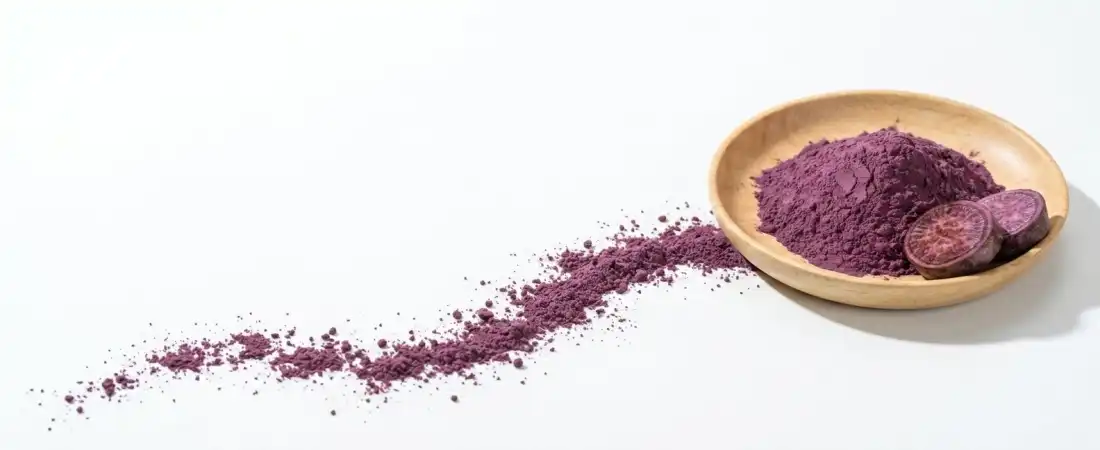
Health Benefits Linked to the Nutritional Components
Antioxidant Capacity and Chronic Disease Prevention
There are about 2,500 to 3,500 μmol TE of oxygen radical absorbance capacity (ORAC) in 100 g of Pure Purple Yam Powder. This is because of the anthocyanins that are in it. So, it's a food with a medium to high level of antioxidants. A study in the Journal of Agricultural and Food Chemistry found that the antioxidants in purple-fleshed potatoes are just as good at getting rid of free radicals as the antioxidants in blueberries. Blueberries are known to be the most antioxidant-rich food. Reactive oxygen species can cause heart disease, brain disease, and aging faster than you should. This skill helps get rid of them.
Polyphenolic chemicals work in more than one way. They get rid of free radicals directly, hold metal ions in place, and make natural antioxidant enzymes like superoxide dismutase work better. This means that people who make products that try to lower oxidative stress, improve skin health, or slow down the aging process can really change how those products are made. Because vitamin C can fix broken anthocyanins, these effects are better in living things where they are found.
Glycemic Management and Diabetic-Friendly Applications
The glucose reaction is different in a basic way when resistant starch is used instead of regular potato or rice flour. Resistant starch lowers blood sugar spikes after a meal by 20 to 30 percent in people. It also makes the body more sensitive to insulin over time. On a scale from 50 to 55, Pure Purple Yam Powder is a low- to medium-GI food that can be used in diabetic recipes or low-carb lines.
Pure Purple Yam Powder and sweet potato powder are not the same in some important ways. There is resistant starch in both, which is good for you. But Pure Purple Yam Powder has more anthocyanin, which blocks α-glucosidase and helps with blood sugar. This enzyme inhibitor makes it take longer for carbs to break down, which further limits the amount of glucose that the body can take in. Label claims that a food will lower blood sugar are backed up by this kind of proof when eaten as part of a healthy menu. This gives procurement teams placement tactics that are based on science.
Gluten-Free Certification and Allergen Safety
FDA rules say that gluten-free goods must have less than 20 parts per million of gluten. Pure Purple Yam Powder doesn't have any gluten naturally, so it meets those rules. There are $7.6 billion worth of gluten-free goods on the market around the world. These goods help people with celiac disease or gluten intolerance who are not celiac. We have ISO 9001, Kosher, and Halal certifications for our product. This means that it can be sold to a lot of different people and meets the food needs of many religions.
Tests have shown that there are no foods that contain milk, eggs, fish, shrimp, tree nuts, peanuts, wheat, or soya. As more and more people in North America and Europe want "free-from" products, this clean allergy profile lowers the risks of contamination and backs up that idea. When you put pollen safety and licensing together, there are more ways to follow the rules. This makes it faster to get new goods on the market.
Practical Applications: How to Use Pure Purple Yam Powder in B2B Contexts
Bakery Products and Confectionery Applications
When used in food, Pure Purple Yam Powder adds color naturally and health benefits as well. When 3 to 8 percent of it is added to bread, cakes, or cookies, it gives them a special purple to violet color and helps them keep their moisture by holding the starch together. Vanilla, chocolate, and tropical fruit all taste good with the mild, slightly sweet flavor. It doesn't overpower other flavors.
Anthocyanins change from purple (pH 3–4) to blue-violet (pH 7–8), so you need to think about how to deal with the pH. The best way for cooks to keep the color stable is to make the recipes slightly acidic with natural stabilizers like citric acid or cream of tartar. At a percentage of 2 to 5 percent, the powder spreads out evenly in frozen treats. This keeps the color from changing when the treats freeze and thaw, and it gives the treats more body. People who make ice cream like the clean-label appeal more than man-made colorants like FD&C Red 40 or Blue 1.
Functional Beverages and Nutritional Drinks
Pure Purple Yam Powder is being used more and more in health drinks, protein shakes, and juice mixes. Solubility goes up when emulsifiers or maltodextrin are added, and the mixture spreads out easily in cold liquids. Most ready-to-drink drinks use between 5 and 12 grams per serve. This food has a good amount of fiber (0.4 to 0.8 grams per serve), so it can help you reach your daily fiber goals.
People who make plant-based drinks will like that the powder works well with bases made of pea protein, rice protein, and oat milk. Because the anthocyanins can show the pH level, foods that change color when mixed with acidic drinks are more interesting to look at. Brands that make sports nutrition products use it in pre-workout goods because the vitamins help your body deal with oxidative stress caused by exercise, and the resistant starch gives you energy that lasts.
Nutraceutical Supplements and Meal Replacements
You can take 500 mg of Pure Purple Yam Powder as a supplement to improve the health of your gut or your body's antioxidant defenses. The powder is easy to mix into meal replacement mixes. It usually makes up 8–15% of the whole dry mix, along with functional carbs, protein isolates, and vitamin premixes. This mix supports many nutritional pathways, such as maintaining the balance of macronutrients, adding vitamins, and letting bioactive chemicals out into the body.
When handling supplements, it's very important to keep an eye on the quality. While we test each batch, we use HPLC to find out how much anthocyanin is present, germ testing to make sure there are fewer than 1,000 CFUs per gram, and heavy metal screens to make sure the product meets the requirements set by California Proposition 65. The quality promises are written down on Certificates of Analysis that are sent with every shipment. This gives makers the ability to track their products, which is needed by FDA cGMP standards and foreign export rules.
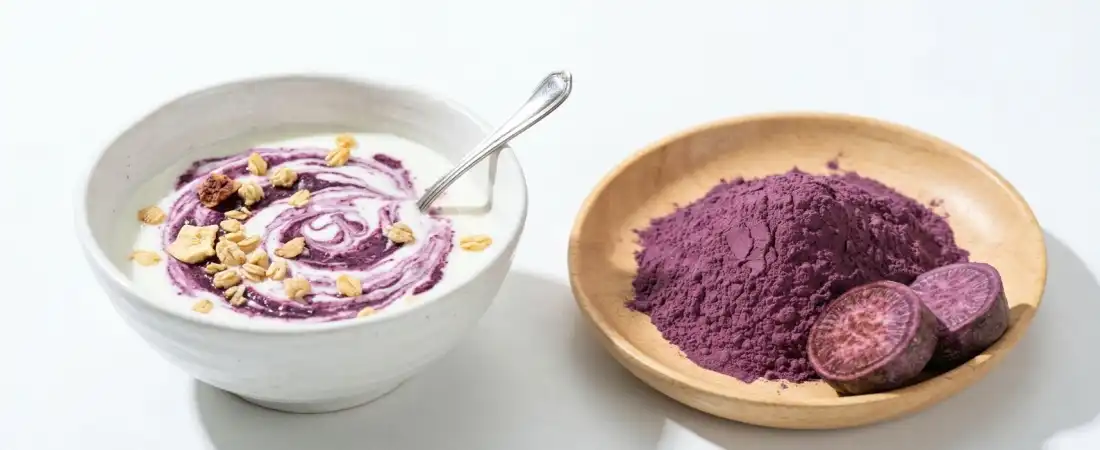
Procurement Insights: Choosing the Right Pure Purple Yam Powder Supplier
Organic Versus Conventional: Quality and Certification Considerations
Organic Pure Purple Yam Powder costs 30 to 50 percent more than regular Pure Purple Yam Powder, but it can have a place in the $220 billion organic food market around the world. Products must be grown without pesticides and processed in buildings that are approved as organic in order to be labeled USDA Organic or EU Organic. Buying managers who want to sell high-end natural goods often think that stores need to get this approval in order to sell the goods and buyers need to trust them. Conventional foods are less expensive, but they still have the same nutritional value as organic foods if they come from a reliable company that uses Good Agricultural Practices.
Tests done by a third party to show non-GMO status help the 63% of U.S. customers who choose to avoid genetically modified products. From our farm partners to the final packing, our supply chain makes it easy to track everything. You can see information that is special to a batch if you ask. Being open cuts down on risks in the supply chain and helps with the environmental reports that big CPG companies want more and more.
Critical Supplier Selection Criteria
Do a lot of different things to make sure you fully evaluate each possible service. In addition to measuring anthocyanin through HPLC, microbial load testing, and heavy metal screening, proximate analysis (moisture, ash, protein, and fat), there should also be microbial load testing and heavy metal screening. There are many different minimum orders. For instance, our 10 kg MOQ is fine for R&D samples and small production runs. Competitors, on the other hand, may expect 100–500 kg orders, which makes it hard for new brands to keep track of their working capital.
Pure Purple Yam Powder that is sold in bulk for more than 500 kg costs between $18 and $35 per kilogram. It costs between $30 and $45 per kilogram for smaller amounts. The differences between them show how the food was made, how good it was, and where it came from. How reliable a provider is can be seen by how often they deliver on time (we guarantee 98% of shipments arrive on time), how quickly they answer the phone (our team promises to answer within two hours), and how well they can help with technology issues. This is very helpful when there are issues with the plan. This is when our R&D team can help by making things more stable, hiding tastes, or making sure colors stay the same.
Logistics and Bulk Order Strategies
The logistics of shipping have a big impact on arrival times and prices. FedEx or UPS can ship orders up to 500 kg straight from our plant in two to four business days if we have enough in stock. Freight forwarders with a good reputation handle shipments of more than 1,000 kg. If you don't need to restock right away, sea freight is cheaper, but it takes 4 to 6 weeks to get to North American ports.
If you want to place a big order, you should talk about tiered price breaks, payment terms (we offer net-30 terms for long-term clients), and the options for unique packaging. Simple 1 kg paper bags and 10 kg boxes can meet your private-label needs. It's possible to get your own brand if you order more than 500 kg. Strategic buyers usually agree to yearly contracts that include packages every three months. This locks in prices while keeping inventory open, which is why we offer discounts of up to 15% on volume for orders over 5,000 kg per year.
Conclusion
Pure Purple Yam Powder is an important ingredient for business-to-business buyers who are producing goods that meet the needs of current customers who want natural, useful, and clean-label ingredients. Anthocyanins, resistant starch, dietary fiber, and important vitamins are all parts of its full nutritional makeup. These nutrients give the recipe many benefits, such as natural color, control of blood sugar, antioxidant activity, and support for gut health. The fact that the item is gluten- and allergen-free and can be used in drinks, vitamins, and baking makes it stand out in a crowded market. For procurement to go well, it's important to work with suppliers who have strict quality control, clear licensing, quick expert help, and reliable transportation. A lot of these things directly affect how well the product works and how well it does in the market.
FAQ
1. Can purple yam powder be used in diabetic-friendly product formulations?
Because it has resistant starch and a glycemic index of 50 to 55, Pure Purple Yam Powder is good for meals that people with diabetes can eat. Because it takes longer for resistant starch to break down than simple carbs, blood sugar levels don't rise as fast. By stopping the α-glucosidase enzyme, anthocyanins help keep blood sugar levels even more in check. This is done by making the breakdown of carbs take longer. For the best insulin response, it should be mixed with protein and healthy fats when it is added to diabetes foods. Tests in real people should also be done to back up what the signs say.
2. How does purple yam powder compare nutritionally to sweet potato powder?
It has resistant starch and dietary fiber, but Pure Purple Yam Powder has two to three times more anthocyanin than white yam powder. This makes it a better antioxidant and gives it a brighter color. There may be a small difference in the amount of beta-carotene in different types of sweet potato powder. While the glycemic index stays the same (50–60), purple yam's anthocyanins help keep blood sugar in check in more ways than one.
3. Is purple yam powder effective as a gluten-free baking ingredient?
In gluten-free baking, Pure Purple Yam Powder works well when mixed with xanthan gum or psyllium husk to make a paste. It helps the starch stay structured and holds water, but it's not as stretchy as gluten, so the recipe needs to be changed. To make it taste better and be healthier, it is often mixed with 20–30% rice flour, tapioca starch, or almond flour.
Partner with NT Biotech for Premium Purple Yam Powder Supply
NT Biotech is ready to give you Pure Purple Yam Powder when you need it. For more than ten years, they've worked with plant products and help people all over the world who make food, drinks, vitamins, and cosmetics. This ube powder is made from roots of the Dioscorea alata plant that we pick by hand. Over 90% of the plant's natural anthocyanins and other good chemicals are kept when it goes through a special low-temperature method. For proof of these scientific advantages, we test each batch fully with HPLC and UV. We keep our ISO 9001, Kosher, and Halal standards up to date. This means that your recipes will work in all sorts of places and follow all sorts of rules all over the world.
With a low minimum order amount of 10 kg, which can be used for both R&D sampling and production scaling, we offer fast shipping (two to four days) on things that are in stock. Our experienced R&D team also provides free technical help. If you're making functional drinks, clean-label baked goods, or advanced nutrition supplements, we can help you get them to market faster with our wide range of package options and OEM skills. You can get free samples, talk about prices for Pure Purple Yam Powder in bulk, or find out how our ingredient solutions can help your next product launch stand out by emailing info@newthingsbiotech.com.
References
1. Zhu, F. (2016). "Anthocyanins in Cereals: Composition and Health Effects." Food Research International, 109, 232-249.
2. Haub, M.D., Hubach, K.L., Al-Tamimi, E.K., Ornelas, S., & Seib, P.A. (2010). "Different Types of Resistant Starch Elicit Different Glucose Responses in Humans." Journal of Nutrition and Metabolism, 2010, Article ID 230501.
3. Tan, T.C., Cheng, L.H., & Pang, E. (2014). "Functional Properties and Bioactive Compounds of Purple Sweet Potato and Yam Flours." International Food Research Journal, 21(5), 1931-1937.
4. Bhandari, M.R., & Kawabata, J. (2006). "Cooking Effects on Oxalate, Phytate, Trypsin and α-Amylase Inhibitors in Various Dioscorea Tubers." Journal of Food Composition and Analysis, 19(6-7), 681-688.
5. Goda, Y., Shimizu, T., Kato, Y., Nakamura, M., Maitani, T., Yamada, T., Terahara, N., & Yamaguchi, M. (1997). "Two Acylated Anthocyanins from Purple Yam, Dioscorea alata." Phytochemistry, 44(1), 183-186.
6. Suda, I., Oki, T., Masuda, M., Kobayashi, M., Nishiba, Y., & Furuta, S. (2003). "Physiological Functionality of Purple-Fleshed Sweet Potatoes Containing Anthocyanins and Their Utilization in Foods." Japan Agricultural Research Quarterly, 37(3), 167-173.